




Industrial Tube Bending Machine Buying Guide for High-Mix Production Lines
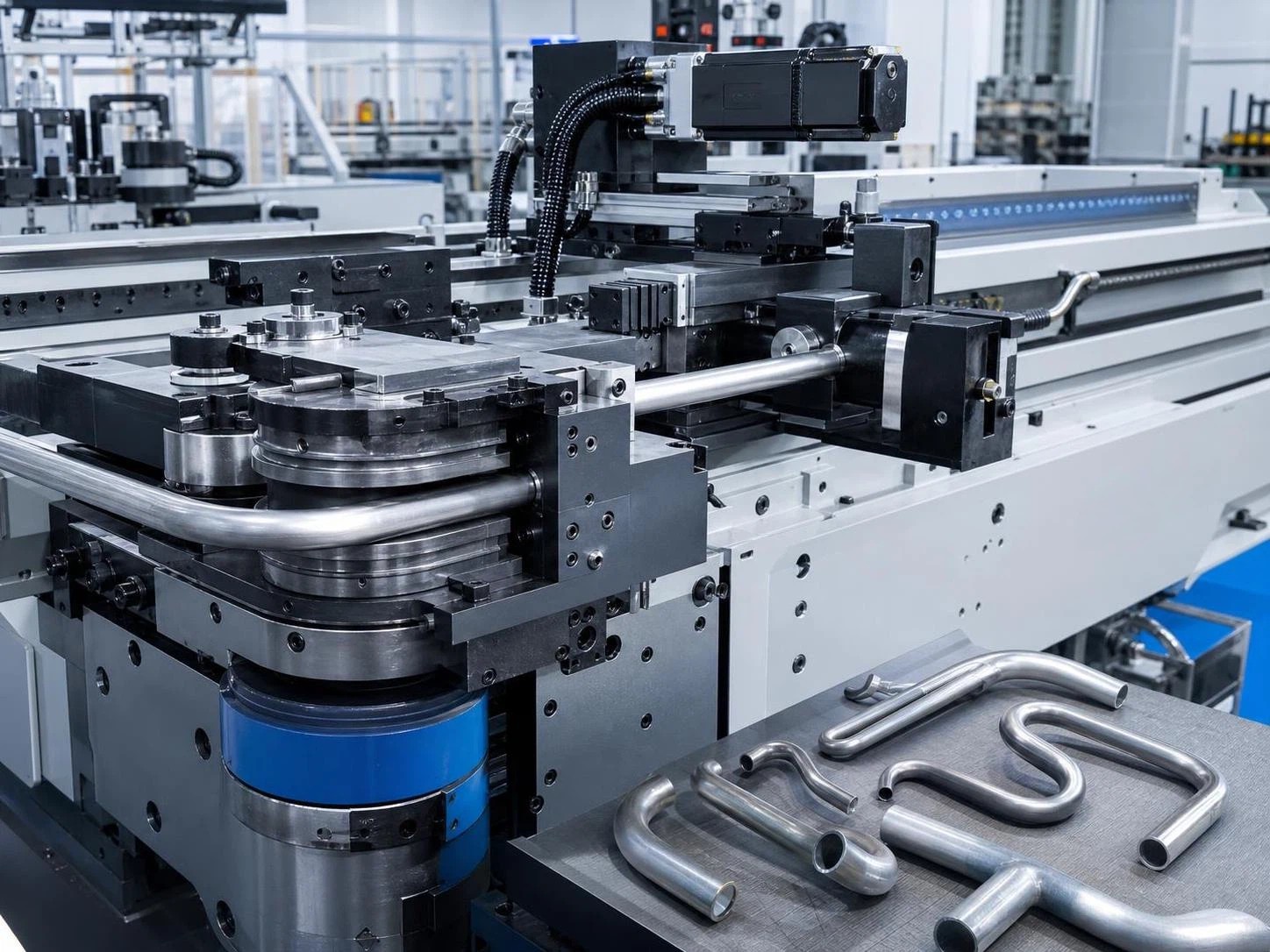
Choosing an industrial tube bending machine for a high-mix production line is rarely a matter of comparing maximum bending capacity and purchase price alone. For procurement teams, the harder question is whether a machine can handle frequent part changes, maintain stable quality across small and varied batches, and do so without creating hidden costs in tooling, setup time, operator dependence, or downstream rework.
That is why buying decisions in this category often go wrong. A machine may look technically capable on paper, yet perform poorly in a production environment where dozens of tube geometries, materials, and bend radii are scheduled in short runs. In high-mix manufacturing, flexibility is not a marketing word; it is a measurable operational requirement that directly affects OEE, lead time, and margin.
This guide looks at the practical factors procurement should evaluate before selecting a tube bending system, especially where cost control must coexist with product variation and delivery pressure.
Why high-mix production changes the buying logic
In dedicated, high-volume production, a buyer can justify a machine optimized around one or two part families. High-mix lines operate differently. Tube diameter, wall thickness, material grade, bend radius, and finished geometry may all change repeatedly during a shift. What matters in this environment is not only the machine’s peak capability, but its ability to switch between jobs with minimal loss.
Procurement teams should therefore assess the machine against three operating realities:
- Changeover frequency: how often tools, programs, clamps, and support settings must be changed.
- Part variability: whether the machine can maintain accuracy across different materials and geometries.
- Skill sensitivity: how much output quality depends on one experienced operator rather than on process control built into the equipment.
If the supplier discussion stays focused only on bending speed, the evaluation is incomplete. In high-mix environments, a slightly slower machine with better repeatability and faster setup may outperform a nominally faster model over the full production week.
The machine type should match the production mix, not just the largest tube
One of the most common procurement mistakes is selecting by maximum capacity. Buyers often assume that if a machine can bend the largest tube in the range, it can efficiently cover smaller and more complex parts as well. In practice, suitability depends on the mix of parts, not only the upper limit.
For high-mix lines, the key decision is usually among:
- Manual or semi-automatic benders for lower volumes, less complex geometries, and tighter capital budgets.
- CNC tube benders for frequent program changes, multi-angle parts, and repeatability requirements.
- Fully automatic cells where loading, bending, measuring, and unloading are integrated for stable, recurring part families.
If the line produces a broad variety of SKUs in small or medium batches, CNC control typically becomes the minimum practical threshold rather than a premium feature. Program storage, servo-controlled axis positioning, and recipe recall reduce the labor cost of variation. The value is less about automation image and more about avoiding setup drift and scrap during every job switch.
Procurement should ask a simple but revealing question: How many different part numbers can this machine realistically process in one shift without productivity collapse? Suppliers that understand high-mix production will answer with examples tied to setup time, memory capacity, tooling logic, and operator workflow.
Bending accuracy is important, but process stability matters more
Many buyers request accuracy figures without examining the conditions behind them. A supplier may quote impressive tolerances, but those values can depend on a narrow material range, ideal tooling, experienced operators, or trial conditions not representative of actual production.
For procurement, the more useful concern is stability across change. Ask how the machine performs when switching between stainless steel, carbon steel, aluminum, or thin-wall tubing. Ask whether springback compensation is built into the control logic. Ask how the machine handles tight radius work, ovality control, wrinkling risk, and surface marking.
In a high-mix setting, the true cost driver is not whether one sample part comes out correctly. It is how often first-off parts fail after a setup change, and how much adjustment time is needed before good parts start flowing.
That is also why buyers should request trial bending on representative parts, not simplified demo samples. Ideally, the test set should include:
- different tube materials;
- at least one thin-wall tube prone to deformation;
- one part with a relatively tight bend radius;
- one geometry involving multiple bends and orientation control.
Without this, procurement risks approving a machine that performs well in catalog conditions but struggles under production variability.
Tooling strategy often determines real operating cost
On high-mix lines, tooling is where many of the hidden costs accumulate. Buyers typically focus on the base machine quotation, yet over the machine life, bend dies, clamp dies, pressure dies, mandrels, wipers, and collets can represent a major cost category—especially when product variation is high.
What procurement should evaluate includes:
- Tool standardization: can one tooling set cover multiple part families?
- Tooling lead time: how long does it take to order replacement or custom tools?
- Changeover design: are tools quick-release, modular, and easy to align?
- Local availability: can tooling or wear parts be sourced regionally if urgent replacement is needed?
A lower-priced machine that requires frequent custom tooling or time-consuming alignment can become expensive very quickly. Buyers should request a projected tooling matrix based on current production mix, not just a single starter set.
This cost logic is similar across metal forming equipment. For example, in thread production, buyers comparing cold-forming alternatives often look beyond machine price to die life, material utilization, and process consistency. Equipment such as the ZC28-6.3 thread rolling machine is typically evaluated on those same grounds: whether it supports efficient changeover, repeatable precision, and lower lifecycle waste compared with less optimized processing routes. Tube bending procurement benefits from the same discipline.
Setup time deserves the same attention as cycle time
Suppliers naturally emphasize bending speed per part. For high-mix production, procurement should spend equal time on setup speed per order. The gap between quoted cycle time and actual line productivity can be substantial when programs, guides, tooling, and support positions must be changed repeatedly.
Useful questions include:
- How long does a full tooling change take for a new diameter and radius?
- How much of that time requires skilled manual adjustment?
- Can programs be imported, copied, and edited easily at the machine?
- Is there guided setup support in the HMI?
- Can the machine store correction data by material or part number?
For procurement, setup reduction has direct economic value. It lowers labor dependency, reduces machine idle time, improves schedule responsiveness, and makes small-batch orders more profitable. In a competitive market where lead times are compressing, that flexibility can matter more than a marginal difference in nominal speed.
Automation compatibility should be judged carefully
Not every high-mix line benefits from maximum automation. A common error is assuming that more automation automatically produces better ROI. In reality, the value of automatic loading, robotic handling, in-line measurement, or downstream integration depends on part consistency and scheduling patterns.
If the production mix changes constantly and batch sizes are small, rigid automation may create its own complexity. Procurement should examine whether the machine supports appropriate automation rather than simply high automation. That includes:
- robot interface readiness;
- communication compatibility with MES or factory data systems;
- barcode or recipe-driven part change;
- integration with cutting, end forming, welding, or inspection stations;
- safe manual override when automated flow is interrupted.
The best procurement decisions often come from defining what must be automated now, what should remain manual for flexibility, and what should be upgradeable later. Expandability can be more valuable than buying a fully integrated system before the production mix has stabilized.
Supplier evaluation is not separate from machine evaluation
In international procurement, the machine and the supplier should be assessed as one risk package. A technically suitable bender from a weak supplier can still become a poor purchase if documentation is incomplete, service is slow, or spare parts support is inconsistent.
For buyers, the supplier review should cover:
- manufacturing and export experience;
- quality management practices such as ISO 9001 claims and supporting evidence;
- CE-related documentation where applicable for the destination market;
- installation, commissioning, and training capability;
- spare parts response time;
- English-language manuals, electrical drawings, and software support.
Where standards or certifications are mentioned, procurement should verify scope and relevance rather than accept them as general signals of quality. “CE compliant” in particular should be checked carefully against the actual machine configuration and target market obligations. If any documentation is unclear, mark it as 【待核实】 during supplier comparison.
This is especially important when sourcing from overseas manufacturers serving multiple equipment categories. Some suppliers have broad metalworking portfolios—covering welding, CNC cutting, machine tools, bending, rolling, and automation—and that can be a strength if engineering coordination and after-sales support are well organized. But breadth alone should not substitute for evidence of experience with the specific tube bending application under review.
Total cost of ownership usually changes the shortlist
Procurement teams under budget pressure may be pushed toward the lowest initial quotation. In high-mix production, that approach often proves shortsighted because the cost structure extends far beyond the purchase order. A better comparison uses total cost of ownership over a realistic operating period.
The main cost elements include:
- machine purchase price;
- tooling package and replacement cost;
- installation and commissioning;
- operator training;
- energy use;
- planned maintenance and wear parts;
- setup-related downtime;
- scrap and rework during job changes;
- software or control system support;
- production loss during service delays.
In many cases, scrap, downtime, and setup losses outweigh small differences in purchase price within the first 12 to 24 months. Procurement should therefore model at least three scenarios: current mix, expected mix growth, and a more demanding future mix involving tighter tolerances or more frequent SKU turnover.
If a machine only works economically under today’s narrow conditions, it may become a bottleneck as product diversification increases.
Questions that expose weak offers quickly
When comparing suppliers, some questions are more useful than broad capability claims. Procurement teams can often identify weak proposals early by asking for specific evidence:
- What is the typical changeover time between two real customer parts?
- Which components are most frequently replaced in this model, and what is the normal stock strategy?
- How is bend correction handled when material batches vary?
- What operator skill level is assumed in the quoted productivity?
- Can the supplier provide references in similar high-mix applications?
- What documentation is delivered before shipment and after commissioning?
- Which machine functions are standard, and which are optional but necessary in practice?
Vague answers to these questions are often more revealing than the technical brochure itself.
What buyers should prioritize before issuing the final PO
Before final purchase approval, procurement should ensure that the internal decision is based on actual production requirements rather than a generic machine class. That means aligning purchasing, production, engineering, and quality around a shared part matrix and acceptance standard.
The most reliable buying decisions usually include:
- a representative sample trial;
- a documented tooling and changeover plan;
- a spare parts and service commitment;
- a review of operator training needs;
- clear acceptance criteria for accuracy, repeatability, and cycle performance;
- verification of relevant certifications and export documentation.
An industrial tube bending machine for high-mix production should not be purchased as a standalone asset. It should be evaluated as a process platform: one that must absorb variation, protect quality, and support delivery performance without escalating hidden costs. Buyers who evaluate flexibility, setup logic, tooling economics, and supplier execution capability together are far more likely to secure equipment that performs well beyond the factory acceptance test.
search
Products Navigation
Send Us A Message