




Plate Bending Machine CNC Selection Guide for Precision Enclosures and Cabinets
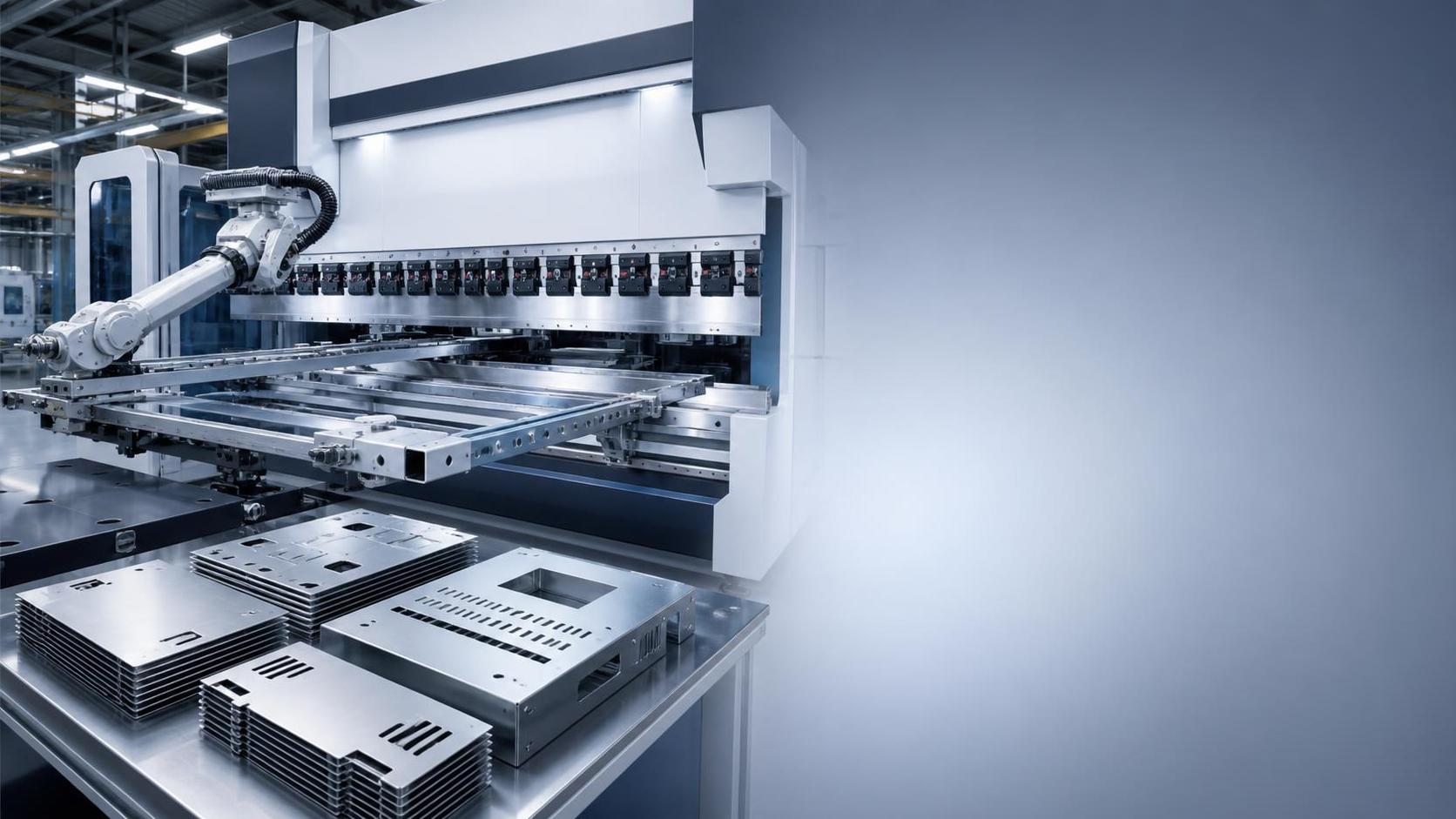
Choosing the right plate bending machine CNC is critical when manufacturing precision enclosures and cabinets, where dimensional accuracy, repeatability, and production efficiency directly affect downstream assembly quality. For technical evaluators, understanding machine structure, control capability, tooling compatibility, and long-term operating stability is essential to making a cost-effective decision. This guide outlines the key selection factors to help you compare solutions with greater confidence.
In enclosure and cabinet production, bending is rarely an isolated process. It sits between laser cutting or punching upstream and assembly, coating, hardware insertion, and electrical integration downstream. That is why a machine that looks acceptable on a specification sheet can still perform poorly in actual production if it creates angle variation, flange inconsistency, surface marking, or unstable cycle times. The selection task is not simply about maximum tonnage or bend length. It is about process fit.
Why enclosure and cabinet work places different demands on CNC bending
Precision enclosures are usually made from mild steel, stainless steel, galvanized sheet, or aluminum in relatively thin to medium thickness ranges. Compared with heavy structural fabrication, the technical pressure comes less from brute force and more from consistency across batches. Door panels must align, holes and slots must remain positionally correct after bending, and mating parts from different shifts or lots must assemble without manual correction.
For this reason, technical evaluation should begin with the part family, not the machine catalog. A shop producing mainly electrical cabinets with repeated 90-degree bends, narrow return flanges, and cosmetic surfaces will need different machine priorities from a workshop handling mixed low-volume custom housings with variable radii, offsets, and frequent setup changes.
The most common mistake in plate bending machine CNC selection is to treat all sheet bending applications as equivalent. They are not. Cabinet work tends to expose weaknesses in backgauge repeatability, ram parallelism, crowning control, and tooling change efficiency much faster than general-purpose sheet metal work.
Machine frame and mechanical stability matter more than advertised speed
Technical buyers often compare CNC systems first because software features are easy to list. In reality, frame rigidity and motion stability usually determine whether the control system can deliver its promised accuracy. A capable CNC cannot compensate for structural deflection beyond a certain point.
When reviewing machines, pay attention to:
- Frame design and welding quality
- Stress relief process after fabrication
- Ram guidance system
- Synchronization method
- Table and ram deflection compensation
For precision enclosures, hydraulic synchronization with reliable feedback or high-quality servo-electric architecture may both be viable, depending on tonnage range and production model. What matters is whether the machine maintains repeatable angle formation along the full bending length, especially on thin materials where small deviations become visible during assembly.
A machine with insufficient rigidity may still pass a short demonstration using narrow coupons. Problems tend to appear when bending full-length side panels or door leaves. Evaluators should therefore request trial parts that reflect actual production dimensions, material grade, and bend sequence.
Backgauge capability is often the real bottleneck
In enclosure manufacturing, dimensional error frequently originates from gauging rather than force generation. If flange depth varies, hole-to-edge location shifts after bending, and panel symmetry becomes inconsistent. This is especially problematic when downstream assembly relies on hinges, locks, mounting rails, or pre-punched fastening features.
A suitable backgauge for cabinet work should be assessed in terms of:
- Axis configuration and travel range
- Repeatability under production speed, not just static positioning
- Finger design for narrow or interrupted parts
- Repositioning speed between bends
- Collision avoidance in complex bend sequences
Many buyers over-specify tonnage and under-specify gauge sophistication. For high-mix enclosure production, that is usually the wrong trade-off. A stable multi-axis backgauge can create more practical value than excess press capacity, because it reduces manual repositioning and improves first-pass yield.
CNC control should be judged by correction logic, not interface appearance
Modern controllers often look similar at first glance: touchscreens, graphical programming, 2D or 3D simulation, tooling libraries, and network connectivity. The real distinction is how effectively the system supports production correction.
Technical evaluators should ask how the control handles:
- Angle correction by material batch variation
- Springback compensation
- Crowning adjustment across different part lengths
- Program version management
- Offline programming compatibility
- Data backup and restore
For enclosure producers working with galvanized or stainless materials from multiple suppliers, springback variation is not theoretical. It affects daily production. A CNC with weak compensation workflow may force operators into trial-and-error adjustments, reducing productivity and increasing dependence on operator experience.
If the plant already uses digital production planning or MES integration, the control’s communication capability should also be checked. Even when integration is not immediately required, open communication options can protect long-term flexibility. If protocol support is claimed, details should be confirmed as 【待核实】 unless fully documented in the supplier’s technical package.
Tooling compatibility has direct impact on part range and operating cost
Tooling decisions are often postponed until after machine selection, but in precision cabinet work they should be considered at the same time. Punch and die geometry determines whether the machine can handle return flanges, hemming-related preparation, narrow channels, and surface-sensitive parts without secondary rework.
Key evaluation points include:
- Compatibility with standard tooling systems used in your plant or region
- Availability of segmented tools for short flange and box work
- Tool hardness and wear resistance
- Clamping system speed and repeatability
- Supplier support for custom tool design
Cabinet manufacturers often run small batches with frequent changeovers. In that environment, fast and accurate clamping can be as important as theoretical bending speed. If each setup takes too long, the machine’s productivity advantage disappears.
Surface protection should also be reviewed carefully. Stainless steel or coated visible panels can be damaged by poor die condition, wrong opening selection, or unstable material support. If the product mix includes appearance-critical parts, ask for evidence of surface control practices, not just bending accuracy claims.
Accuracy claims require context
Machine brochures may emphasize positioning accuracy or repeatability figures, but these numbers are not enough on their own. Technical evaluators should always ask: under what test condition? Material type, thickness, bend length, ambient temperature, tool set, and operator correction method all influence the final result.
For enclosure and cabinet production, angle consistency and flange repeatability across a full production run are usually more meaningful than isolated laboratory-style measurements. A practical acceptance test should include:
- Representative material grades actually used in production
- Typical part lengths and bend combinations
- Consecutive sample measurement, not only first-piece inspection
- Verification after tool change and program recall
This is also where supplier engineering maturity becomes visible. A capable manufacturer will discuss process windows and realistic tolerances. A weaker one will rely on generic claims without clarifying conditions.
Automation should be evaluated against part mix, not trend pressure
There is strong market interest in automated bending cells, robotic loading, and integrated sheet handling. These solutions can be effective, but they are not automatically the right choice for precision enclosures. If part sizes vary widely, lot sizes are small, and engineering changes are frequent, automation can underperform expectations due to setup complexity and programming overhead.
For technical assessment, the key question is not whether automation is available, but whether it matches the production pattern. A semi-automatic CNC machine with fast setup and robust gauging may deliver better real-world throughput than a more complex system operating below its design assumptions.
Shops with a balanced mix of repeatable cabinet panels and custom parts should model utilization carefully. The decision should include labor structure, shift pattern, and expected engineering support capacity.
Reliability and maintainability are part of precision
For many buyers, precision is treated as a new-machine characteristic. In practice, precision is a maintained condition. The machine should hold performance over time under ordinary factory conditions, not only after installation.
That shifts attention toward:
- Hydraulic system quality and leak control
- Servo component sourcing and replacement availability
- Guide and bearing wear resistance
- Lubrication management
- Electrical cabinet layout and cooling
- Diagnostic support and spare parts lead time
For export-oriented manufacturers, downtime risk is often underestimated. Lost production from a failed valve, controller module, or gauge drive can be more expensive than the initial price difference between machines. This is particularly important where overseas support response may be slower.
In adjacent forming applications, the same principle applies. For example, when evaluating curved structural or profile components, buyers often focus on shaping capability but should also examine whether the machine prevents deformation and supports stable correction control. Equipment such as a Profile bender shows how design features like digital displacement readout, hydraulic side control, and anti-distortion support can make the difference between nominal capacity and usable precision in production. The lesson carries over to sheet bending: control architecture and mechanical support must be judged together.
Compliance and documentation should not be an afterthought
For internationally sourced equipment, technical teams should review not only performance but also documentation quality. CE-related claims, electrical drawings, hydraulic schematics, spare parts lists, maintenance instructions, and safety interlock descriptions all matter. If equipment is said to be designed in line with EU CE standards, the exact scope of conformity and applicable directives should be checked in formal documents rather than accepted at a marketing level.
Where local compliance obligations apply, consult internal EHS and regulatory teams early. Retrofitting safety or documentation after delivery can delay commissioning and increase cost.
A practical way to compare suppliers
When two or three machines seem technically close, comparison should move from broad specifications to failure-sensitive details. Ask each supplier to support the same evaluation package: identical sample drawings, material data, tolerance targets, cycle assumptions, and acceptance criteria. This exposes differences in process understanding.
Useful comparison topics include:
- Response to springback variation
- Ease of correcting first-piece error
- Tooling standardization options
- Training depth for operators and programmers
- Remote diagnostics capability
- Installation and commissioning scope
- Recommended preventive maintenance intervals
It is also worth reviewing the supplier’s experience with enclosure, cabinet, or similar thin-sheet applications. A machine builder familiar with structural metalwork may still deliver a solid product, but application-specific support often shortens ramp-up time and reduces avoidable process tuning.
What usually separates a good selection from an expensive one
A good plate bending machine CNC selection for precision enclosures and cabinets is rarely the machine with the most features. It is the one that fits the production reality with the least hidden compromise. If your parts are narrow, cosmetic, and repetitive, emphasize gauge quality, correction workflow, and tooling efficiency. If your mix is broad and engineering changes are frequent, prioritize programming flexibility and setup speed. If the plant depends on stable export delivery schedules, long-term serviceability may deserve more weight than peak cycle speed.
Technical evaluators create the most value when they translate machine specifications into production consequences. That means testing real parts, challenging vague accuracy claims, checking control logic in correction scenarios, and treating maintainability as part of precision. Done properly, the selection process does not just reduce equipment risk. It improves the predictability of the entire enclosure manufacturing chain.
search
Products Navigation
Send Us A Message