




Precision Fiber Laser Cutting Machine: What Tolerance and Repeatability Matter Most?
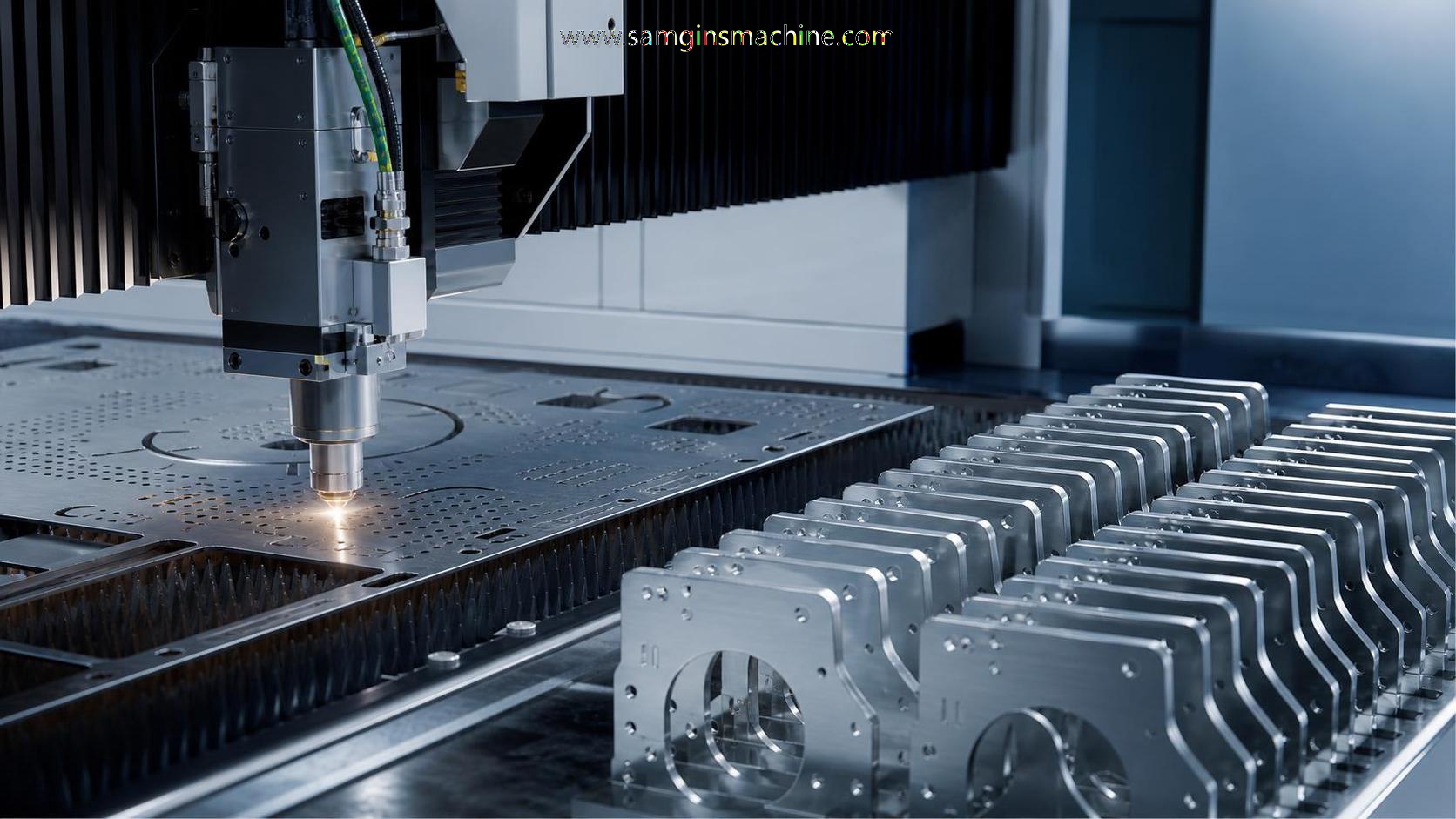
Precision Fiber Laser Cutting Machine: What Tolerance and Repeatability Matter Most?
For project managers, a precision fiber laser cutting machine is never judged by speed alone.
Tolerance and repeatability decide whether parts fit, weld, bend, and assemble without delay.
They also shape scrap rates, inspection pressure, and delivery confidence.
That is why comparing one precision fiber laser cutting machine against another requires more than reading a brochure table.
You need to know which accuracy values matter, how they are tested, and where they affect production most.
Tolerance and Repeatability Are Related, But Not the Same
Tolerance describes how close a finished feature is to the target dimension.
Repeatability describes how consistently the machine returns to the same result over many cycles.
A precision fiber laser cutting machine may hit one perfect part, yet still drift on the next fifty parts.
That difference matters in production far more than in a demo cut.
In practical terms, tolerance protects part quality.
Repeatability protects process stability.
When both are controlled well, downstream fitting and welding become more predictable.
When either one is weak, hidden costs show up fast.
Which Accuracy Indicators Matter Most?
Not every published number has equal value.
For a precision fiber laser cutting machine, several indicators deserve close attention.
1. Positioning Accuracy
This shows how accurately the cutting head reaches a commanded coordinate.
It directly affects hole spacing, slot location, edge offsets, and overall part geometry.
For parts that must align with fixtures or bolt patterns, this is critical.
2. Repeat Positioning Accuracy
This is often the more important metric for daily production.
It shows whether the machine returns to the same point again and again.
If repeatability is weak, part variation grows, even when nominal tolerance looks acceptable.
3. Contour Accuracy
Straight lines are easy.
Arcs, corners, small radii, and nested contours reveal the real capability of a precision fiber laser cutting machine.
Poor contour control causes overburn, corner rounding, taper variation, and edge inconsistency.
4. Kerf Stability
Kerf width is not always listed, but it matters.
Stable kerf supports dimensional control across different materials and thicknesses.
Unstable kerf creates fitting errors, especially on small features and interlocking parts.
5. Thermal Deformation Control
Even an advanced precision fiber laser cutting machine can lose real-world accuracy if heat input is poorly managed.
Thin sheet distortion, edge warping, and micro-movement during cutting all change the final result.
What Numbers Should You Ask For?
A supplier may present excellent sample pieces without explaining the test conditions.
That is where many decisions go wrong.
Ask for measurable data under defined standards, material grades, thickness ranges, and cutting speeds.
- Positioning accuracy and repeat positioning accuracy
- Tolerance results by material and thickness
- Corner accuracy on small geometries
- Hole diameter consistency at different batch sizes
- Edge roughness and dross level
- Accuracy after thermal stabilization, not only at startup
A good precision fiber laser cutting machine should show stable values across long shifts, not only in ideal laboratory conditions.
Why Repeatability Often Matters More Than Peak Tolerance
This point is easy to miss during procurement.
A machine with slightly less impressive headline tolerance can still outperform another machine if repeatability is stronger.
Why?
Because production problems rarely come from one part.
They come from variation across hundreds or thousands of parts.
High repeatability reduces inspection burden.
It supports tighter nesting confidence.
It improves robotic welding consistency.
It also lowers rework on assemblies that depend on hole-to-hole alignment.
In other words, repeatability is what turns precision into usable production capacity.
Factors That Influence Real Cutting Accuracy
Accuracy is not created by the laser source alone.
A precision fiber laser cutting machine performs as a system.
Machine Structure
Frame rigidity, gantry stability, and vibration control all affect motion precision.
A weak structure cannot maintain tolerance under fast acceleration.
Drive and Feedback System
Servo quality, encoder resolution, and control algorithms shape positioning and repeatability.
Backlash, lag, and calibration drift quickly show up in finished parts.
Cutting Head and Height Control
Nozzle condition, autofocus response, and capacitive sensing influence edge quality and dimensional stability.
This becomes more sensitive on reflective materials and thin sections.
Process Database
A machine may be mechanically strong but still underperform if cut parameters are poorly tuned.
Piercing logic, lead-ins, gas pressure, and power curves all matter.
Material Variation
Surface condition, flatness, coating, and chemistry variation affect cutting consistency.
That is why claimed tolerance should always be linked to actual material conditions.
How to Evaluate a Supplier More Effectively
From a project perspective, the machine specification is only part of the decision.
The supplier’s engineering discipline matters just as much.
Wuxi Samgins International Trade Co.,Ltd has focused on mechanical equipment since 2012.
Its product portfolio covers laser cutting machines, CNC machine tools, welding equipment, robots, and plate processing systems.
Production and design are organized under ISO9001 quality system requirements and EU CE standards.
That background matters when accuracy, compliance, and export reliability all affect the project outcome.
When reviewing a precision fiber laser cutting machine supplier, ask these questions:
- How is tolerance verified before shipment?
- What repeatability data exists after continuous operation?
- Can the supplier test your own drawings and materials?
- What calibration and maintenance routines are required?
- How are installation, operator training, and after-sales response handled?
Accuracy Does Not End at Laser Cutting
In many fabrication lines, precision requirements continue into beveling, milling, and weld preparation.
That is why process planning should consider adjacent equipment, not only the laser cell.
For example, in container manufacturing, shipbuilding, and special vehicle production, bevel consistency can affect fit-up as much as cut tolerance.
A related option is the CNC Square & Pipe Beveling Machine.
It processes square, rectangular, and round tubes without accessory changes between different sizes and types.
Its adjustable speed reaches 0 to 1500 mm/min, while one-pass beveling helps avoid secondary grinding.
Surface finish can reach Ra3.2 to 6.3, and some models support micron-level milling accuracy.
For workshops handling carbon steel, stainless steel, or aluminum plates, that kind of process continuity reduces variability between cutting and welding stages.
Common Procurement Mistakes
Several buying mistakes appear again and again.
- Focusing only on maximum power, while ignoring motion accuracy
- Accepting generic tolerance claims without material-specific proof
- Comparing sample parts with different thicknesses and geometries
- Ignoring thermal drift during long production shifts
- Underestimating maintenance quality and operator training
A precision fiber laser cutting machine should be selected for stable output over time, not just attractive demo performance.
What Matters Most in the End
If the goal is dependable production, repeatability usually deserves first attention.
Tolerance still matters, especially for critical assemblies, but repeatability determines whether that tolerance is sustainable.
The best precision fiber laser cutting machine is the one that holds geometry, controls heat, and produces the same result across every shift.
When evaluating options, ask for test data, inspect real parts, and connect machine accuracy to the full production chain.
That approach leads to fewer surprises, lower rework, and a more defensible equipment decision.
search
Products Navigation
Send Us A Message