




Teach-Free Intelligent Welding Robots vs Manual Programming: When Do They Pay Off?
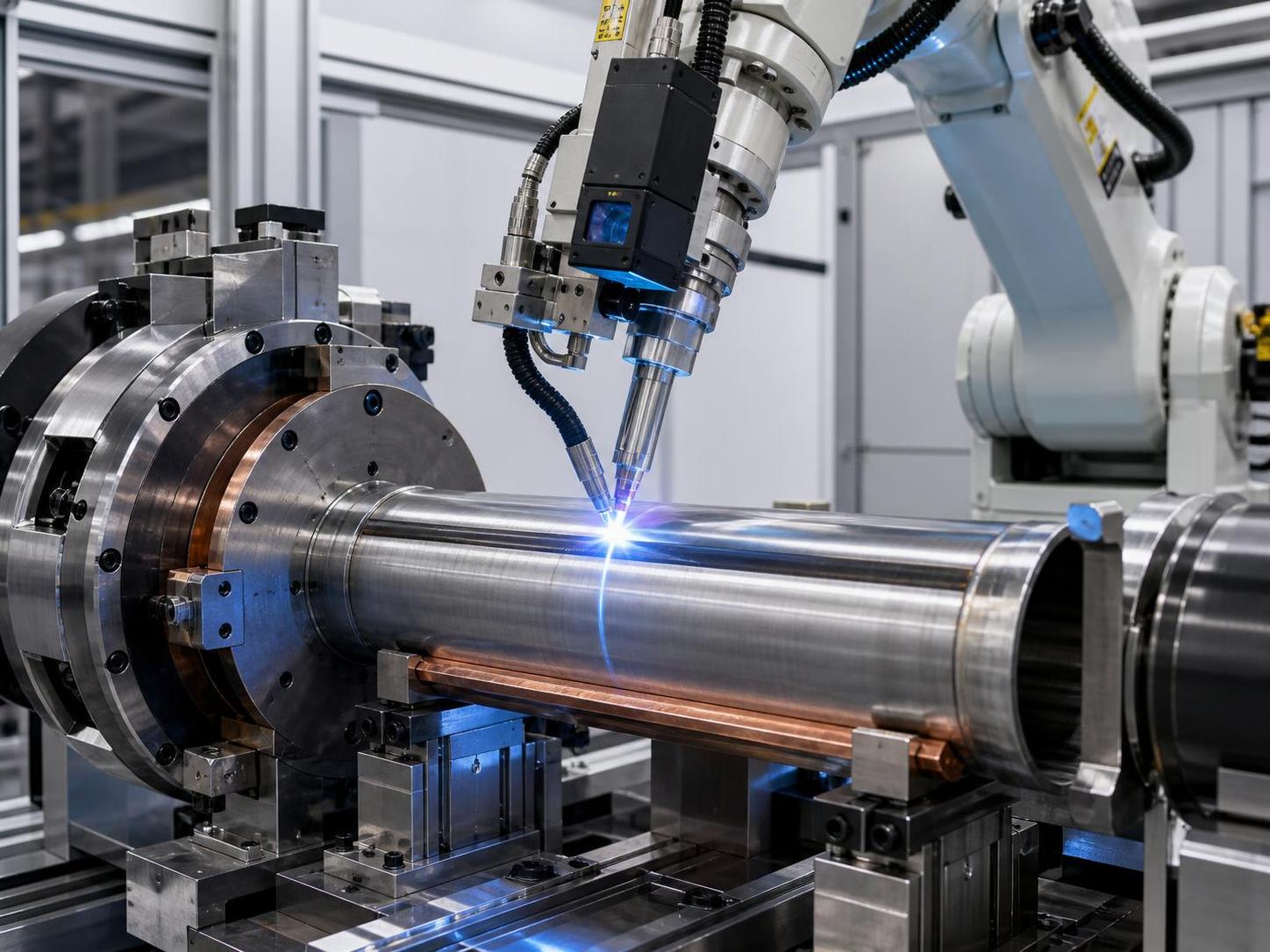
For technical evaluators, the choice between a Teach-free Intelligent Welding Robot and a conventionally programmed robot is rarely settled by the purchase quotation alone. The more consequential questions are usually hidden in the production reality: How many part variants arrive each week? Who will create and maintain robot programs? How often do fixtures change? What happens when a welder is unavailable, a seam shifts slightly, or a low-volume order suddenly becomes urgent?
Manual robot programming remains a sound solution for many stable, repeatable welding cells. Yet it can become an expensive bottleneck when product mix rises, batch sizes fall, or programming resources are scarce. Teach-free welding technology is designed to reduce that bottleneck by using sensing, vision, path recognition, adaptive control, or simplified human-machine interaction to establish welding paths with less conventional point-by-point teaching.
The right decision is therefore not “intelligent versus traditional.” It is a fit-for-process decision: determine where flexibility creates enough operational value to justify the technology, and where a well-engineered fixed program will remain the more economical choice.
Start with the cost of change, not the cost of the robot
In a highly repetitive production line, a manually programmed welding robot can run for months with only minor parameter adjustments. The original programming effort is spread across a high number of identical components. This is the environment in which traditional automation is at its best: predictable geometry, consistent fixturing, stable joint access, and sufficient volume to absorb engineering time.
The equation changes when the plant handles frequent product revisions, custom fabrications, multiple diameters, or short production lots. A new program may require part measurement, fixture confirmation, offline programming or pendant teaching, trial welds, parameter refinement, and quality approval. None of these tasks is unreasonable on its own. Together, however, they can turn a robot into an asset that waits for engineering support rather than producing welds.
A Teach-free Intelligent Welding Robot is most relevant when this “cost of change” is substantial. Instead of relying entirely on a technician to define every path, the system may identify the joint through sensors or vision, guide an operator through a simplified setup sequence, compensate for modest part-position variation, or generate a path from detected geometry. The exact capability varies by supplier and configuration, so evaluators should examine the practical workflow rather than assume that “teach-free” means no preparation at all.
In most real applications, fixtures, torch access, joint design, weld procedure qualification, and safety planning still matter. Teach-free operation reduces programming dependence; it does not remove welding engineering from the process.
Where manually programmed robots still make excellent economic sense
There is no advantage in replacing a robust, proven programming approach simply because a newer interface appears more advanced. Manual or offline programming is often the rational option in several conditions:
- Long-running, high-volume products: One program supports a large number of parts, making initial setup time comparatively small.
- Highly controlled fixtures: Parts arrive at repeatable locations and orientations with little dimensional spread.
- Complex but fixed weld paths: The effort required to program a challenging path is justified because the path rarely changes.
- In-house robot programming capability: Experienced technicians are available across shifts and can maintain programs efficiently.
- Qualified processes with narrow tolerances: A locked and validated program may be preferred where any adaptive behavior must be rigorously controlled and documented.
For these operations, the strongest return often comes from better fixtures, improved torch cleaning, wire feeding reliability, seam tracking where needed, and disciplined preventive maintenance—not necessarily from a teach-free system.
Technical teams should also be cautious about treating manual programming as inherently slow. With sound cell design, reusable program templates, external axes configured properly, and trained personnel, conventional robotic welding can be extremely productive. The real weakness is not programming itself; it is the mismatch between a rigid programming process and a volatile production environment.
The production patterns that favor teach-free welding
Teach-free technology begins to earn its place when setup time interrupts productive welding often enough to affect delivery, labor allocation, or throughput. The following patterns are strong indicators.
High-mix fabrication with recurring but non-identical parts
Job shops and equipment manufacturers may process families of tanks, frames, housings, ducts, pipe sections, or fabricated assemblies that share a process but differ in size or seam location. A traditional robot can weld them, but every variation may call for program edits. If operators spend a meaningful portion of the week waiting for a programmer or repeatedly teaching similar seams, a teach-free approach can reduce friction.
Short batches and frequent changeovers
When batch size is small, even a modest programming cycle can consume a large share of the job’s total time. A system that recognizes the workpiece or guides faster path creation can improve the economics of automation for parts that would otherwise remain manual.
Variable fit-up and placement
Fabricated components are not always presented with the consistency of precision-machined parts. Thermal distortion, rolling tolerances, tack-weld variation, and fixture wear can move a seam away from its nominal position. Seam finding and adaptive features may protect welding consistency, provided the variation stays within the system’s sensing range and the joint remains weldable.
Limited access to specialist programmers
Many manufacturers have capable welders and production supervisors but few robotic programming experts. If every new part depends on a single specialist, automation availability can become fragile. Simplified programming or teach-free path generation can distribute routine setup work more effectively—although final authority over process settings should remain with trained personnel.
A practical comparison: what evaluators should measure
ROI is usually decided by hours recovered
A meaningful payback assessment should separate welding arc time from all non-arc activities. Focusing only on deposition rate can hide the value of reduced setup and changeover. For a comparison, map the current process across an entire part family:
- Time to create or edit a welding program;
- Time for first-part positioning, touch-up, and trial welding;
- Number of jobs that require engineering intervention;
- Changeover time between variants;
- Manual welding hours retained because robotic setup is not economical;
- Rework associated with seam location variation, distortion, or inconsistent travel conditions;
- Downtime caused by unavailable operators, programmers, or fixture adjustments.
Then compare those costs with the full cost of the proposed solution: robot and power source, sensing hardware, safety enclosure, positioners, fixtures, software, installation, commissioning, training, maintenance, and validation. The comparison must also account for throughput limitations outside the robot cell. If material handling, tack welding, inspection, or downstream grinding is the real constraint, a faster setup method alone may not produce the expected financial result.
A useful way to frame the decision is to ask: How many additional productive welding hours will this system create each month, and how dependable is that estimate? The answer should be based on actual job history rather than an idealized cycle-time demonstration.
Do not confuse “teach-free” with “fixture-free”
This is one of the most common evaluation mistakes. Intelligent path detection can reduce the need for precise robot teaching, but it does not automatically compensate for every upstream inconsistency. Excessive gaps, contamination, incorrect tack welds, unstable clamping, inaccessible joints, and large shape deviations remain process problems.
In fact, a teach-free cell may reveal fixture weaknesses that manual welding had quietly absorbed. A skilled welder can visually interpret a gap or adjust torch angle instinctively. An automated system needs defined boundaries: acceptable workpiece variation, detectable seam conditions, reachable weld orientations, and approved welding parameters for each joint type.
Before specifying a system, define the part presentation standard. Measure actual dimensional variation, not just drawing tolerances. Review the worst acceptable workpiece, not only the ideal sample. Confirm whether surface scale, coatings, reflective materials, or joint contamination could affect sensing. These details determine whether intelligence will simplify production or introduce another layer of uncertainty.
Consider dedicated seam automation before forcing a robot into every task
Not every welding challenge requires a multi-axis robot. Long, repetitive straight seams on cylindrical or formed workpieces may be better served by dedicated automation with purpose-built clamping and controlled travel. This is particularly relevant in pipeline, automotive component, petrochemical, and solar water-heater manufacturing, where longitudinal seams can be a dominant operation.
For example, a Longitudinal seam welding machine can provide a more direct solution where the workpiece geometry is suited to a dedicated seam process. Available configurations cover welding lengths up to 3000 mm, with specified workpiece diameters from smaller minimum diameters through a maximum diameter of 750 mm. Pneumatic key-type clamping, adjustable pressing positions, a copper backing arrangement with back-gas protection, and controlled torch travel address issues that a general-purpose robot cell might solve less efficiently.
Such equipment is not a substitute for teach-free robotics when assemblies have multiple changing weld locations or complex three-dimensional paths. It is a reminder that the best automation strategy starts with the joint, the part family, and the handling method—not with a preference for a particular machine category.
Questions to ask during a supplier demonstration
A demonstration should look like production, not a showroom exercise. Provide representative parts with normal tolerances, including samples that reflect realistic fit-up variation. Ask the supplier to show the complete workflow from loading through weld completion, rather than only the final welding pass.
- How is a new part introduced: scanning, manual guidance, CAD import, template selection, or a combination?
- Which joint types, materials, surface conditions, and thickness ranges are supported by the proposed sensing method?
- What variation in seam location, gap, and part placement can be detected or compensated for?
- When sensing fails, what does the operator see, and how quickly can recovery occur?
- Which tasks can a trained production operator perform, and which require a robotic or welding specialist?
- How are weld parameters protected, revised, documented, and linked to quality requirements?
- What fixture accuracy remains necessary after the teach-free function is enabled?
- Can the cell be expanded with positioners, seam tracking, fume extraction, or additional part families later?
It is also sensible to evaluate service readiness. A flexible cell can only remain flexible if replacement parts, remote support, documentation, and local commissioning capability are considered early. Suppliers with experience across welding equipment, CNC machinery, cutting systems, and fabrication lines can often help evaluators see the wider material-flow and fixturing picture, rather than treating the robot as an isolated purchase.
The decision rule: buy intelligence where variability is expensive
Choose manual programming when repeatability is high, product life is long, fixture control is strong, and programming capacity is readily available. In that setting, conventional automation is not outdated—it is disciplined, stable manufacturing.
Consider a Teach-free Intelligent Welding Robot when frequent changes, variable part placement, small batches, or limited programming resources prevent conventional robotic welding from reaching useful utilization. Its value is not simply faster programming. The larger benefit is often the ability to automate more of the production mix without turning every new order into a programming project.
For technical evaluators, the most credible business case comes from a clear boundary: identify the part families where manual welding or repeated robot teaching is consuming time, verify that their variation is detectable and controllable, and test the proposed workflow on representative parts. When those conditions are met, teach-free welding can become a practical route to more responsive, less labor-dependent fabrication rather than another promising feature left unused on the specification sheet.
search
Products Navigation
Send Us A Message