




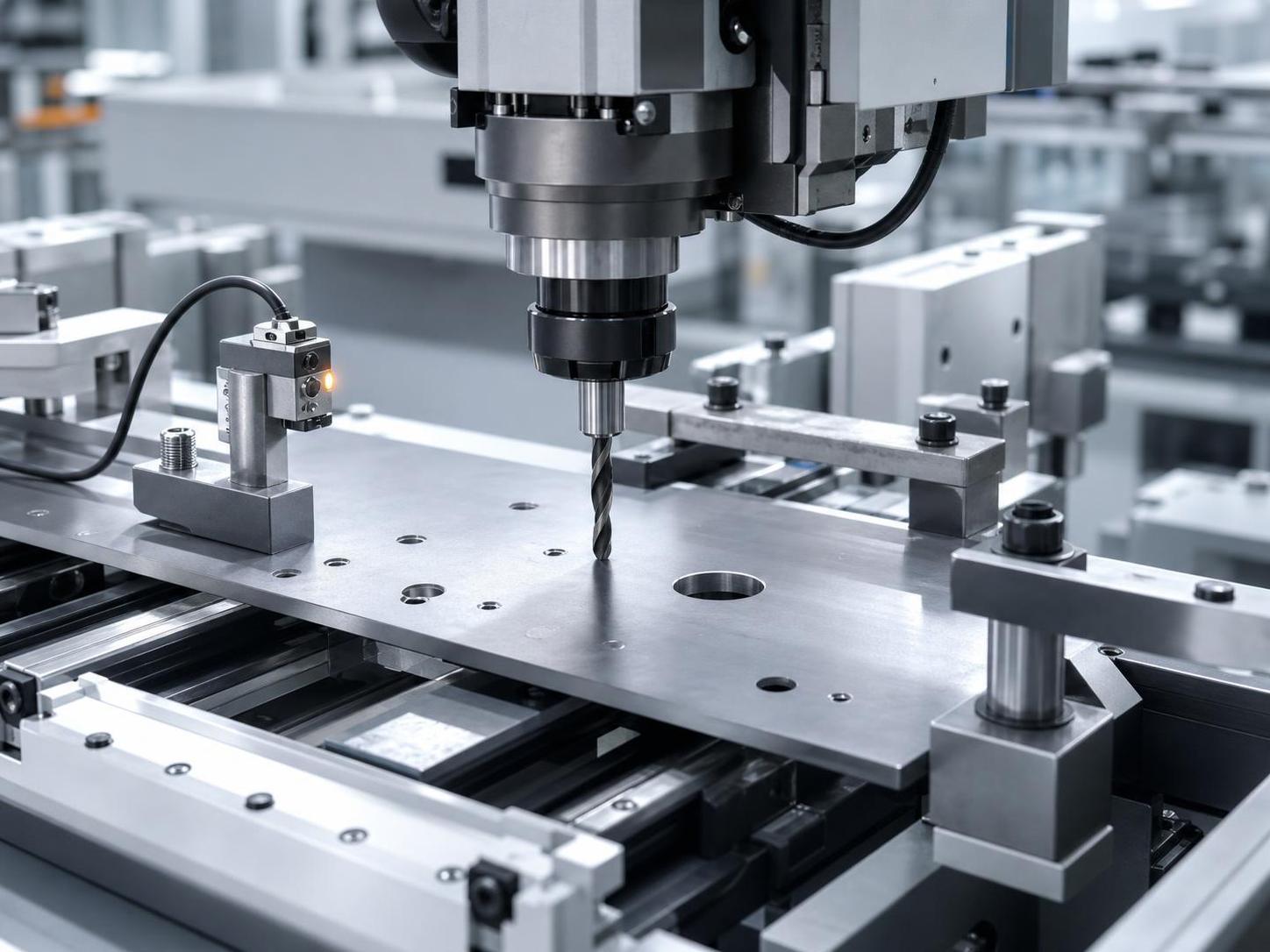
What Does a PLC Plate Drilling Machine Control in Automated Plate Processing?
A common point of confusion in automated fabrication is that many people assume a PLC plate drilling machine only starts and stops the spindle. In practice, when hole positions drift, cycle times become inconsistent, or upstream and downstream equipment fail to stay coordinated, the issue is often tied to what the control system is managing behind the scenes rather than to the drill head alone.
If you are comparing equipment, checking a technical specification, or trying to understand why one line runs more smoothly than another, it helps to break the system down by control responsibilities. The real value of a PLC plate drilling machine is not just drilling holes, but controlling motion logic, material handling, sequence timing, alarm response, and process stability across the entire plate processing workflow.
Why this question matters in real production
In automated plate processing, the drilling stage sits in the middle of several linked tasks. The plate has to be fed into position, clamped correctly, referenced against a coordinate system, drilled to the required pattern, and then released for the next operation. If any of those steps are handled inconsistently, the final problem may show up as poor hole accuracy, burr issues, wasted time during rework, or a production bottleneck that is difficult to trace.
That is why asking what a PLC plate drilling machine controls is more than a basic technical question. It is often the starting point for understanding whether the equipment can maintain repeatability, whether it can communicate with other machines in the line, and whether the operator has enough control over process adjustments without relying on trial and error.
Many buyers focus first on spindle power, drilling diameter, or frame size. Those parameters matter, but they do not explain how the machine behaves in daily operation. The control system determines how commands are executed, how sensors are interpreted, how faults are handled, and how one action is linked to the next. In practical terms, that is where a large share of production consistency comes from.
What a PLC plate drilling machine usually controls
The simplest way to understand a PLC plate drilling machine is to treat it as the logic center of the drilling process. It coordinates multiple machine functions so they operate in the correct order, at the correct time, and within the correct limits. Although exact configurations vary, most systems control several core areas.
1. Plate positioning and reference logic
Before drilling begins, the plate must be moved into the correct position. The PLC typically receives signals from limit switches, encoders, or position sensors and uses those inputs to manage feed movement and establish the work reference. This matters because accurate hole placement depends not only on spindle precision, but also on whether the material is aligned and confirmed before drilling starts.
2. Clamping and material holding sequence
A drilling cycle is only stable if the plate is held securely. The PLC controls the timing of clamps, pressure confirmation, and release sequence. If the machine allows drilling before the clamping state is confirmed, vibration or slight movement can affect hole quality. Good control logic prevents that by making each step conditional on the previous one being complete.
3. Spindle start, stop, and drilling sequence
The PLC governs when the spindle starts, when the head moves to the next point, and how the machine transitions between hole locations. In some systems, it also works alongside CNC motion controls for path execution and sequence coordination. This is one reason the control layer should never be reduced to a simple on-off function. It is managing process order and protecting the machine from unsafe or inefficient transitions.
4. Feed speed and drilling cycle timing
Feed speed affects tool life, surface finish, and production efficiency. The PLC typically helps manage programmed timing, cycle initiation, delay intervals, and operational interlocks. Depending on machine design, the operator may adjust parameters through the interface, while the PLC ensures that the change stays within the logic of the overall cycle.
5. Alarm monitoring and fault protection
One of the most useful control responsibilities is fault handling. Overtravel conditions, clamping failures, sensor mismatch, overload conditions, lubrication warnings, or emergency stop events need a fast and predictable response. The PLC monitors those inputs and triggers machine stop logic, alarm display, or reset conditions. Without that layer, diagnosing faults becomes slower and machine safety becomes harder to maintain.
6. Communication with other equipment
In an automated line, the drilling machine rarely works alone. It may receive material from conveyors, rollers, loaders, or preceding fabrication stations. It may also pass processed plates to marking, cutting, or sorting stages. The PLC often handles inter-machine signals such as ready, start, in-position, completed cycle, and fault status. That communication is what allows the line to operate as a connected process instead of a series of isolated machines.
Common misunderstandings that lead to poor equipment evaluation
A frequent misunderstanding is to assume that drilling quality depends mainly on the mechanical drilling unit. Mechanical rigidity is important, but it is only part of the picture. If control timing is unstable or material positioning logic is weak, even a solid drilling head can produce inconsistent output.
Another mistake is to look at automation as a single feature rather than a chain of linked controls. For example, some users ask whether the machine has automatic feeding, but do not ask how feeding confirmation interacts with clamping, how drilling is locked until the plate reaches position, or how the machine handles an interrupted sequence. Those details directly affect whether the equipment behaves predictably in daily use.
There is also a tendency to separate drilling equipment from the rest of the fabrication line too strictly. In real workshops, process quality depends on transitions between machines. A line that includes drilling, welding, straightening, or cutting will only stay efficient if each station uses reliable control logic and responds well to upstream variation. In that context, it is reasonable to compare drilling control philosophy with other line equipment, including systems such as the HYJ-800 H beam straightening machine, where control of motor direction, continuous work-piece transport, and fine adjustment also affects downstream dimensional consistency.
How to judge whether the control system is actually suitable
If you are reviewing technical information, it helps to move from broad claims to practical checkpoints. Instead of asking only whether the machine uses PLC control, ask what the PLC is responsible for and how that responsibility appears in operation.
- Check the sequencing logic: Confirm whether positioning, clamping, drilling, and release follow a locked sequence with sensor confirmation at each stage.
- Review motion coordination: Understand whether feed movement, hole positioning, and spindle timing are integrated smoothly or require frequent manual intervention.
- Look at alarm structure: A useful system should distinguish between minor warnings, operational interruptions, and machine protection faults.
- Ask about parameter adjustment: Operators should be able to set or modify process values clearly, without bypassing machine logic.
- Assess line compatibility: If the machine is part of a broader fabrication setup, check how it exchanges status signals with conveyors, feeders, or adjacent stations.
- Observe restart behavior: After a pause or fault, the machine should support orderly recovery rather than forcing the entire sequence to be guessed or repeated manually.
These points sound basic, but they are often where hidden differences between machines start to appear. Two machines may look similar in brochure format, yet one offers better process control simply because the logic is more complete and easier to operate under real production conditions.
What the PLC does not control by itself
It is also useful to be clear about the limits of the control system. A PLC plate drilling machine can manage process logic, but it does not automatically solve every production issue. Tool wear, poor fixture condition, low machine rigidity, plate surface contamination, and incorrect program input can still create defects even when the control system is working normally.
This distinction matters because troubleshooting can go in the wrong direction if everything is blamed on the controller. If holes are oversized, the cause may be mechanical wear or tool condition. If cycle timing is inconsistent, the issue may be a sensor delay, feed instability, or a mismatch between software settings and actual material behavior. The control system is central, but it operates within a larger mechanical and operational environment.
A practical way to troubleshoot control-related drilling problems
When a drilling line behaves inconsistently, many teams start with the visible symptom. That is understandable, but it usually helps to trace the sequence instead. The question should be: at which step does the expected machine state fail to match the actual state?
- Start with the symptom: Identify whether the main issue is position error, unstable cycle time, missed drilling, repeated alarms, or poor coordination with adjacent equipment.
- Check input confirmation: Verify whether sensors for plate presence, clamping status, position arrival, and safety conditions are all feeding correct signals.
- Review the execution sequence: Confirm that drilling is not starting before material stabilization or before the in-position signal is fully registered.
- Examine operator settings: Compare feed, timing, and process parameters with the material and drilling requirement being used.
- Inspect communication points: In linked lines, make sure the machine is not waiting on a handshake signal from upstream or downstream equipment.
- Separate logic issues from mechanical issues: If the PLC sequence is correct but the result remains poor, inspect clamping force, tooling, guides, and motion components.
This step-by-step approach is useful because it keeps troubleshooting grounded in the actual process. It avoids broad assumptions and makes it easier to decide whether the next action should be an electrical check, a control adjustment, or a mechanical inspection.
Why coordinated control matters across a fabrication line
Automated plate processing is usually part of a broader manufacturing flow rather than an isolated operation. Plates may later be welded, milled, assembled, or combined into structural sections. For that reason, drilling accuracy is not the only concern. Consistent timing, repeatable positioning, and stable material handling also affect what happens next.
That broader view is one reason many manufacturers pay attention to control behavior across different types of equipment. In H-beam production lines, for example, straightening equipment also depends on disciplined control of transport and motion direction. A machine such as the HYJ-800 model is designed for correcting flange distortion and side bending after welding, with continuous work-piece transport and controlled forward and reverse motor action. When machines in different stages share that kind of control discipline, the entire line is easier to coordinate and less dependent on operator guesswork.
From a buyer's perspective, this means the right question is not only whether a machine can perform its individual task, but whether its control logic supports the consistency of the whole production route.
Frequently Asked Questions
Does a PLC plate drilling machine control hole accuracy directly?
It helps control the conditions that support accuracy, such as plate positioning, clamping confirmation, motion sequence, and timing. Actual hole quality still depends on mechanical condition, tooling, and proper programming.
Is PLC control the same as CNC control?
No. They often work together, but they are not the same thing. CNC usually handles programmed motion paths and coordinate execution, while the PLC manages machine logic, sequence control, interlocks, signal processing, and fault response.
Why does one drilling machine feel easier to operate than another?
In many cases, the difference comes from how clearly the control logic is structured. Better alarm handling, more logical sequencing, and clearer parameter access reduce confusion and shorten adjustment time.
Can a good PLC system reduce downtime?
It can help by detecting abnormal conditions early, preventing incorrect sequence execution, and making faults easier to identify. It does not eliminate downtime by itself, but it supports faster and more consistent recovery.
What should I ask a supplier when evaluating this type of machine?
Ask what the PLC controls in detail, how alarms are structured, how the machine confirms plate position and clamping, how it communicates with other equipment, and how operators modify process parameters during routine use.
Conclusion
A PLC plate drilling machine controls much more than spindle activation. It is responsible for the process logic that keeps positioning, clamping, drilling sequence, timing, alarms, and equipment coordination working together in a stable way. For anyone studying automated plate processing from a technical or purchasing angle, that is the layer worth understanding first.
When evaluating equipment, focus less on broad automation claims and more on what the machine actually monitors, confirms, and sequences. That approach usually gives a clearer picture of whether the system will fit the production standard, troubleshooting routine, and line integration needs you are working with.