




What Is a Handling Robot and Where Does It Deliver the Greatest Value?
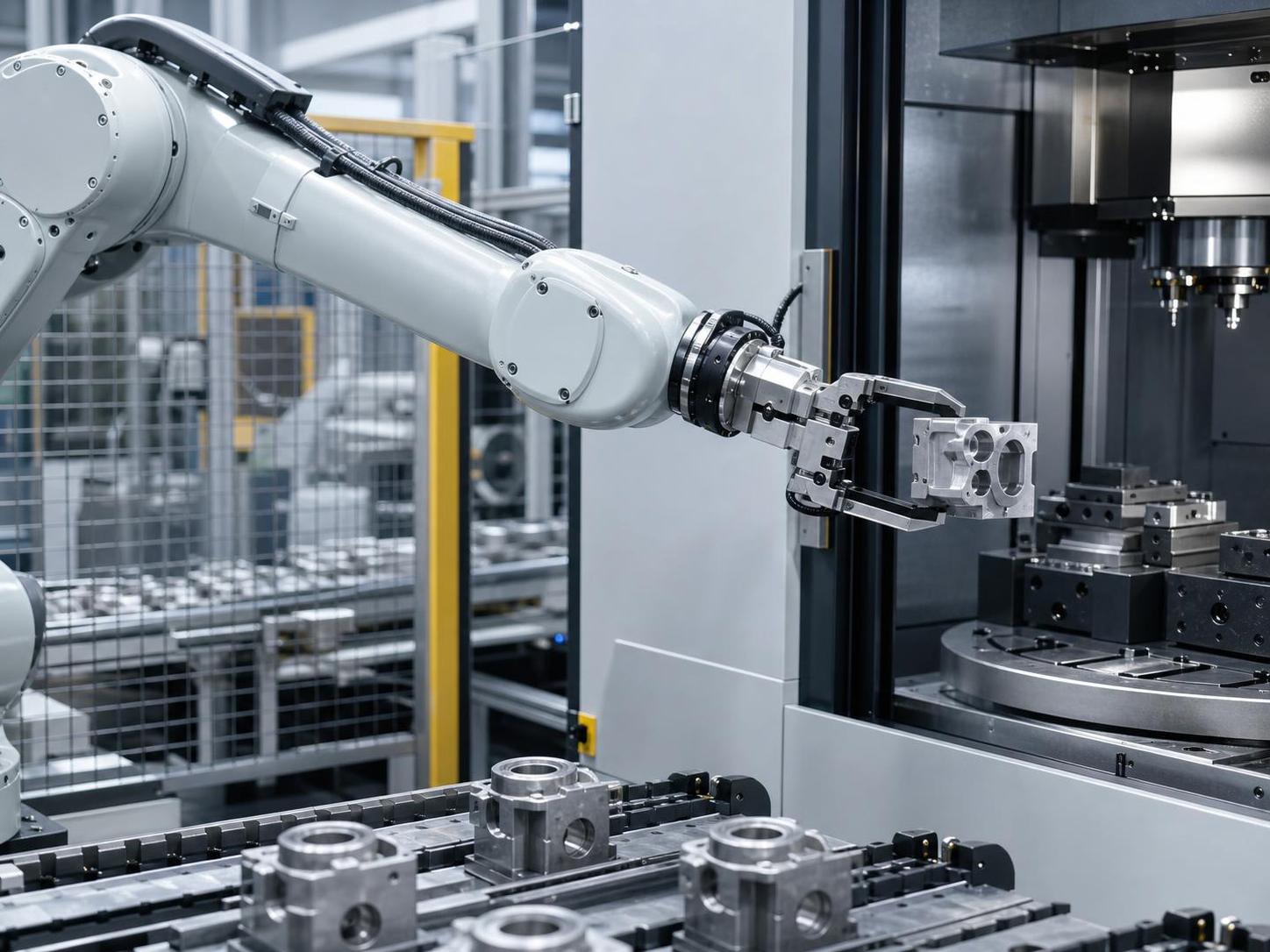
On a busy factory floor, materials are rarely where they need to be for long. A steel plate must move to a cutting station, a machined part needs unloading, a welded assembly has to be transferred for inspection, and finished components must be sorted for the next operation. Each movement may look simple in isolation. Across hundreds or thousands of cycles, however, these small tasks can become a major source of delays, injuries, inconsistent handling, and labor pressure.
A Handling Robot is built to automate these movements. It picks up, positions, loads, unloads, sorts, transfers, or stacks materials and workpieces between manufacturing steps. Depending on the application, it may use a gripper, vacuum cups, magnetic tooling, forks, clamps, or a custom end-of-arm tool. Its purpose is not merely to replace a person carrying a part; it is to make material flow more predictable and connected.
For companies exploring automation, the practical question is not whether robots are impressive. It is where a Handling Robot can make the clearest operational difference—and where conventional handling may still be the better choice.
What Does a Handling Robot Actually Do?
Handling robots are industrial robots assigned primarily to material movement rather than a process such as cutting, welding, or painting. In real production, though, the boundaries often overlap. A robot that loads a CNC machine may also orient the workpiece correctly. A welding cell may use robotic motion to place a component, reposition an assembly, and support the welding sequence. A palletizing robot may inspect a label or separate parts by production batch before stacking them.
The most common duties include:
- Loading raw material into CNC lathes, machining centers, presses, and cutting machines
- Unloading finished parts without waiting for an operator to return to the machine
- Transferring workpieces between welding, grinding, deburring, coating, and inspection stations
- Picking and placing parts from conveyors, pallets, fixtures, or bins
- Sorting products by size, model, quality status, or destination
- Stacking sheets, profiles, cartons, or finished assemblies for transport or storage
- Handling hot, sharp, heavy, awkward, or repetitive workpieces in safer conditions
Its performance depends on more than arm reach and payload. Cycle time, repeatability, required positioning accuracy, available floor space, gripper design, safety fencing, workpiece variation, and communication with surrounding equipment all matter. A robot that is technically capable of lifting a part may still be unsuitable if it cannot reliably find, grip, or release that part within the required production rhythm.
Why Material Movement Deserves More Attention Than It Usually Gets
Manufacturers often identify welding, machining, or laser cutting as the “main” production activities. Yet these processes spend surprising amounts of time waiting for material. A CNC machine can be idle while an operator unloads a completed component. A welding station may wait for a large fabricated section to be positioned. A downstream process may be ready, but parts arrive in uneven batches because manual transfer varies from shift to shift.
This is why a Handling Robot frequently creates value beyond its immediate station. It reduces gaps between operations and gives production planning a more dependable rhythm. Instead of treating loading and unloading as background work, the factory can design them as part of the process itself.
That change is particularly meaningful in metalworking environments, where parts can be heavy, oily, sharp-edged, hot after processing, or difficult to grasp consistently. Repetitive manual handling can place real strain on operators, while irregular positioning may lead to fixture damage, inaccurate processing, or avoidable rework.
Where a Handling Robot Delivers the Greatest Value
1. High-repeatability CNC machine tending
Machine tending is one of the most established applications for a Handling Robot. The robot presents a blank to a CNC lathe, milling machine, machining center, or grinding machine; it then removes the completed part and places it in a designated tray, conveyor, or pallet.
The value is strongest when parts have a stable geometry, cycles repeat frequently, and the machine is otherwise left waiting between jobs. In these conditions, automation can support more consistent spindle utilization and reduce the need for operators to spend their time on repetitive loading tasks. Operators can instead focus on setup, tool management, quality checks, and exceptions—the work that requires judgment.
Machine tending is not limited to small components. With appropriate payload capacity and tooling, robots can handle castings, fabricated brackets, shafts, plates, and other larger workpieces. The key is careful assessment of part orientation, gripping surfaces, chip contamination, and how the robot will handle parts that do not arrive in exactly the same position.
2. Welding and fabrication lines with large or long workpieces
In structural steel, sheet metal fabrication, and heavy equipment manufacturing, handling often becomes difficult because the workpiece is not compact or easy to access. Long beams, frames, panels, and fabricated assemblies may require repeated repositioning before welding can continue. The challenge is not just weight; it is reach, orientation, and keeping the work area safe while maintaining a workable pace.
Robotic welding systems can combine process automation with controlled workpiece movement. For example, a railway-mounted robot configuration extends the working range along a long production zone. This approach can be especially relevant for repetitive fabrication of elongated components where a fixed robot’s reach would be too limited.
One example is the 7 axis railway type welding robot, designed for zone-based welding with a servo-driven slide carriage. Its stated working capacity includes workpieces up to 12,000 mm in length, 1,200 mm in width, and 650 mm in height, with configurations that can be adapted for longer fabrication tasks. In this type of cell, material handling and welding planning are closely connected: a workpiece is hoisted onto the platform, weld information is selected from a 3D drawing, and the robot moves to the required welding zones. For very long assemblies, multiple robots may work by sections rather than forcing one unit to cover an impractical distance.
For buyers, this illustrates an important point: a Handling Robot does not always look like a stand-alone pick-and-place arm. In some production systems, its value comes from coordinated movement along a rail, fixture, positioner, or transfer platform.
3. Sheet metal transfer between processes
Sheet metal production involves many transitions: cutting, bending, rolling, leveling, deburring, edge processing, welding, and final inspection. Manual transfer is common, but sheets can be difficult to grip, vulnerable to scratching, and awkward to position accurately. A vacuum-based or magnetic handling system can move flat material with greater repeatability when the surface condition and material type are suitable.
The biggest opportunity often lies in avoiding bottlenecks between machines. For example, if a laser cutting machine produces nested parts faster than they can be separated and transferred, downstream bending or deburring may be starved of material. Automation does not have to solve every stage at once. Even a focused transfer cell between two high-volume operations can stabilize the line.
Care is needed with thin sheets, oily surfaces, perforated parts, and mixed material grades. Vacuum gripping may not be appropriate for every component; magnetic tools are limited to ferrous materials; mechanical clamps need dependable edges or gripping areas. Tooling selection should be based on real samples, not only CAD models.
4. Palletizing, depalletizing, and end-of-line movement
At the end of production, handling continues to influence quality and delivery performance. Components need to be arranged in a way that protects surfaces, supports traceability, and makes downstream transport practical. A robot can stack products in consistent patterns, separate different product references, and prepare pallets for dispatch or storage.
This application is attractive when manual palletizing involves repetitive lifting, unstable stack patterns, or multiple shift handovers. It can also improve the visibility of production output because each completed cycle is tied to a defined location, pallet count, or batch status.
Still, palletizing is not automatically a good fit when product dimensions change constantly, packaging is unstable, or production volume is too low to justify dedicated tooling. Flexible grippers and vision systems can accommodate variation, but they also add complexity that should be evaluated honestly.
The Value Is Usually Found in Consistency, Not Just Labor Reduction
It is tempting to judge a Handling Robot only by the number of manual tasks it removes. Labor availability is a real concern, especially for strenuous or repetitive jobs, but the wider value is often more compelling.
- More predictable cycle times: The robot follows the same movement sequence without fatigue or shift-to-shift variation.
- Improved safety: Workers spend less time near heavy loads, sharp edges, moving fixtures, welding areas, or hot workpieces.
- Better process continuity: Machines and production cells receive parts more consistently, reducing avoidable waiting.
- Repeatable positioning: Correct presentation of a part can support more stable machining, welding, inspection, or assembly.
- Useful production data: Robot cells can record cycles, alarms, downtime states, and operating conditions for later review.
- More meaningful use of skilled labor: Experienced operators can focus on setup, quality, maintenance coordination, and problem-solving rather than constant lifting and transfer.
Safety deserves particular attention. A properly engineered robotic cell includes risk assessment, guarding or protective devices, emergency stops, safe operating zones, and clear status indication. In larger automated equipment, visible alarm lights can help employees understand whether the system is running, paused, or in a fault condition. Safe automation is not simply a robot placed beside a machine; it is a coordinated workspace designed for people and equipment to operate together responsibly.
When Automation May Not Be the Immediate Answer
A Handling Robot is not a universal remedy for every production problem. Low-volume custom jobs with constantly changing workpieces may be better served by flexible manual handling, lifting aids, or simpler fixtures. If upstream quality is inconsistent, automating the transfer may merely move defective parts faster. Likewise, a robot cannot compensate for poor layout, unclear routing, or unstable work instructions.
Manufacturers should be cautious when the proposed cell relies on assumptions that have not been tested: “all parts will arrive in the same orientation,” “the surface will always be clean enough for vacuum gripping,” or “operators will never need to intervene.” Industrial reality is full of exceptions. Successful automation plans make room for them.
Questions to Ask Before Choosing a Handling Robot
Before comparing robot brands or requesting a quotation, map the current movement in detail. Record the part range, weight, dimensions, arrival position, handling frequency, process cycle time, and destination. Observe what experienced operators do when a part sticks, shifts, arrives damaged, or does not fit the fixture. Those small corrections often reveal the true engineering requirements.
It is also useful to ask whether the goal is standalone automation or an integrated production cell. A simple machine-tending robot may need only basic signals from a CNC machine. A more advanced line may require conveyors, positioners, safety interlocks, barcode tracking, vision guidance, and communication with manufacturing management systems.
For fabricated products, consider the future part mix as well as today’s workload. Rail-mounted and multi-axis systems may offer broader coverage for long workpieces, while modular grippers or configurable fixtures can make a cell more practical as product designs evolve. The right system is rarely the one with the longest list of features; it is the one that handles the actual production variation without creating unnecessary complexity.
A Practical Way to Identify the Best Starting Point
The best first handling automation project is often not the most ambitious one. Look for a repetitive task with a clear safety concern, a measurable delay, reasonably stable workpieces, and a process that already performs reliably. CNC loading, transfer of standardized fabricated parts, or end-of-line palletizing can provide a manageable starting point.
Once that cell is running consistently, the factory gains more than output capacity. It learns how to define robot-ready parts, organize fixtures, train operators, plan maintenance, and respond to faults. Those lessons make later applications—such as integrated welding and material transfer systems—far easier to evaluate.
Ultimately, a Handling Robot delivers its greatest value where movement is repetitive, physically demanding, time-sensitive, and closely tied to the performance of the next process. It turns material flow from a recurring interruption into a controlled part of production. For manufacturers working with CNC equipment, welding systems, cutting machines, and fabrication lines, that control can be the foundation for a safer and more dependable operation.
search
Products Navigation
Send Us A Message