




When to Use Longitudinal Seam (GTAW) Welding for Thin-Wall Fabrication
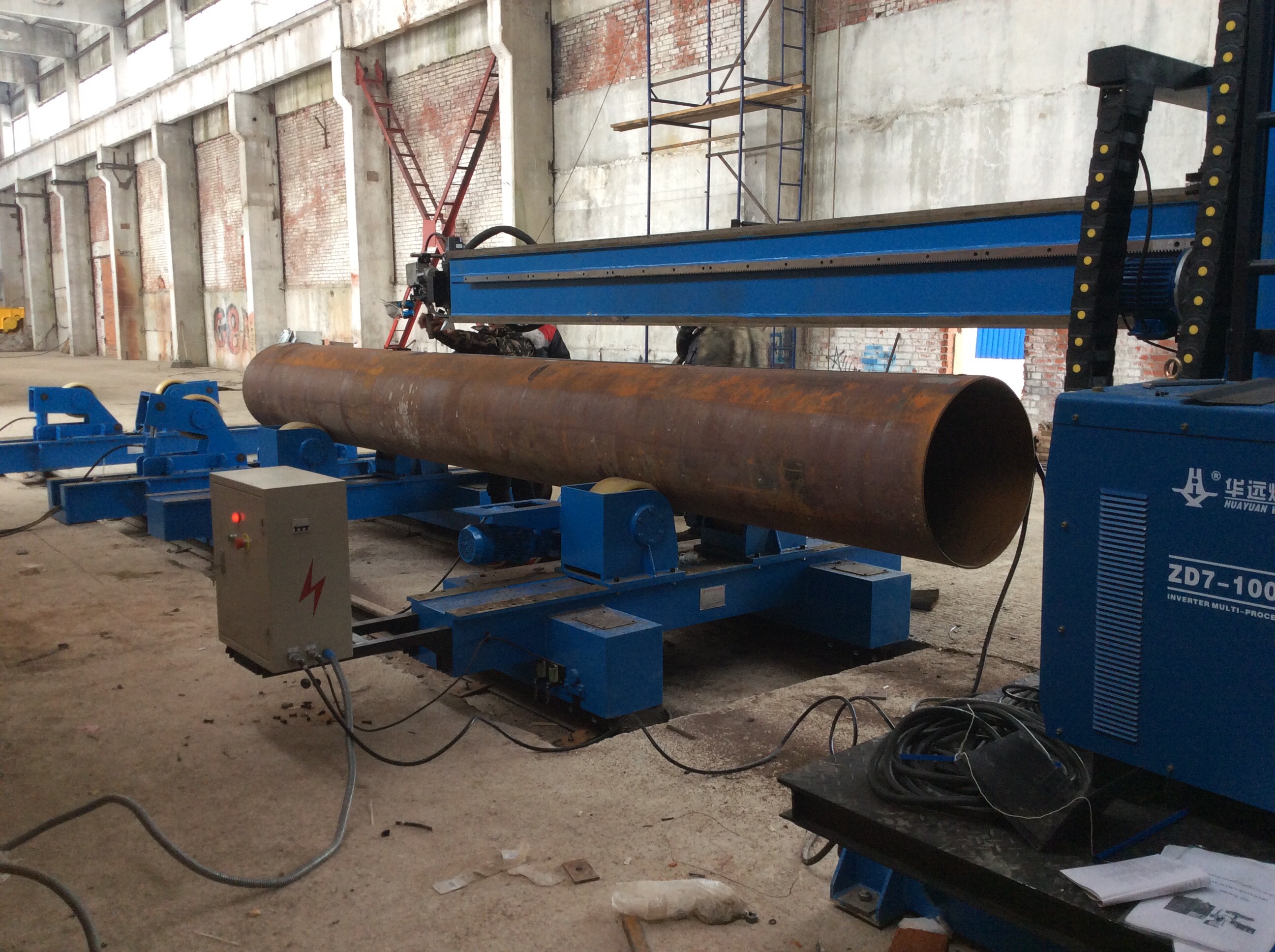
When Thin Wall Parts Need a Weld That Stays Straight
Longitudinal seam (GTAW) welding earns its place when the part is thin enough that heat control matters more than raw deposition rate. That usually means shells, tubes, ducts, sleeves, tanks, transition sections, and rolled components where the weld runs in a straight line along the length of the part and where post-weld correction is either expensive or unacceptable. In those jobs, the question is rarely whether the joint can be welded by another process. The real question is whether the finished geometry will still hold after welding, whether the inside of the seam will stay clean enough for service, and whether rework will erase any savings from using a faster process.
For project managers handling precision fabrication, choosing the right welding process can directly affect quality, speed, and cost. Longitudinal seam (GTAW) welding is often the preferred solution for thin-wall fabrication when clean seams, low distortion, and consistent accuracy are critical. Understanding when this method delivers the best value helps ensure reliable production results and better control over demanding manufacturing projects.
This is especially true in stainless steel and light-gauge carbon steel work. Once wall thickness drops to the point where edge collapse, burn-through, or visible waviness become common risks, process stability starts driving the decision. GTAW is slower than high-productivity methods, but it gives fabricators a narrower and more controllable heat input window. On longitudinal seams, where the part often has to remain round, straight, or dimensionally repeatable over a long distance, that control can be worth more than welding speed.
Where It Usually Makes Sense
The clearest fit is rolled thin-wall cylinders and cones that must seal well and stay visually clean. Food-related equipment, light process vessels, filter housings, architectural stainless components, and enclosures for instrumentation often fall into this range. In those applications, customers tend to care about three things at the same time: low distortion, minimal spatter, and a seam profile that does not create cleanup work inside the part. Longitudinal seam (GTAW) welding addresses all three better than most alternatives when joint preparation is controlled.
It also becomes a practical choice when the downstream process is unforgiving. If the welded shell will later be machined, polished, assembled with close-tolerance flanges, or fitted with internal components, a small amount of shrinkage in the wrong direction can create problems that are much larger than the weld itself. Shops with real thin-wall experience usually judge the process not by arc time alone but by total route time: fit-up, welding, straightening, grinding, leak testing, and final inspection. GTAW often wins on that full route when distortion control is a priority.
Another common trigger is cosmetic quality. A visible stainless shell in a clean industrial environment is not judged the same way as a structural member hidden in a frame. If the weld must look controlled without heavy dressing, GTAW offers a more predictable bead appearance, provided the fixture keeps the seam gap stable and the edges are properly prepared.
The Site Conditions That Matter More Than People Expect
Thin-wall longitudinal seams are less forgiving of shop variation than many buyers expect. The process works best when rolling accuracy is consistent, edge mismatch is limited, and the seam presentation to the torch does not wander. A good GTAW setup cannot compensate for poor shell forming indefinitely. If the part comes to the station with variable gap, uneven roundness, or spring-back that changes along the seam, productivity drops fast because the operator or the automation has to keep chasing the joint.
Backing and clamping also deserve more attention than they often get in early quotations. On very thin material, chill bars, copper backing, or dedicated seam fixtures can be the difference between a repeatable weld and a part that needs local repair. That is why experienced fabricators ask about more than material grade and thickness. They want to know seam length, tolerance on roundness, whether full penetration is required, whether the inside surface must stay smooth, and what leak standard the customer will use. The process decision sits on that context.
Shielding quality matters too. A process that looks stable on a short sample can become inconsistent on long seams if gas coverage is disturbed by draft, awkward part geometry, or poor purge practice. On stainless work, oxidation at the root can turn a nominally acceptable weld into a cleaning and passivation problem. In short runs this may look manageable. In production, it becomes a cost line.
When It Is the Wrong Tool
Not every long seam on a fabricated part should go through GTAW. Once thickness increases and distortion sensitivity becomes less severe, the process can be too slow to justify. If the part is structural, hidden from view, tolerant of moderate heat input, and headed for production volumes where throughput dominates, other processes may be more economical. That is one reason heavy beam and plate fabrication follows a different logic from thin-wall shell work.
A useful contrast is high-volume H-beam production. There, the priority is not a neat autogenous seam on light-gauge material but stable, fast joining of thicker sections with controlled deformation over long workpieces. In that environment, a dedicated line such as Horizontal H beam line is built around horizontal assembly, submerged arc welding, automated conveying, flipping, and correction in one continuous flow. With published working ranges such as H beam height 250-1500 mm, width 150-500 mm, web thickness 4-14 mm, flange thickness 5-20 mm, and welding speed 0.3-1.9 m/min on some models, it addresses a manufacturing problem that is fundamentally different from precision thin-wall seam control. The comparison is useful because it prevents a common mistake: assuming the cleanest process is always the best process. It is only the best one when the part and the risk profile demand it.
A Practical Way to Judge Suitability
Before deciding on longitudinal seam (GTAW) welding, a shop usually needs answers to a short set of questions:
That last point is easy to underestimate. In prototype or small-batch jobs, GTAW can be selected because it is flexible and trusted by skilled welders. In repetitive production, it becomes a process engineering decision. Once the seam tracking, clamping, and purge arrangement are stabilized, repeatability improves and the cost picture becomes clearer.
What Customers Often Misjudge
One common assumption is that thin-wall welding problems are mainly about operator skill. Skill matters, but recurring defects on longitudinal seams usually point back to preparation and restraint. Irregular slit edge quality, poor rolling consistency, or a fixture that does not support the seam uniformly will show up no matter who is behind the torch. Another misjudgment is treating all stainless jobs the same. A decorative outer shell, a low-pressure enclosure, and a component with strict internal cleanliness requirements do not carry the same acceptance criteria, even if the base material is similar.
There is also a budgeting issue. Some buyers compare process cost only at the welding station. Experienced manufacturers look further downstream. If a faster process leads to more straightening, more grinding, more discoloration, or more leak repair, the apparent savings can disappear. Companies that have spent years supplying machine tools, welding systems, cutting equipment, and integrated fabrication solutions into overseas markets tend to evaluate the process in that broader way, because exported equipment and fabricated assemblies are often judged not just on function but on finish consistency and dimensional reliability. That is where disciplined production planning under ISO9001-oriented quality systems becomes relevant: it supports repeatability, but it does not remove the need to match process choice to the part itself.
The Better Use of GTAW Is Usually Selective, Not Universal
The best shops rarely force longitudinal seam (GTAW) welding onto every seam in a project. They use it where the geometry is vulnerable, where appearance matters, where the inside condition matters, or where repair access will be poor later. On the same project, they may choose a different method for brackets, heavier attachments, or non-critical joints. That kind of mixed-process thinking is usually a sign of real fabrication experience rather than inconsistency.
If a project includes both thin-wall precision sections and heavier structural members, it is normal for the equipment strategy to split as well. A thin cylindrical enclosure may justify GTAW longitudinal seam control, while a structural assembly elsewhere in the same plant is better served by automated beam or plate welding equipment, including systems such as the Horizontal H beam line for light-duty, high-volume H-beam work. The process boundary should follow the fabrication risk, not habit.
When evaluating a new job, the most useful next step is usually not a generic process debate. It is a disciplined review of material thickness, seam length, fit-up tolerance, root condition requirements, distortion allowance, and downstream finishing. If those factors are tight, longitudinal seam GTAW is often the right answer. If they are not, the better decision may be to reserve GTAW for the parts that truly need it and let higher-productivity processes handle the rest.
search
Products Navigation
Send Us A Message