




Bolt Adjustable Welding Rotator vs Conventional Rotators: A Detailed Comparison
What Is A Bolt Adjustable Welding Rotator
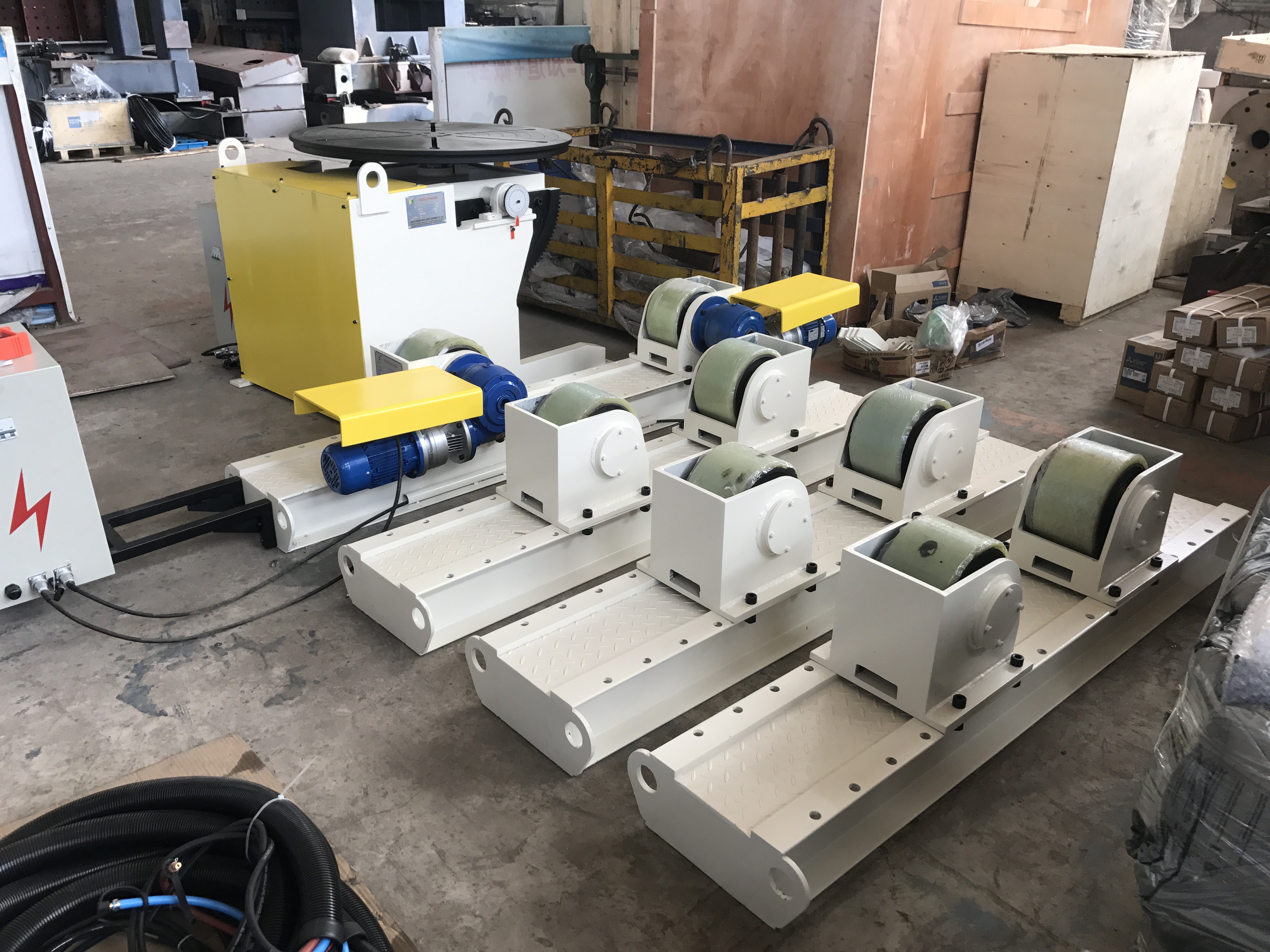
A Bolt adjustable welding rotator is a vessel turning device designed to support and rotate cylindrical or round-section workpieces during welding, fit-up, grinding, and inspection. Its defining feature is the wheel-center adjustment method: operators reposition wheel brackets through pre-engineered bolt holes rather than relying on a fully self-aligning frame or a continuously motorized width adjustment system.
In practical fabrication, this design is widely used for pressure vessels, storage tanks, pipe spools, wind tower sections, and structural tubular components. The objective is simple: maintain stable rotation, correct elevation, and predictable contact pressure so welders or automated welding heads can produce consistent circumferential seams with less manual handling.
Compared with conventional rotators, the bolt-adjustable type is often chosen when diameter ranges are known in advance and product families repeat over time. It balances flexibility and mechanical simplicity, making it suitable for workshops that need dependable capacity without the added complexity of more expensive adjustment mechanisms.
From an industry standpoint, buyers usually assess this equipment by load capacity, wheel material, speed control, frame rigidity, synchronization between drive and idler units, and conformity with plant safety practices. For export projects, compatibility with common fabrication codes and electrical requirements is also part of the evaluation process.
Technical Principle And Core Design Logic
The working principle of a Bolt adjustable welding rotator is based on friction-driven rotation. A powered wheel set transmits torque to the shell or pipe outer surface, while an idler stand provides balanced support. By changing the bolted wheel spacing, the machine adapts to different diameters and maintains a contact angle that helps prevent slipping, ovality stress concentration, or unstable rolling.
The bolt adjustment method matters because wheel geometry directly affects rotation quality. If wheel spacing is too narrow or too wide for the workpiece, the shell can wander, climb, or rotate unevenly. Properly selected bolt positions create a more suitable cradle angle, which improves weld seam presentation to the operator or to connected systems such as welding manipulators and seam tracking units.
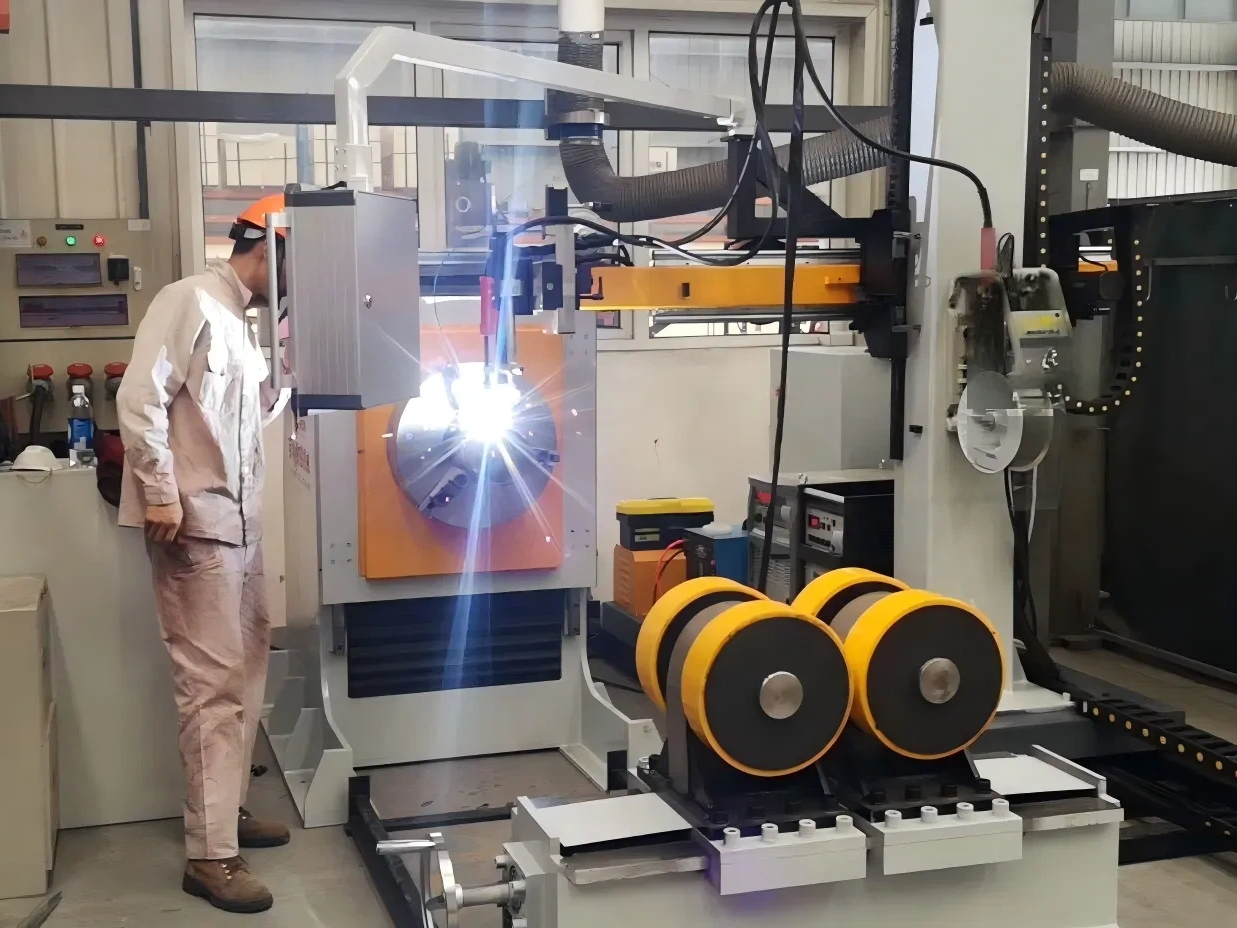
Most industrial units also integrate variable frequency speed control, reversible travel, and coordinated control cabinets. Heavy-duty models may include anti-drift measures, steel or polyurethane wheel options, tandem drive arrangements, and remote pendants for operator convenience. When combined with a manipulator, the rotator becomes part of a complete circumferential welding cell for higher repeatability and better arc stability.
Manufacturers such as Wuxi Samgins typically position the rotator within a broader fabrication line, where matching equipment selection is important. A workshop producing tanks, steel structures, or pipe sections may need the rotator to work alongside welding manipulators, positioners, long seam welding machines, edge milling machines, or plate rolling machines, so interface compatibility should be checked early in project planning.
Bolt Adjustable Welding Rotator Vs Conventional Rotators
The key comparison starts with adjustment philosophy. A conventional rotator may refer to fixed-center units, lead-screw adjustable designs, self-aligning rotators, or hydraulic adjustment systems. A Bolt adjustable welding rotator sits between fixed simplicity and advanced automation: it requires manual repositioning, but the structure is usually robust, understandable, and less sensitive to maintenance demands than more complex adjustment platforms.
In terms of setup time, conventional self-aligning rotators are typically faster for variable-diameter jobs because the wheels automatically conform within a rated range. Bolt-adjustable units take longer when switching between diameters, since the operator must loosen and relocate mounting points. However, once configured for a repeated product size, they often deliver stable long-run operation with very predictable mechanical behavior.
On cost and serviceability, bolt-adjustable designs often have an advantage. Fewer moving adjustment components can mean simpler inspection, easier spare parts planning, and lower risk of synchronization issues in harsh fabrication environments. Conventional hydraulic or self-aligning models can provide greater convenience, but buyers should weigh that against higher capital cost, more complex maintenance, and the real production frequency of diameter changes.
Regarding application fit, bolt-adjustable machines are usually well suited for batch production of vessels, pipes, and rolled shells with defined dimensional ranges. Conventional self-aligning machines may be better for mixed production shops, repair yards, or subcontractors handling many incoming diameters each week. The better choice depends less on theory and more on production rhythm, operator skill, and how often changeovers occur.
Main Types, Standards, And Suitable Users
Mainstream rotator categories include conventional fixed rotators, Bolt adjustable welding rotator systems, self-aligning rotators, moving or track travel rotators, anti-drift rotators, and special heavy-duty units for extra-thick or large-diameter shells. Wheel material choices commonly include rubber, polyurethane, and steel, each selected according to load, surface temperature, coating sensitivity, and traction requirements.
The most suitable users are pressure vessel manufacturers, tank farms fabricators, pipeline contractors, steel structure plants, offshore component workshops, and general metalworking companies producing cylindrical assemblies. It is especially attractive for factories that already know their workpiece dimensions and want a mechanically direct solution that can integrate with welding manipulators or robotic circumferential welding layouts.
For market access and procurement review, buyers generally expect compliance with recognized quality and machinery safety frameworks. Wuxi Samgins states that its machines comply with the ISO9001 quality system and EU CE Machinery and LVD directives, which is relevant for importers seeking documented production control and electrical safety alignment. For projects connected to ASME or API fabrication environments, familiarity with those code expectations is also operationally useful.
Because Wuxi Samgins supplies not only welding rotators but also welding manipulators, positioners, robots, pipe welding machines, and H-beam production equipment, buyers planning full-line expansion can evaluate matching equipment from one source. That broad product range is commercially relevant when standardizing controls, spare parts channels, technical support, and future workshop upgrades.
How To Select The Right Solution
Selection should begin with workpiece data, not catalog preference. Buyers need to define the minimum and maximum diameter, shell length, total weight, wall thickness, center of gravity behavior, and expected seam quality level. A Bolt adjustable welding rotator should be chosen with enough rated capacity margin to accommodate real production conditions, including fixtures, tack weld distortion, and occasional handling imbalance.
Next, evaluate changeover frequency. If the production line runs repeated vessel diameters for long cycles, bolt adjustment is often efficient and economical. If operators constantly switch sizes, self-aligning or powered adjustment may save labor and reduce downtime. This is where procurement teams should compare not only equipment price, but also setup minutes per batch, operator training burden, and potential interruption to welding schedules.
Control requirements are equally important. Variable speed range, low-speed smoothness, forward and reverse rotation, emergency stop logic, remote operation, and synchronization with manipulators or welding heads all affect actual weld performance. For automated lines, confirm electrical interfaces, cable routing, and control compatibility early. A stable rotator with poor integration can still create workflow bottlenecks.
Buyers should also examine wheel material, frame machining quality, gearbox brand, motor protection, and the sourcing standard of hydraulic, servo, or CNC-related components where applicable. Wuxi Samgins emphasizes the use of world-famous imported brands for key hydraulic, servo, and CNC components across its machinery portfolio, which can be meaningful for customers prioritizing precision, stability, and long service life in demanding workshops.
Manufacturing Quality Control, Installation, And Maintenance Timing
A reliable Bolt adjustable welding rotator depends on disciplined fabrication and assembly. Critical checkpoints usually include frame welding accuracy, stress control, wheel concentricity, bearing seating, gearbox alignment, and electrical cabinet verification. Poor base frame accuracy can lead to uneven load sharing between stands, while weak wheel machining or assembly can produce vibration that directly affects weld appearance and rotational consistency.
During installation, the floor condition and stand alignment deserve close attention. Operators should place the drive and idler units on level foundations, verify parallelism, check cable protection, and confirm the actual workpiece contact line before production begins. Trial rotation under no-load and then loaded conditions helps reveal slip, abnormal noise, or drift before the machine enters regular use.
Maintenance timing depends on utilization intensity, but regular inspection should cover wheel wear, bolt tightness, reducer lubrication, motor temperature, cable integrity, and control response. The adjustment bolts themselves are not minor details; repeated size changes make fastener condition and hole wear worth monitoring. A simple preventive schedule often extends service life more effectively than reactive repair after tracking errors or drive instability appear.
For overseas buyers, after-sales responsiveness matters almost as much as the machine itself. Wuxi Samgins positions its offer around design, manufacturing, sales, after-sales, and technical support, with long-term warranties and attention to concerns such as quality variance, delivery delays, and incomplete service. That support model is relevant when rotators are part of a larger project schedule where downtime can delay vessel completion and shipment commitments.
Application Scenarios And International Project Experience
Typical applications for a Bolt adjustable welding rotator include circumferential welding of tanks, pipe spools, shell sections, and heavy rolled cylinders. In these jobs, consistent rotation improves bead appearance, arc access, and welder ergonomics. It also helps automated welding systems maintain travel consistency, which is increasingly important for export-oriented fabricators under tighter quality documentation and delivery expectations.
Global project experience becomes useful when production requirements vary by region, drawing practice, and code expectation. Wuxi Samgins lists customers such as URALSTANKOIMPORT, MD Calbah Industries Pty Ltd, Ersay International Transport, BatysMunaiGazZhabdyktary LLP, PT.Cahaya mas Cemerlang, Estructuras Metalicas Girders Chile Limitada, and Lincoln Electric-MENA. These references do not by themselves define machine performance, but they do indicate exposure to diverse industrial markets and export workflows.
In a tank or vessel shop, the rotator often works best as one station within a coordinated process. Plate rolling, edge preparation, fit-up, longitudinal seam welding, circumferential welding, and blasting may all be linked. Because Wuxi Samgins also supplies plate rolling machines, longitudinal seam welding machines, shot blasting machines, and related fabrication equipment, buyers can consider line-level consistency instead of purchasing each step in isolation.
For buyers entering new export markets, it is practical to ask not only whether the machine can rotate the workpiece, but whether the supplier understands project documentation, electrical adaptation, packaging protection, commissioning needs, and remote troubleshooting. In B2B procurement, those execution details often shape the real outcome more than the brochure specification alone.
Total Cost Of Ownership, ROI, And Future Trends
The total cost of ownership of a Bolt adjustable welding rotator includes far more than the purchase price. Buyers should account for transport, installation, operator training, energy use, spare wheels, reducer maintenance, electrical components, and production losses caused by poor matching between the rotator and the actual workpiece range. An under-specified machine may look economical at the quotation stage but become expensive through downtime and weld rework.
ROI should be estimated from labor reduction, higher weld consistency, safer material handling, lower repositioning time, and improved compatibility with manipulators or welding automation. In repetitive vessel production, a bolt-adjustable solution can produce attractive returns because its structure is simpler and its capital requirement is often lower than advanced adjustment systems. The savings become clearer when the diameter range is stable and output planning is disciplined.
Looking ahead, the industry trend is toward integrated cells that connect rotators with manipulators, robotic welding, digital speed control, and more traceable production data. Even when a Bolt adjustable welding rotator remains mechanically simple, buyers increasingly expect better control integration, safer operation, and easier synchronization with upstream and downstream equipment. Practical automation, not complexity for its own sake, is the direction most workshops value.
For procurement teams comparing a Bolt adjustable welding rotator with conventional rotators, the sound conclusion is usually conditional rather than absolute. Choose bolt adjustment when repeat sizes, rugged service, and straightforward maintenance matter most. Choose more automated conventional formats when high-mix production dominates. A supplier with customization capability, broad equipment coverage, and export support experience, such as Wuxi Samgins, is often better positioned to recommend the right configuration for the full fabrication workflow rather than only a single machine sale.
search
Recommended Products
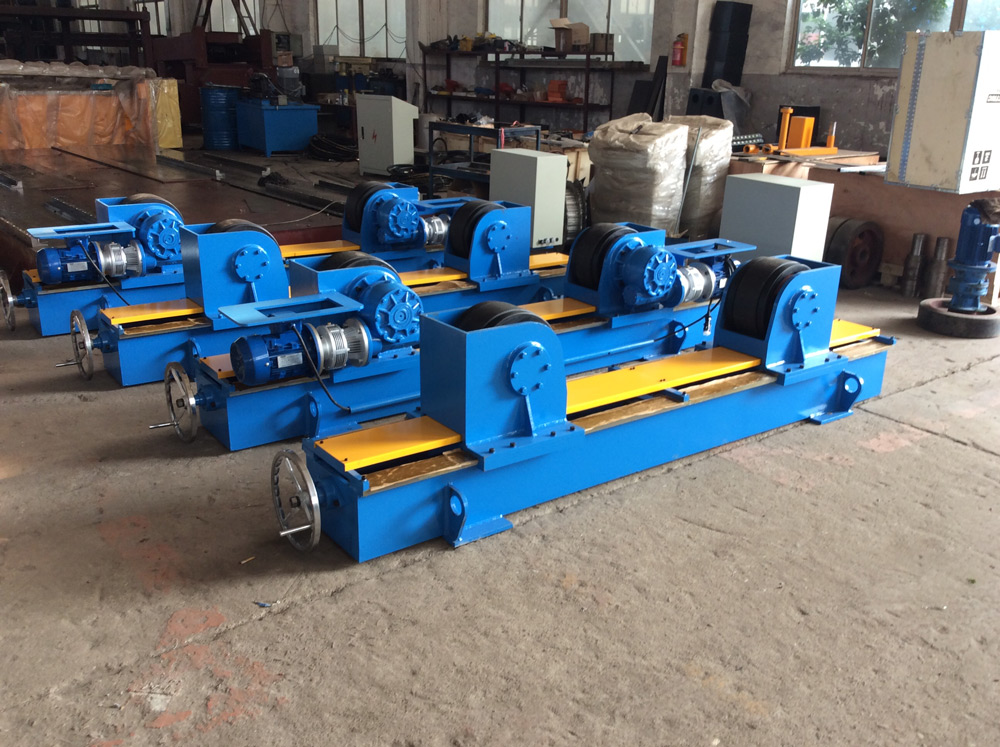
 Bolt adjusting welding rotatorA Welding Rotator is composed of three main components: a powered rotator (equipped with a motor), an idler rotator (without motor), and an integrated control system. Its primary function is to rotate cylindrical workpieces during welding operations, ensuring optimal positioning and consistent weld quality.
Automatic welding rotators are extensively used in butt welding of large-diameter pipes, pressure vessel fabrication, and other cylindrical assembly applications. By delivering smooth, adjustable rotation, they significantly enhance welding productivity and quality while substantially reducing operator fatigue.
As a result, welding rotators have become essential equipment in cylinder fabrication and heavy-duty welding workshops, offering a reliable solution for improving both efficiency and weld integrity.![星星1]()
- PPCW16 heavy duty Chuck Pipe Welding StationEngineered for superior practicality and reliability, the PPCW series chuck-type automatic pipe welder delivers exceptional performance across TIG, MAG, and SAW processes. This versatile system automates the entire welding sequence—from root pass to fill and cap—ensuring consistent, high-integrity joints. It is ideally suited for automated butt welding applications, including pipe-to-pipe, pipe-to-reducing pipe, pipe-to-flange, pipe-to-elbow (excluding equal straight-end elbows), and pipe-to-tee configurations.
![星星1]()
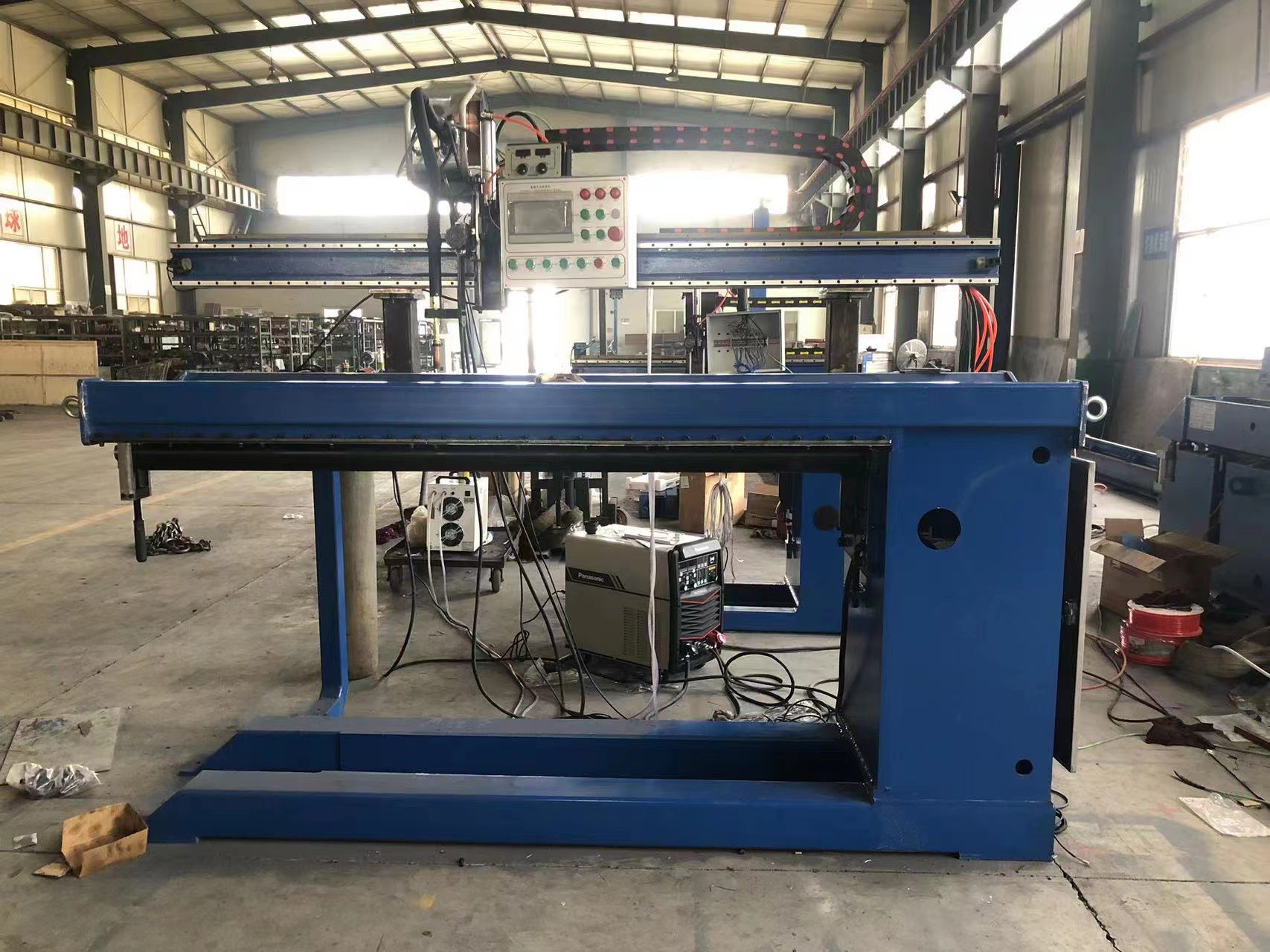
- Longitudinal seam welding machine1.1 Key-type pneumatic pressing device is applied to calmp the work piece. This device provides force evenly to work piece and prevents
deformation.
1.2 It is widely applied in high quality welding and low-deformation straight seam. Use in such fi eld: petrochemical industry, solar water
heater manufactor, pipeline and automobile industry.
1.3 Controlled by PLC, driven by DC motor, and stepless speed regulation, with control system to realize automatic welding,and equipped
with straight oscillator for optional choice.![星星1]()
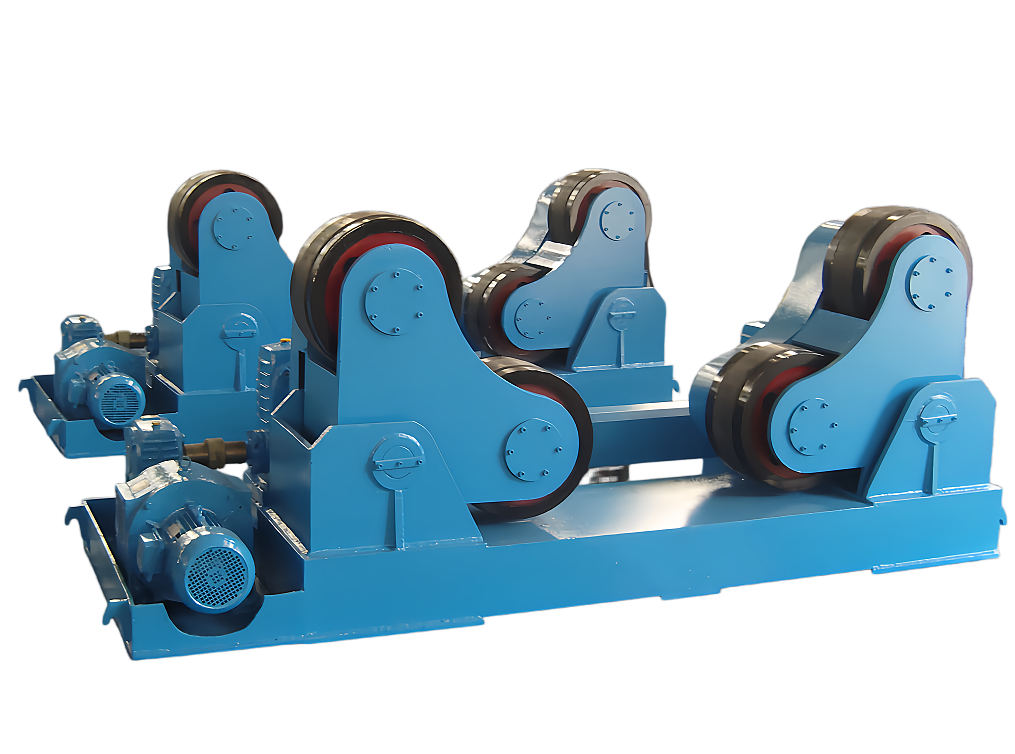
 Lead screw welding rotatorA Welding Rotator consists of a powered rotator (with motor), an idler rotator (without motor), and a control system. It is primarily used to rotate cylindrical workpieces during welding, enabling optimal positioning and consistent weld quality.
Automatic welding rotators are widely applied in butt welding of large-diameter pipes, pressure vessels, and other cylindrical assemblies. By providing smooth and adjustable rotation, they significantly improve welding productivity and quality while reducing operator fatigue. As such, welding rotators have become essential equipment in cylinder fabrication and heavy welding workshops.![星星1]()
 Self aligning welding rotatorThe self-aligning welding rotator is a specialized auxiliary device designed to support and precisely rotate cylindrical workpieces during welding operations.
1.1 System Composition
A complete welding rotator system consists of three primary components:
Active (driven) rotator – equipped with a motor and reduction drive to provide rotational power
Passive (idle) rotator – provides support and follows the rotation of the driven unit
Control system – enables precise speed regulation for optimal welding conditions![星星1]()
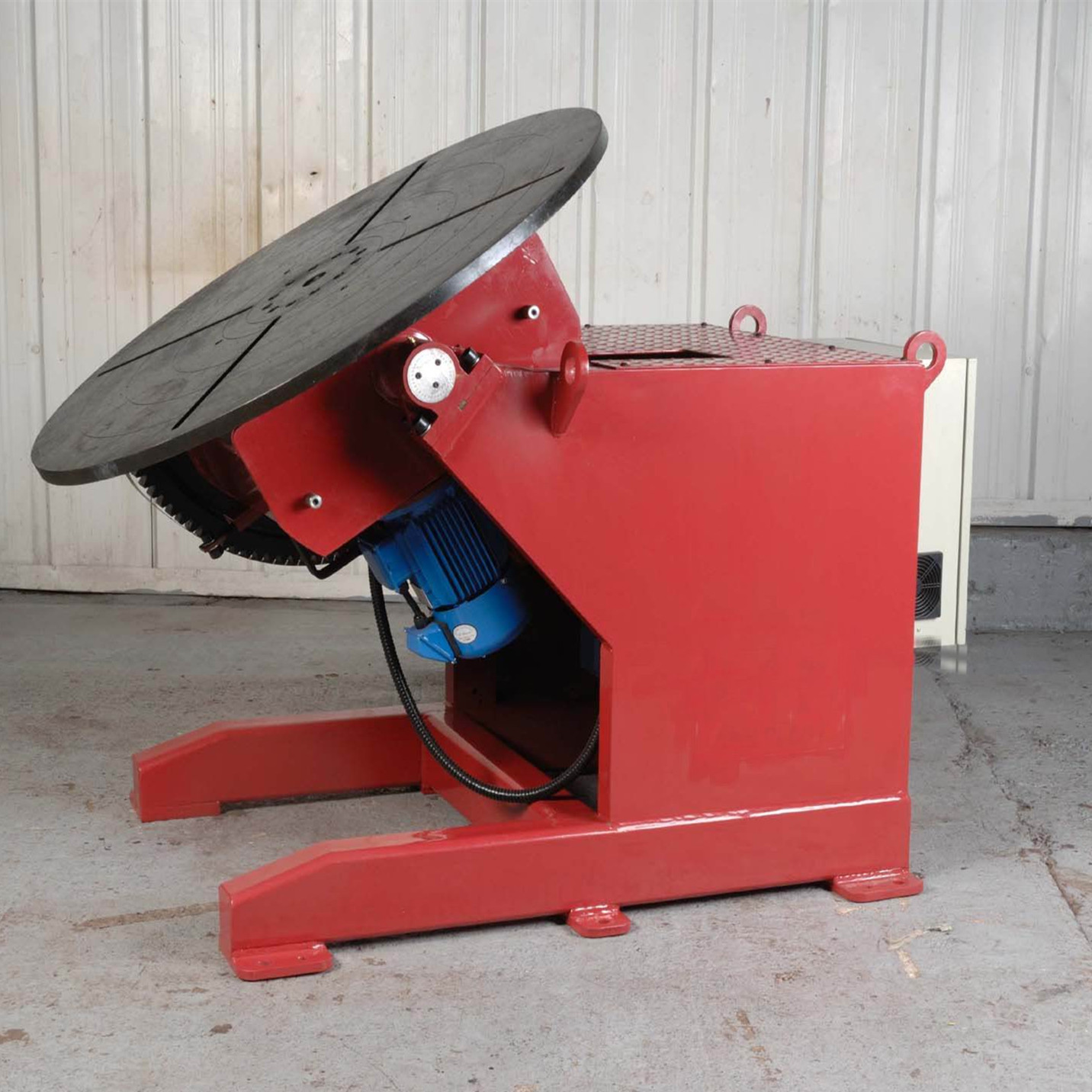
 Welding positionerOur welding positioners are available in a wide capacity range from 100kg to 20,000kg, featuring VFD-controlled 360° continuous rotation and tilting from 0° to 90°–120° for optimal welding positioning. Standard electrical configuration is 380V/50Hz/3PH, with custom voltages available. The 100kg model is equipped with wireless remote control and foot switch for ease of operation, while the 1,000kg model offers multiple configurations including hydraulic lifting, L-shape, and head & tail stock types to suit diverse application requirements.
![星星1]()

Recommended blogs
Send Us A Message
Send us a Message
A dedicated person will follow up on your needs one-on-one and provide personalized customized solutions according
to your needs.
Get In Touch
We look forward to hearing from you for in-depth communication on how to fulfill your mixing requirements.