




How Welding Robots Work: An In-Depth Guide to Robotic Welding Processes
What Welding Robots Are And Where They Fit
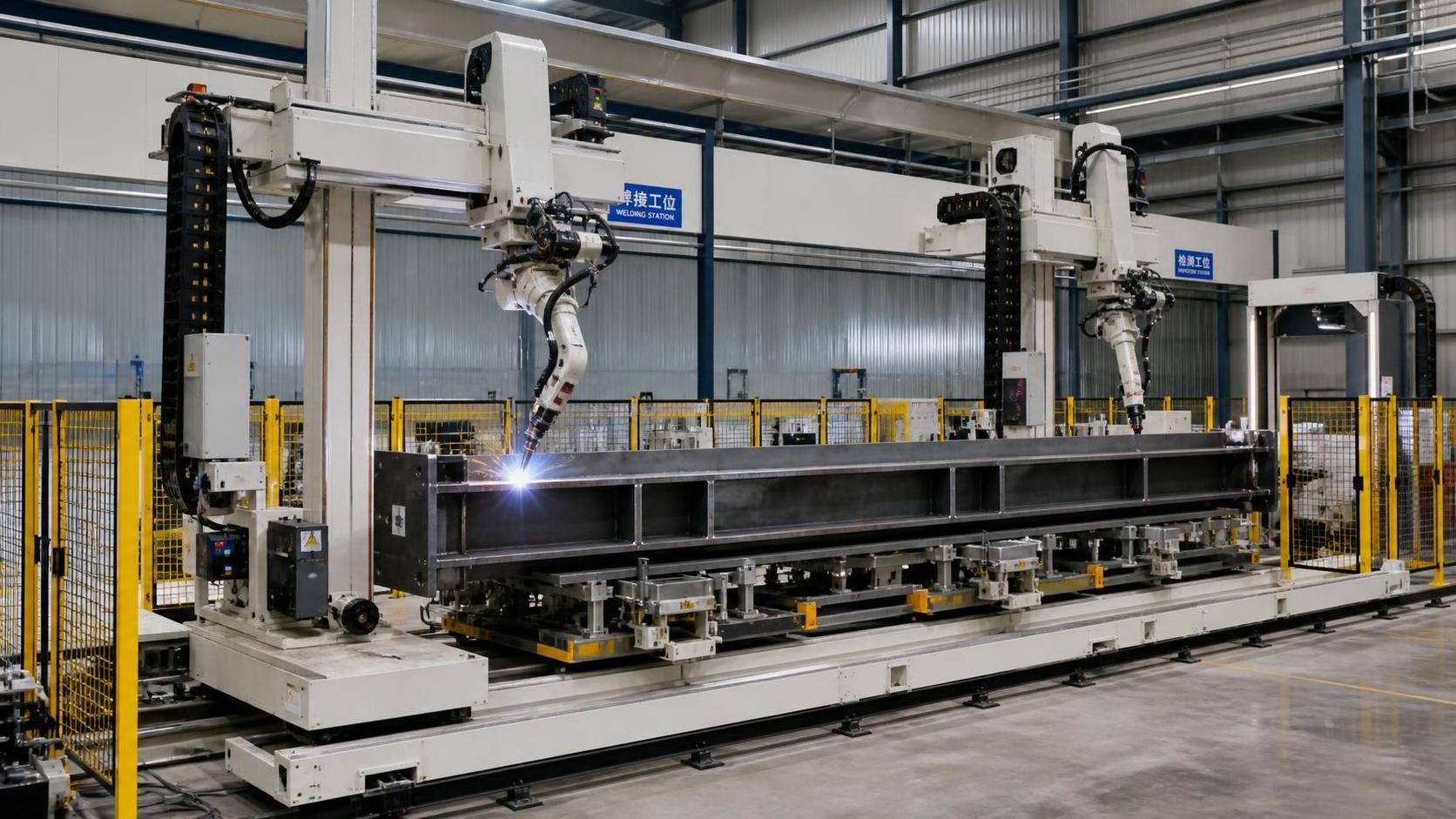
Welding robots are programmable industrial machines that move a welding tool along a defined path while coordinating the welding process. A typical installation includes a robot arm, controller, welding power source, torch or gun, fixtures, safety equipment, and operator interface. Depending on the process, it may also include a wire feeder, shielding gas supply, seam sensor, or workpiece positioner. The robot provides controlled motion; the complete cell is responsible for producing an acceptable weld.
Most arc welding systems use articulated arms with multiple rotary joints, commonly six axes, to orient the torch around a workpiece. Additional axes can move the robot along a track or rotate and tilt the component. A seven-axis or nine-axis configuration describes the total controlled motion in a particular system, but the arrangement varies. Buyers should ask which axes belong to the robot and which belong to external equipment, and whether they move in coordination.
Robotic welding suits repeatable joints where parts can be located consistently and production volume or weld length supports automation. Steel fabricators, equipment manufacturers, tank builders, and pipe processors may use it for different reasons: some need higher throughput, while others need steadier weld appearance or less manual exposure to fumes and heat. It does not eliminate the need for qualified welding procedures, competent supervision, or inspection.
How A Robotic Welding Cycle Works
The cycle starts with a prepared joint loaded into a fixture or positioner. The fixture establishes a repeatable location, while clamps hold the parts against movement and distortion. An operator or upstream system confirms that the correct program and consumables are selected. The controller then moves the torch to an approach point, checks the necessary process signals, and initiates the weld through the connected power source.
During arc welding, the power source establishes an arc between the electrode and workpiece. The arc melts the joint surfaces and, where used, filler metal; shielding gas or flux protects the molten pool from atmospheric contamination. The robot follows a taught or generated path while controlling travel speed and torch orientation. Welding parameters such as current, voltage, wire feed speed, and gas flow must be selected for the process, material, joint, and approved procedure.
After the weld, the system terminates the arc, retracts the torch, and permits unloading only when the cell is in a safe state. Some installations use touch sensing, laser sensing, or arc-based tracking to locate or follow a seam, subject to process compatibility. Sensors can accommodate defined variation, but they cannot reliably compensate for every fit-up error, contaminated surface, or incorrect program. Inspection and feedback remain essential parts of the cycle.
Main Robotic Welding Processes And Configurations
Gas metal arc welding, often called MIG or MAG welding, is widely used in robotic fabrication because a continuously fed wire supports sustained welding and integrates readily with automated controls. Flux-cored arc welding also uses continuously fed wire and may be appropriate for particular materials, deposition requirements, or fabrication conditions. The choice of wire, shielding method, and parameters depends on the qualified procedure and the operating environment.
Resistance spot welding uses electrodes to clamp overlapping sheets while electrical current and pressure create a localized weld. It is common in high-volume sheet fabrication, but it requires suitable joint access and a compatible welding gun. Robotic laser welding concentrates energy into a narrow area and can support fast, precise seams where joint preparation and fit-up are controlled. Laser cells also require process-specific guarding and risk assessment.
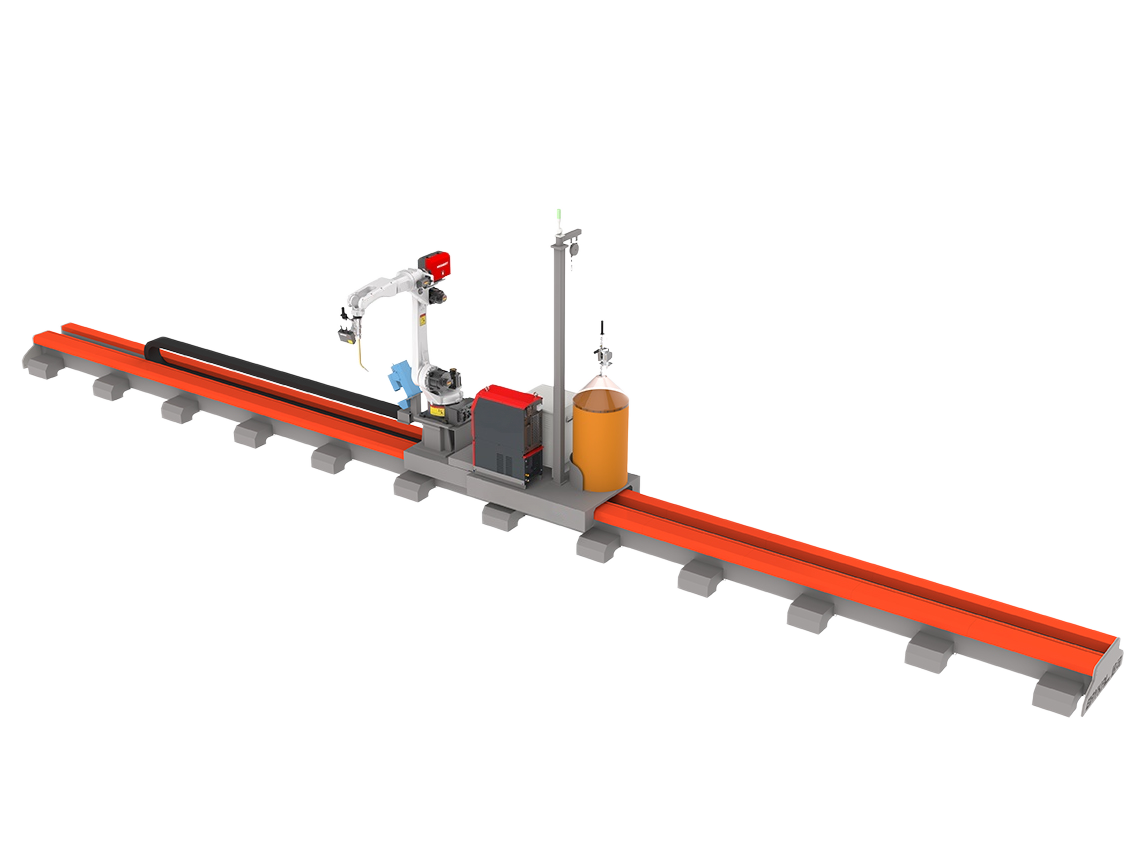
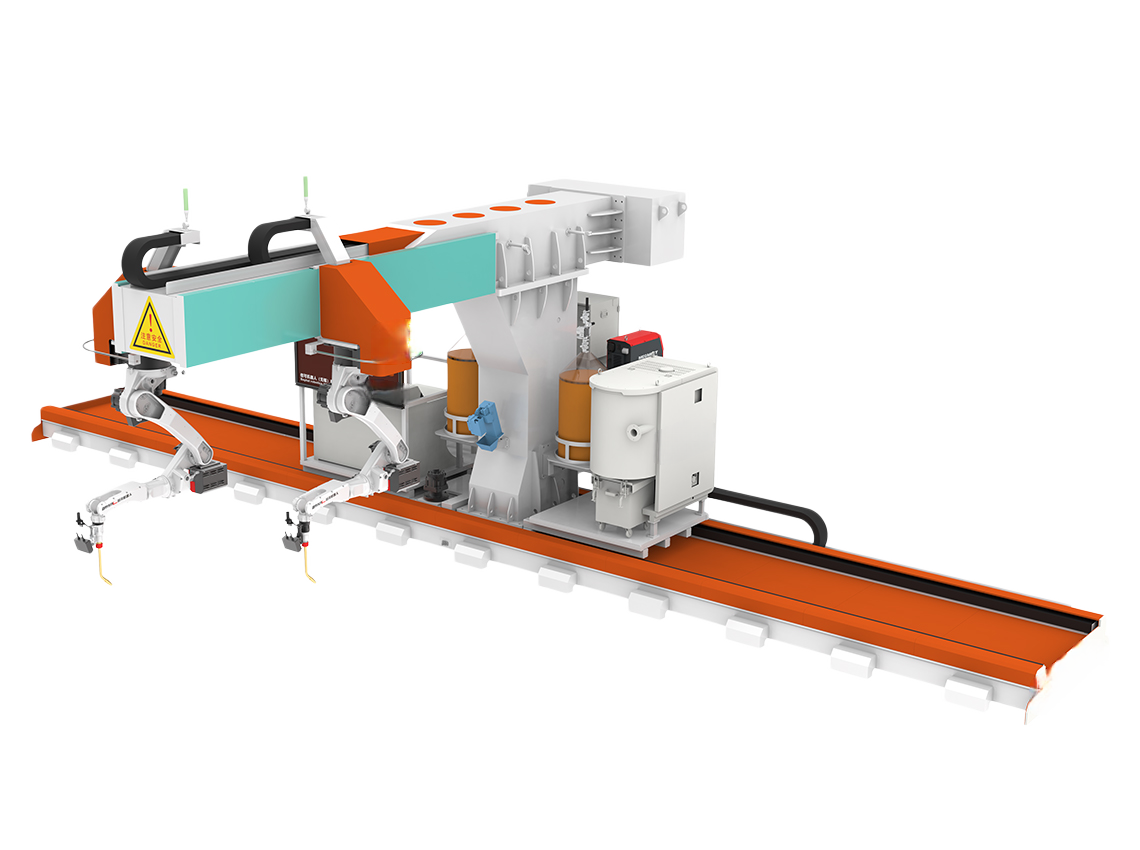
Configuration matters as much as the welding process. A fixed robot can serve compact parts, while a robot on a linear track can reach longer assemblies. A rotating positioner brings joints into accessible orientations, and synchronized motion can maintain a favorable torch angle as the component turns. For long, straight, or circumferential seams, dedicated manipulators, longitudinal seam machines, or rotators may be more suitable than a general-purpose robot.
Applications And Equipment Integration
Structural steel shops often need access to long members, stiffeners, and repeated fillet welds. Tank and vessel manufacturers may prioritize circumferential seams, controlled rotation, and support for heavy shells. Pipe fabricators must consider diameter range, joint preparation, internal access, and the ability to position the joint. Sheet metal producers may favor compact cells and fixtures that limit distortion. In each case, part geometry and production mix determine the appropriate level of automation.
Wuxi Samgins offers welding robots alongside welding manipulators, rotators, positioners, long seam machines, pipe welding equipment, and H-beam production machinery. Its customization offering includes seven-axis and nine-axis robotic configurations and heavy-duty rotators. A buyer can evaluate these products as components of a coordinated fabrication workflow, subject to engineering review of load capacity, dimensions, interfaces, and the specific welding application.
Supporting operations influence robotic results. CNC cutting, edge milling, rolling, and leveling can improve the consistency of parts presented to the cell when correctly specified and maintained. Welding robots still need a documented tolerance window for gaps, joint alignment, and tack weld placement. Before committing to a layout, provide representative drawings and samples, identify upstream and downstream handling constraints, and request a proposed process and equipment configuration.
How To Select And Specify A Welding Cell
Start with a part family rather than an isolated weld. Document materials, thicknesses, joint types, weld lengths, production quantities, and required acceptance criteria. Include the largest and smallest components, their mass, and the positions the torch must reach. A reach study should account for fixtures, cable routing, torch angle, collision clearance, and maintenance access. Confirm that robot payload covers the complete tool package, not merely the torch.
Next, compare the production sequence with the proposed cell. Estimate arc-on time, loading and unloading, repositioning, cleaning, inspection, and program changes. Ask whether external axes are synchronized with robot motion, whether offline programming or seam sensing is available, and how new parts are introduced. The most flexible system is not automatically the most economical: a dedicated machine may offer a simpler solution for a stable, repetitive seam.
Define acceptance requirements before ordering. These can include a reach demonstration, weld samples, inspection method, cycle-time assumptions, training, spare parts, documentation, and service response arrangements. Wuxi Samgins states that key hydraulic, servo, and CNC components use imported brands; buyers should confirm the actual component list and alternatives for their quotation. Also establish who is responsible for utilities, site preparation, installation, and final cell integration.
Safety Standards And Weld Quality Control
A robotic cell needs a risk assessment covering unexpected motion, pinch points, electrical hazards, arc radiation, fumes, hot parts, and fire. Typical safeguards include perimeter guarding, interlocked access, emergency stops, suitable extraction, and controlled procedures for teaching and maintenance. Applicable requirements depend on the destination and installation. ISO 10218 addresses industrial robot safety, while ISO 12100 provides a general risk-assessment framework; verify the applicable editions and local rules.
For European projects, determine which legislation and conformity assessment obligations apply to the complete machine or integrated cell, not just its individual components. Wuxi Samgins reports operation under an ISO 9001 quality system and compliance of its machines with applicable EU CE machinery and low-voltage requirements. Request current certificates, declarations, technical documentation, and an explanation of the scope for the exact equipment and destination before purchase.
Weld acceptance is separate from machine conformity. Establish the applicable welding procedure, qualification requirements, inspection plan, and acceptance criteria with the purchaser and relevant authority. Depending on the job, ASME or API requirements may apply; Wuxi Samgins reports experience with these and other local codes. Check joint preparation and fit-up before welding, monitor consumables and parameters during production, and use visual or other specified examinations to verify the finished joint.
Maintenance Costs And Future Trends
Maintenance intervals should follow the robot, power source, and peripheral equipment manufacturers' instructions and the actual duty cycle. Routine checks commonly cover torch consumables, wire feed condition, cable wear, gas leaks, fixture condition, extraction, and safety devices. Schedule cleaning, calibration checks, backups, and preventive service around production needs. Track recurring faults and keep critical consumables available; isolate hazardous energy before maintenance under the site's procedures.
Total ownership cost includes the robot and power source, integration, guarding, fixtures, positioners, installation, training, consumables, energy, maintenance, programming, and downtime. Compare those costs with a documented baseline for labor, throughput, rework, and inspection. For a simple payback estimate, divide the initial investment by expected annual net savings, including recurring operating costs. Test conservative assumptions for utilization, part changes, and ramp-up; payback is not a guarantee.
Developments in sensing, offline programming, process monitoring, and data integration can make welding robots easier to deploy across changing product mixes. Their value depends on part variation, software compatibility, operator skills, and the cost of maintaining reliable data. Wuxi Samgins reports more than 10 years of export experience and offers design, manufacturing, sales, and technical support. To assess a project, request a written proposal with drawings, target output, quality requirements, delivery terms, and warranty details.
search
Recommended Products
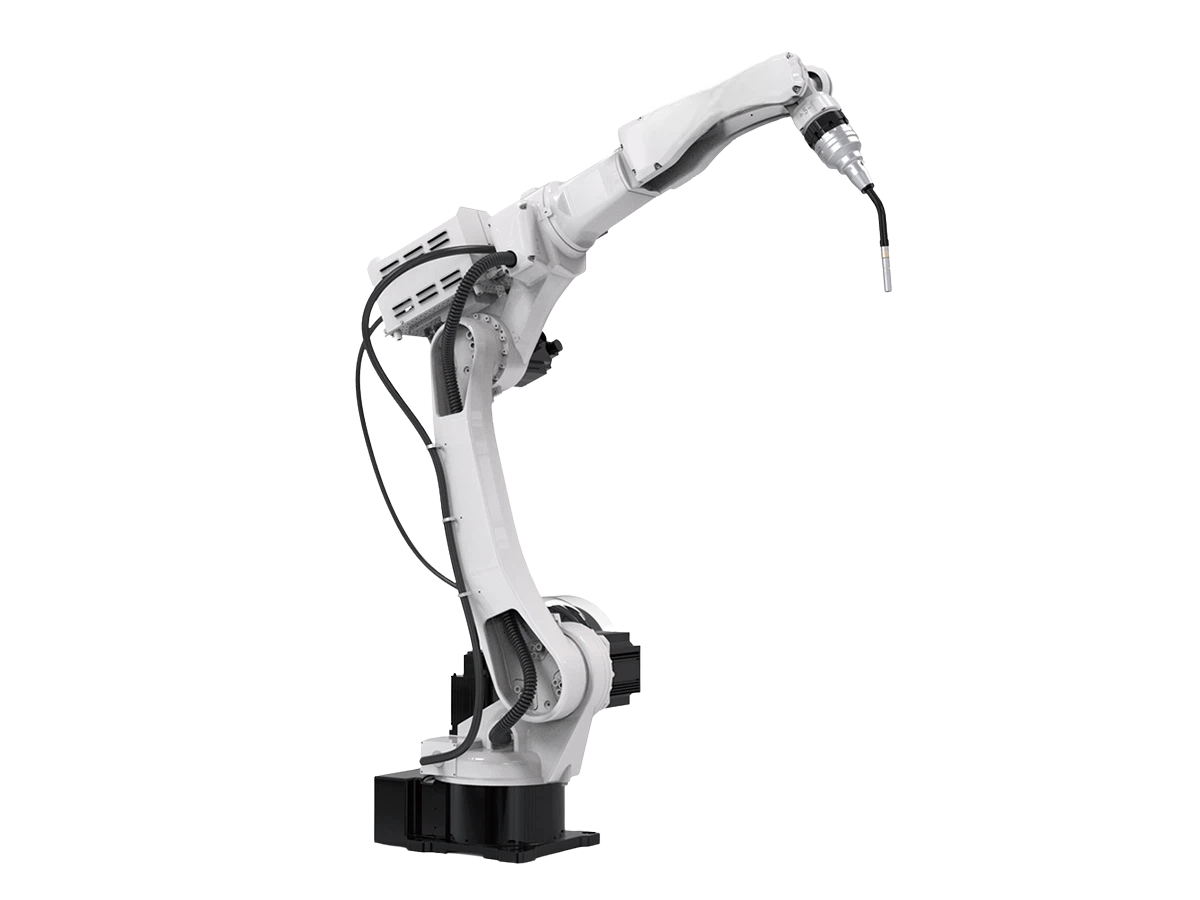
 6 Axis 2000mm ArmSpan MlG Industrial Welding RobotThis welding robot is designed for reliable arc welding in harsh production environments, featuring a long reach, stable repeatability, and flexible installation.
![星星1]()
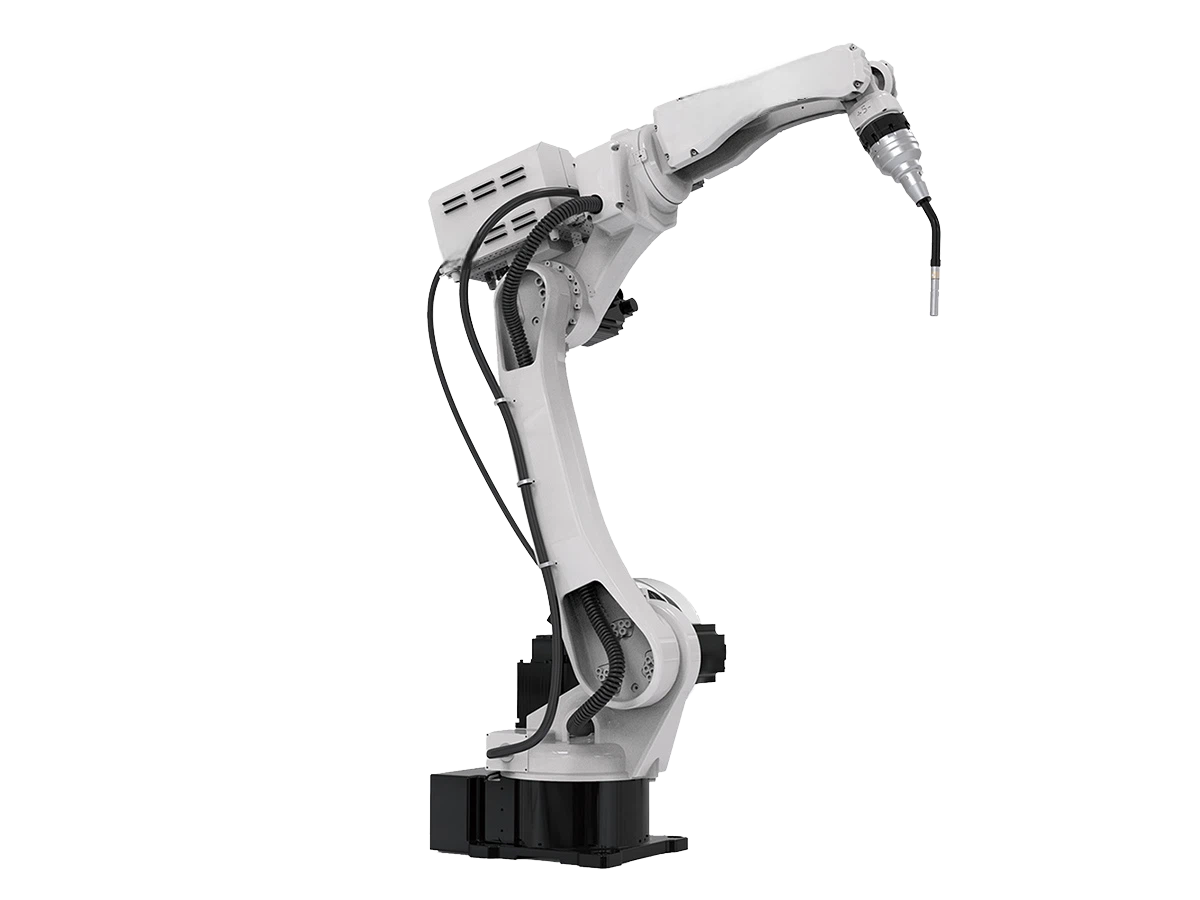
- 6 Axis 1800mm ArmSpan MlG Industrial Welding RobotThe welding robot with 1945mm reach, 6kg payload and ±0.08mm repeatability for consistent automated welding.
![星星1]()
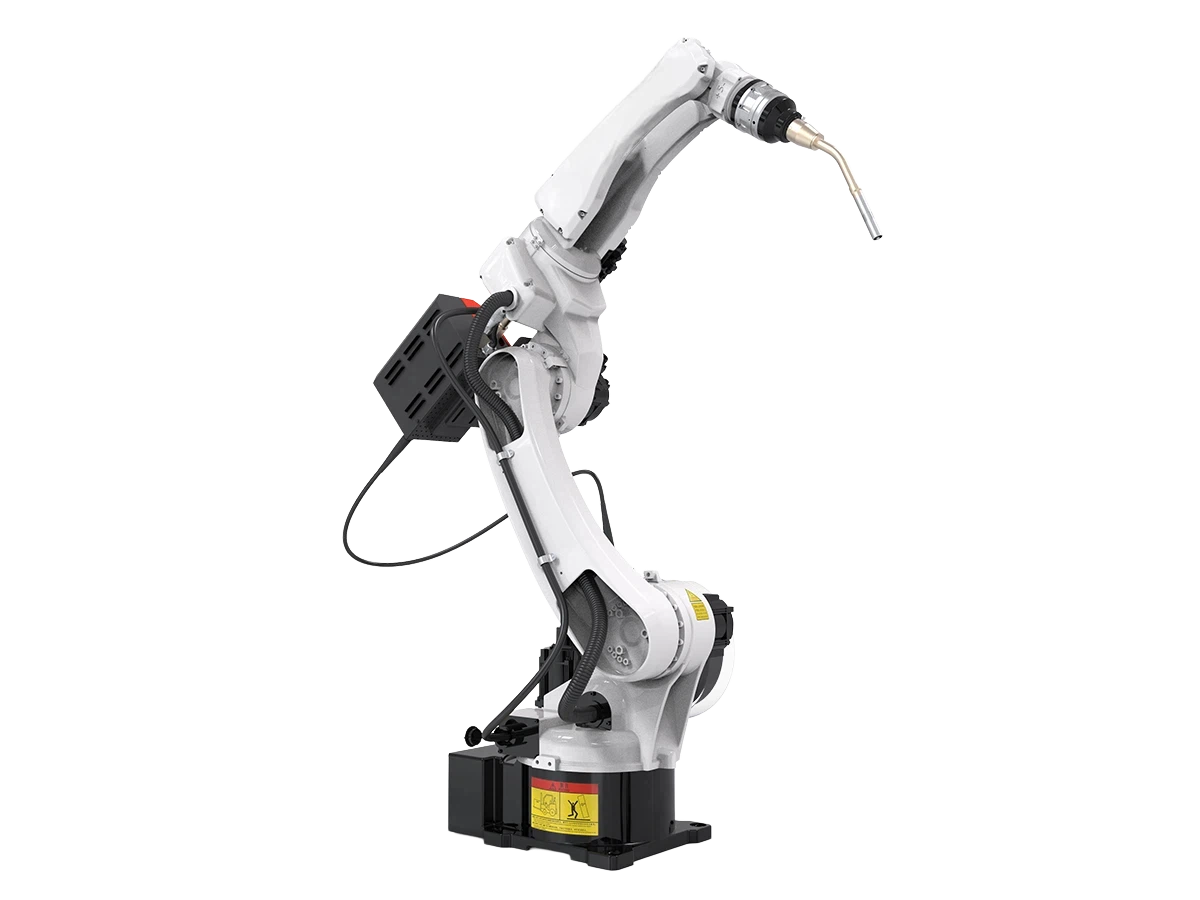
- 6 Axis 1500mm ArmSpan Industrial Welding RobotWith a maximum reach of 1594 mm, the robot is well suited to medium-scale welding cells where coverage matters.
![星星1]()
 Cantilever type welding robot BR-2010A Pro/DG12Explore the BR-2010A Pro/DG12 cantilever welding robot for long workpieces, automated arc tracking, and efficient CNC welding.
![星星1]()
- BR-2010A Pro/XB12-A8DP MAX Eight-Axle Cantilever Dual-MotorBR-2010A Pro/XB12-A8DP MAX cantilever welding robot imports TEKLA drawings, uses laser positioning, and automates welding for steel fabrication.
![星星1]()

Recommended blogs
- How robotic welding and automation improve repeatability in batch productionSep 30, 2026Robotic Welding and Automation improve batch production repeatability through controlled fixtures, weld parameters, and material preparation—reducing rework and improving throughput.
- How to Choose a Laser Cutting Machine for Sheet Metal WorkJul 12, 2026Laser cutting machine selection for sheet metal starts with material, thickness, and workflow. Learn how to compare speed, quality, automation, and total cost with confidence.
- 3-roll vs 4-roll plate rolling machines: which leaves a shorter flat end?Nov 17, 20263 roll vs 4 roll plate rolling machine: discover which typically leaves shorter flat ends and how to choose the right machine for your production needs.
- Can a 4-roll plate rolling machine form a cone?Nov 17, 20264-roll plate rolling machines for complex applications can form cones with the right setup. Explore capacity limits, tooling and practical tips for accurate results.
- How do adjustable bottom carrier rollers support plate rolling?Nov 17, 2026Explore how a 3 roller plate rolling machine with adjustable bottom carrier rollers supports plate handling, improves process stability and fits your fabrication needs.
Send Us A Message
Send us a Message
A dedicated person will follow up on your needs one-on-one and provide personalized customized solutions according
to your needs.
Get In Touch
We look forward to hearing from you for in-depth communication on how to fulfill your mixing requirements.