





How a Sheet Metal Edge Deburring Machine Works: A Comprehensive Guide to Safer, Higher-Quality Fabrication
What Is A Sheet Metal Edge Deburring Machine?
A sheet metal edge deburring machine is an industrial finishing system that removes burrs, sharp edges, oxide residues, cutting dross, and small surface imperfections from sheet, plate, or profile parts. It normally processes workpieces after laser cutting, plasma cutting, flame cutting, punching, shearing, milling, or drilling. The objective is not merely cosmetic: controlled edge finishing helps improve handling safety, fit-up consistency, coating adhesion, and downstream assembly quality.
A burr is displaced or partially separated material left at an edge after a cutting operation. Its size depends on material grade, thickness, tooling condition, cutting parameters, and heat input. A practical sheet metal edge deburring machine removes loose material while preserving critical dimensions. Depending on the finishing head and process settings, it may also create a consistent edge break or radius, which reduces sharp-edge risks without over-rounding functional features.
In B2B fabrication, deburring is often specified as part of a broader quality route rather than as an isolated operation. Buyers should distinguish between light burr removal, slag removal, edge rounding, surface finishing, and oxide-layer removal because each outcome requires different abrasive media and contact conditions. A correctly specified machine supports repeatable production across batches, while an incorrectly specified system can remove too little material, alter part geometry, or create unnecessary consumable expense.
How The Deburring Process Works
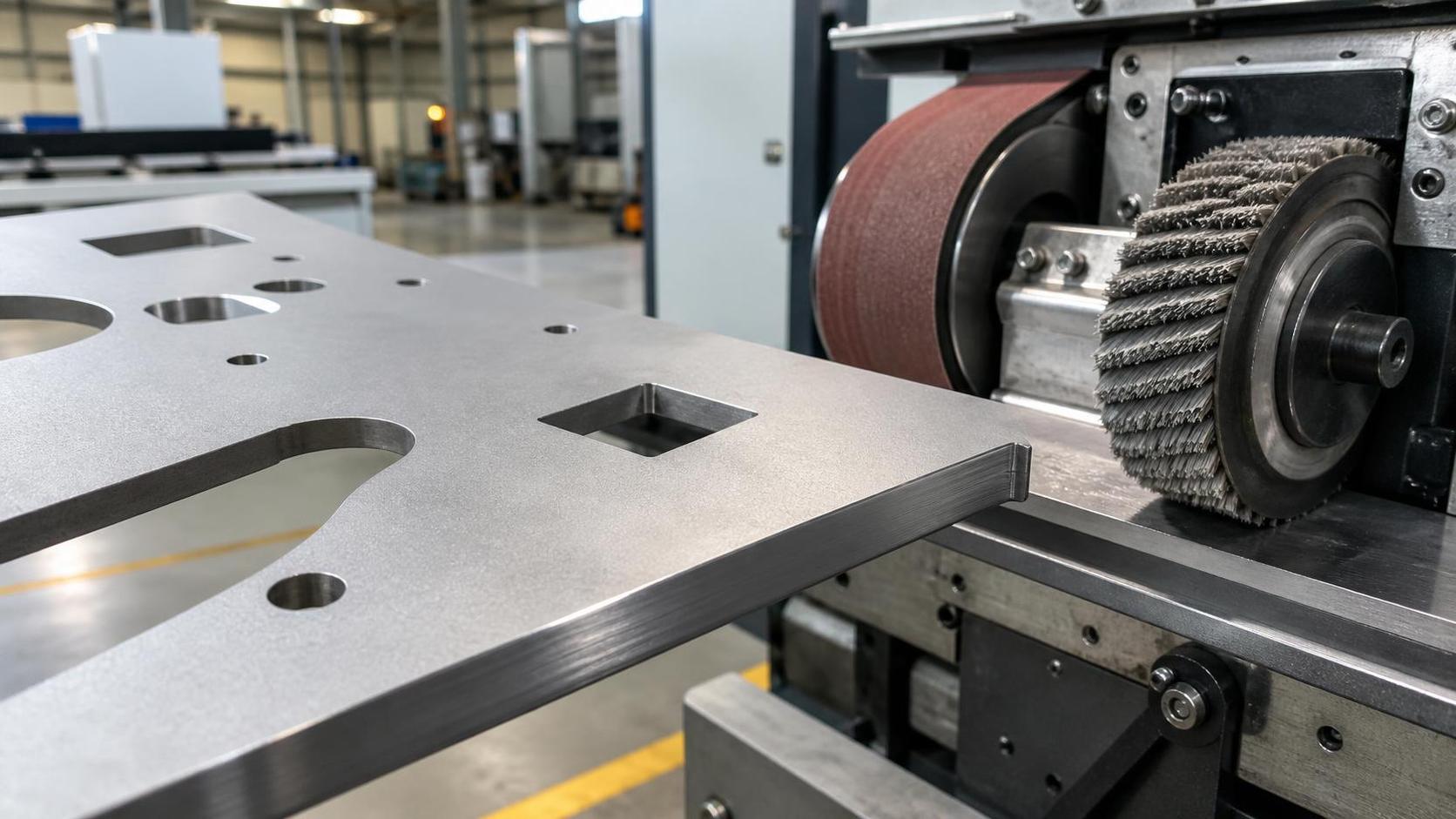
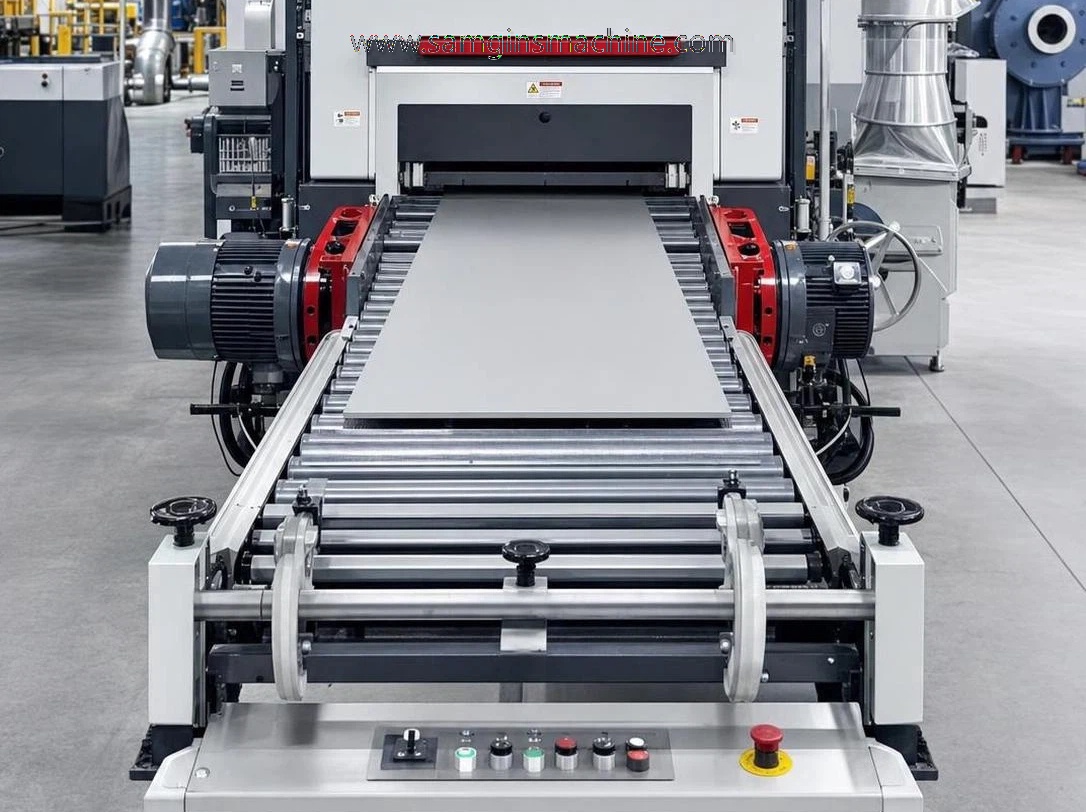
Most automated systems feed a metal workpiece through one or more processing stations by conveyor belt, vacuum assistance, magnetic transport, pressure rollers, or a combination of these methods. Abrasive belts, rotating brushes, flap wheels, disc brushes, or grinding heads contact the upper surface, lower surface, edges, or both sides. The selected tooling cuts away protruding material through controlled abrasion instead of uncontrolled impact or manual filing.
The process begins with stable workpiece transport. If the part shifts, vibrates, or lifts during contact, finishing becomes uneven and small components may be damaged. The machine then applies calibrated pressure, rotational speed, feed speed, and abrasive grit. Coarser media generally remove heavier burrs or dross more quickly, while finer media produce a smoother finish. Operators balance removal rate against surface protection, especially for stainless steel, aluminum, coated sheet, and thin-gauge parts.
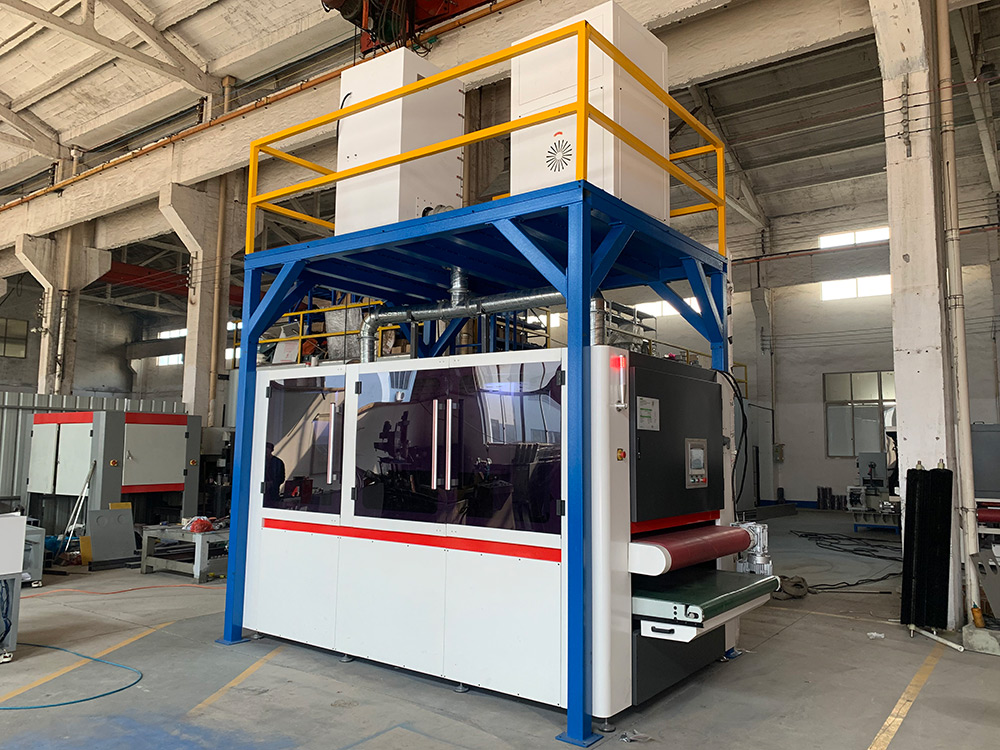
Dust collection is an essential part of how a sheet metal edge deburring machine works. Grinding dust, abrasive fragments, and metallic particles must be captured appropriately to protect operators, maintain machine performance, and reduce contamination of adjacent processes. For materials that present elevated dust-related risks, buyers should assess local safety requirements, extraction design, grounding, filtration, maintenance procedures, and the machine supplier's guidance before commissioning the equipment.
Main Machine Types And Their Uses
Wide-belt deburring machines use abrasive belts to remove broad surface burrs and light edge protrusions over a large contact area. They are commonly considered for flat laser-cut or punched components with predictable geometry. Their strengths include throughput and surface consistency, but the buyer must verify whether the system can finish internal holes, narrow slots, small parts, and edges that require a defined radius rather than a basic break.
Rotary brush and disc-brush systems are frequently selected for multidirectional edge rounding. Flexible abrasive brushes can follow external contours and reach many internal profiles, making them useful for parts with holes, slots, tabs, and complex laser-cut features. The resulting finish depends on brush type, abrasive grain, pressure, rotation, and dwell time. Brush systems are often specified where a more uniform edge condition is needed before painting, powder coating, welding, or manual handling.
Heavy-slag removal machines use more aggressive belts, drums, or grinding stations for parts cut by plasma or flame processes. These machines address tenacious dross that light brush systems may not remove efficiently. Wet processing variants can be appropriate in certain operations, while dry systems are common where the material and dust-management plan permit them. A sheet metal edge deburring machine may combine several stations so that slag removal, burr removal, and edge rounding occur in one pass.
Selecting Equipment For Your Production Requirements
Selection starts with the workpiece, not the machine brochure. Record the material types, thickness range, minimum and maximum part sizes, part weight, burr direction, cutting source, and expected monthly volume. Carbon steel, stainless steel, aluminum, galvanized sheet, and coated materials can respond differently to the same abrasive process. The supplier should evaluate representative samples whenever possible, particularly when parts include narrow webs, small holes, raised burrs, protective film, or heat-affected edges.
Define the required result in measurable production terms. For example, specify whether the goal is removal of loose burrs, a tactilely safe edge, a consistent edge radius, surface blending, or preparation for coating. Also identify which surfaces must remain untouched. This prevents a common procurement error: purchasing a high-throughput machine designed for light finishing when the actual process requires heavy slag removal, or selecting an aggressive system that marks parts with visible surfaces.
Capacity decisions should include conveyor speed, usable working width, station configuration, automation interfaces, loading method, extraction demand, and changeover time. A machine sized only for today's largest panel may be inefficient for high-frequency small parts. Conversely, a compact system may become a bottleneck after a new laser cutter is installed. Buyers should model the full production flow, including cutting, sorting, deburring, inspection, bending, welding, coating, and packing, before fixing the required configuration.
Applications, Safety, And Quality Expectations
Common users include sheet metal job shops, enclosure manufacturers, electrical cabinet producers, elevator component suppliers, HVAC fabricators, machinery builders, vehicle-component manufacturers, steel structure workshops, and metal furniture producers. These operations benefit when parts can move from cutting to bending, welding, assembly, or coating with fewer manual touch-up steps. A sheet metal edge deburring machine is especially valuable where operators frequently handle cut edges or where downstream finishing quality is commercially important.
Safety and acceptance requirements vary by product, destination market, customer contract, and applicable regulations. Fabricators should establish internal criteria for sharp-edge control, visual finish, dimensional protection, and contamination prevention. For export projects, the relevant machinery, electrical, workplace safety, and customer-specific requirements should be reviewed early. Machine documentation, guarding, emergency stops, electrical configuration, extraction arrangements, and operator training all contribute to a controlled installation rather than simply a successful sample result.
Wuxi Samgins supplies sheet metal deburring machines within a wider fabrication equipment range that includes CNC cutting systems, press brakes, edge milling equipment, welding automation, leveling machines, and rolling equipment. This broader process perspective can help buyers coordinate deburring capacity with upstream cutting and downstream forming. Wuxi Samgins states that its machines comply with its ISO9001 quality system and EU CE Machinery and LVD directives, subject to the specification and applicable project scope.
Installation, Operation, And Quality Control
Before installation, confirm floor loading, electrical supply, compressed-air requirements where applicable, access for abrasive replacement, material infeed and outfeed space, and dust-extraction routing. The machine should be positioned to avoid unnecessary part handling between cutting and finishing. Commissioning should include transport tracking, abrasive head alignment, safety-device checks, extraction verification, and trial runs using the actual material families that will be processed in routine production.
A disciplined operating procedure begins with part identification and parameter selection. Operators should inspect for excessive slag, warped material, loose scale, or features unsuitable for the selected station. They then set or verify feed rate, abrasive pressure, rotational settings, and transport method. First-off parts should be checked on both sides and around holes, slots, corners, and cutouts. Results should be compared with approved samples or documented acceptance criteria before a batch proceeds.
Routine maintenance protects finish quality and machine uptime. Inspect abrasive belts or brushes for wear, clean workpiece-contact areas, verify belt tracking and roller condition, empty and service collection systems according to the operating plan, and check guards and emergency functions. Wuxi Samgins offers design, manufacturing, sales, after-sales, and technical support services, with long-term warranty arrangements described according to the supplied equipment and commercial agreement. Clear maintenance responsibilities should be agreed before purchase.
Total Cost Of Ownership And Future Trends
The purchase price is only one part of total cost of ownership. Buyers should calculate capital cost, installation, electrical work, extraction equipment, abrasives, replacement parts, labor, energy, training, maintenance, downtime, inspection, and material loss caused by rework. A lower-priced sheet metal edge deburring machine may cost more over time if abrasive consumption is high, access for service is poor, or it cannot achieve the finish needed for downstream operations without manual correction.
Return on investment is usually driven by reduced manual grinding, shorter handling time, fewer cut-related safety incidents, more predictable coating preparation, and greater consistency between shifts. Build an ROI estimate from current labor minutes per part, loaded labor cost, annual volume, reject or rework rate, consumable consumption, and projected machine utilization. Use conservative assumptions and include planned downtime. Sample processing is useful for validating cycle time and consumable performance before a final investment decision.
Industry development is moving toward more integrated fabrication cells, automated loading and unloading, parameter recipes, condition monitoring, improved dust management, and processes that combine deburring with edge rounding or surface finishing. Global customers named by Wuxi Samgins include URALSTANKOIMPORT, Calbah Industries Pty Ltd, Ersay International Transport, Zein Steel Industries Co. LLC, and Lincoln Electric-MENA; project-specific equipment scope and results should be confirmed directly. For buyers, the durable strategy is to select a configurable system backed by technical support, spare-parts planning, and capacity that matches the production roadmap.
search
Recommended Products
 RNS1300 Sheet metal deburring machineThis equipment features a dry sanding belt combined with four sets of universal sanding roller brushes. It is primarily designed for edge processing, hole deburring, and surface finishing of metal sheets, including drawing, descaling, and polishing. It can effectively remove burrs generated by stamping, shearing, laser cutting, plasma cutting, and flame cutting in a single pass, from all directions. As a result, all edges and holes of the workpiece achieve a smooth small R-arc finish. The entire processing procedure is safe and reliable, ensuring superior workpiece quality.
![星星1]()
- RNS1000 Sheet metal deburring machineThis equipment combines a dry sanding belt with four sets of universal sanding roller brushes. It is primarily designed for edge processing, hole deburring, and surface finishing of metal sheets, including drawing, descaling, and polishing. It effectively removes burrs generated by stamping, shearing, laser cutting, plasma cutting, and flame cutting in a single pass from all directions, delivering a smooth small R-arc finish on all edges and holes. The process is safe, reliable, and ensures superior workpiece quality.
![星星1]()
- RNS 800 Sheet metal deburring machineThis equipment combines a dry sanding belt with four sets of universal sanding roller brushes. It is primarily designed for edge processing, hole deburring, and surface finishing of metal sheets, including drawing, descaling, and polishing. It effectively removes burrs generated by stamping, shearing, laser cutting, plasma cutting, and flame cutting in a single pass from all directions, delivering a smooth small R-arc finish on all edges and holes. The process is safe, reliable, and ensures superior workpiece quality.
![星星1]()

Send Us A Message
Send us a Message
A dedicated person will follow up on your needs one-on-one and provide personalized customized solutions according
to your needs.
Get In Touch
We look forward to hearing from you for in-depth communication on how to fulfill your mixing requirements.