




Hydraulic Shearing Machine Supplier Knowledge Base: Everything You Need to Know Before Sourcing
What A Hydraulic Shearing Machine Supplier Really Provides
A hydraulic shearing machine supplier does more than sell a piece of equipment. In practical B2B sourcing, the supplier is responsible for matching machine structure, cutting capacity, blade configuration, control system, and safety features to the buyer's material type, thickness range, production rhythm, and plant conditions. A capable supplier helps reduce the risk of overbuying, under-specifying, or selecting a machine that looks acceptable on paper but performs poorly in daily factory use.
Hydraulic shearing machines are widely used to cut carbon steel, stainless steel, aluminum, and other sheet or plate materials into required dimensions before bending, welding, rolling, machining, or assembly. Because these machines often sit upstream of critical fabrication processes, inconsistent cutting quality can affect dimensional accuracy, weld gap control, downstream fit-up, and scrap rate. That is why buyers often evaluate a hydraulic shearing machine supplier as part of a full production solution rather than as a standalone machine vendor.
From a sourcing perspective, supplier capability usually covers technical consultation, machine design, component selection, manufacturing quality, testing, packing, export coordination, installation guidance, training, spare parts planning, and after-sales support. In many cases, especially for export projects, the supplier also needs to communicate clearly about voltage, local safety expectations, documentation, and shipment timing. Weakness in any of these areas can create avoidable cost after the machine arrives.
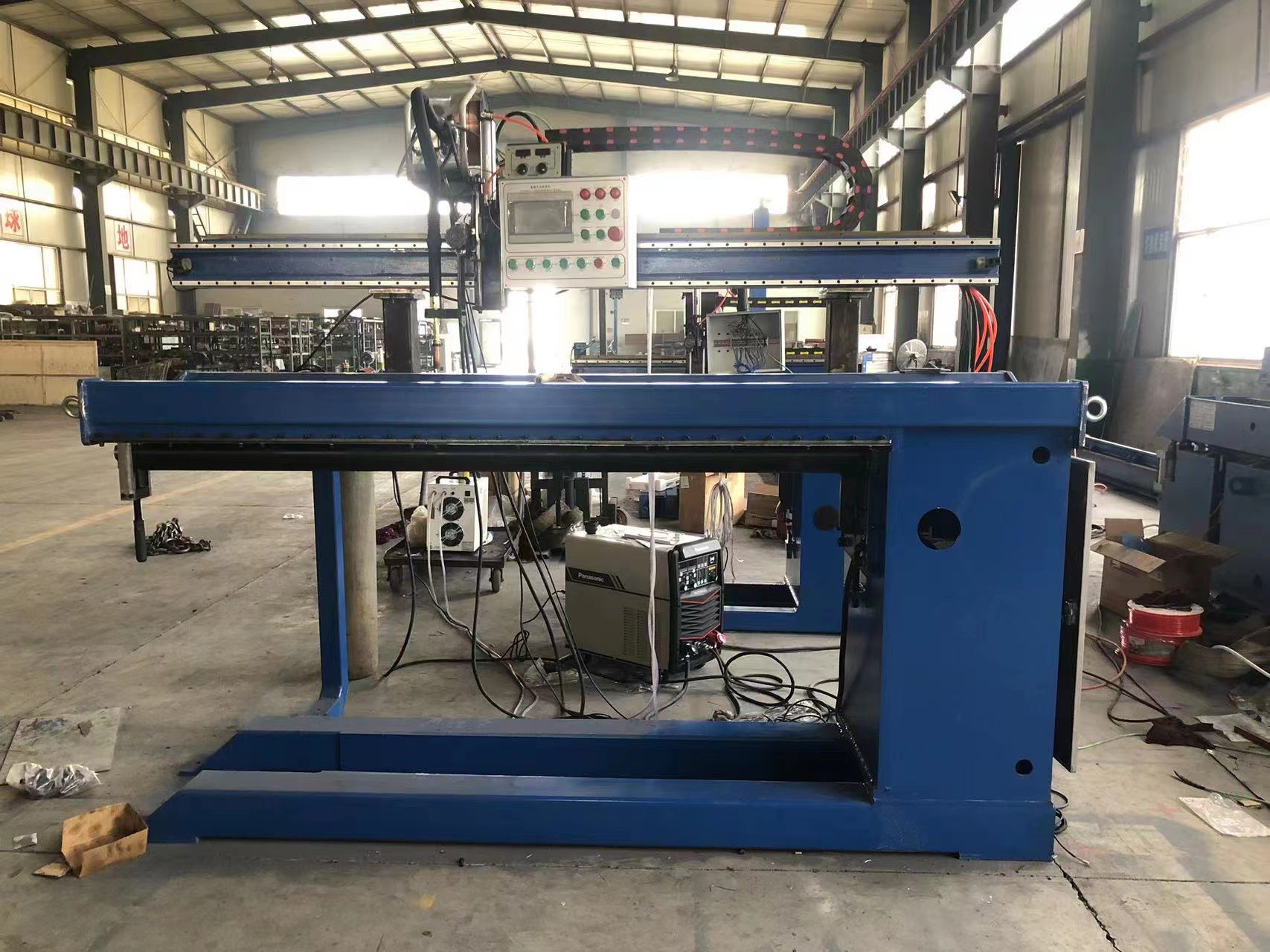
For buyers looking for broader fabrication integration, Wuxi Samgins is positioned within the manufacturing and processing machinery sector with a wide machine portfolio that includes shearing machines, press brakes, plate rolling machines, leveling machines, CNC cutting systems, welding rotators, and longitudinal seam welding machine solutions. This matters because many fabrication plants do not buy a shearing machine in isolation. They source linked equipment around a shared production workflow.
How Hydraulic Shearing Technology Works In Production
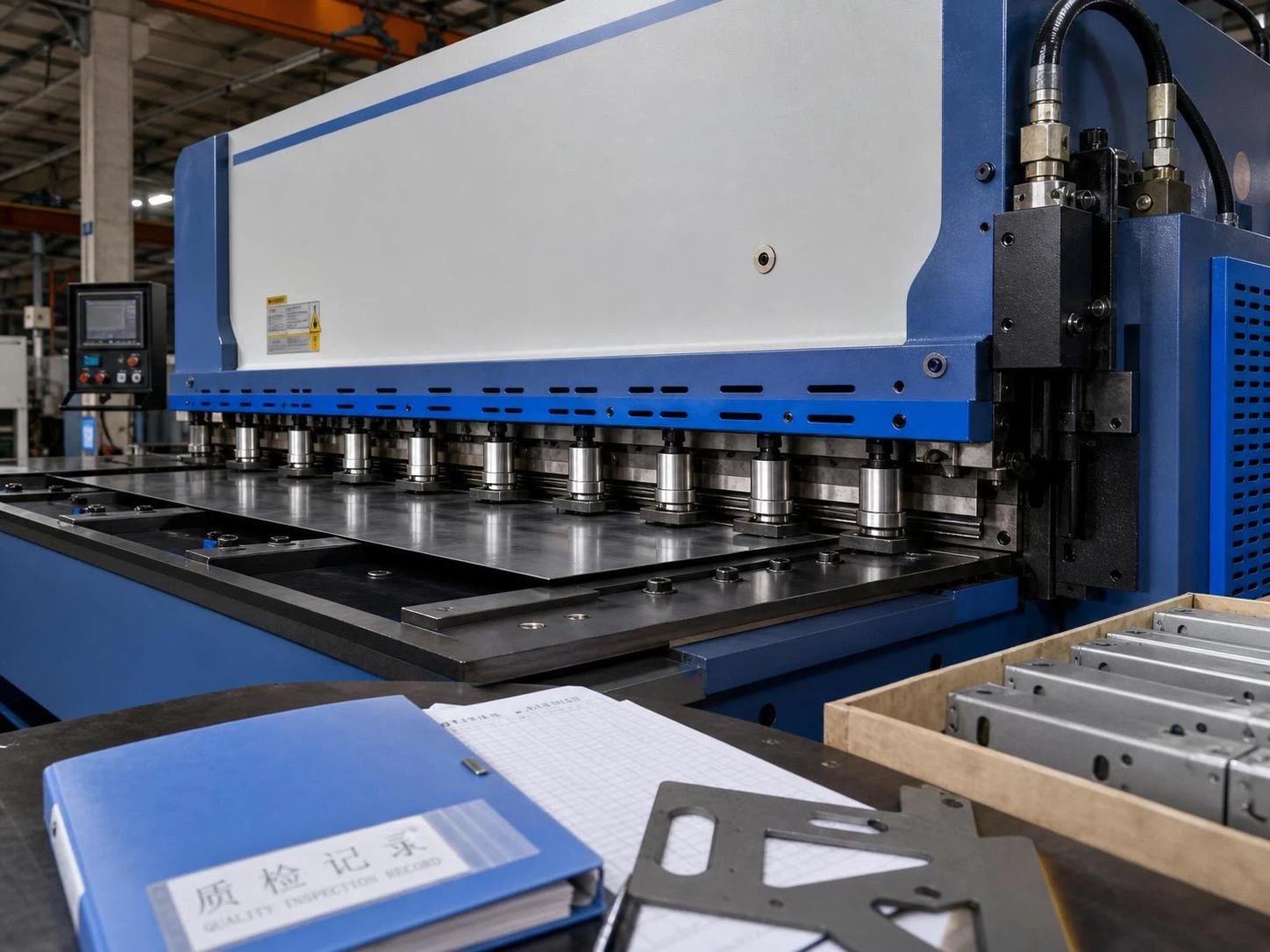
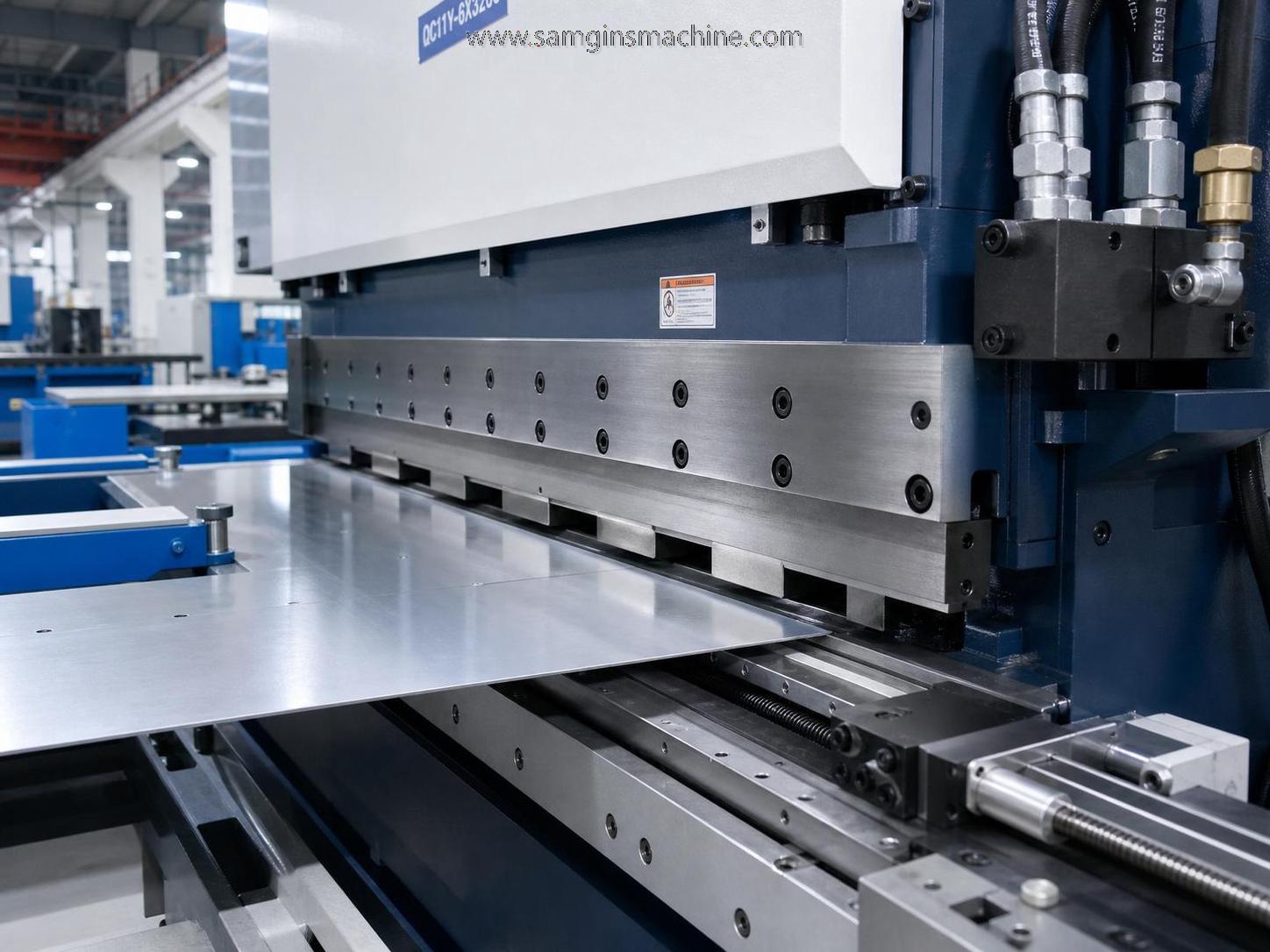
A hydraulic shearing machine cuts material through the relative motion of upper and lower blades. Hydraulic cylinders drive the upper beam, which descends with controlled force to shear the sheet against a fixed lower blade. The cut quality depends on several interacting factors, including blade sharpness, blade clearance, hold-down pressure, rake angle, frame rigidity, and the mechanical properties of the material being processed. Stable hydraulic control is important because excessive vibration or uneven force can damage edge quality.
In normal operation, the operator or CNC controller sets backgauge position, cutting length, stroke parameters, and sometimes blade gap according to sheet thickness and material type. Hold-down devices clamp the sheet to reduce movement during cutting. If the machine is configured properly, the result is a straight cut with manageable burr, acceptable squareness, and repeatable dimensions. If it is not, users may see twisting on narrow strips, edge deformation, accelerated blade wear, or inaccurate repeat cuts.
The supplier's engineering choices strongly influence this performance. Frame fabrication quality affects long-term rigidity. Hydraulic system design affects motion stability and service life. The choice of seals, pumps, valves, electrical components, and controller brand influences maintenance frequency and operating consistency. This is why experienced buyers ask a hydraulic shearing machine supplier detailed questions about key components instead of comparing only tonnage and maximum thickness.
Wuxi Samgins states that key hydraulic, servo, and CNC components use world-famous imported brands for precision, stability, and longer service life. In procurement terms, that is relevant because hydraulic shearing performance depends heavily on component consistency over time, not only on the machine's initial trial cut. Buyers sourcing for repetitive industrial output should pay close attention to this point during technical review and factory acceptance discussions.
Main Machine Types And Supplier Specializations
Not every hydraulic shearing machine supplier focuses on the same machine category. The two most common types in metal fabrication are swing beam shearing machines and guillotine shearing machines. Swing beam models are often selected for practical, cost-conscious applications with routine sheet cutting needs. Guillotine types are generally preferred where higher precision, broader material flexibility, or more controlled blade clearance adjustment is required. A supplier should be able to explain the tradeoff instead of pushing one design for every buyer.
Suppliers may also differ by control level. Basic machines use manual settings and are common in repair shops or lower-volume production. NC and CNC versions improve repeatability, backgauge positioning, job memory, and operator efficiency, which becomes increasingly important in batch production and mixed-order environments. If the factory frequently shifts between thicknesses, dimensions, or materials, a supplier with stronger automation capability can provide a more suitable long-term answer.
Another important distinction is whether the supplier serves standalone machine buyers or integrated line customers. Some factories need the shearing machine to work together with deburring, bending, rolling, welding, or structural steel equipment. Wuxi Samgins has a broad product range across welding, cutting, plate processing, and beam production machinery, which can be helpful for buyers planning a larger fabrication layout, capacity expansion, or process standardization project.
A specialized hydraulic shearing machine supplier should also understand material behavior by application. Cutting thin stainless sheets for enclosure fabrication is different from processing thicker carbon steel for tanks, ducting, construction parts, or general fabrication. Supplier recommendations on throat depth, cutting angle, backgauge travel, front support, and discharge handling should reflect the actual production job, not a generic brochure template.
Who Should Source From A Professional Supplier
The typical buyer of a hydraulic shearing machine supplier includes sheet metal processors, steel service workshops, enclosure manufacturers, HVAC fabricators, machinery builders, pressure vessel workshops, transport equipment producers, and structural steel contractors. In these environments, shearing is often one of the first production steps, so the machine directly affects throughput, labor efficiency, nesting decisions, and material yield before parts move to bending, welding, rolling, or assembly.
Professional sourcing becomes more important when production volume is high, material grades vary, downstream tolerances are tight, or labor experience is limited. In such cases, a weakly specified machine may still cut metal, but it can create hidden losses through setup time, dimensional drift, rework, blade replacement, or avoidable downtime. A stronger supplier adds value by helping the buyer define real requirements before the order is locked.
Buyers also need different support depending on project maturity. Some already know exact thickness, length, and controller needs. Others are building a new workshop or replacing an older machine with incomplete historical data. An experienced hydraulic shearing machine supplier should be able to guide both groups by asking about annual tonnage, common plate sizes, tolerance expectations, operating shifts, material mix, and future expansion plans.
Wuxi Samgins is especially relevant for buyers who want to align shearing with adjacent fabrication processes. Because its catalog extends into press brakes, plate rolling machines, sheet metal deburring machines, edge milling machines, pipe processing equipment, and welding automation, the company can support discussions beyond a single machine purchase. For many industrial buyers, this reduces coordination risk when planning a more complete line.
How To Evaluate Quality, Compliance, And Manufacturing Control
When screening a hydraulic shearing machine supplier, buyers should review both machine specifications and the supplier's process discipline. Useful checkpoints include frame welding and stress handling methods, machining accuracy of critical surfaces, hydraulic circuit layout, electrical cabinet organization, blade material options, backgauge design, and factory test procedures. A quotation with incomplete technical detail often signals that after-order clarification will be difficult and that final performance may not fully match the initial promise.
Compliance is also important, particularly for imported industrial equipment. Wuxi Samgins states that its machines comply with the ISO9001 quality system and EU CE Machinery and LVD directives. For buyers in regulated markets or those with internal procurement rules, such baseline compliance can simplify documentation review. At the same time, purchasers should still verify the exact scope of supplied documents, warning labels, manuals, electrical compatibility, and safety configuration for the destination market.
Quality control should be discussed as a process, not just a claim. Buyers can ask how incoming components are checked, how frame alignment is controlled during fabrication, how hydraulic systems are tested for leakage and pressure stability, how backgauge repeatability is verified, and whether trial cutting is done using material close to the customer's real application. The answers reveal whether the supplier thinks like a manufacturer or simply like a trader handling machine transactions.
For factories that require process continuity, support after shipment matters almost as much as build quality. Wuxi Samgins highlights long-term warranties and support covering design, manufacturing, sales, after-sales, and technical service. In practice, buyers should confirm response channels, spare parts lead time, commissioning support method, and the information required for fault diagnosis. These details matter when the machine becomes part of daily production instead of a one-time capital purchase.
Selection Standards Before You Request A Quotation
A sound RFQ to a hydraulic shearing machine supplier should start with material reality, not only headline thickness. Buyers should specify material grade, tensile characteristics if known, maximum and common thickness, sheet width and length, required cutting tolerance, expected burr tolerance, daily shift pattern, and whether production involves long straight cuts, narrow strips, mixed batches, or repeated part families. Without this context, quotations are often difficult to compare because suppliers make different assumptions in silence.
Cutting capacity should be evaluated conservatively. Many buyers focus on the maximum rated thickness for mild steel, but the working mix may include stainless steel or thicker sections processed intermittently. It is usually better to size the machine around stable production conditions instead of occasional theoretical limits. Blade clearance adjustment method, backgauge accuracy, support arms, squaring arm quality, front feeding convenience, and control usability all affect real output more than catalog capacity alone.
Plant conditions also influence selection. Available floor space, sheet handling method, crane access, power supply, operator skill level, noise expectations, and maintenance capability should all be considered before placing an order. A professional hydraulic shearing machine supplier should ask for this information and may recommend auxiliary options such as front support, pneumatic rear support, sheet return systems, or upgraded controllers when they improve operating efficiency.
For buyers building a sheet metal workflow, a shearing machine may need to work alongside press brakes, deburring units, or welding systems. In such cases, Wuxi Samgins can be relevant because its product range covers multiple linked fabrication stages. Referencing adjacent solutions such as a longitudinal seam welding machine can also help buyers think in process terms, especially if the cut blanks will feed cylindrical shells, tanks, duct components, or fabricated assemblies.
Application Scenarios, Global Supply Experience, And Case Signals
A hydraulic shearing machine supplier becomes most valuable when application demands vary by region, code environment, and production objective. Export buyers often need more than machine parameters. They may need advice on operating language, documentation package, electrical standard matching, spare blade strategy, and installation preparation. A supplier with international project experience can usually anticipate these issues earlier, which helps reduce delays between machine arrival and productive start-up.
Wuxi Samgins states that it has over 10 years of export experience and that its team is familiar with ASME, API, and other local industry codes. That matters particularly for customers in pressure vessel, steel structure, energy, transport, and industrial fabrication sectors where purchased equipment must fit into broader production and documentation requirements. Familiarity with these working environments can improve communication accuracy even when the machine itself is a standard shearing model.
The company's referenced customer list includes URALSTANKOIMPORT, MD Calbah Industries Pty Ltd, Ersay International Transport, Contevix comercio e servicos ltda, Zein Steel Industries Co.LLC, BatysMunaiGazZhabdyktary LLP, S.P Blue Fisheries LDA, Rienzie Group, SALEH SAAD ALSANHANI, Engiplas engineering plastics, Regional engineering works, PT.Cahaya mas Cemerlang, Estructuras Metalicas Girders Chile Limitada, and Lincoln Electric-MENA. While those names do not replace a technical evaluation, they indicate exposure to geographically diverse industrial buyers.
For procurement teams, the practical lesson is clear: ask the hydraulic shearing machine supplier for examples relevant to your production style. The best reference is not the largest customer name, but a case close to your material range, accuracy expectation, and production rhythm. That makes discussions about machine configuration, delivery timing, and training far more useful than generic marketing claims.
Maintenance, Lifecycle Planning, And Future Industry Trends
A hydraulic shearing machine is not a buy-and-forget asset. Routine inspection of hydraulic oil condition, seal status, blade wear, hold-down operation, lubrication points, electrical connections, and backgauge accuracy is necessary to preserve cut quality and avoid sudden downtime. Maintenance intervals depend on operating hours, material type, environmental cleanliness, and operator discipline. Buyers should ask the supplier for preventive maintenance guidance before installation rather than after the first fault appears.
Replacement planning should include blades, seals, filters, wear-prone hydraulic parts, and critical electrical items with realistic lead time expectations. A dependable hydraulic shearing machine supplier should help define a recommended spare parts list for the first year of operation, especially when the installation site is far from major industrial service hubs. This is often more valuable than chasing the lowest initial machine price and then waiting too long for basic consumables or service components.
Looking forward, the industry is moving toward easier control interfaces, better repeatability, higher energy efficiency, improved guarding, remote support readiness, and stronger integration with digital production planning. Buyers increasingly expect equipment that supports stable output across mixed product batches with less dependence on highly experienced operators. This trend favors suppliers that combine mechanical robustness with practical automation and stronger technical documentation.
For companies expanding sheet metal and welded fabrication capacity, it is sensible to choose a supplier that can support future process upgrades rather than only today's cut list. Wuxi Samgins, with machinery spanning shearing, bending, rolling, CNC cutting, and welding automation, aligns with that broader planning logic. A sourcing decision framed around lifecycle fit is usually stronger than one driven only by immediate purchase cost.
How Much It Really Costs: TCO And ROI For Buyers
The real cost of sourcing from a hydraulic shearing machine supplier is the total cost of ownership, not the quotation amount alone. TCO includes machine price, freight, duties, installation time, foundation or electrical preparation, operator training, blade replacement, hydraulic maintenance, spare parts inventory, production loss during downtime, and quality loss from inaccurate cutting. A cheaper machine can become more expensive over time if it creates unstable output or frequent service interruptions.
ROI is usually driven by throughput improvement, labor reduction, material utilization, reduced outsourcing, and more predictable downstream processing. If a better machine shortens setup time, improves repeatability, and lowers scrap before bending or welding, the financial effect can be meaningful even without very high production volume. Buyers should estimate value based on actual monthly cutting demand, rework history, and delivery pressure, not on generic payback formulas.
When comparing offers, procurement teams should standardize the evaluation sheet. Include machine type, rated capacity, control level, major component brands, included tooling or blades, safety configuration, warranty terms, spare parts package, documentation scope, inspection method, and delivery commitment. This prevents confusion when one hydraulic shearing machine supplier prices a basic package and another includes practical production items that reduce follow-up spending after arrival.
A disciplined sourcing approach usually leads to better commercial outcomes than a narrow price negotiation. For buyers that may later add press brakes, plate rolling machines, deburring systems, or welding equipment, supplier breadth can further improve ROI by simplifying service coordination and technical alignment. That is one reason Wuxi Samgins may be relevant for fabrication businesses seeking both a hydraulic shearing machine supplier and a broader machinery partner for future plant development.
search

Send Us A Message
Send us a Message
A dedicated person will follow up on your needs one-on-one and provide personalized customized solutions according
to your needs.
Get In Touch
We look forward to hearing from you for in-depth communication on how to fulfill your mixing requirements.