




Sheet Metal Deburring Equipment Explained: How to Select the Right Machine for Surface Finishing
What Sheet Metal Deburring Equipment Is
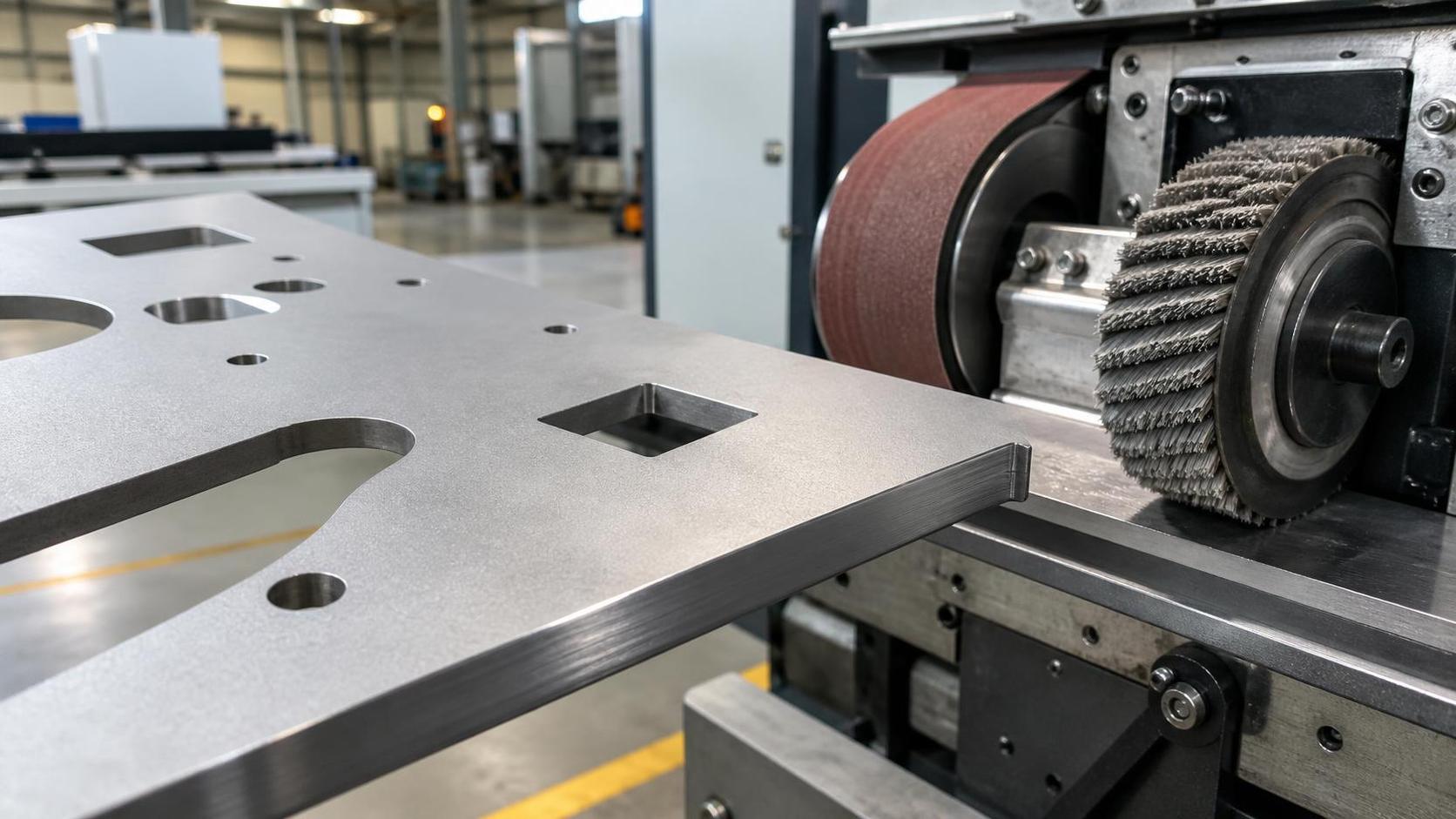
Sheet metal deburring equipment is industrial machinery used to remove burrs, sharp edges, slag, oxide scale, and minor surface irregularities from metal parts after laser cutting, plasma cutting, punching, shearing, machining, or forming. A burr is displaced material left along an edge when a cutting tool or thermal process exits the workpiece. It may be small, but it can affect assembly accuracy, coating adhesion, worker safety, and the perceived quality of a finished component.
The term covers more than a single machine category. Depending on the required result, sheet metal deburring equipment may use abrasive belts, rotating brushes, flap wheels, wide belts, planetary heads, magnetic media, or combinations of these systems. Some machines focus on edge rounding, while others remove heavy laser oxide, produce a directional finish, clean both sides in one pass, or prepare parts for powder coating and welding.
In practical procurement, the required finish must be defined before comparing machine specifications. Important questions include whether the burr is on one or both sides, whether edges need a controlled radius, whether the material is stainless steel, carbon steel, aluminum, copper, or galvanized sheet, and whether the part has holes, louvers, protective film, or narrow internal contours. These variables determine the appropriate process and abrasive configuration.
Why Deburring Matters In Fabrication
Manual filing, handheld grinding, and hand-held rotary tools can remove isolated burrs, but they are difficult to standardize across shifts and operators. They also create ergonomic pressure, inconsistent edge geometry, and labor-dependent throughput. Automated sheet metal deburring equipment turns an unpredictable finishing task into a defined production step with controllable feed speed, abrasive pressure, contact method, and repeatable results.
Deburring supports downstream operations. Sharp edges can damage powder-coating films, create thin paint coverage at corners, interfere with sealing surfaces, or introduce handling hazards during assembly. Residual dross on thermal-cut parts can also prevent flat seating in fixtures. A properly selected finishing process improves part handling and can reduce rework before bending, welding, coating, packing, or final inspection.
For manufacturers processing mixed orders, the value is not limited to cosmetic improvement. Consistent finishing can reduce dependence on highly variable manual work and make routing more predictable. Wuxi Samgins supplies sheet metal processing equipment alongside laser cutting, CNC cutting, press brake, leveling, welding, and material-handling solutions. This broader process perspective is useful when a deburring machine must fit an existing fabrication flow rather than operate as an isolated purchase.
How The Main Deburring Technologies Work
Abrasive belt systems use a moving coated-abrasive belt to contact the part surface. They are commonly applied for burr removal, surface calibration, oxide removal, and directional finishing. Their performance depends on abrasive grain, belt speed, contact roller hardness, workpiece support, and feed rate. A belt can remove material efficiently, but excessive pressure may change flatness or produce an unsuitable surface pattern on thin sheet.
Rotary brush systems use abrasive filaments, discs, or flap elements that conform to outer edges, holes, slots, and complex contours. They are especially useful where uniform edge rounding is required around external and internal features. The brush geometry reaches local edges differently from a wide abrasive belt, making it suitable for parts with frequent cutouts, perforations, and irregular profiles. Brush wear and compensation settings should be considered in routine process control.
Magnetic polishing uses magnetic force to drive small finishing media around workpieces, typically for specific small components or difficult-to-reach features. It is not a direct substitute for a conveyorized wide-sheet machine in every application. However, it can complement other equipment where fine finishing of small parts is needed. The most effective configuration is often a sequence: cutting, initial burr or oxide removal, edge conditioning, cleaning, and inspection.
Main Machine Categories And Applications
Single-sided conveyor machines process one face of a sheet or part per pass. They are practical when burr direction is predictable, part geometry is relatively simple, or production volume supports manual turning. Double-sided machines process upper and lower surfaces in a single pass, which can improve throughput and reduce handling. The correct choice depends on the cut process, burr location, part thickness range, labor availability, and takt-time requirement.
Belt-only machines are generally suited to broad surface work, primary burr removal, and uniform linear finishing. Brush-only machines are often selected for contour following and edge rounding. Combination machines pair belts with brushes, allowing a heavier first operation followed by a more controlled edge treatment. This arrangement can be useful for laser-cut stainless or carbon steel parts where oxide removal and safe, smooth edges are both required.
Selection should also consider part support. Small blanks, perforated panels, thin material, and narrow strips require a conveyor bed that holds parts securely during processing. Vacuum support, magnetic support, or suitable conveyor construction may be relevant depending on material and machine design. Buyers should submit representative drawings and sample parts, including the smallest and most distortion-sensitive pieces, for a realistic process discussion.
Who Uses These Machines And Where They Fit
Typical users of sheet metal deburring equipment include laser-cutting service centers, enclosure manufacturers, electrical cabinet producers, HVAC fabricators, elevator-component suppliers, agricultural-equipment makers, commercial kitchen producers, steel-structure workshops, and contract manufacturers. These businesses frequently handle different materials and part geometries, so flexibility, rapid adjustment, and stable consumable performance are often as important as maximum feed speed.
The machine normally sits after cutting and before bending, welding, coating, or assembly. In a laser-processing cell, parts may move from a fiber laser cutting machine to sorting, deburring, and then press brake operations. For plasma-cut structural components, heavier slag removal may be required before edge finishing. Mapping this route helps purchasers identify handling bottlenecks, required buffer space, dust extraction needs, and the level of automation justified by production volume.
Wuxi Samgins has supplied equipment to international customers including URALSTANKOIMPORT, MD Calbah Industries Pty Ltd, Ersay International Transport, Contevix comercio e servicos ltda, Zein Steel Industries Co. LLC, and Lincoln Electric-MENA. These named business relationships demonstrate international project exposure, but a buyer should still assess each proposed machine against its own materials, parts, local safety rules, power supply, and production objectives.
How To Select The Right Machine
Start with the input condition rather than the machine brochure. Identify cutting method, material grade, thickness range, sheet dimensions, smallest component size, burr height, dross condition, surface sensitivity, and expected daily volume. Laser-cut stainless steel may require oxide removal and consistent cosmetic finishing, while punched galvanized parts may need gentle edge conditioning that does not damage the coating. A single stated material thickness is rarely enough for a sound selection.
Next, define the output acceptance standard. The requirement may be simply no sharp edge, a repeatable edge break, a specified edge radius, removal of thermal oxide, or a finish ready for paint. Agree how the result will be inspected: visual inspection, touch-safe handling, radius gauges, coating trials, or sample approval. This avoids a common mismatch in which the supplier optimizes for burr removal while the buyer expects substantial edge rounding.
Evaluate working width, conveyor design, head configuration, adjustment range, dust-collection interface, electrical compatibility, guarding, access for abrasive changes, and service support. A factory acceptance test using representative samples is valuable, especially for mixed production. Request the proposed abrasive sequence, estimated consumable life assumptions, recommended operating parameters, and exclusions. Wuxi Samgins can discuss customized manufacturing requirements within its broader sheet metal and welding equipment offering.
Quality Control, Installation, And Maintenance
Reliable results begin with installation. The machine should be placed on a stable floor with adequate access for loading, unloading, maintenance, and abrasive replacement. Electrical supply, grounding, compressed air where required, and dust extraction must match the equipment specification and local regulations. A safe extraction arrangement is particularly important when processing combustible dusts or mixed materials; the final solution must be evaluated according to the material and applicable site requirements.
A practical quality plan includes approved reference samples for each major material and cut condition. Operators can compare processed parts for residual burrs, uneven edge rounding, visible scratch direction, heat discoloration, or excessive material removal. Feed rate, head pressure, belt condition, brush condition, and conveyor condition should be documented for recurring jobs. This allows settings to be restored instead of relying on individual operator judgment.
Maintenance intervals depend on workload and abrasive type, but daily cleaning, regular inspection of belts and brushes, conveyor checks, dust-system cleaning, and periodic alignment verification are fundamental. Consumables should be replaced before finish quality deteriorates enough to cause downstream defects. Wuxi Samgins states that its machines comply with the ISO9001 quality system and EU CE Machinery and LVD directives, while its support covers design, manufacturing, sales, after-sales service, and technical assistance.
Total Cost Of Ownership And Future Direction
The purchase price is only one component of total cost of ownership. Buyers should model capital cost, freight and installation, power use, dust extraction, abrasive belts or brushes, operator time, maintenance labor, spare parts, floor space, training, and expected downtime. The financial case usually improves when the machine replaces repetitive manual work, reduces coating or assembly rework, and creates a more predictable flow from cutting to downstream production.
Return on investment should be based on actual part mix, not an ideal production example. Measure current manual deburring minutes per part, labor cost, rejected-part cost, rework frequency, and average daily quantity. Then compare these figures with estimated automated cycle time, setup time, consumable cost, and machine utilization. Capacity that is too low creates a bottleneck, while excessive capacity can increase investment and operating cost without improving the factory constraint.
Future demand is moving toward integrated processing cells, lower manual handling, better traceability, flexible abrasive systems, and finishing processes matched to laser-cut part quality. As cutting speeds rise and product variants increase, manufacturers need sheet metal deburring equipment that can adapt without sacrificing inspection discipline. A structured sample test, transparent cost model, and clear service plan remain the most reliable basis for choosing equipment that supports long-term surface-finishing capability.
search
Recommended Products
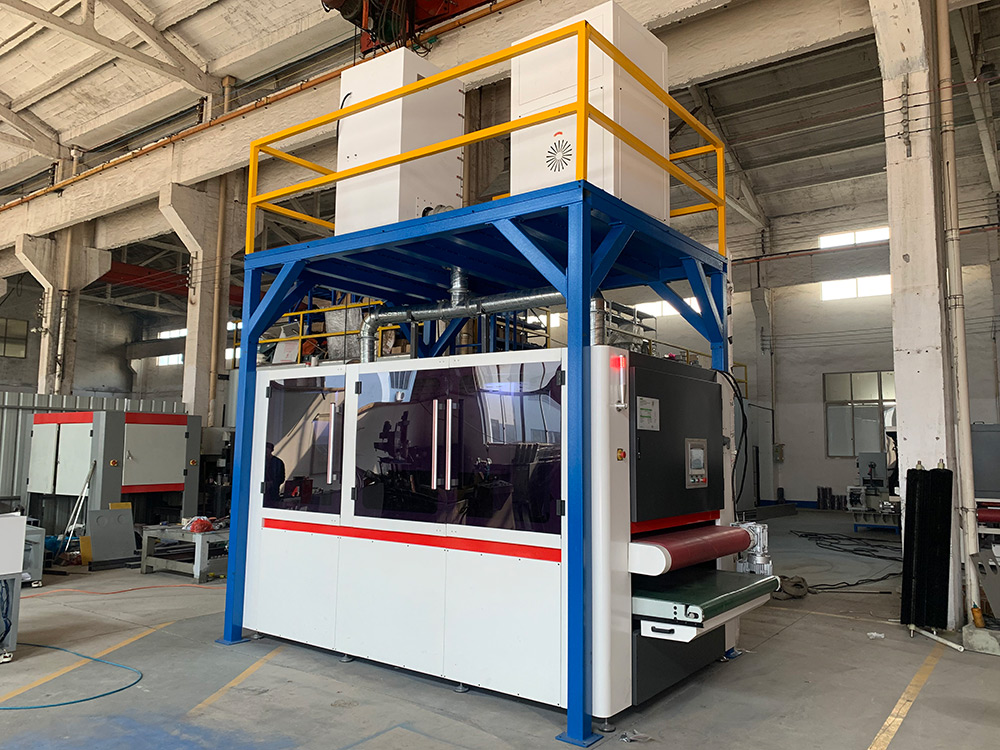
 RNS1300 Sheet metal deburring machineThis equipment features a dry sanding belt combined with four sets of universal sanding roller brushes. It is primarily designed for edge processing, hole deburring, and surface finishing of metal sheets, including drawing, descaling, and polishing. It can effectively remove burrs generated by stamping, shearing, laser cutting, plasma cutting, and flame cutting in a single pass, from all directions. As a result, all edges and holes of the workpiece achieve a smooth small R-arc finish. The entire processing procedure is safe and reliable, ensuring superior workpiece quality.
![星星1]()
- RNS1000 Sheet metal deburring machineThis equipment combines a dry sanding belt with four sets of universal sanding roller brushes. It is primarily designed for edge processing, hole deburring, and surface finishing of metal sheets, including drawing, descaling, and polishing. It effectively removes burrs generated by stamping, shearing, laser cutting, plasma cutting, and flame cutting in a single pass from all directions, delivering a smooth small R-arc finish on all edges and holes. The process is safe, reliable, and ensures superior workpiece quality.
![星星1]()
- RNS 800 Sheet metal deburring machineThis equipment combines a dry sanding belt with four sets of universal sanding roller brushes. It is primarily designed for edge processing, hole deburring, and surface finishing of metal sheets, including drawing, descaling, and polishing. It effectively removes burrs generated by stamping, shearing, laser cutting, plasma cutting, and flame cutting in a single pass from all directions, delivering a smooth small R-arc finish on all edges and holes. The process is safe, reliable, and ensures superior workpiece quality.
![星星1]()

Recommended blogs
Send Us A Message
Send us a Message
A dedicated person will follow up on your needs one-on-one and provide personalized customized solutions according
to your needs.
Get In Touch
We look forward to hearing from you for in-depth communication on how to fulfill your mixing requirements.