




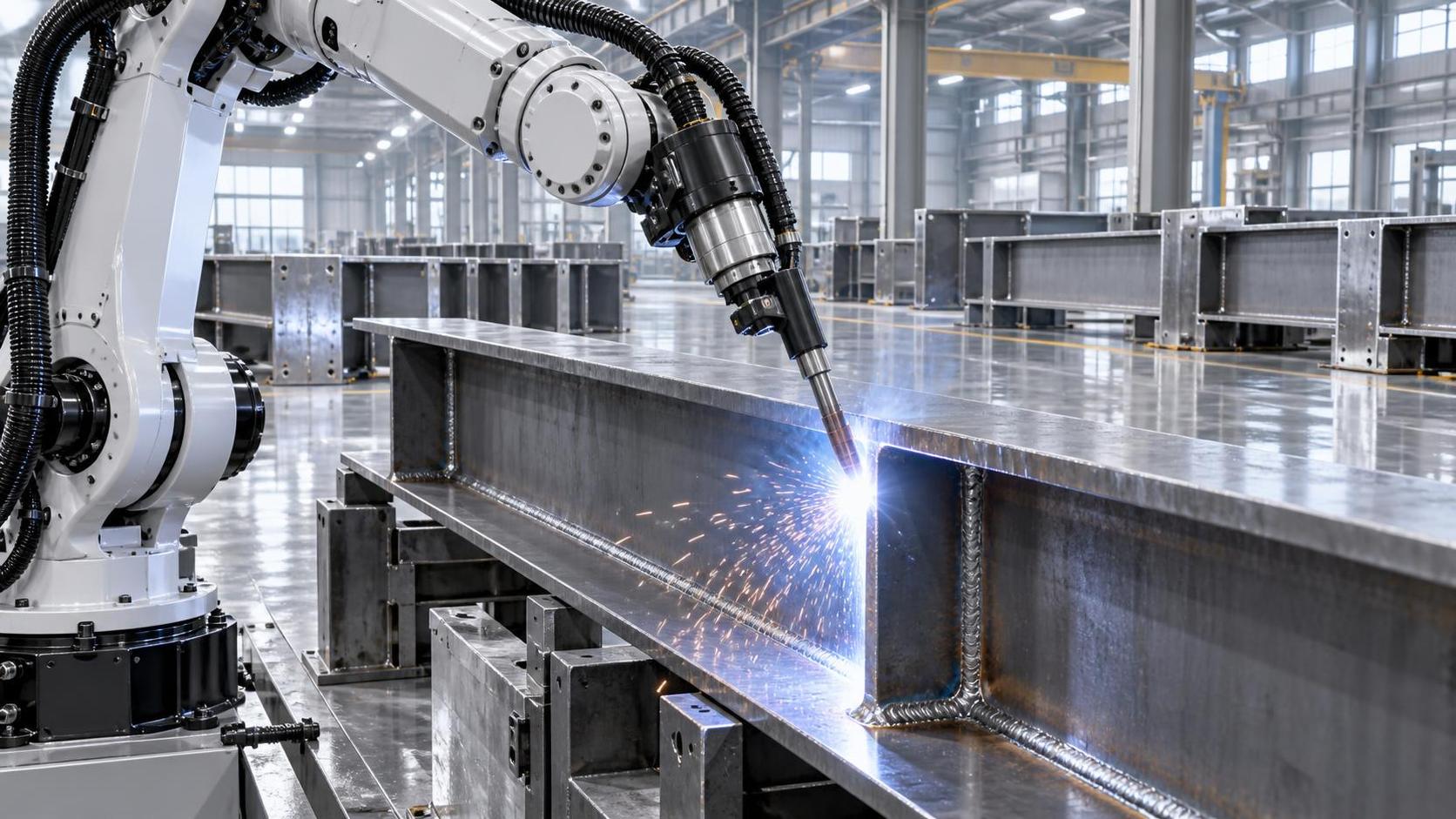
arc welding robots: A Complete Guide to Types and How They Work
Arc Welding Robots: A Complete Guide To Types And How They Work
Arc welding robots are programmable industrial manipulators that guide a welding torch along a joint while an electric arc supplies the heat needed to fuse metal. A production system normally combines the robot, welding power source, controller, wire feeder where required, fixtures, and safety equipment. The robot controls movement; the welding equipment regulates the arc. Reliable results depend on coordinating these elements with a suitable joint design, welding procedure, and consistent incoming parts.
A complete robotic welding cell extends beyond the arm itself. Depending on the application, it may include workpiece positioners, travel tracks, torch cleaning equipment, seam sensors, extraction, and loading stations. Robot repeatability describes the ability to return to a commanded position under specified conditions. It does not establish finished weld accuracy by itself. Fixture variation, contact tip wear, joint gaps, heat distortion, and calibration can all affect where the weld actually forms.
The strongest candidates for automation usually have repeatable joints, accessible torch paths, and enough recurring production to justify programming and tooling. Typical users include fabricators of machinery frames, transport equipment, structural components, tanks, and pipe assemblies. High production volume helps, but smaller batches can also work when part families share fixtures and programs. A practical feasibility study starts with representative drawings and samples, then checks whether the process can tolerate the measured variation.
Robotic welding should also be distinguished from dedicated mechanized welding. A longitudinal seam welding machine may be economical for repeated straight seams, while a manipulator with rotators can suit large cylindrical workpieces. An articulated robot offers greater flexibility around complex geometries and changing weld orientations. Buyers should select the automation architecture around the workpiece and production mix, rather than assuming that every welding task benefits from the same equipment configuration.
How Arc Welding Robots Control Motion And The Weld Pool
The operating sequence begins with locating and clamping the workpiece. The controller moves the torch to an approach position, initiates shielding gas and the arc as specified, and follows the programmed seam. During welding, it coordinates travel speed, torch orientation, and process commands to the power source. At the joint end, programmed crater filling and gas postflow may help control termination quality. The robot then retracts before the next movement or unloading operation.
Weld quality depends on the interaction between electrical settings, travel speed, wire delivery, shielding, and joint geometry. Current and voltage influence metal transfer and penetration, while torch angle and contact tip distance affect arc behavior. Travel speed changes heat input per unit length, although formal heat input calculations also depend on the process and applicable procedure. Parameters must therefore be developed together through trials and qualification where required, rather than optimized as unrelated settings.
Programming commonly uses a teach pendant, offline programming software, or a combination of both. Operators define weld paths, approach moves, process schedules, and coordinated positioner movements. Offline programming can reduce production interruption, but the simulated cell must match the installed equipment closely. Tool center point calibration, workpiece reference frames, and actual fixture positions remain essential. A program that looks correct on screen still needs controlled verification for clearance, reach, arc behavior, and weld quality.
Sensing can help arc welding robots accommodate variation within defined limits. Touch sensing locates features before welding, while through arc sensing can support tracking in suitable joint geometries and welding conditions. Laser systems can measure seam position or profile when access and surface conditions permit. Sensor selection should follow the expected variation and required response. No tracking method removes the need for appropriate fit up, stable workholding, and a welding procedure suited to the joint.
Main Robot Types And Arc Welding Processes
Six axis articulated robots are widely used because they can orient a torch around varied joints within a compact working area. Hollow wrist designs can simplify cable routing, although maintenance access and dress package durability still need evaluation. Gantry and Cartesian arrangements can suit long or large workpieces where predictable linear coverage is valuable. Choosing between these architectures requires checking the actual weld envelope, obstacles, loading arrangement, and reachable torch orientations rather than comparing reach figures alone.
Additional axes expand the system beyond the robot arm. A travel track can extend coverage, while rotary or tilt positioners can present joints in more favorable welding positions. Configurations described as seven or nine axes may combine an arm with external motion, but suppliers can count and coordinate these axes differently. Ask which movements are synchronized during welding, which are used only for indexing, and how their combined motion affects payload, clearance, and cycle time.
Gas metal arc welding, including commonly used MIG and MAG variants, is a frequent choice for robotic fabrication because continuous wire feeding supports productive welding. Flux cored arc welding can suit applications requiring particular deposition characteristics or consumable properties, subject to material and procedure requirements. Gas tungsten arc welding, often called TIG, offers controlled heat delivery for suitable thin sections and demanding joints, but usually requires closer fit up and careful control of electrode condition.
Submerged arc welding is another arc process used in suitable mechanized applications, particularly long seams and larger sections, although its equipment and flux handling requirements differ from typical articulated torch cells. Collaborative robots describe a robot and application concept rather than a welding process. Their use still requires assessment of arc radiation, fumes, heat, spatter, electrical hazards, and movement. A collaborative arm does not automatically make an operating welding cell safe for unrestricted human access.
Application Matching And Wuxi Samgins Integration Options
For machinery and structural fabrication, arc welding robots are most useful where weld access and part location remain consistent across a production family. Frames, brackets, and assemblies with repeated fillet welds are common evaluation candidates. Large H beam production may instead call for dedicated assembly, welding, and straightening equipment. Wuxi Samgins offers welding robots alongside H beam production equipment, allowing buyers to compare flexible robot cells with specialized lines against their actual product mix.
Tank and pipe manufacturers face different workholding challenges. Diameter, length, wall thickness, center of gravity, and allowable distortion influence whether a positioner, rotator, or welding manipulator is appropriate. Wuxi Samgins lists welding rotators, positioners, longitudinal seam welding machines, and pipe welding equipment within its range. Its stated customization capability includes seven and nine axis welding robot arrangements and heavy duty rotators. A proposal should identify the exact axis configuration and prove access to every specified seam.
Upstream preparation also affects robot performance. Cutting accuracy, edge condition, bevel consistency, and component straightness can determine whether a programmed seam remains within tolerance. Wuxi Samgins supplies CNC cutting equipment, edge milling machines, plate processing equipment, and other fabrication machinery that may support a coordinated production route. The commercial benefit should be assessed through measurable interfaces: incoming part tolerances, fixture datums, transfer methods, and achievable cycle balance between preparation, welding, inspection, and downstream operations.
The supplied customer references include URALSTANKOIMPORT, MD Calbah Industries Pty Ltd, Zein Steel Industries Co.LLC, and Lincoln Electric-MENA. These names can support a request for relevant references, but they do not establish which robotic systems were supplied or what performance resulted. Ask Wuxi Samgins for permission based reference discussions, comparable application details, and sample acceptance records where available. Evaluate experience against your material, joint configuration, production scale, and destination requirements before drawing conclusions.
Selection Criteria, Safety Standards, And Quality Verification
Begin equipment selection with a technical package covering material grades, thickness ranges, drawings, weld symbols, annual demand, batch sizes, and inspection requirements. Include realistic minimum and maximum part conditions, not only nominal dimensions. Check robot reach through the complete torch path, payload including peripherals, positioner load ratings, cable routing, and maintenance access. Specify target production output using a full cycle definition that includes loading, sensing, welding, repositioning, cleaning, inspection, and unloading.
Robot safety and welding quality require separate but connected reviews. ISO 10218 addresses industrial robot and robot application safety, while ISO 12100 provides a general framework for machinery risk assessment. Arc welding equipment has relevant requirements within the IEC 60974 series. Applicable editions and national adoption should be agreed for the destination market. The integrated cell needs appropriate safeguarding, interlocks, emergency stops, extraction, electrical protection, and verified safety functions based on its assessed risks.
Production codes depend on the final product and contract. ISO 3834 addresses quality requirements for fusion welding, while ASME Section IX or API 1104 may be relevant to particular pressure equipment or pipeline work. Their applicability must be established rather than assumed. Equipment compliance does not qualify a welding procedure or automatically approve production welds. Define required procedure qualifications, operator qualifications where applicable, acceptance criteria, traceability, and inspection methods with the responsible engineering and quality teams.
Wuxi Samgins states that its equipment follows ISO 9001 quality system requirements and relevant EU CE machinery and low voltage requirements, and that selected hydraulic, servo, and CNC components use established international brands. Verify these claims for the proposed configuration through current certificates, declarations, component schedules, and technical documentation. ISO 9001 concerns the quality management system. Factory acceptance should separately demonstrate representative welds, agreed cycle times, safety functions, and inspection results under clearly recorded test conditions.
Implementation, Maintenance, And Total Ownership Cost
Implementation should progress from sample welding and layout approval to fixture validation, factory acceptance, installation, and site acceptance. Confirm floor capacity, anchoring, utilities, shielding gas supply, extraction, and loading logistics before shipment. Establish who supplies fixtures, guarding, software, interfaces, and local compliance work. Wuxi Samgins describes support spanning design, manufacturing, sales, and technical service. Convert that scope into contractual deliverables, including training, documentation language, installation responsibilities, service response arrangements, and acceptance criteria.
Maintenance frequency should follow equipment manuals and actual duty conditions. Routine checks typically cover contact tips, nozzles, liners, wire feeding, shielding gas delivery, cooling circuits, cable wear, and torch condition. Planned work may include lubrication, calibration verification, fixture inspection, and backups of robot and welding settings. Collisions, torch replacement, and unexplained weld displacement should trigger appropriate checks before restarting production. Keep critical consumables and selected spare parts locally where delivery delays would otherwise stop the cell.
Total ownership cost includes more than the quoted robot package. Budget for engineering, fixtures, positioners, sensing, guarding, extraction, shipping, import costs, installation, qualification, training, consumables, energy, maintenance, software, and downtime. Compare quotations against a common scope so omitted integration work does not appear as a price advantage. Warranty duration, coverage exclusions, travel charges, remote support conditions, and spare part availability should be written into the agreement rather than inferred from general service statements.
Estimate simple payback by dividing the installed investment by expected annual net operating savings. Calculate savings from realistic reductions in labor hours, rework, scrap, or outsourcing, then subtract additional operating and support costs. Count extra output only when demand and downstream capacity can absorb it. Test conservative, expected, and high utilization scenarios, including product changeovers and learning time. Robots can improve consistency and productive arc time, but financial returns remain sensitive to fit up, uptime, and scheduling.
Future Trends And A Practical Purchasing Roadmap
Development in arc welding robots is moving toward easier programming, stronger sensing, and closer integration of process and production data. Offline programming, reusable weld libraries, and improved calibration tools can reduce preparation effort for changing products. Their value depends on drawing quality, stable reference systems, and operator capability. Buyers should request a demonstration using representative parts, including difficult corners and variable joints, rather than judging usability from a simple demonstration component alone.
Adaptive control and machine vision can expand the range of manageable variation, while production monitoring can reveal interruptions and process drift. Artificial intelligence based functions may assist programming or anomaly detection, but performance depends on the application, data, and validation method. Recorded current, voltage, and travel data can support traceability and process review. They should not be treated as direct proof of internal weld soundness or a substitute for inspection required by the governing specification.
A purchasing roadmap should start with one defined part family and measurable acceptance targets. Set the required weld quality, full cycle time, changeover time, operator duties, and documentation scope before requesting proposals. Compare a robot cell with dedicated seam welding or other mechanized options where appropriate. Then run representative trials, review the complete installed cost, and confirm that maintenance personnel can support the selected controls and components throughout the planned service life.
For an application review with Wuxi Samgins, provide part drawings, materials, thicknesses, maximum dimensions and weights, weld requirements, production targets, and destination country. Request a proposed layout, equipment list, axis description, welding process, safety concept, trial plan, and itemized service scope. Its broad fabrication equipment range can help assess the surrounding production steps as well as the welding cell. Base the final purchase on demonstrated capability, documented responsibilities, and a credible operating cost model.
search
Recommended Products
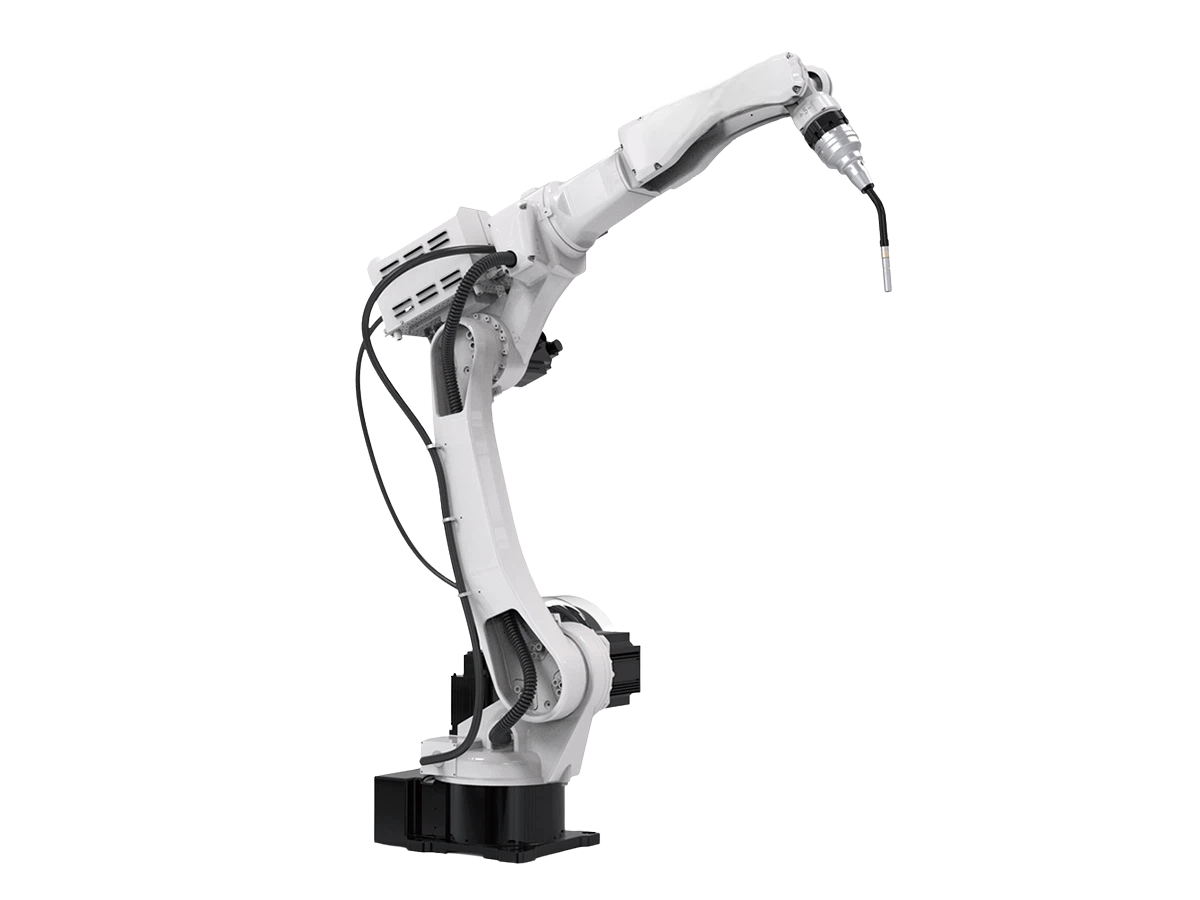
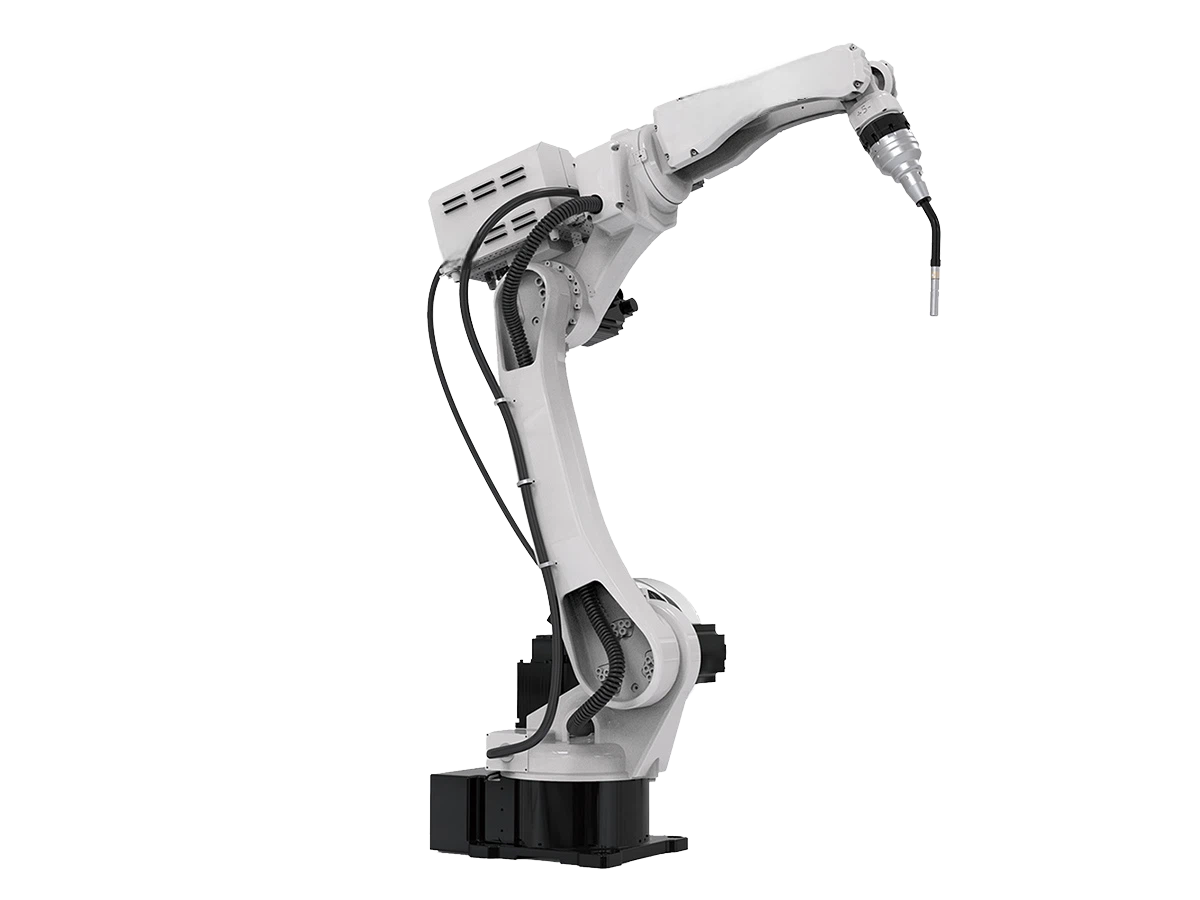
 6 Axis 2000mm ArmSpan MlG Industrial Welding RobotThis welding robot is designed for reliable arc welding in harsh production environments, featuring a long reach, stable repeatability, and flexible installation.
![星星1]()
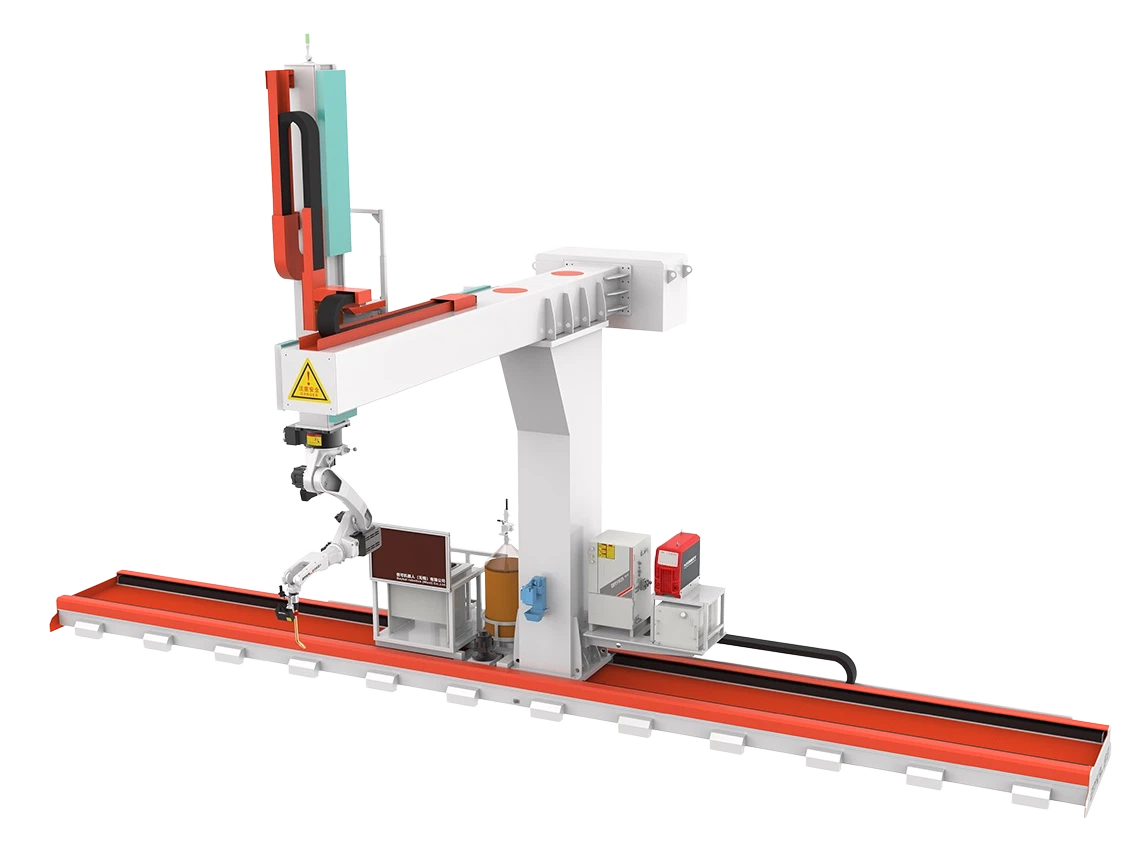
 9 axis cantilever type welding robot9 axis cantilever type welding robot for large steel workpieces with auto tracking, 3D import, and efficient CNC welding automation.
![星星1]()
- Cantilever type welding robot BR-2010A Pro/DG12Explore the BR-2010A Pro/DG12 cantilever welding robot for long workpieces, automated arc tracking, and efficient CNC welding.
![星星1]()
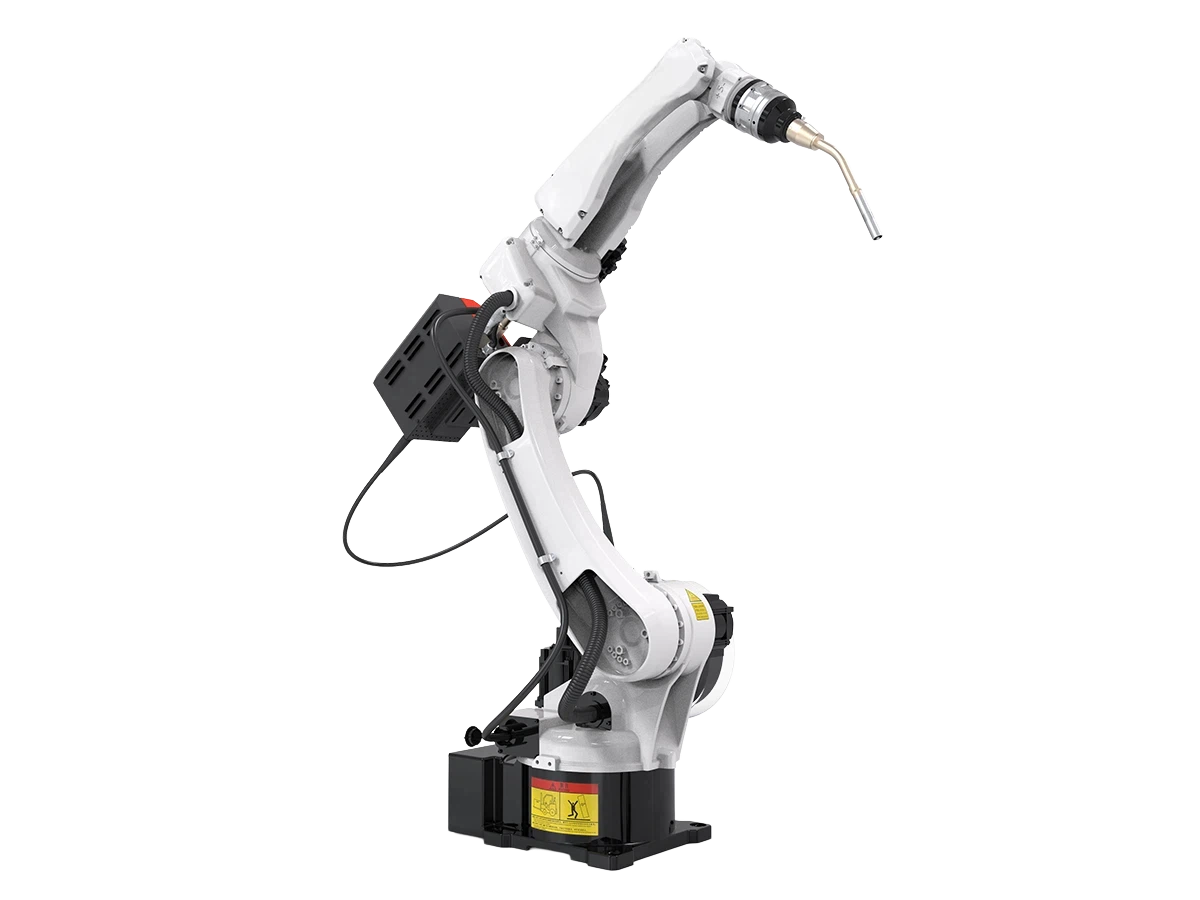
- 6 Axis 1800mm ArmSpan MlG Industrial Welding RobotThe welding robot with 1945mm reach, 6kg payload and ±0.08mm repeatability for consistent automated welding.
![星星1]()
- 6 Axis 1500mm ArmSpan Industrial Welding RobotWith a maximum reach of 1594 mm, the robot is well suited to medium-scale welding cells where coverage matters.
![星星1]()
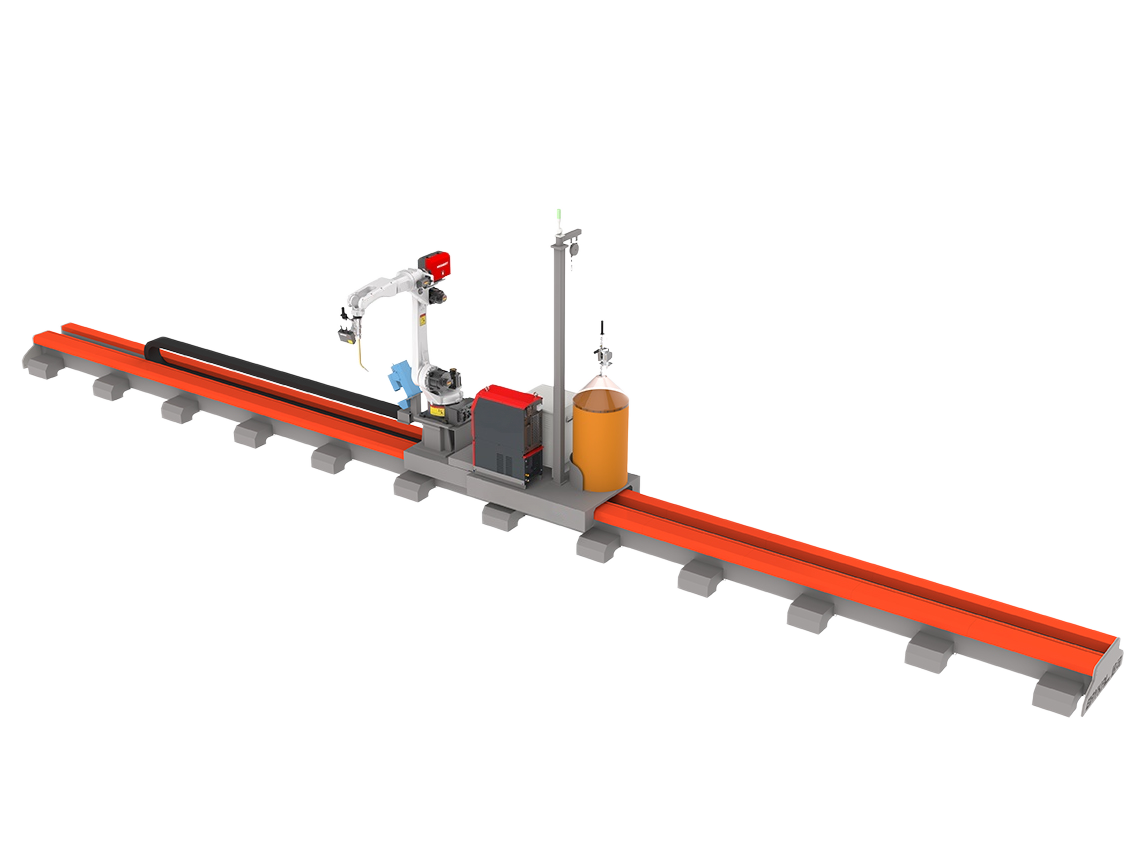
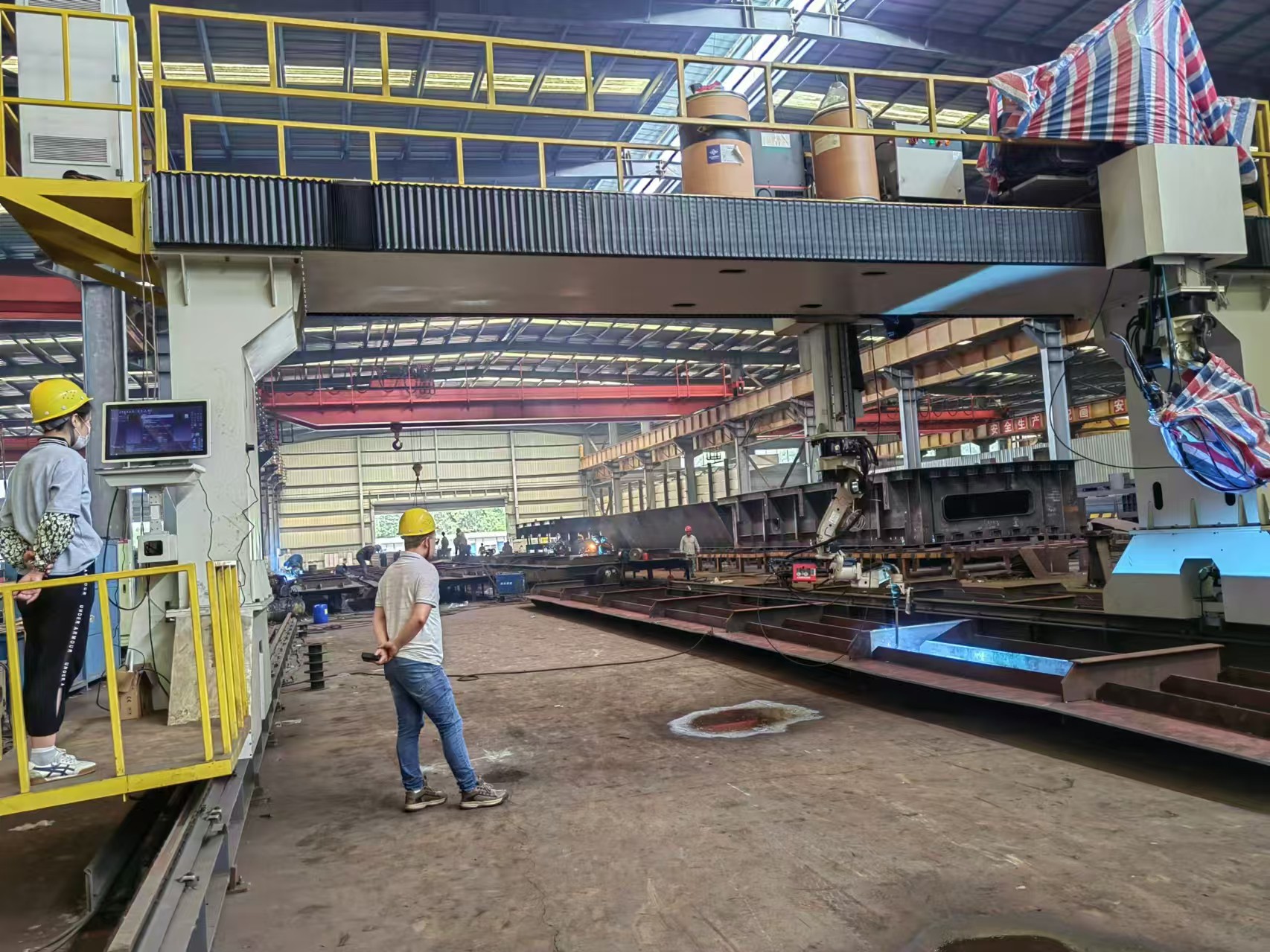
- 9 axis gantry type welding robotThis equipment mainly using robot special rail (1 set), slide (1 set), 6 axis welding robot and its control system (1 set), welding power supply (1 set), clear gun station (1 set), welding torch (1 set), etc.
The ground rail support is 12 meters long and one ground rail is welded. For the workpiece of more than 12 meters and less than 25 meters, two robots are used to conduct regional welding, which can greatly improve the welding efficiency.![星星1]()

Recommended blogs
- How robotic welding and automation improve repeatability in batch productionSep 30, 2026Robotic Welding and Automation improve batch production repeatability through controlled fixtures, weld parameters, and material preparation—reducing rework and improving throughput.
- How to Choose a Laser Cutting Machine for Sheet Metal WorkJul 12, 2026Laser cutting machine selection for sheet metal starts with material, thickness, and workflow. Learn how to compare speed, quality, automation, and total cost with confidence.
- 3-roll vs 4-roll plate rolling machines: which leaves a shorter flat end?Nov 17, 20263 roll vs 4 roll plate rolling machine: discover which typically leaves shorter flat ends and how to choose the right machine for your production needs.
- Can a 4-roll plate rolling machine form a cone?Nov 17, 20264-roll plate rolling machines for complex applications can form cones with the right setup. Explore capacity limits, tooling and practical tips for accurate results.
- How do adjustable bottom carrier rollers support plate rolling?Nov 17, 2026Explore how a 3 roller plate rolling machine with adjustable bottom carrier rollers supports plate handling, improves process stability and fits your fabrication needs.
Send Us A Message
Send us a Message
A dedicated person will follow up on your needs one-on-one and provide personalized customized solutions according
to your needs.
Get In Touch
We look forward to hearing from you for in-depth communication on how to fulfill your mixing requirements.