




Are welding robots for sale with integrated seam tracking suitable for field welds on corroded pipe joints?
Are welding robots for sale with integrated seam tracking suitable for field welds on corroded pipe joints?
Sep 22, 2026
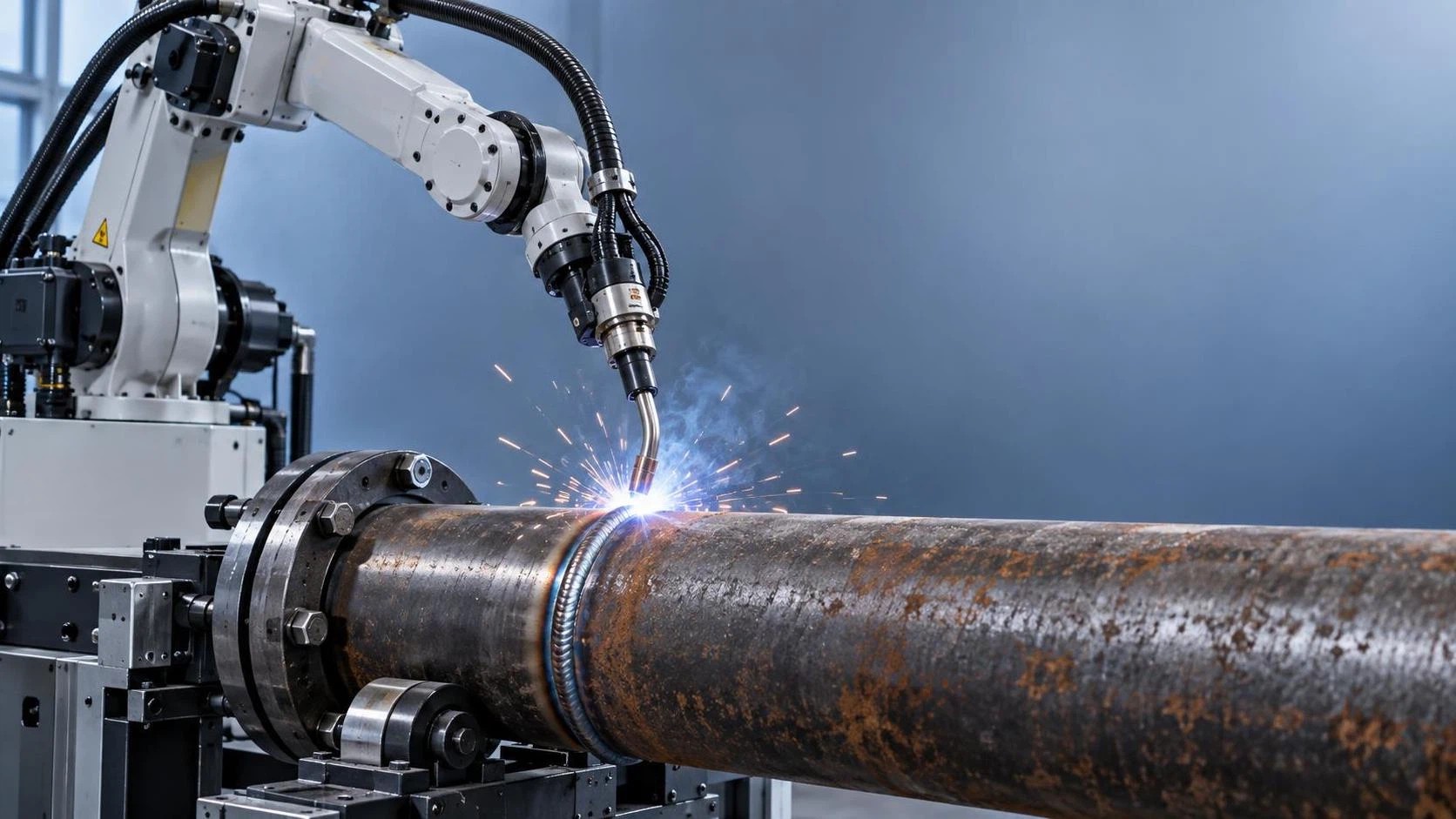
Welding robots with integrated seam tracking are increasingly deployed for field welds on pipeline infrastructure—but corroded pipe joints introduce variables that challenge even advanced systems. For project managers overseeing repair, maintenance, or retrofit work in oil & gas, water transmission, or industrial plant settings, the question isn’t whether seam-tracking welding robots *exist*, but whether they deliver repeatable, code-compliant welds on surfaces compromised by rust, pitting, scale, or irregular geometry—without requiring extensive pre-weld surface preparation.
The short answer: yes—but only under specific operational constraints and with deliberate system selection criteria. Seam tracking alone is insufficient. What determines success is how the robot’s sensing architecture, motion control logic, and process adaptation respond to three interdependent variables: surface degradation severity, joint geometry distortion, and environmental instability common in field conditions.
Corrosion affects seam tracking at two levels. First, optical sensors—especially laser triangulation or structured-light systems—struggle with low-contrast, non-reflective, or highly textured surfaces. Rust layers scatter incident light; flaking scale creates false edges; uneven oxidation introduces height variance exceeding typical sensor resolution (±0.1–0.3 mm). Second, thermal distortion from prior service or residual stress alters joint gap and alignment *during* welding. A robot calibrated on a clean, nominal joint may misinterpret actual root opening or misalign torch position mid-pass—even with real-time tracking—because the underlying metal deforms as heat input progresses.
This means seam tracking must be coupled with adaptive arc control—not just positional correction. Systems relying solely on vision-based path correction without dynamic voltage/current modulation often produce inconsistent penetration, especially when encountering sudden changes in base metal thickness beneath corrosion. In practice, successful field deployments use hybrid sensing: laser profiling combined with arc voltage feedback or through-arc seam tracking (TAST), where current fluctuations serve as proxies for gap variation. These systems don’t “see” the rust—they infer joint behavior from electrical response—and adjust wire feed speed and travel rate within milliseconds.
But hardware capability is only half the equation. Field deployment introduces logistical constraints that impact reliability more than technical specs suggest. Power supply stability matters: voltage sags common on temporary generators disrupt servo responsiveness and sensor sampling rates. Ambient dust and moisture degrade optical sensor windows and affect cooling efficiency of robotic arms—leading to thermal drift in position repeatability. And unlike shop-floor applications, field welds rarely allow full access around the pipe circumference. Overhead or vertical-down positions demand higher torque density and tighter inertia control to maintain torch orientation during gravity-induced arm sag.
Certification compliance adds another layer. ASME B31.4, B31.8, and ISO 15614-1 require procedure qualification records (PQRs) for each joint type, material grade, and thickness range. Corroded joints often fall outside standard qualified ranges because wall loss alters effective thickness and heat sink capacity. A robot qualified for 12.7 mm carbon steel pipe may not meet code requirements when welding the same nominal pipe with 2–3 mm of localized wall loss—even if seam tracking compensates for geometry. Project managers must verify whether the robot’s manufacturer provides traceable PQRs covering degraded-thickness scenarios, not just nominal conditions.
Pre-weld surface preparation remains unavoidable—but its scope can be reduced. Light rust (ISO 8501-1 St2) may be tolerable with robust arc tracking; heavy pitting or laminar scale (Sa2.5 or worse) still requires grinding or abrasive blasting to expose sound metal at the root face. Here, equipment integration becomes decisive. A Turn Type Plate Edge Milling Machine—though designed for plate beveling—illustrates the broader principle: precision edge preparation directly influences weld consistency in variable-material-thickness scenarios. While not used on pipe, its CNC-controlled milling accuracy (micron-level tolerance) and ability to form complex bevel geometries in one pass reflect the same engineering priority: eliminating manual variability before heat input begins. That discipline transfers to field welding: when corrosion compromises joint integrity, controlled mechanical removal—even limited to root-face zones—yields more predictable arc behavior than chemical or thermal cleaning alone.
Maintenance readiness also shapes viability. Field robots with sealed enclosures, IP65-rated joints, and modular sensor housings withstand site conditions longer than those optimized for climate-controlled shops. But equally critical is diagnostic transparency: does the system log tracking deviation magnitude per pass? Can it flag instances where arc voltage exceeded expected thresholds—indicating potential lack of fusion due to hidden pitting? Without granular, time-stamped process data, rework decisions become reactive rather than evidence-based.
Finally, cost-benefit analysis must account for total cycle time—not just robot uptime. A robot reducing weld time by 30% loses advantage if setup, calibration, and post-weld NDT take 50% longer due to unanticipated geometry variance. Real-world field projects show ROI emerges not from speed alone, but from reduced rework rates (typically 4–7% on corroded joints versus <1% on prepared surfaces) and faster commissioning timelines—particularly where shutdown windows are tightly scheduled.
For project managers, the decision hinges less on whether a welding robot for sale includes seam tracking, and more on whether its sensing-response loop, environmental hardening, and documentation support align with the *actual* condition of the pipe—not its specification sheet. Systems proven in offshore platform retrofits or municipal water main repairs tend to outperform generic industrial units, not because of higher specs, but because their control algorithms were trained on datasets containing corrosion-induced joint anomalies. That empirical grounding matters more than theoretical resolution or maximum travel speed.
When evaluating options, prioritize vendors who provide field-tested validation reports—not lab demonstrations—and who specify performance limits in terms of measurable degradation metrics (e.g., “stable tracking up to 1.2 mm surface roughness Ra, verified on API 5L X65 pipe with simulated atmospheric corrosion”). Avoid solutions marketed solely on “AI-powered tracking” without disclosing sensor redundancy, update frequency, or failure mode handling. In field environments, reliability is defined by what happens when the system *can’t* track—not when it does.
search
Products Navigation
Send Us A Message