




What’s the typical price difference between welding robots for pipeline fabrication and general-purpose models?
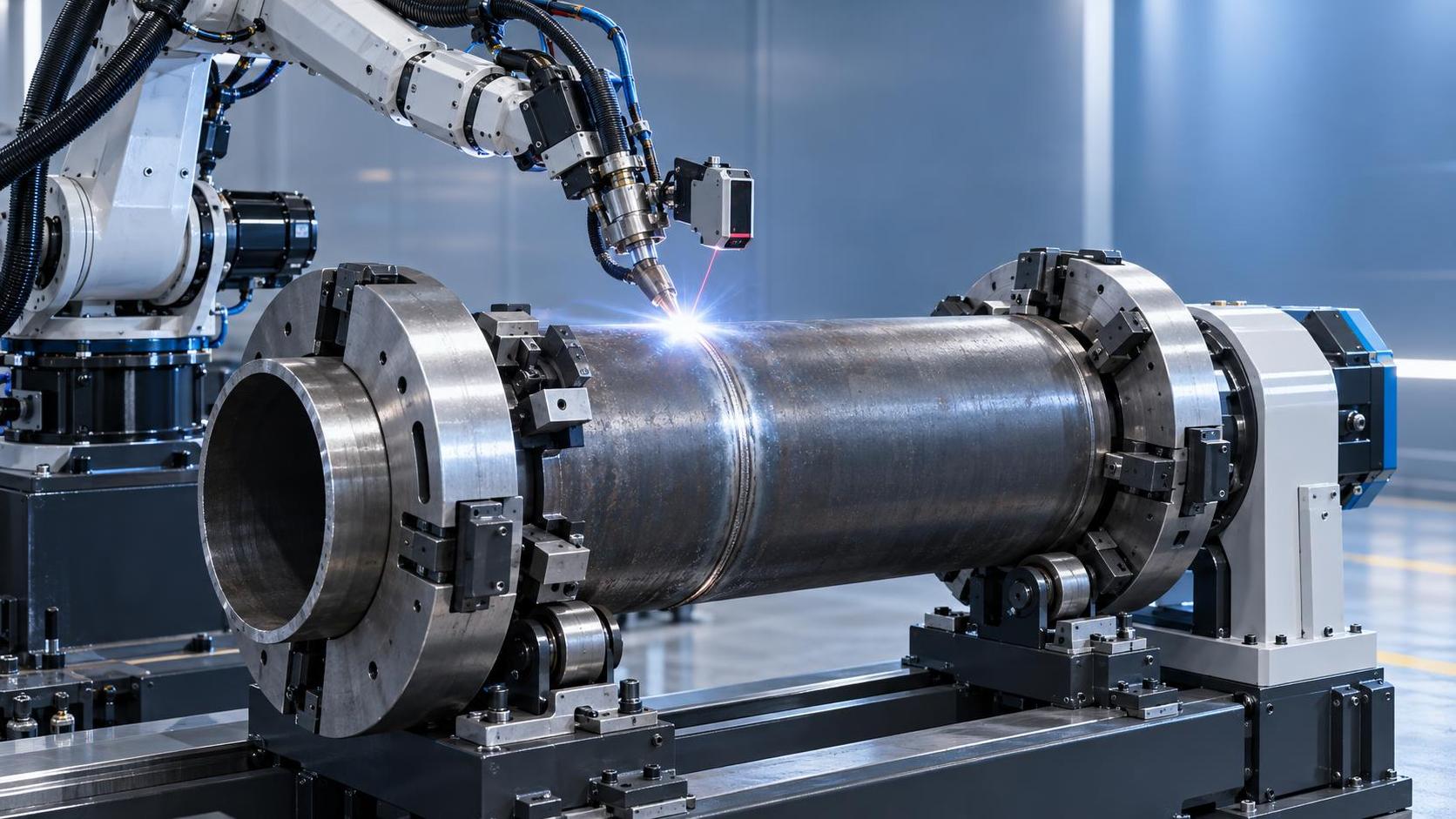
When evaluating capital expenditure for automated welding solutions, finance leaders need clear, actionable cost insights—especially between specialized welding robot for pipeline fabrication and general-purpose models. The typical price differential is not a fixed markup but a function of engineering requirements, compliance scope, and operational constraints. Based on real-world procurement patterns across heavy fabrication facilities in Southeast Asia, Europe, and the Americas, the acquisition cost for pipeline-optimized welding robots commonly ranges from 20% to 40% higher than comparably rated general-purpose units—yet this delta reflects deliberate design investments rather than arbitrary premium pricing.
Where the Cost Difference Originates
The gap emerges not from brand or platform positioning, but from four interdependent technical domains: motion architecture, end-effector configuration, seam recognition fidelity, and regulatory integration readiness. A general-purpose welding robot—designed for flat-plate tacking, structural steel assembly, or robotic MIG welding in automotive or machinery applications—relies on standard six-axis kinematics with ±0.1 mm repeatability, moderate payload capacity (10–25 kg), and basic arc-start logic. In contrast, a welding robot for pipeline fabrication must maintain sub-millimeter angular alignment while traversing curved, rotating, or eccentrically supported pipe sections. This demands reinforced wrist joints, torque-sensing servo feedback loops, and custom base mounts capable of handling radial loads exceeding 300 N·m during orbital weld passes.
Tooling is another decisive factor. General-purpose models typically ship with universal torch holders and pneumatic wire feeders compatible with ER70S-6 or similar solid-wire consumables. Pipeline variants require integrated rotary positioners, pipe clamping jaws with hydraulic self-centering, and dual-torch setups for tandem GMAW or hot-pass/cold-pass sequencing. These are not optional add-ons—they’re embedded into the system’s mechanical interface and control firmware. Retrofitting such functionality onto a general-purpose robot often incurs higher integration labor costs than purchasing a purpose-built unit outright.
Seam Tracking Is Not Optional—It’s Non-Negotiable
General-purpose robots may offer optional seam tracking via laser triangulation or arc voltage sensing—but these modules are frequently treated as secondary features, calibrated for static, high-contrast joints on mill-finished plates. Pipeline applications involve variable bevel geometry, inconsistent root gaps due to pipe ovality, and thermal distortion during multi-pass welding on thick-wall (>25 mm) carbon steel or X70/X80 line pipe. Here, seam tracking must operate at cycle speeds up to 600 mm/min while compensating for joint misalignment in real time. That requires dedicated AI-accelerated vision processors—not just software upgrades—and hardware-level synchronization between torch angle adjustment and travel speed modulation. This capability directly impacts first-pass yield: facilities reporting >92% defect-free root passes consistently use closed-loop seam tracking certified to ASME B31.4/B31.8 Annex D protocols.
Compliance readiness further compounds cost structure. General-purpose robots rarely include pre-validated welding procedure specifications (WPS), ASME Section IX qualification records, or traceable calibration logs for weld parameters (voltage, wire feed rate, travel speed). Pipeline-optimized systems ship with factory-loaded WPS libraries covering common pipe diameters (16″–60″), wall thicknesses (12.7–50.8 mm), and filler metals (ER100S-G, ER80S-D2). These aren’t generic templates—they’re validated against actual pipe coupons under simulated field conditions, including wind exposure and ambient temperature swings. Retrospective validation adds weeks to commissioning and introduces budget uncertainty that finance teams cannot absorb.
Operational Context Determines True TCO
Price difference alone is misleading without context. For example, a facility fabricating pressure vessels or boiler drums may find general-purpose robots sufficient if all pipe joints are pre-machined with tight tolerances and welded in controlled shop environments. But when processing field-cut pipe spools with mill-scale residue, inconsistent bevel angles, or out-of-roundness beyond ASTM A53 tolerance bands, the pipeline robot’s built-in adaptive path correction prevents costly rework—often reducing post-weld grinding labor by 35–50%. That labor saving isn’t abstract: it translates directly into measurable reduction in man-hours per joint, lower consumable waste, and fewer non-conformance reports requiring third-party inspection.
Similarly, material preparation upstream affects ROI calculation. While the welding robot executes the final pass, edge quality before welding determines arc stability and penetration consistency. Facilities using flame-cut or plasma-cut pipe ends frequently experience porosity or lack-of-fusion unless edges undergo secondary machining. That’s where complementary equipment like the Non-standard Edge Milling Machine Without Pressure Beam becomes operationally relevant: its CNC-controlled milling head achieves Ra3.2 surface finish and precise 30°–37.5° bevels on carbon steel, stainless steel, or aluminum plates up to 100 mm thick—without requiring pressure beams that limit access to large-diameter pipe flanges. Its independent feed and return systems allow uninterrupted processing of long workpieces, reducing handling time between beveling and welding stages. When deployed upstream of pipeline welding cells, it eliminates one major source of joint variability—making the welding robot’s seam tracking task more deterministic and less reliant on real-time correction.
What Changes the Differential?
The 20–40% range narrows or widens depending on three variables: pipe diameter range, required certification scope, and integration depth. Robots rated only for 12″–24″ pipe with single-pass SAW capabilities may carry a 15–22% premium over general-purpose units. But those engineered for 48″+ diameters, multi-layer submerged arc welding with flux recovery, and ASME Section VIII Div. 2 fatigue analysis reporting can exceed 45%—not because of inflated margins, but due to redundant encoder systems, explosion-proof enclosures, and dual-network safety controllers meeting SIL2 requirements. Conversely, if a project specifies only AWS D1.1 structural welding (not pipeline-specific codes), the justification for full pipeline optimization weakens—and general-purpose robots with enhanced seam tracking and pipe-positioner integration may meet technical requirements at lower TCO.
Ultimately, the price difference reflects engineering trade-offs made visible only at the point of installation and commissioning—not on the spec sheet. Finance teams benefit most when procurement aligns robot selection with actual weld joint variability, upstream edge preparation capability, and the enforceability of code compliance—not just headline acquisition cost.
search
Products Navigation
Send Us A Message