




How does a programmable handling robot arm adapt to changing workflows?
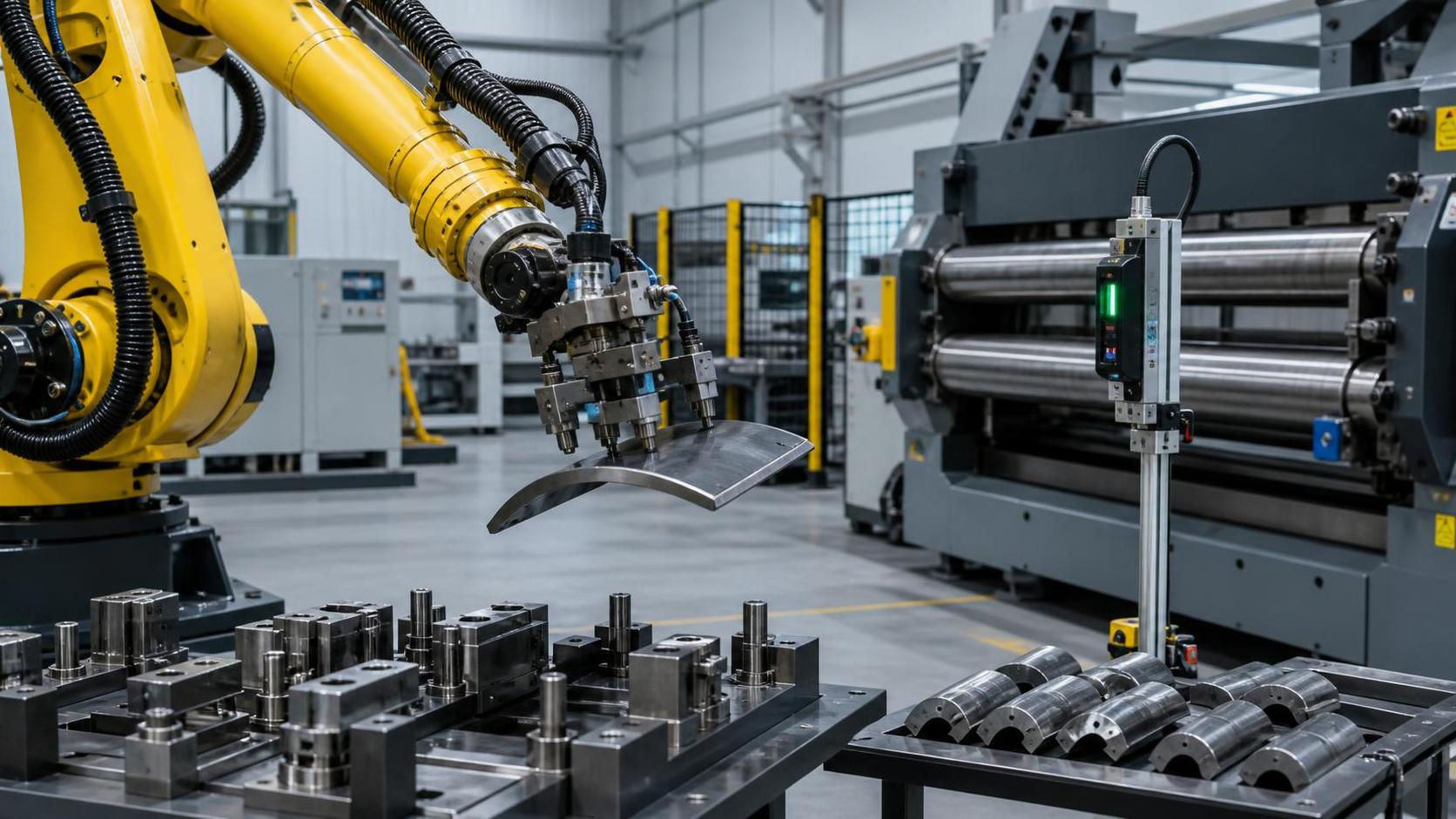
How Does a Programmable Handling Robot Arm Adapt to Changing Workflows?
For project managers facing shifting production schedules, product mixes, and labor demands, a programmable handling robot arm provides flexibility without requiring constant equipment replacement or major line reconstruction.
Its value comes from adaptable programming, reliable motion control, and integration-ready design that keep material flow efficient across welding, cutting, machining, forming, assembly, and inspection operations.
What Project Managers Actually Need From Flexible Automation
Most project managers are not looking for automation simply because robots are modern. They need dependable capacity that protects delivery dates when production conditions change unexpectedly.
A programmable handling robot arm helps teams respond to changing workflows by moving parts, tools, pallets, or fixtures according to revised production instructions instead of fixed mechanical arrangements.
This matters when a factory handles high-mix, low-volume orders, seasonal demand changes, engineering revisions, or customer projects with different material sizes, handling sequences, and quality requirements.
Unlike dedicated transfer equipment, a robot arm can be reassigned through software, end-effector replacement, fixture changes, and adjusted safety settings when the production task changes.
However, adaptability should not be confused with unlimited flexibility. The robot must still have sufficient payload, reach, cycle-time capability, accuracy, environmental protection, and integration capacity for intended applications.
Project leaders should therefore evaluate the complete workflow rather than selecting equipment only by robot specifications. Bottlenecks, operator tasks, upstream machines, downstream processes, and material variation determine real results.
The practical question is not whether a robot can move a workpiece. The question is whether it can keep the whole production cell productive after schedules and product requirements change.
Programming Allows Process Changes Without Rebuilding the Line
The main advantage of a programmable handling robot arm is that its motions are defined by programs rather than permanently fixed cams, conveyors, or manual transfer routines.
When workflows change, engineers can revise pick points, drop locations, approach paths, dwell times, tool commands, pallet patterns, and machine communication logic through controlled programming procedures.
For example, a robot serving a CNC cutting machine may load sheet blanks in one project, then transfer cut components to sorting stations for another production order.
In a welding cell, the same robot platform may position different fabricated assemblies after fixture updates, provided reach, payload, collision clearance, and welding-process requirements remain within validated limits.
Offline programming can reduce disruption during changeovers. Engineers simulate reach, cycle time, collisions, and equipment layout before deploying revised programs to the production floor.
Simulation is particularly useful when a new product has complex geometry or when plant managers need evidence that proposed automation changes will meet promised project milestones.
Still, virtual validation does not replace shop-floor commissioning. Actual parts, fixtures, surface conditions, tolerances, sensor performance, and operator access must be verified before full production release.
End Effectors Determine How Broadly the Robot Can Be Reused
Programming controls motion, but the end effector determines what the robot can physically handle. Grippers, vacuum cups, magnetic tools, clamps, forks, and custom fixtures create application flexibility.
A well-planned end-of-arm tooling strategy lets one robot support several product families without sacrificing grip security, positioning accuracy, or safe material transfer.
Quick-change tooling is useful where production frequently alternates between sheet metal, pipe sections, machined components, welded structures, and packaged finished goods.
For metal fabrication, vacuum grippers can handle flat sheet materials, while magnetic grippers may suit ferrous components with suitable surface conditions and controlled separation requirements.
Mechanical grippers are often preferred for irregular profiles, oily workpieces, or applications where surface porosity, curvature, and varying dimensions make vacuum handling less predictable.
Project managers should ask how tool changes are performed, who verifies the installed tool, and whether the control system automatically loads the correct payload and safety parameters.
Without those controls, a flexible robot cell can create hidden operational risk. Incorrect tool selection may cause poor gripping, collisions, unstable paths, or damage to machinery and workpieces.
Integration With Machines Makes Workflow Changes Practical
A programmable handling robot arm becomes more valuable when it communicates reliably with surrounding equipment. This includes CNC machines, welding systems, cutting equipment, conveyors, sensors, safety devices, and production software.
Machine integration allows the robot to wait for cycle completion, confirm door status, identify part presence, transfer finished components, and release the next workpiece at the correct time.
For project managers, this coordination reduces dependence on manual handoffs that often become inconsistent when shift staffing, production priorities, or order volumes change.
Interfaces should be defined early. Teams need clear responsibility for electrical connections, fieldbus protocols, PLC logic, safety interlocks, alarm handling, remote diagnostics, and commissioning acceptance tests.
It is also important to identify which equipment controls the production sequence. Poorly defined control ownership can cause delays, duplicated signals, or difficult troubleshooting after installation.
In an expandable cell, spare I/O capacity, network ports, floor space, and controller capability can support future additions such as vision systems, conveyors, tool changers, or secondary machines.
This approach prevents a short-term automation project from becoming a closed system that requires expensive redesign when production volume or process requirements increase later.
Handling Robots Can Support Forming and Fabrication Workflows
Flexible material handling is especially useful in metal fabrication, where part geometry, batch size, and process routing often vary from project to project.
A robot can load and unload bending equipment, transfer formed shells, orient workpieces for welding, move components between machining steps, or stage parts for inspection and packaging.
For cylindrical, conical, and arc-shaped fabrication projects, a robot may be positioned upstream or downstream of a CNC Bending machine with 4 roller to reduce manual transfer work.
Four-roller bending equipment can improve dimensional accuracy by shortening the span between lower rollers and supporting better workpiece control during metal forming operations.
Its ability to address leading and trailing end forming limitations can reduce the need for auxiliary handling steps, although actual process planning depends on material thickness, diameter, and tolerances.
When combining a forming machine with robotic handling, engineers must assess part stability after rolling, surface temperature, edge conditions, center-of-gravity changes, and safe gripping locations.
The best automated arrangement is not necessarily the one with the most equipment. It is the one that removes unnecessary handling while keeping changeovers predictable and maintenance manageable.
Vision and Sensors Help the Cell Handle Real Production Variation
Changing workflows often involve inconsistent part presentation. Components may arrive with different orientations, positions, stack heights, surface finishes, or manufacturing tolerances.
Vision systems and sensors can make a programmable handling robot arm more resilient by locating parts, confirming orientation, checking dimensions, and detecting whether a transfer operation succeeded.
A simple photoelectric sensor may be enough for repeatable pallet locations. More variable tasks may require two-dimensional cameras, three-dimensional vision, force sensing, or barcode identification.
Vision should be selected according to the actual source of variation. Adding cameras without stable lighting, reliable part contrast, and defined recovery procedures can create unnecessary complexity.
For project delivery, teams should define how the system reacts when a part is missing, misaligned, damaged, or outside expected dimensions. Recovery logic matters as much as detection.
Operators need clear alarm messages and safe restart procedures. A cell that detects every exception but cannot recover efficiently may still lose valuable production time.
Data from sensors can also support continuous improvement by revealing recurring placement errors, supplier variation, fixture wear, cycle-time losses, and reasons for unplanned intervention.
Changeover Time Is the Real Test of Adaptability
A robot system is only genuinely adaptable when it can switch between approved workflows within a commercially acceptable time, using procedures that production teams can repeat safely.
Project managers should measure changeover from the final good part of one order to the first approved good part of the next order.
This measurement should include tooling replacement, fixture adjustment, program selection, robot calibration, quality inspection, material staging, safety validation, and operator confirmation.
Long changeovers can erase the apparent benefits of automation in low-volume production. Shorter changeovers improve equipment utilization and allow more responsive order scheduling.
Standardized fixtures, labeled tools, stored robot recipes, automated payload settings, and documented setup checklists help reduce variation between shifts and between different operators.
Where possible, programs should use parameterized values rather than separate code for every minor variation. Controlled parameters make approved adjustments faster while protecting essential motion and safety limits.
Configuration management is equally important. Teams should record software versions, tool data, fixture numbers, process settings, and validation status so proven production recipes remain traceable.
How to Evaluate Return on Investment and Project Risk
Return on investment should be assessed through total workflow effects, not only direct labor savings. The strongest cases usually combine capacity improvement, quality consistency, safety, and delivery reliability.
Potential benefits include reduced waiting time between machines, fewer handling injuries, lower scrap caused by poor positioning, improved machine uptime, and more stable output across shifts.
Costs include the robot, tooling, guarding, controls, integration engineering, fixtures, commissioning, training, maintenance, spare parts, and possible floor-layout changes.
Project managers should request a realistic throughput model based on actual product mix. A cycle-time estimate based on one ideal part rarely represents daily factory conditions.
Risk assessment should cover part variation, future product plans, operator skill, supplier support, service response, software ownership, safety compliance, and availability of replacement components.
Acceptance criteria should be written before installation. Define target cycle time, first-pass yield, uptime assumptions, safe operating conditions, changeover duration, and required operator intervention levels.
This makes supplier discussions more objective and gives the project team a defensible basis for deciding whether the automation cell has achieved its intended business outcome.
Implementation Should Start With the Most Stable, Valuable Workflow
Many automation projects struggle because teams begin with the most difficult process. A better approach is to automate a stable, repetitive workflow with clear performance losses.
Choose a task where part families are understood, handling rules are documented, process demand is sufficient, and the expected benefit can be measured after deployment.
Once the first cell performs reliably, the organization gains real data about programming effort, operator training, maintenance needs, cycle-time performance, and required engineering support.
That experience can guide later expansion into more variable workflows. It also helps management distinguish between equipment limitations and process discipline issues that existed before automation.
Training should include operators, maintenance technicians, manufacturing engineers, quality personnel, and project leaders. Each group needs practical responsibility for normal operation and exception handling.
Preventive maintenance plans should address grippers, cables, lubrication points, sensors, safety devices, controller backups, and wear components associated with the robot cell.
Reliable automation depends on disciplined daily use. A technically capable robot cannot compensate for undocumented product changes, poor fixture control, inconsistent material presentation, or delayed maintenance.
Conclusion: Flexibility Comes From System Design, Not the Robot Alone
A programmable handling robot arm adapts to changing workflows through configurable software, modular tooling, machine integration, sensing, and disciplined changeover processes.
For project managers, the priority is to evaluate the complete production system: product variation, handling method, process timing, safety, equipment interfaces, and future expansion requirements.
When these factors are planned together, robotic handling can improve throughput and delivery reliability while giving manufacturing teams a practical way to manage changing project demands.
search
Products Navigation
Send Us A Message