




How much faster does a CNC machine tending robot reduce cycle time compared to manual loading?
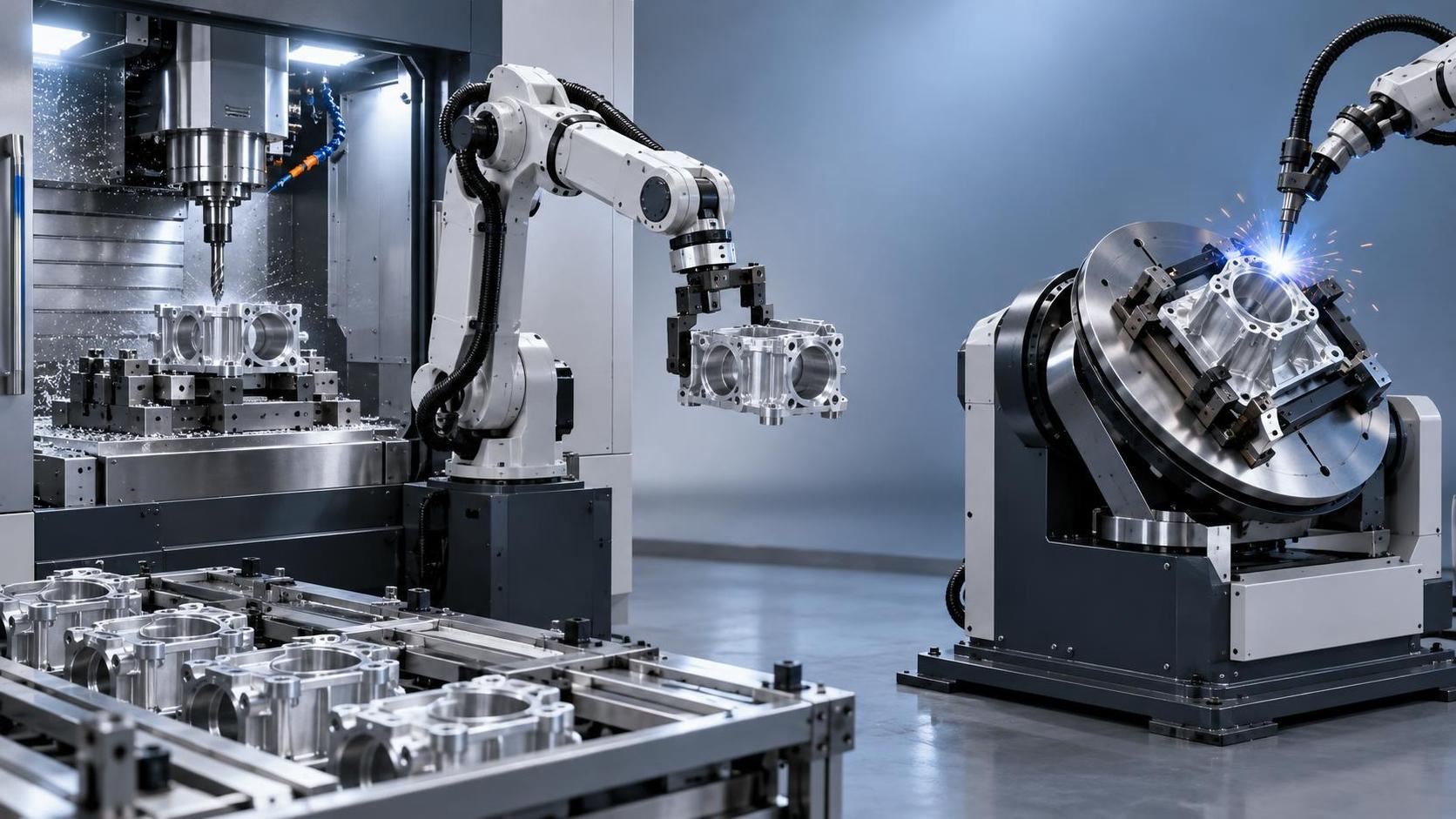
For project managers overseeing high-volume CNC machining operations, cycle time is not just a metric—it’s the direct lever on throughput, labor cost, and delivery reliability. When manual loading becomes the bottleneck—especially across multiple shifts or during peak demand—the question isn’t whether automation is needed, but how much measurable acceleration a CNC machine tending robot delivers in real production conditions. Based on field deployments supported by Wuxi Samgins International Trade Co., Ltd., typical cycle time reductions range from 25% to 40%, with the upper end consistently achieved in environments where part geometry, fixture consistency, and machine idle time are well-characterized.
This gain isn’t theoretical. It stems from three repeatable mechanical advantages: first, elimination of human variability in load/unload timing—no waiting for operator availability, no fatigue-induced delays, no safety pauses between cycles. Second, precise synchronization with machine tool cycles: robots can initiate unloading while the spindle is still retracting, begin part positioning before coolant stops flowing, and trigger the next cycle command within milliseconds of door closure. Third, zero inter-cycle downtime—while a person walks to the next station or repositions themselves, the robot transitions seamlessly between tasks, especially when integrated with multi-machine cells.
Where the Gains Actually Accumulate
The 25–40% figure reflects average performance across mid-to-high complexity parts (e.g., aluminum housings, steel brackets, cast components) machined on vertical machining centers with 3–5 minute base cycles. But the actual delta depends less on the robot itself and more on how well the upstream and downstream processes support it:
- Fixture repeatability: If part location varies more than ±0.1 mm between loads, the robot must compensate with vision-guided adjustment or slower approach speeds—eroding gains by 5–10%. Standardized, hardened fixtures with positive locating pins yield the highest consistency.
- Material handling infrastructure: Conveyor-fed part staging, palletized workholding, and automated deburring stations reduce auxiliary time. Without these, the robot spends up to 30% of its cycle moving between distant load points or waiting for manual part placement.
- Machine tool readiness: CNCs with fast door actuators (<1.5 sec), short tool change times (<2 sec), and programmable M-codes for external device handshake allow tighter integration. Older machines with pneumatic doors or legacy control interfaces often cap robot utilization at 70–80%, limiting overall cycle compression.
Crucially, the largest gains appear not in single-machine setups—but in cells where one robot services two or three CNCs. Here, the robot’s ability to manage queue logic, prioritize urgent jobs, and buffer parts between machines transforms idle time into productive time. In such configurations, measured cycle time per part drops 35–40%, while overall cell output increases 2.2–2.6× compared to three manually loaded machines.
Why “Average” Isn’t Enough for Your Project
A 30% reduction sounds compelling—until your specific part requires 12-second manual loading due to weight, asymmetry, or surface sensitivity. In that case, even a highly optimized robot may only achieve 22% improvement because physical handling constraints dominate the cycle. Conversely, if your current process includes 45 seconds of walking, waiting, and double-checking per load, the robot’s fixed 8-second load/unload time delivers far more than 30%—it resets the entire operational rhythm.
That’s why Wuxi Samgins recommends quantifying your baseline *before* specifying hardware: record five consecutive cycles per shift, noting exact timestamps for door open, part removal, fixture reset, part placement, door close, and program start. Exclude setup, maintenance, or unplanned stops. Then calculate median idle time—the gap between door close and next program start. If that gap exceeds 15 seconds regularly, a CNC machine tending robot will deliver near-maximum ROI regardless of part complexity.
Integration Realities You Can’t Ignore
Hardware selection matters—but integration discipline matters more. Most underperformance traces back to three avoidable oversights:
- Underestimating peripheral timing: A robot may load a part in 6 seconds, but if the CNC requires 4 seconds to re-zero axes after door closure, that delay isn’t eliminated—it’s just shifted. Synchronize PLC logic so axis re-homing starts concurrently with door closing.
- Ignoring thermal drift in fixturing: As ambient temperature changes or machine heat builds, fixture expansion can misalign part datum points. Robots relying solely on position-based loading—not vision or force feedback—will experience increasing rejection rates after 4–6 hours of continuous operation. Thermal compensation routines or periodic recalibration protocols are non-negotiable for sustained accuracy.
- Overlooking maintenance access: Robotic arms need regular lubrication, cable inspection, and gripper wear checks. If the robot cell design forces full shutdown for every service event, planned maintenance becomes unplanned downtime. Modular mounting, swing-away joints, and service hatches built into guarding prevent this.
These aren’t edge cases—they’re routine conditions in high-mix, high-precision shops. Wuxi Samgins’ engineering team routinely audits these parameters during pre-installation assessments, ensuring the proposed solution aligns with actual shop-floor physics—not just catalog specs.
When Welding Positioners Enable Broader Automation
In hybrid manufacturing lines—where CNC-machined parts feed directly into welding cells—the Welding positioner plays a critical role in maintaining end-to-end cycle integrity. For example, a robot that loads a machined bracket into a CNC, then transfers it to a welding station, relies on consistent part orientation and secure holding. The HB series Welding positioner provides programmable tilt and rotation, enabling full access to all weld seams without manual re-fixturing. Its VFD-controlled speed regulation ensures smooth motion during robotic transfer, minimizing vibration-induced misalignment. With payload capacities from 100 kg to 20,000 kg and tilting angles up to 120°, it accommodates everything from small enclosures to large structural assemblies—keeping the flow uninterrupted between machining and joining operations.
What to Measure After Installation
Don’t rely on “cycle time” alone. Track these four metrics for 30 days post-commissioning:
- Effective uptime per CNC (machine runtime ÷ scheduled shift time)—expect 92–95% vs. 78–85% manual)
- Operator task density (minutes spent on value-add tasks ÷ total shift minutes)—should increase 40–60% as manual loading shifts to supervision, quality sampling, and preventive maintenance
- First-pass yield—if unchanged or improved, integration is stable; if degraded, revisit fixture repeatability or robot path optimization
- Tool life variation—consistent loading reduces chatter-induced tool wear; monitor insert replacement intervals across identical operations
If effective uptime doesn’t exceed 90% within two weeks, investigate PLC communication latency or gripper vacuum stability—not robot programming. If operator task density stays flat, reassess workload redistribution planning. These indicators reveal whether the automation is truly accelerating production—or merely relocating bottlenecks.
For project managers, the decision isn’t about adopting robotics—it’s about selecting the right level of integration for your current workflow maturity, part mix, and labor constraints. The 25–40% cycle time reduction is achievable, but only when technical specifications meet operational reality. That alignment starts with measurement, not marketing.
search
Products Navigation
Send Us A Message