




What Is a China Welding Manipulator and Where Is It Used in Heavy Fabrication?
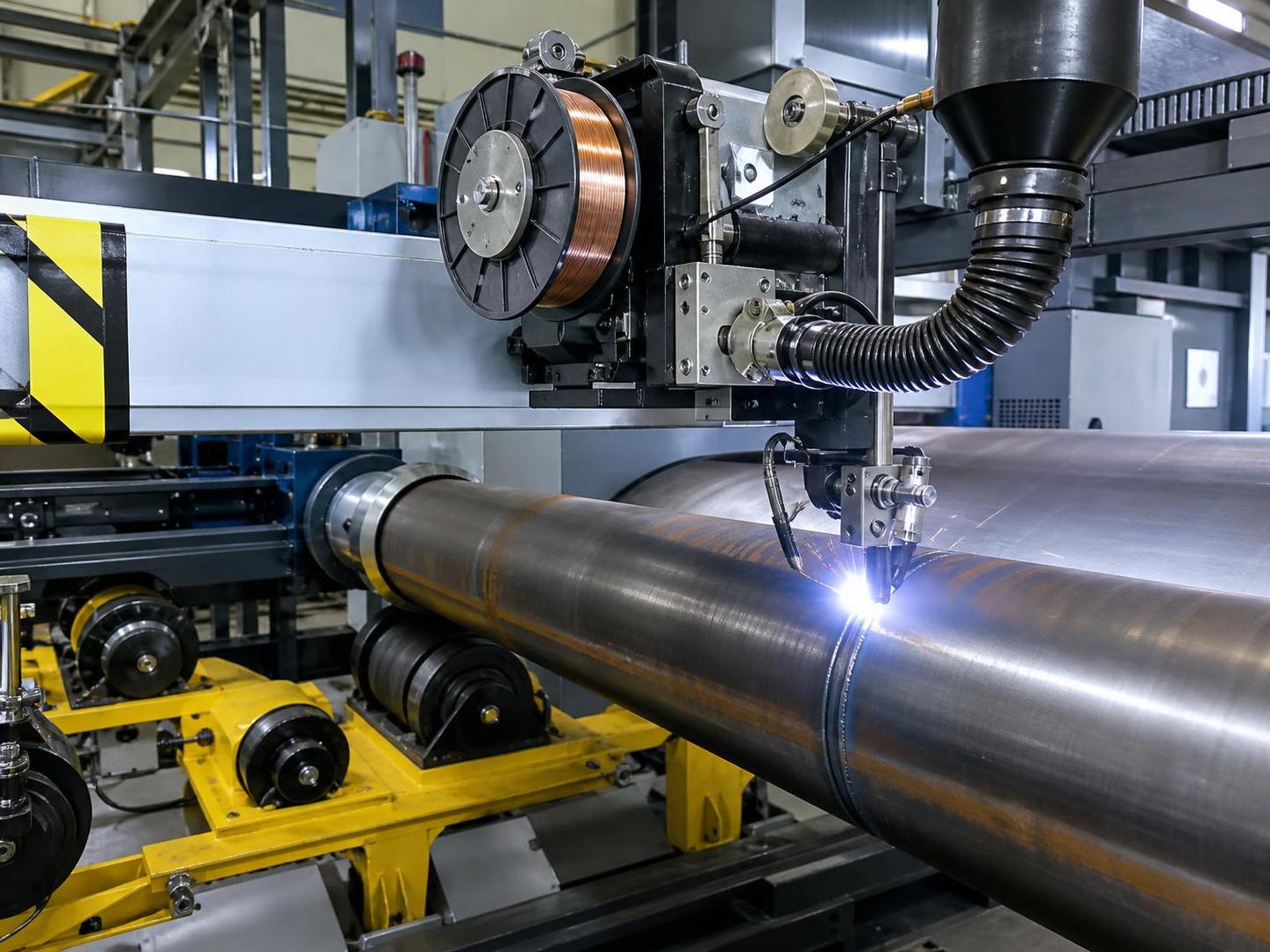
A china welding manipulator is not a robot in the way many first-time researchers imagine, nor is it simply a welding column with a boom attached. In heavy fabrication, it is better understood as a positioning and motion-control system that carries the welding head to the workpiece in a stable, repeatable way, especially when the weld seam is long, circular, elevated, or difficult to access manually.
That distinction matters because heavy fabrication plants do not buy this equipment just to automate movement. They use it to solve a very practical production problem: how to maintain weld quality and arc stability on large components where manual welding becomes slow, inconsistent, physically demanding, or unsafe. Once workpieces become too large for easy manipulation by hand, and once welds must meet stricter inspection standards, the welding manipulator becomes part of the production logic rather than an optional accessory.
What a welding manipulator actually does
In its standard form, a welding manipulator consists of a vertical column and a horizontal boom. The welding head, flux recovery unit, camera, seam tracker, or other process equipment can be mounted on the boom. The system moves the welding torch along a controlled path while keeping the welding parameters and stand-off distance more stable than a human operator usually can over long runs.
It is commonly paired with processes such as submerged arc welding, MIG/MAG, TIG, or strip cladding, depending on the application. In heavy industries, submerged arc welding is especially common because it suits thick plate, long straight seams, and circumferential welds on large cylindrical components.
A manipulator often works together with other equipment rather than alone. Typical combinations include:
- welding rotators for tanks, pipes, and vessels;
- positioners for non-cylindrical fabrications;
- roller beds and fit-up stations;
- welding power sources and flux systems;
- seam tracking, oscillation, and camera monitoring systems.
So when people ask what a china welding manipulator is, the more useful answer is this: it is a platform for controlled weld-head movement in large-scale fabrication, often integrated into a broader welding cell.
Why heavy fabrication relies on it
Heavy fabrication is different from light sheet metal work or general-purpose welding shops. The components are larger, weld deposits are heavier, distortion risks are greater, and quality requirements are often tied to pressure containment, structural load, or fatigue resistance. In that environment, a manipulator offers several operational advantages.
The first is consistency over length and time. A long seam on a pressure vessel shell or a wind tower section may run far beyond what an operator can comfortably weld with uniform travel speed and torch angle. The manipulator helps maintain those variables.
The second is productivity. A mechanized welding setup can reduce stoppages, improve deposition efficiency, and make multi-shift production more realistic. This does not automatically mean “labor replaced.” In many plants, it means skilled welders are shifted from difficult continuous runs toward setup, monitoring, parameter control, and critical passes.
The third is safety and ergonomics. Overhead work, deep shell access, and elevated welding positions create obvious risk. A manipulator reduces operator exposure to heat, fumes, awkward posture, and repetitive strain.
The fourth is process control. If a factory needs repeatability for qualified welding procedures, especially where inspection standards are demanding, mechanized torch travel becomes easier to document and standardize than purely manual execution.
Where it is used in heavy fabrication
The most common applications are found where weld seams are large, repetitive, or geometrically difficult.
Pressure vessels and storage tanks. This is one of the clearest use cases. Longitudinal and circumferential seams on shells, heads, and nozzles are often welded with manipulators working with turning rolls. Industries include petrochemical, LNG-related equipment, boilers, heat exchangers, and process storage.
Pipe and pipeline fabrication. Large-diameter pipe sections, spool fabrication, and pipe can manufacturing often use manipulators for external seams, internal welding support, cladding, or surfacing operations.
Steel structures. In heavy structural fabrication, especially box columns, bridge components, offshore modules, and large welded assemblies, manipulators help with long fillet and butt welds where access and consistency are challenging.
Wind energy towers and tubular sections. Tower cans and flanges require reliable welding on thick materials and large diameters. Mechanized setups are favored where production volume and weld repeatability justify the investment.
Shipbuilding and marine fabrication. Usage depends on yard layout and block design, but manipulators can support panel lines, subassembly welding, and large cylindrical or tubular structures.
Heavy machinery and mining equipment. Components such as booms, frames, drums, housings, and thick-section welded parts may benefit where weld paths are repetitive and part handling systems are already in place.
Cladding and surfacing. In valves, vessel internals, corrosion-resistant overlays, and wear-resistant applications, the manipulator is valuable because precise travel control directly affects layer quality and dilution.
What it is not suitable for
Not every fabrication shop needs a welding manipulator. This is where many early-stage buyers misread the category.
If the product mix is highly varied, batch sizes are small, parts are compact, and weld joints change constantly, a fixed manipulator may not deliver strong returns. Manual welding, portable mechanization, or a flexible robotic system may be more practical.
It is also not the best answer where upstream fit-up is poor. A manipulator can improve torch travel, but it cannot compensate for major dimensional variation, bad edge preparation, or unstable joint gaps unless the system includes advanced seam tracking and even then within limits.
Another limitation is plant layout. Large booms require clear movement envelopes, suitable foundations, and coordinated handling equipment. In older workshops, the bottleneck may be space or crane access rather than welding speed.
How it differs from a welding robot
For information researchers, this is one of the most important distinctions. A welding manipulator and a welding robot both automate movement, but they are designed around different production realities.
A manipulator is usually better for large, simpler weld paths: straight seams, circumferential seams, overlay runs, and repetitive heavy weldments. It tends to be more robust, easier to maintain, and more straightforward to deploy in thick-plate industries.
A robot is generally better where parts are smaller or medium-sized, weld geometries are more complex, and multi-axis flexibility is needed. Robots are powerful, but in very large vessel or structural work they may require more complex fixturing and programming to deliver the same practical value.
In other words, the manipulator remains highly relevant not because factories resist robotics, but because the equipment matches the geometry and economics of heavy fabrication.
What buyers usually evaluate beyond the basic concept
Once the initial definition is clear, the next question is not “what is it?” but “what kind of production system does it fit?” Several factors shape that answer.
Workpiece type. Cylindrical shells, pipe sections, box structures, and large beams all place different demands on reach, stability, and accessibility.
Welding process. SAW, MIG/MAG, TIG, and cladding setups require different torch arrangements, controls, and auxiliary systems.
Boom length and load capacity. These determine whether the manipulator can carry the required welding head, wire feed, camera, flux hopper, or oscillation unit without compromising rigidity.
Travel precision and speed control. In heavy welds, stable travel is directly linked to bead profile, penetration consistency, and heat input control.
Integration with rotating or positioning equipment. A manipulator often performs best as part of a matched system, not as a standalone purchase.
Automation level. Some users need basic mechanized travel; others need seam tracking, programmable welding cycles, remote monitoring, or synchronized movement with rotators.
Standards and compliance. For export-oriented or regulated sectors, electrical safety, CE-related conformity, and documented quality control matter. Exact certification scope should always be checked case by case.
The upstream and downstream processes matter more than many expect
A welding manipulator does not sit in isolation. Its real performance depends on what happens before and after welding.
Before welding, plate cutting quality, bevel preparation, edge straightness, and face squareness affect how smoothly the welding operation runs. In structural fabrication, for example, inconsistent end preparation on beams or box sections can create fit-up variation that reduces the value of mechanized welding. This is why some manufacturers look not only at welding equipment but also at preparation machinery such as an CNC Face milling machine, which is used in metal structure face milling for H-beams, box beams, cross beams, and column-type workpieces. Where programmed control, geometric consistency, and quick changeover are important, better end-face preparation can improve assembly accuracy and make downstream welding automation more effective.
After welding, inspection and distortion control become equally important. If a plant still faces heavy rework after mechanized welding, the problem may not be the manipulator itself. It may come from joint design, restraint conditions, welding sequence, or poor parameter qualification.
Common misunderstandings in the market
One common misunderstanding is that country of origin alone determines performance. In reality, a china welding manipulator can range from a basic economic unit to a highly engineered system with advanced controls and customized integration. The buyer should focus less on the label and more on the supplier’s design capability, component selection, manufacturing control, and after-sales support.
Another misunderstanding is that higher automation always means better results. For some plants, a simple and rigid manipulator with reliable controls is more valuable than an overcomplicated setup that is difficult to maintain or underused by operators.
A third is that welding speed is the main measure of value. In heavy fabrication, quality stability, reduced repair rates, and safer operation may matter more than headline speed. The true gain often appears in fewer interruptions, less welder fatigue, and more predictable throughput.
A fourth is that installation is easy if the machine itself is well built. In practice, implementation depends on floor space, foundation conditions, lifting logistics, power supply, work handling, operator training, and process qualification.
Why China is frequently part of the sourcing conversation
China is deeply embedded in the global supply chain for fabrication machinery, including welding automation. For overseas buyers, the attraction is not only price. It also includes the breadth of available configurations, experience in supplying standard and semi-custom heavy equipment, and the ability of some manufacturers to package complementary machinery within a broader fabrication line.
That said, sourcing success varies significantly by supplier. Information researchers should pay attention to whether a manufacturer can explain application cases clearly, define the duty cycle of the equipment, specify key components, discuss integration limits, and support acceptance testing. A supplier that only provides generic catalogs without process understanding may be less reliable than one that asks detailed questions about weld type, part dimensions, handling method, and target standards.
Where a fabrication line includes cutting, preparation, welding, and finishing, buyers often prefer suppliers familiar with the wider process chain. In some structural and beam-oriented production environments, that may include not only welding automation but also preparation equipment such as a CNC Face milling machine with rigid cast construction, CNC-controlled feed, and optional expanded functions for drilling or chamfering, because the quality of assembled weldments starts upstream.
What information researchers should take away
The most useful way to understand a welding manipulator is not as a single machine category, but as an enabling tool for heavy weld production where scale, repeatability, and access make manual welding less efficient or less consistent. Its strongest application is in large vessels, pipes, structures, and thick-section assemblies with repetitive seam geometry.
For early-stage research, the key judgment is whether the production environment actually benefits from mechanized torch movement. If the answer is yes, the next layer of evaluation is integration: workpiece handling, joint preparation, process selection, control requirements, and quality targets. That is where equipment decisions become meaningful.
In heavy fabrication, the value of a welding manipulator is rarely about automation for its own sake. It is about turning difficult welds into controllable, repeatable production steps. That is why the equipment remains widely used, even as robotic systems continue to expand across the broader manufacturing sector.
search
Products Navigation
Send Us A Message