




What Safety Standards Should a Welding Robot Meet Before Installation?
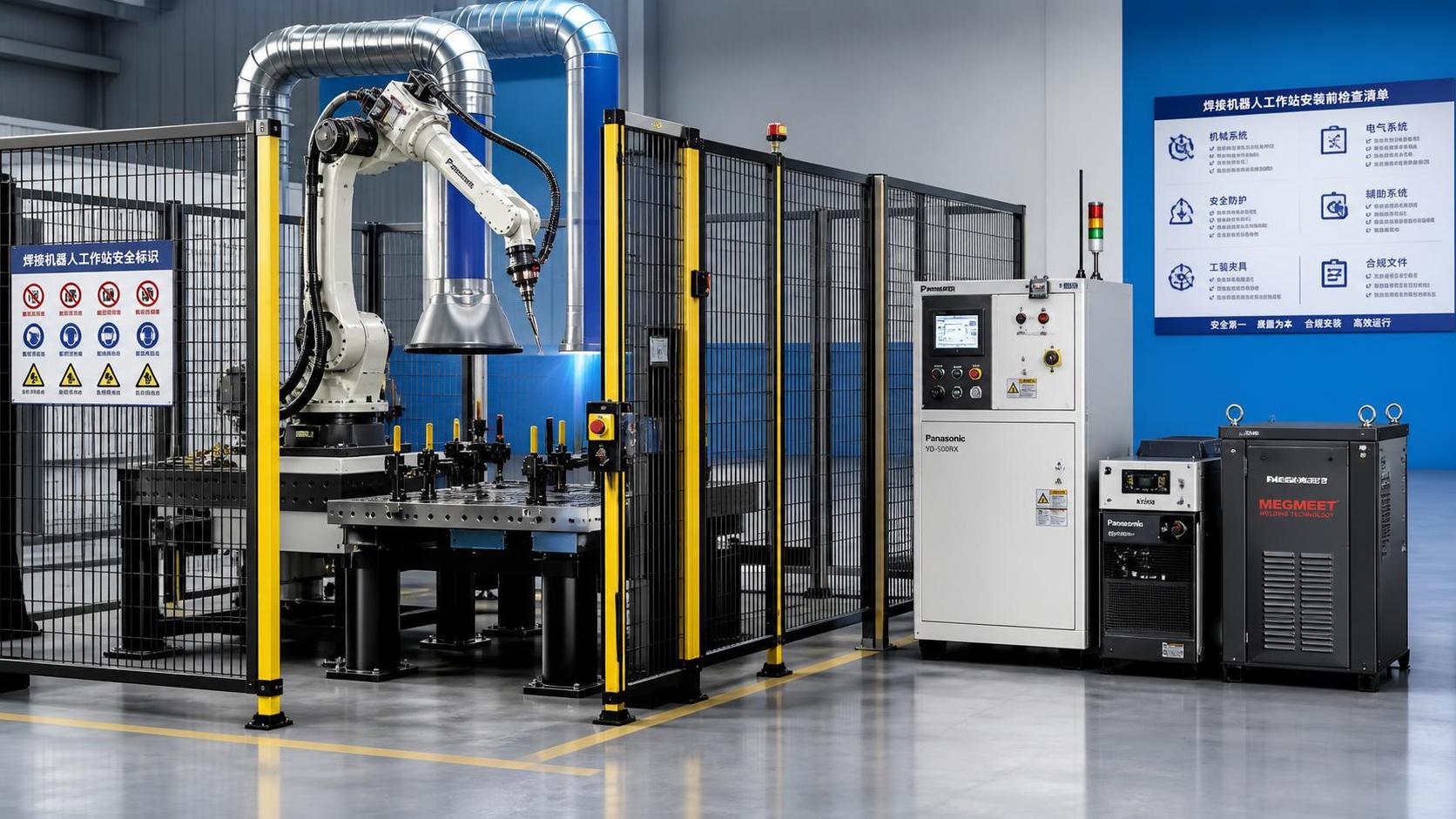
Before commissioning any automated welding cell, manufacturers usually focus on payload, reach, torch configuration, and cycle time. Those matter, but they are not the first gate. The real starting point is safety. If a plant is asking, “What safety standards should a welding robot meet before being installed in a factory?”, the answer is not one certificate or one checklist item. It is a combination of machine safety design, robot-specific requirements, electrical compliance, guarding, emergency functions, and a documented risk assessment that matches the actual application.
In practice, a welding robot can be mechanically sound and still be unsafe to install. Arc welding adds hazards that do not exist in many other robotic tasks: high temperature, spatter, fumes, arc radiation, live electrical components, moving axes, wire feed systems, gas supply, and often rotating positioners or external tracks. The installation standard therefore has to cover the entire cell, not only the robot arm.
A welding robot is judged as a system, not a standalone arm
This is where many projects get delayed. A buyer may confirm that the robot brand itself is widely used and assume the compliance question is settled. It usually is not. Before installation, the factory should evaluate the complete assembly: robot, controller, welding power source, torch cleaning unit, wire feeder, safety fence, interlocks, positioner, workpiece fixtures, extraction system, and control logic between them.
For most industrial projects, the core reference points are ISO 12100 for risk assessment and risk reduction, ISO 10218 for industrial robot safety, and, where relevant, regional market requirements such as CE conformity in Europe. If the system includes safety-related control functions, ISO 13849 or IEC 62061 may also come into play depending on the design route used by the machine builder. Electrical equipment is commonly assessed against IEC 60204-1. These standards do not replace local legal requirements, but they form the practical framework most serious suppliers and integrators work within.
The standards that usually matter before installation
A useful way to think about compliance is to separate it into layers.
At the base level is general machine safety. ISO 12100 is important because it requires the manufacturer or integrator to identify hazards, estimate risk, and reduce that risk through design, safeguarding, and information for use. This sounds abstract until a welding cell is on the floor. Then it becomes very practical: Can someone reach into the arc zone? What happens if air pressure fails? Can the robot restart automatically after a stop? Is there a pinch point between the robot and a headstock-tailstock positioner?
The next layer is robot safety. ISO 10218-1 applies to the robot itself, while ISO 10218-2 focuses on the robot system and integration. For factory owners, the second part is often the more decisive one because installation risk depends on the layout, access points, safety distances, operating modes, and how peripheral equipment interacts with the robot.
Then there is control reliability. If a safety gate is opened, the robot should stop in a predictable and validated way. If an emergency stop is pressed, the system response should be defined and tested. This is where safety-related parts of control systems matter. A compliant design is not just “there is an E-stop button”; it is whether the safety circuit architecture, diagnostics, and fault response meet the required performance for that hazard.
Electrical safety is another layer that should never be treated as paperwork only. Welding cells combine power electronics, control cabinets, grounding, cables exposed to heat, and often harsh shop conditions. Before installation, factories should confirm cabinet layout, protection against electric shock, proper labeling, grounding arrangements, isolation, and cable routing. In welding applications, poor grounding and cable management can become both a safety issue and a process stability problem.
CE marking is important, but it is not the whole answer
Many buyers, especially those importing equipment, ask first about CE. That is reasonable, particularly for the European market. But CE marking on its own should not end the discussion. A welding robot cell may carry CE documentation, yet the final installation still needs to match the declared configuration, intended use, and site conditions.
If the cell is modified after delivery, combined with other machines, or installed in a new process flow, additional assessment may be necessary. This matters for companies serving global markets. A supplier such as Wuxi Samgins International Trade Co., Ltd., which works with automatic welding equipment, CNC cutting machines, welding robots, H-beam production line equipment, and other metal fabrication machinery for customers in Southeast Asia, Europe, the Americas, and Oceania, typically has to pay attention not only to product configuration but also to destination-market expectations. Their emphasis on ISO9001 process control and EU CE-oriented design is useful, but the final compliance picture still depends on the exact cell layout and site integration.
What a factory should verify on the cell itself
Before a welding robot is installed, several safety features deserve direct confirmation rather than assumption.
Guarding and access control
The cell should have guarding that prevents unintended entry into hazardous zones during automatic operation. Depending on the process, that may include fixed fencing, interlocked doors, light curtains, area scanners, or a combination. For arc welding, physical barriers often do double duty by also controlling exposure to arc flash and spatter. Safety distances have to be checked against actual reach and possible overtravel, including the workpiece and tooling.
Emergency stop and protective stop behavior
Emergency stop devices should be accessible and clearly identified, but that is only the visible part. The plant should verify what the stop actually removes or isolates: robot motion, welding output, wire feed, gas, positioner movement, and auxiliary axes where needed. Protective stops triggered by a gate switch or safety scanner also need clear logic. In welding cells, stopping the robot without controlling the weld source can leave residual hazards.
Manual mode and teaching safety
A large share of robot-related incidents happens during setup, teaching, maintenance, or recovery from faults rather than full automatic production. Reduced-speed manual mode, enabling devices on the teach pendant, clear mode selection, and restricted access during programming are therefore essential. If the integrator cannot explain how safe teaching is managed, the project is not ready for installation.
Fume extraction, ventilation, and fire risk
This part is often underestimated because it sits between occupational safety and process engineering. Welding fumes, heat, and sparks must be controlled through suitable extraction and cell design. The exact ventilation requirement depends on material, filler, duty cycle, and local regulations, so it should be confirmed case by case. Where combustible dust, coatings, or confined cell layouts are involved, fire prevention becomes even more important.
Lockout and maintenance access
Maintenance points should be reachable without creating new hazards. Is there a procedure to isolate electrical power, pneumatic energy, stored mechanical energy, and welding output before service? Are torch cleaning stations and wire feed components accessible without stepping into dangerous robot motion zones? A cell that runs well in production but is difficult to maintain safely usually causes trouble later.
Documents matter because they show how the machine was thought through
Before installation approval, documentation should be reviewed with the same seriousness as hardware. That normally includes the risk assessment, electrical diagrams, pneumatic diagrams where applicable, safety circuit description, operating manual, maintenance instructions, spare parts list, and declaration of conformity or equivalent compliance documents for the target market.
A good document pack makes acceptance easier because it answers predictable questions early. Which hazards remain after safeguarding? What personal protective equipment is still required? What is the restart procedure after a fault? How are safety devices validated? If those answers only exist verbally, the factory is carrying unnecessary risk.
Common mistakes before installation
One common mistake is treating the robot supplier, welding source supplier, and line integrator as separate islands. Safety problems often appear in the gaps: the robot stops but the positioner does not, the gate interlock is wired but not performance-rated, or the extraction hood works for one part family but not another.
Another is buying to a nominal standard instead of an application. A cell for simple flat workpieces is different from a system welding large structural beams, tubes, or heavy fabricated assemblies. External axes, head-tail positioners, long seams, and operator loading zones change the risk profile substantially.
The third is assuming export experience automatically covers site compliance. International suppliers with broad machinery portfolios can bring valuable process knowledge, especially when they have worked across automatic welding, cutting, rolling, and fabrication equipment. Still, the factory should confirm the final safety concept against local regulations, plant rules, and the exact production rhythm on site.
What a practical pre-installation review should look like
A useful pre-installation review is not long, but it is specific. The team should confirm the applicable standards for the destination market, review the risk assessment, inspect the guarding concept, verify safety control architecture, and check whether manuals and declarations match the delivered configuration. Then they should walk through real operating scenarios: loading, auto cycle, part change, torch cleaning, wire replacement, jam recovery, maintenance, and emergency response.
If the welding robot will be integrated into a broader fabrication line, the review should also cover upstream and downstream interfaces. A safe cell can become unsafe when linked to conveyors, fit-up stations, CNC cutting sections, or beam handling systems without coordinated stop logic.
So, what safety standards should a welding robot meet before being installed in a factory? At minimum, it should satisfy the relevant robot, machinery, electrical, and safety-control standards for its market, and those requirements must be reflected in the actual cell design, not only in sales documents. If there is one practical rule worth remembering, it is this: evaluate the robot as a working system in your factory conditions, not as a catalog item. That is usually the difference between a smooth startup and a costly redesign after delivery.
search
Products Navigation
Send Us A Message