




When are double-sided sheet metal deburring machines worth the cost?
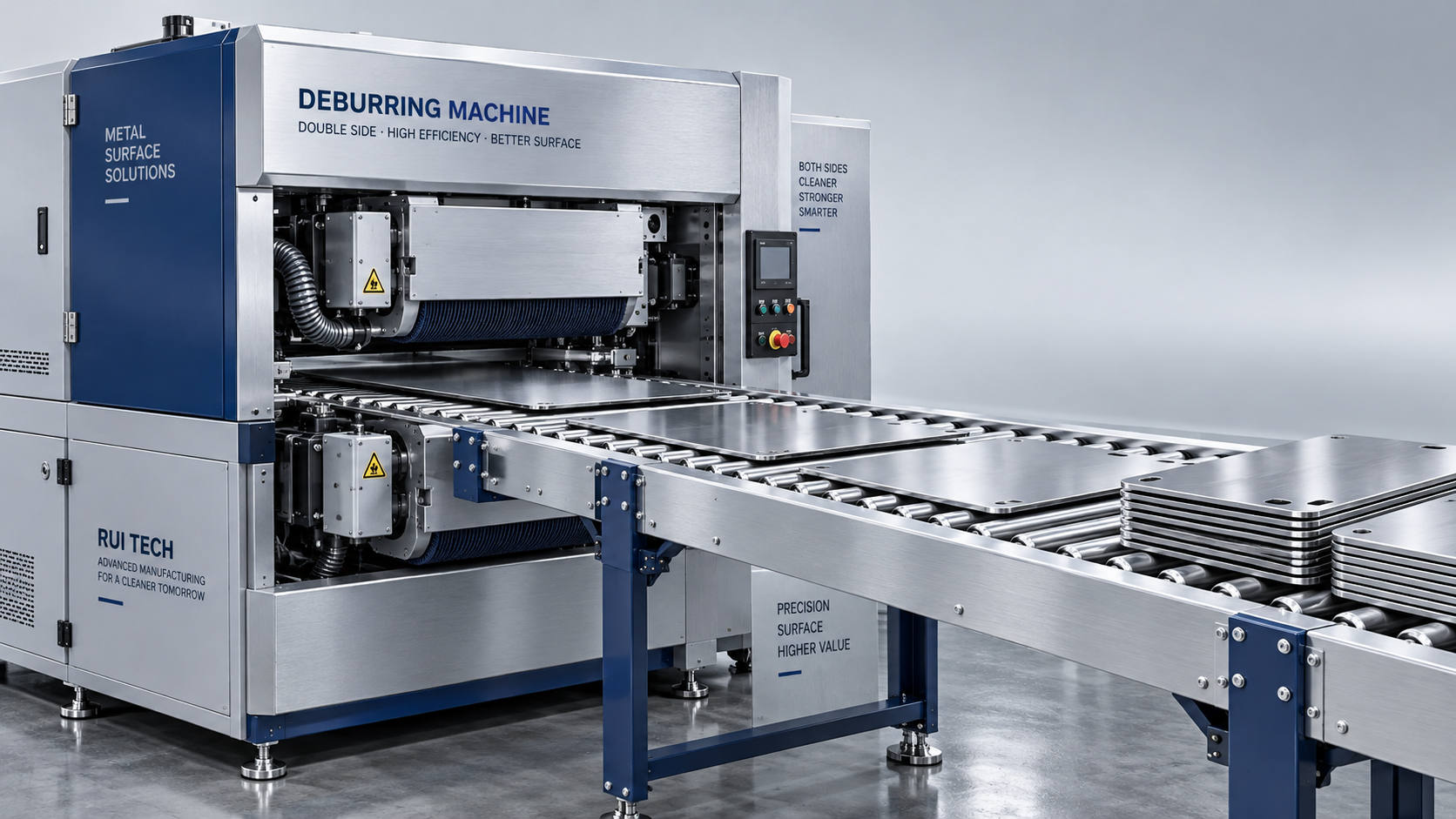
Double-sided sheet metal deburring machines are worth the additional cost when removing a second pass produces measurable savings that exceed the extra ownership expense. The strongest case is a steady workload requiring both faces to be finished, where flipping, refeeding, and inspecting parts consumes paid labor or restricts production. Higher cutting volume alone is not enough to justify the investment.
A typical decision arises when cut parts accumulate before bending or assembly while operators repeatedly turn sheets for another finishing pass. That queue can create overtime, delayed orders, and handling damage. Before approving a double-sided machine, establish whether it will remove those costs—or simply move the queue to another operation. Compare it with a suitable single-sided alternative using accepted parts, actual labor requirements, and the same finish specification.
Start with the work that genuinely needs two-sided finishing
The financial value of simultaneous processing depends on how much of the production mix benefits from it. A machine may process both faces, but that capability has little incremental value when most parts need only one face treated. Burr location, edge requirements, surface appearance, and downstream handling all affect the decision.
Separate the workload into parts requiring one-sided deburring, parts requiring both sides, and parts needing additional finishing that neither proposed machine can complete alone. Use drawings, inspection requirements, and representative samples rather than assuming every laser-cut or punched component belongs in the two-sided category.
Deburring, edge rounding, oxide removal, and surface finishing are not interchangeable tasks. A configuration suitable for removing light burrs may not deliver the required edge radius or remove heavier adherent material. Double-sided processing also does not guarantee identical results on every internal opening or contour. Confirm the actual processing scope before assigning savings.
- Strong candidates: recurring parts requiring both faces, frequent turning and refeeding, and a finishing operation that limits delivery or absorbs overtime.
- Weaker candidates: mostly one-sided work, intermittent batches, or substantial unused capacity in the existing process.
- Trial-dependent candidates: small parts, thin or distorted sheets, protective films, delicate surfaces, and mixed thicknesses requiring frequent adjustments.
The relevant volume is the annual workload the machine can process successfully, not total cutting output. Exclude incompatible parts and retain any manual touch-up, sorting, or alternative routing in the cost model.
Compare complete workflows, not conveyor speeds
A single-sided machine can sometimes meet a two-sided specification through two passes. Its purchase price may be lower, but the second pass introduces turning, staging, refeeding, and possibly extra inspection. A double-sided alternative can eliminate some of those activities, although loading, unloading, tool changes, and cleaning remain.
Measure the workflow from the arrival of a batch to its release for the next operation. Record operator attendance separately from machine running time. An operator who tends another process while parts travel through the machine does not generate the same labor savings as an operator continuously occupied with turning and feeding sheets.
Use the same acceptance criteria for both options. Comparing a slower process that meets the required edge condition with a faster process that leaves touch-up work will overstate the investment benefit.
Build the approval around incremental cash flow
When choosing between two new machines, assess the additional investment in the double-sided option, not just its total purchase price. When replacing existing equipment, compare the proposed investment with keeping that equipment, including avoidable repairs and any realistic disposal proceeds.
Incremental installed investment = double-sided installed cost − alternative installed cost.
Installed cost should include delivery, installation, electrical work, extraction where required, handling equipment, initial tooling, training, and commissioning. Allow for the production interruption associated with installation and qualification. A quotation covering only the machine price is not a complete capital request.
Annual net cash benefit = avoidable labor cost + avoidable quality cost + avoidable external processing cost + realizable capacity contribution − additional annual operating cost.
Simple payback = incremental installed investment ÷ annual net cash benefit.
Simple payback is useful for screening, but it ignores the timing of cash flows and benefits beyond the payback period. For final approval, apply the company’s investment horizon and discount rate to calculate net present value. Include financing, taxes, depreciation effects, and residual value only where applicable, using consistent assumptions across alternatives.
Do not confuse released hours with cash savings
Calculate potential labor reduction from observed handling and processing time per accepted part, multiplied by the eligible annual quantity. Then identify how those hours become an economic benefit. Reduced overtime, temporary labor, outsourcing, or an otherwise necessary hire can support a cash-saving claim.
Redeploying an existing operator can be valuable, but it does not automatically reduce payroll. Record redeployed hours separately unless they prevent another expense or support additional profitable output. Apply the same discipline to quality improvements: count avoidable scrap, rework labor, and documented replacement costs, not an unsupported allowance for “better quality.”
Avoid counting the same benefit twice. Faster processing might reduce overtime or support extra sales; the full value of both should not be assigned to the same released hours without demonstrating that both outcomes can occur.
Capacity has value only where it changes business results
Finishing can be a bottleneck when cutting equipment produces parts faster than they can be deburred. Removing the second pass may shorten that queue and release downstream work sooner. However, faster finishing creates limited financial benefit if bending, welding, or assembly already determines total output.
Trace a representative production route and identify the constrained operation. Check whether the queue reflects inadequate capacity, poor scheduling, batch-release practices, or lack of operators. A new machine will not resolve all four problems equally well.
Where extra saleable output is credible, value it using incremental contribution margin rather than sales revenue. Deduct the variable costs needed to produce and deliver those additional orders. Base the volume on available demand, downstream capacity, staffing, and working-capital requirements—not the machine’s theoretical maximum output.
Capital prioritization should follow the same logic across the workshop. In a mixed sheet-and-tube operation, a separate investment such as an NC hydraulic pipe bending machine addresses pipe forming, not sheet deburring. Its PLC programming and hydraulic bending functions belong in a different process assessment. Do not combine unrelated equipment benefits to make the deburring payback appear stronger; fund the investment that resolves the demonstrated constraint.
Account for the costs that the second processing side adds
Double-sided equipment can reduce handling while introducing additional tooling and service requirements. Compare abrasive and brush consumption per accepted part under the required settings. Tool price alone says little without replacement frequency, usable life, changeover time, and disposal costs.
Include electricity, extraction, filters, cleaning, preventive maintenance, service access, and spare-parts availability. Ask which components need periodic replacement and whether maintenance on either processing side stops the entire machine. Confirm the required utilities and collection equipment for the actual materials; do not assume an existing extraction system is suitable.
Floor space also extends beyond the machine footprint. Loading and unloading zones, maintenance access, material staging, and extraction equipment may affect the installed layout. Retained manual finishing stations still consume space and labor even after the new machine arrives.
Mixed workloads can erode expected utilization. Changes in thickness, material, finish, or part geometry may require adjustments, cleaning, or separate batches. Include those interruptions and a realistic ramp-up period rather than assuming full productive use from installation onward.
Require a production trial that can support the financial model
A demonstration using easy, flat samples is insufficient for a major purchasing decision. Submit a representative mix of actual parts, including the combinations most likely to cause handling problems, finish variation, or repeat passes. Record the incoming burr condition so the comparison is meaningful.
- Agree on acceptance limits. Define burr removal, edge condition, allowable surface marks, dimensional concerns, and any downstream requirements.
- Check processing compatibility. Verify minimum part dimensions, thickness range, support or holding method, and suitability for the materials involved.
- Time the full batch. Include setup, loading, unloading, adjustments, turning where needed, inspection, cleaning, and touch-up.
- Inspect both faces. Check external edges, relevant openings, surface condition, and consistency across the batch.
- Document exceptions. Identify parts that need another pass, cannot run safely, or must remain on a different route.
Ask the supplier to identify the tested configuration, tooling, settings, and material restrictions in the quotation. The performance evidence must correspond to the equipment being purchased. Confirm what happens if acceptance testing reveals that the agreed workload cannot achieve the required finish or throughput.
Consumable life may require a longer evaluation than a short demonstration permits. Treat preliminary estimates as uncertain until supported by relevant operating evidence or a clearly stated quotation basis.
Set an approval threshold that survives a weaker workload
Calculate a base case and a downside case. The downside case should reflect lower eligible volume, reduced utilization, higher consumable expense, and fewer recoverable labor hours. Use plausible operating assumptions drawn from the shop’s records rather than arbitrary optimistic percentages.
A useful break-even calculation is:
Required annual eligible parts = [(incremental investment ÷ target payback years) + additional annual fixed operating cost] ÷ net saving per eligible part.
For this calculation, net saving per part should include avoidable variable costs after deducting added variable operating expense. Use a weighted saving where part families differ materially. Keep fixed costs separate to avoid double counting, and evaluate capacity-related contribution separately when it cannot be reliably assigned per part.
Approval is strongest when the representative trial meets the finish specification, the existing workload exceeds the calculated threshold, and the downside case remains acceptable under the company’s capital policy. Where the return depends mainly on uncommitted orders or payroll reductions that cannot occur, retain those benefits as upside—not as the basis for purchasing the machine.
search
Products Navigation
Send Us A Message