




4 Roller Plate Rolling Machine: The Complete 2026 Guide to Working Principles, Components, and Applications
What Is A 4 Roller Plate Rolling Machine?
A 4 roller Plate Rolling machine is a plate-forming machine that bends metal sheet or plate into cylindrical, conical, and curved profiles. Its defining configuration uses one upper forming roll, two lower side rolls, and a fourth lower central pinch roll. The plate is securely gripped between the upper and central lower rolls while the side rolls move to create the required bending radius. This arrangement supports accurate positioning, consistent feeding, and reduced manual intervention compared with many conventional three-roll processes.
The machine is commonly used on carbon steel, stainless steel, aluminum, and other formable plate materials, subject to their thickness, width, yield strength, and surface requirements. Typical finished parts include pressure-vessel shells, storage tanks, wind-tower sections, process piping components, ducting, marine structures, and heavy equipment housings. A properly specified 4 roller Plate Rolling machine can also pre-bend both plate edges, helping reduce the flat ends that otherwise require additional forming or welding preparation.
Industrial buyers should distinguish nominal rolling capacity from practical production capability. Capacity depends on material grade, plate dimensions, minimum rolling diameter, roll geometry, and whether the work is performed at full width. Machine documentation should state assumptions clearly, especially for high-strength plate. Buyers also need to consider the plate's surface condition, required roundness, seam alignment tolerance, and whether finished shells must meet fabrication codes used in their target market.
Working Principle And Core Components
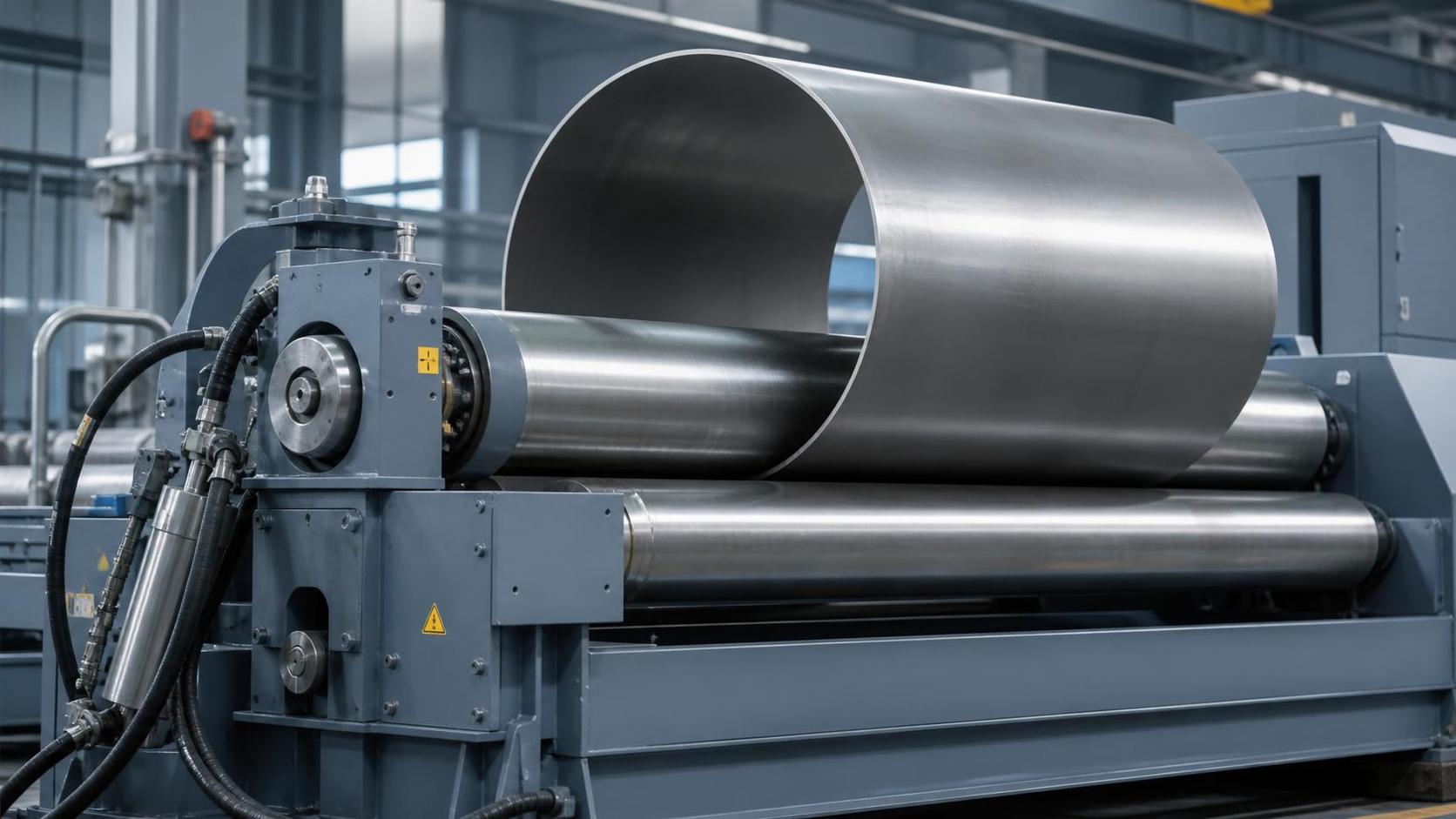
During operation, the operator or CNC program positions the plate between the upper and central lower rolls. These pinch rolls hold and feed the workpiece, preventing slip as the plate advances. The two lateral rolls rise independently or in coordinated motion beneath the plate. Their position changes the bending moment and progressively forms the desired radius. Because the plate remains clamped during loading, pre-bending, rolling, and reverse rolling, the process is generally easier to control than a sequence that repeatedly repositions the workpiece.
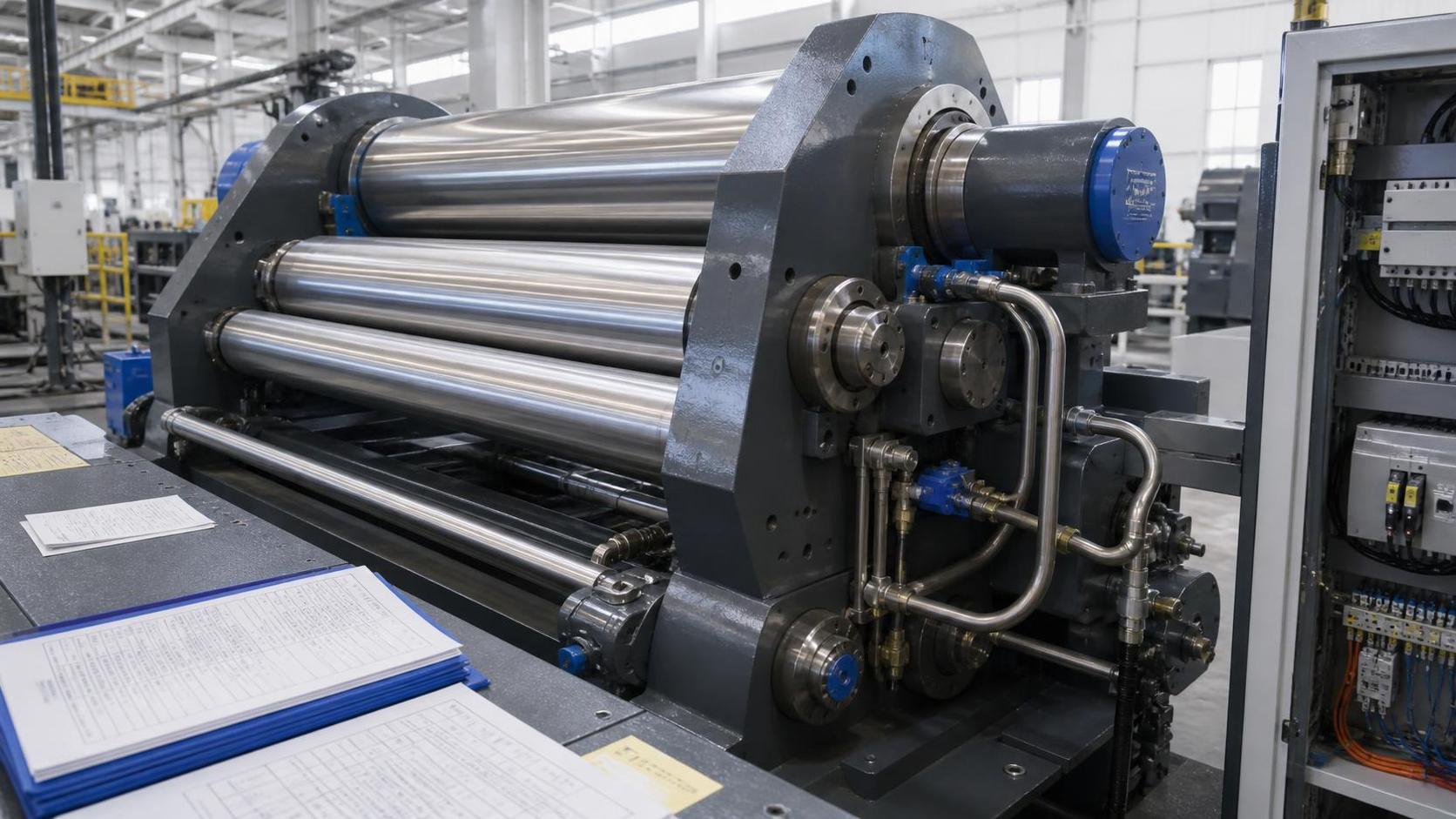
The principal components are the hardened or suitably treated working rolls, hydraulic cylinders, bearings, drive system, gearbox, machine frame, control panel, and drop-end mechanism for removing completed shells. Depending on configuration, drives may be hydraulic or electromechanical, while roll movement is typically hydraulic on medium and heavy-duty equipment. Digital position displays and CNC controls can store rolling sequences, improve repeatability, and assist operators in producing multiple parts with the same geometry.
Roll deflection is a critical engineering consideration. When wide or thick plate is rolled, the working rolls can flex under load, affecting roundness across the shell length. Machines may use roll crowning, support rolls, or compensation systems to manage this effect. Reliable bending also requires adequate frame stiffness, synchronized hydraulic movement, stable pressure control, and accurate roll parallelism. These factors have a direct effect on the number of correction passes needed after initial rolling.
Main Types And Configuration Choices
Four-roll machines are often grouped by duty level, control method, and plate-handling arrangement. Light and medium plate rollers serve general sheet-metal fabrication, ventilation equipment, and standard tank work. Heavy-duty hydraulic machines are intended for thicker plate, larger widths, and demanding shell fabrication. Buyers should compare not only maximum plate thickness but also the stated minimum diameter, since a machine that handles a thick plate may not necessarily form it to the buyer's required tight radius.
Control options range from manual operation with position indicators to NC and CNC systems. An NC setup assists repeatable roll positioning, while CNC systems can manage programmed movements, compensation routines, and multi-pass sequences. CNC is especially valuable where shops make recurring vessel sizes, require traceable parameters, or face short production windows. For low-volume repair work or highly variable job-shop production, a simpler hydraulic arrangement may be commercially appropriate when supported by capable operators and clear process procedures.
Horizontal layouts suit most plate rolling operations, while vertical arrangements may be selected for particular floor-space, material-handling, or heavy-shell requirements. Optional equipment can include side supports, overhead supports, conical rolling devices, feeding tables, powered extraction systems, and automation interfaces. These should be evaluated as production tools rather than accessories: a support system can reduce ovality and improve handling safety when rolling large-diameter, long, or thin-wall shells.
Selection Criteria For Industrial Buyers
Start selection with actual workpiece data: material grade, maximum and routine thickness, usable plate width, target inside diameter, edge-prebend requirement, and expected annual volume. Specify the strongest material that will be processed routinely, not only the most common mild-steel plate. High-yield-strength materials demand greater rolling force and can exhibit more springback. The supplier should confirm capability against the stated material condition and clarify whether quoted values represent full-width rolling, pre-bending, or a larger-diameter rolling condition.
Production flow matters as much as capacity. Assess loading direction, crane access, plate transfer, welding fit-up, shell extraction, and available floor space. A 4 roller Plate Rolling machine placed between cutting, edge preparation, and longitudinal seam welding stations can reduce handling time and improve dimensional control. Fabricators producing tanks or pressure-related components should also evaluate compatibility with welding manipulators, welding rotators, seam welding machines, and inspection workflows.
Wuxi Samgins can be relevant for buyers seeking a broader fabrication-cell perspective rather than an isolated rolling machine purchase. Its product scope includes plate rolling machines, press brakes, edge milling equipment, CNC cutting systems, welding rotators, manipulators, and welding automation. For facilities building tanks, pipelines, steel structures, or sheet-metal assemblies, this wider equipment coverage can help align material preparation, forming, fit-up, and welding requirements during technical discussions.
Applications, Standards, And Market Requirements
A 4 roller Plate Rolling machine is widely applied in vessel and tank fabrication, oil and gas equipment, water-treatment systems, shipbuilding, energy infrastructure, structural fabrication, mining equipment, and process-industry ductwork. Its ability to hold the plate during successive bending steps is useful when shell geometry, seam closure, and repeatability affect downstream welding. Conical work, when supported by appropriate tooling and operating limits, is also relevant for transition sections, hoppers, reducers, and specialized industrial assemblies.
International projects may require equipment and fabrication practices that align with applicable customer specifications, local safety rules, and codes such as ASME or API where relevant to the finished product. A rolling machine itself does not certify a vessel or structure; fabricators still need qualified procedures, traceable materials, competent welding, inspection, and documented quality systems. Buyers importing machinery should confirm electrical standards, guarding, emergency-stop provisions, documentation language, and the scope of CE-related compliance required in the destination market.
Wuxi Samgins states that its machines comply with the ISO9001 quality system and EU CE Machinery and LVD directives, and that its team has global export experience with familiarity with ASME, API, and local industry codes. Its named customer references include URALSTANKOIMPORT, MD Calbah Industries Pty Ltd, Ersay International Transport, Contevix comercio e servicos ltda, and Lincoln Electric-MENA. Prospective buyers should verify the project-specific scope, documentation, and reference relevance during procurement.
Installation, Quality Control, And Maintenance
Installation begins with a suitable foundation, level machine placement, verified electrical and hydraulic connections, and clear access for loading and shell removal. Before production, technicians should check roll alignment, pressure settings, travel limits, interlocks, lubrication points, and emergency functions. Trial rolling with representative material is advisable because material certificates alone do not fully predict springback, surface response, or the number of passes required for a specific diameter.
Quality control should include incoming plate checks, measurement of rolled diameter and roundness, verification of edge-prebend quality, and inspection of seam closure before welding. For critical fabrication, record roll positions, material identification, operator settings, and measured results. This creates a practical basis for repeat orders and root-cause analysis. A plate with damaged edges, inconsistent thickness, excessive scale, or residual distortion can compromise rolling results even when the machine is operating correctly.
Preventive maintenance normally covers hydraulic oil condition, filters, hoses, seals, lubrication, drive components, bearings, electrical terminals, and control-system backups. Frequency should follow the manufacturer's manual, operating hours, and the machine environment. Operators should keep rolls clean and avoid uncontrolled impacts during loading. When accuracy begins to drift, investigate roll parallelism, bearing wear, pressure stability, encoder feedback, and plate-handling practices before changing programmed rolling values.
Total Cost Of Ownership And Return On Investment
The acquisition price is only one part of total cost of ownership. Buyers should include freight, import arrangements, foundation work, commissioning, operator training, lifting equipment, tooling, spare parts, electrical consumption, maintenance labor, and planned downtime. Machine size also affects building requirements and internal logistics. Selecting unnecessary capacity can increase capital and operating cost, while under-specifying capacity can lead to excessive passes, outsourced work, quality losses, or an early replacement decision.
Return on investment often comes from shorter setup time, less edge rework, reduced dependence on manual pre-bending methods, better seam fit-up, and higher throughput for recurring shells. A four-roll configuration can be particularly attractive where operators process varied plate sizes but must retain stable positioning. Quantify potential gains using current cycle time, labor hours, scrap or rework rate, outsourced forming spend, expected machine utilization, and the value of improved delivery reliability rather than relying on a generic payback estimate.
A procurement request should ask for a detailed technical proposal, capacity chart by material grade, recommended options, commissioning scope, training plan, spare-parts list, warranty terms, and service response process. Wuxi Samgins emphasizes design, manufacturing, sales, after-sales, and technical support across its fabrication equipment range. Buyers should turn those general service commitments into contract-ready deliverables, including acceptance criteria, documentation, remote support arrangements, and responsibilities for installation and final production trials.
2026 Trends And Buying Outlook
In 2026, plate-rolling investment is increasingly evaluated as part of a connected fabrication workflow. Buyers are looking for better parameter repeatability, clearer production records, and practical links between cutting, edge preparation, rolling, welding, and inspection. CNC controls, digital position feedback, and more capable handling equipment can support these objectives, but their value depends on disciplined setup, trained operators, and stable upstream material quality.
Demand for thinner high-strength materials, corrosion-resistant alloys, energy-related infrastructure, and tighter fabrication schedules is likely to keep pressure on forming accuracy and production flexibility. Manufacturers should prioritize machines with transparent capacity data, maintainable hydraulic and drive systems, accessible service parts, and controls that match the shop's real skill level. Automation should solve a measurable handling, repeatability, or safety problem instead of being specified solely as a feature.
The most effective 4 roller Plate Rolling machine purchase is based on representative parts, verified technical assumptions, and a complete view of downstream fabrication. Request sample rolling evidence where appropriate, review the proposed layout with production personnel, and agree on acceptance measurements before shipment. This approach helps buyers select equipment that supports both immediate shell-forming needs and future integration with welding, cutting, and material-processing systems.
search
Recommended Products
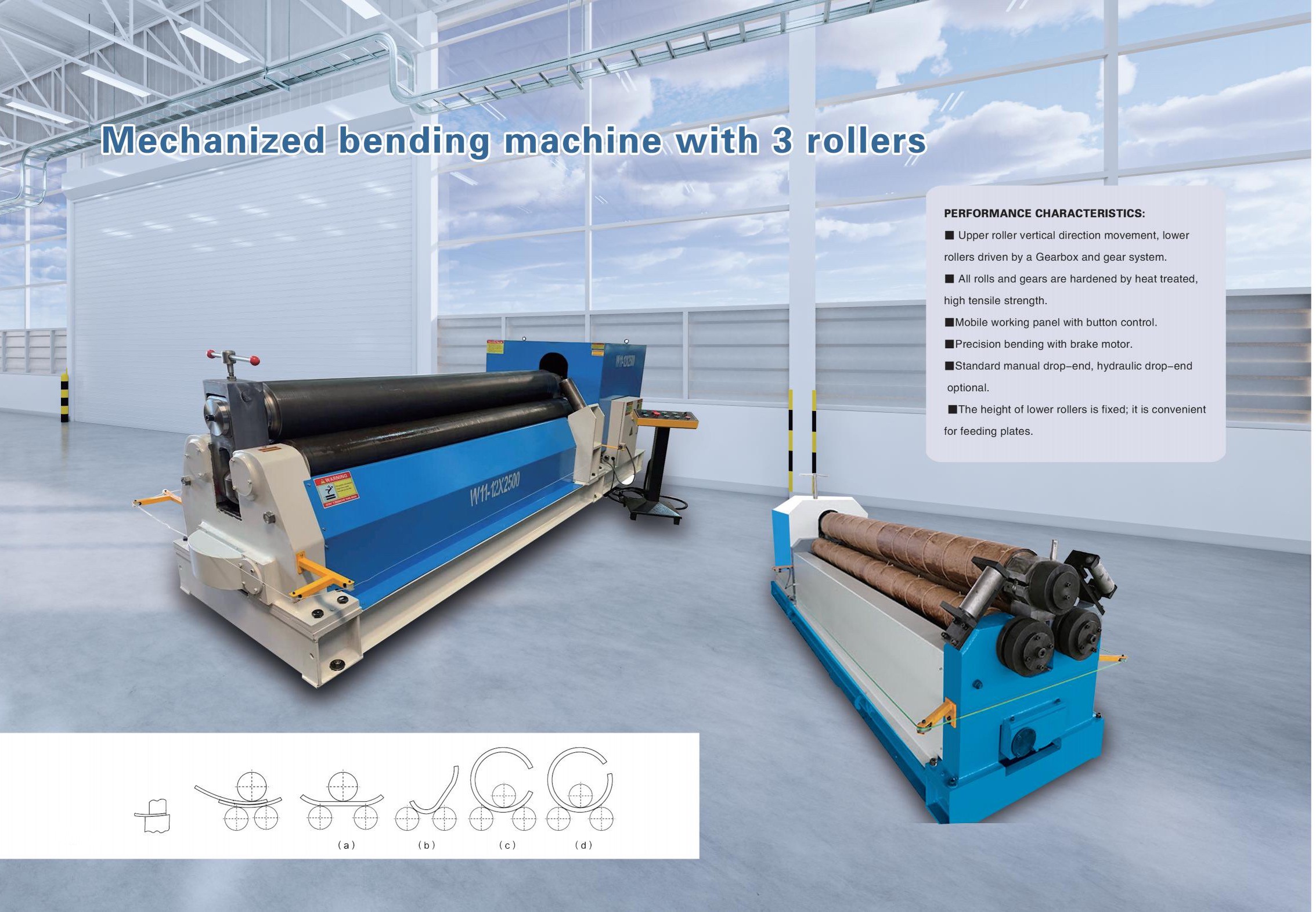
 Mechanized bending machine with 3 rollerA roll forming machine is a processing device that bends sheet materials into desired shapes through the action of working rollers. It is capable of producing various components, including cylindrical and conical parts, making it essential equipment in metal fabrication.
The machine operates by applying external forces—hydraulic or mechanical—to move the working rollers, which bend or roll the sheet into shape. Depending on the rotational movement and positional changes of differently shaped rollers, it can process elliptical, arc-shaped, and cylindrical workpieces.![星星1]()
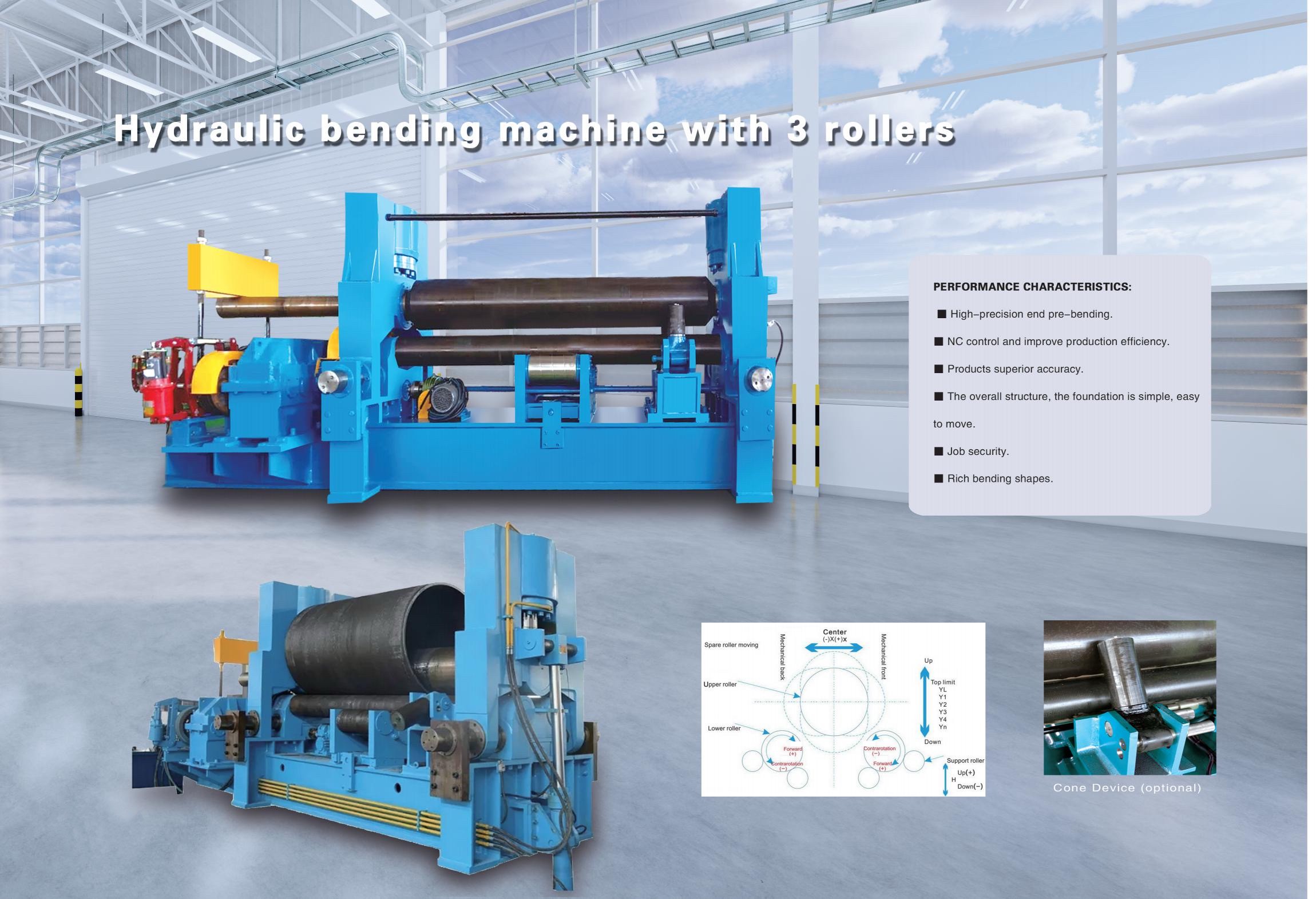
 Hydraulic bending machine with 3 roller1.Introduction for Hydraulic bending machine with 3 roller:
A roll forming machine is a device that bends sheet materials into shapes through the action of working rolls. It can form various parts such as cylindrical pieces and conical pieces. It is a very important processing equipment. The working principle of a roll forming machine is to use external forces such as hydraulic pressure and mechanical force to make the working rolls move, thereby bending or rolling the sheet materials into shapes. Depending on the rotational movement and position changes of the working rolls of different shapes, parts such as elliptical pieces, arc-shaped pieces, and cylindrical pieces can be processed.![星星1]()

Send Us A Message
Send us a Message
A dedicated person will follow up on your needs one-on-one and provide personalized customized solutions according
to your needs.
Get In Touch
We look forward to hearing from you for in-depth communication on how to fulfill your mixing requirements.