




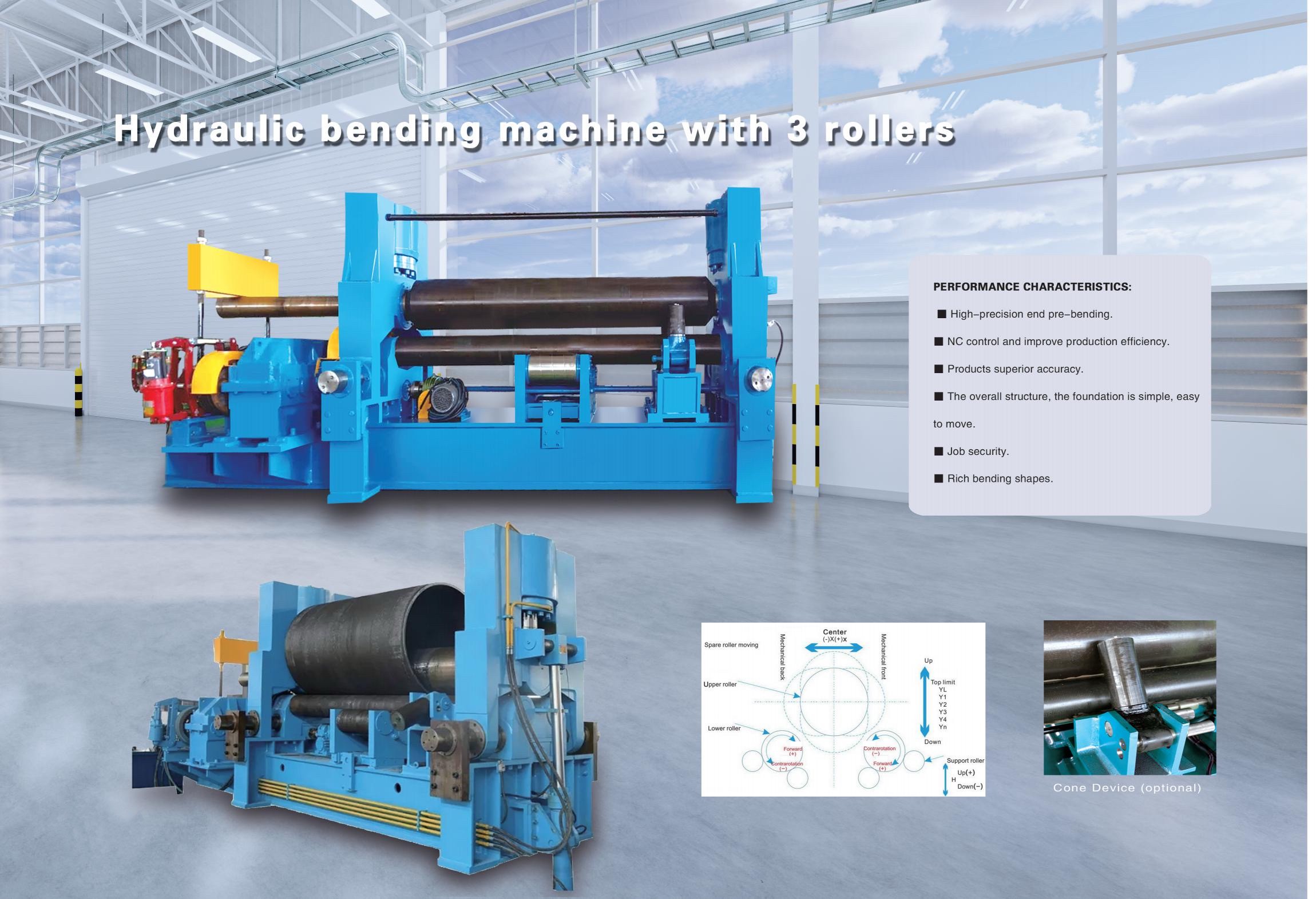
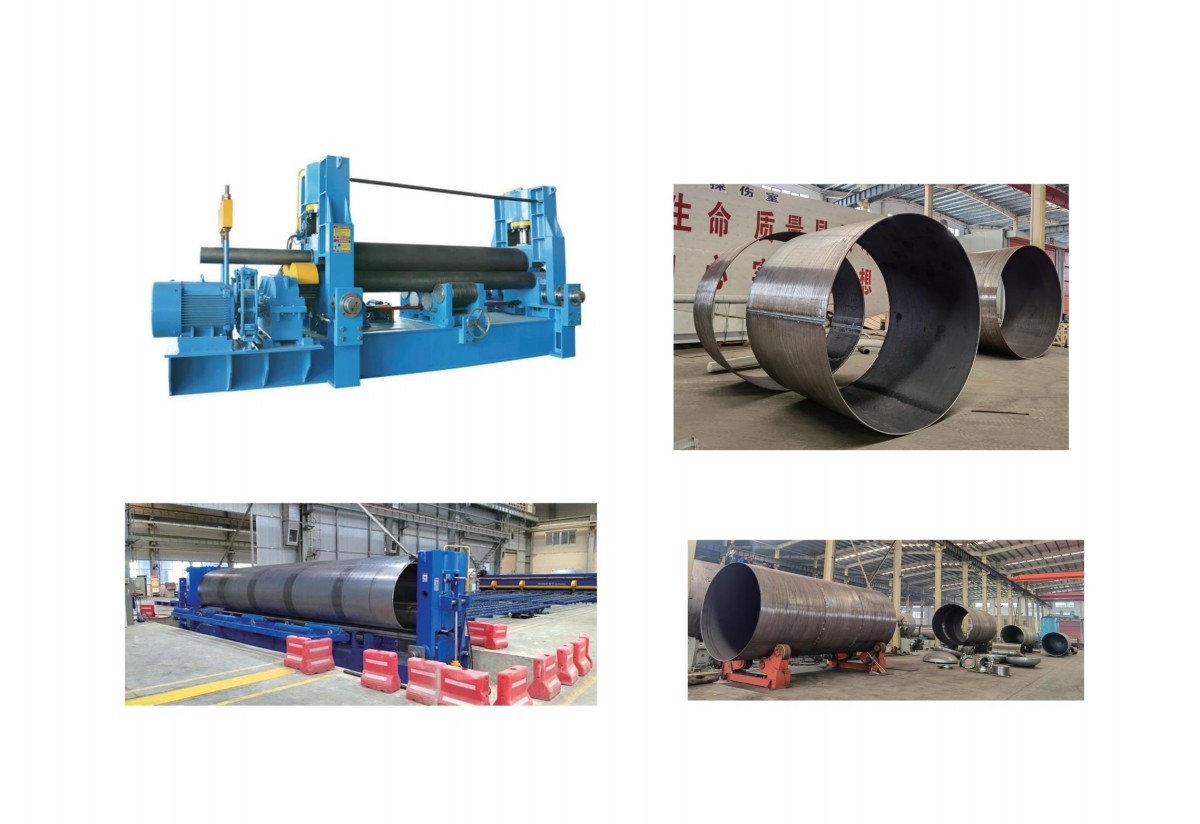
Hydraulic bending machine with 3 roller
A roll forming machine is a device that bends sheet materials into shapes through the action of working rolls. It can form various parts such as cylindrical pieces and conical pieces. It is a very important processing equipment. The working principle of a roll forming machine is to use external forces such as hydraulic pressure and mechanical force to make the working rolls move, thereby bending or rolling the sheet materials into shapes. Depending on the rotational movement and position changes of the working rolls of different shapes, parts such as elliptical pieces, arc-shaped pieces, and cylindrical pieces can be processed.
Full-range Machinery & Customized Non-standard Solutions
Authorized Certificates & Independent R&D Patents
Over 10 Years Global Export & Worldwide Project Cases
Navigation

Hydraulic bending machine with 3 roller Description
1. Product Introduction: Hydraulic 3-Roller Plate Bending Machine
The plate bending machine (also known as a roll forming machine) is essential processing equipment that uses working rollers to bend sheet metal into cylindrical, conical, and other curved shapes.
1.1 Working Principle
The machine operates by applying hydraulic and mechanical forces to move the working rollers. Through controlled rotation and position adjustments of the rollers, various shapes including cylindrical, conical, elliptical, and arc-shaped parts can be formed.
1.2 Symmetrical 3-Roller Design
In this configuration, the upper roller is positioned symmetrically between two lower rollers. Hydraulic cylinders drive the upper roller vertically up and down, while the main reducer's final gear drives the upper roller and the two lower rollers in synchronized rotation. This combined downward pressure and rotational motion subjects the metal plate to multiple consecutive bends, creating permanent plastic deformation (inner layer compression, middle layer neutral, outer layer tension).
1.3 Key Feature & Limitation
Advantage: A row of fixed idler rollers beneath the two lower rollers reduces their span, significantly improving workpiece accuracy and overall machine performance.
Limitation: The sheet ends require pre-bending using auxiliary equipment before rolling.
1.4 Typical Application
This hydraulic 3-roller plate bending machine is particularly suitable for heavy-duty applications, capable of handling plate thicknesses of 50mm or more in large-scale industrial settings.
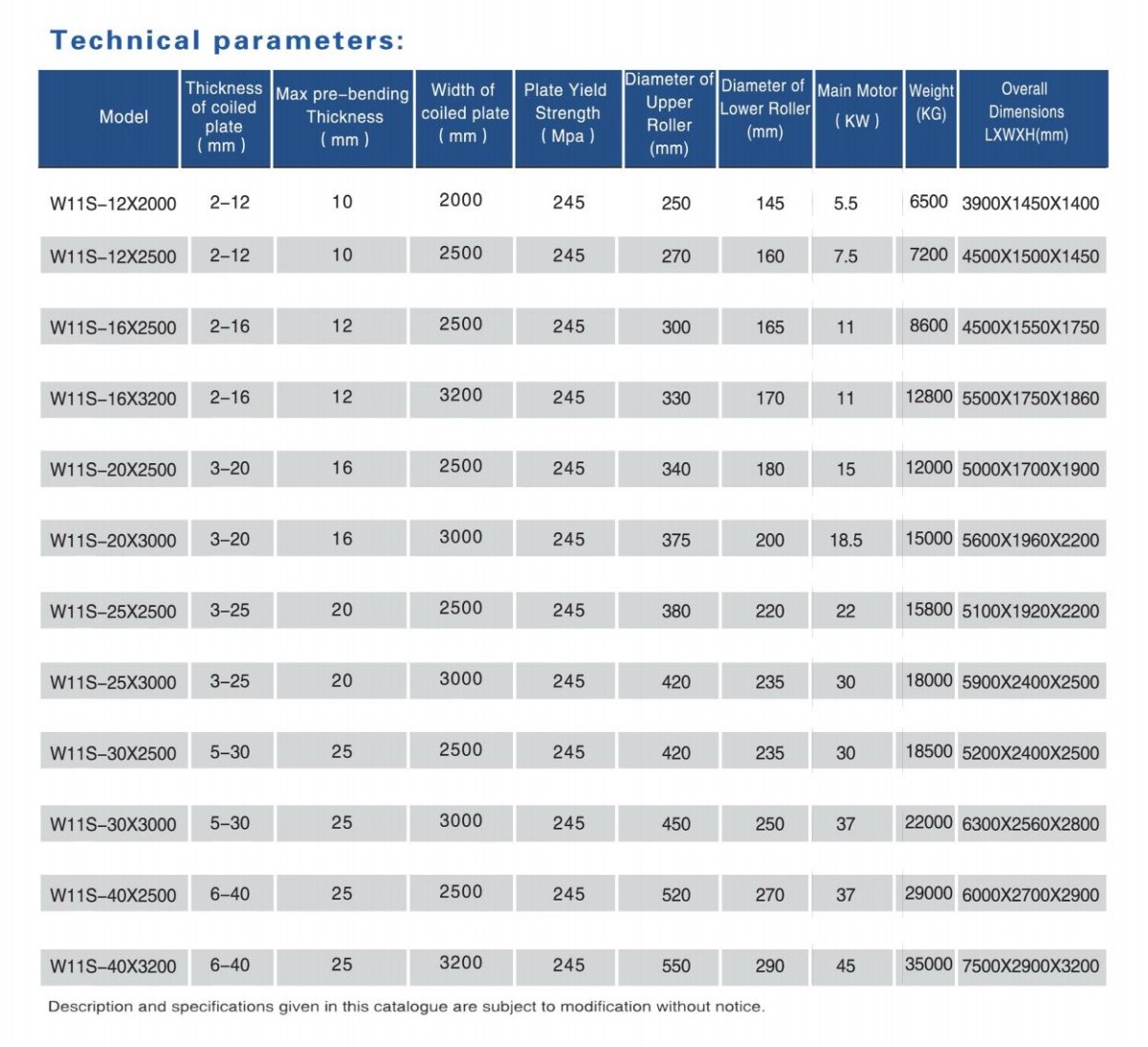
2.Technical parameter for Hydraulic bending machine with 3 roller
3.Characters for Hydraulic bending machine with 3 roller:
The iron plate rolling machine (rolling machine) is divided into mechanical type and hydraulic type.
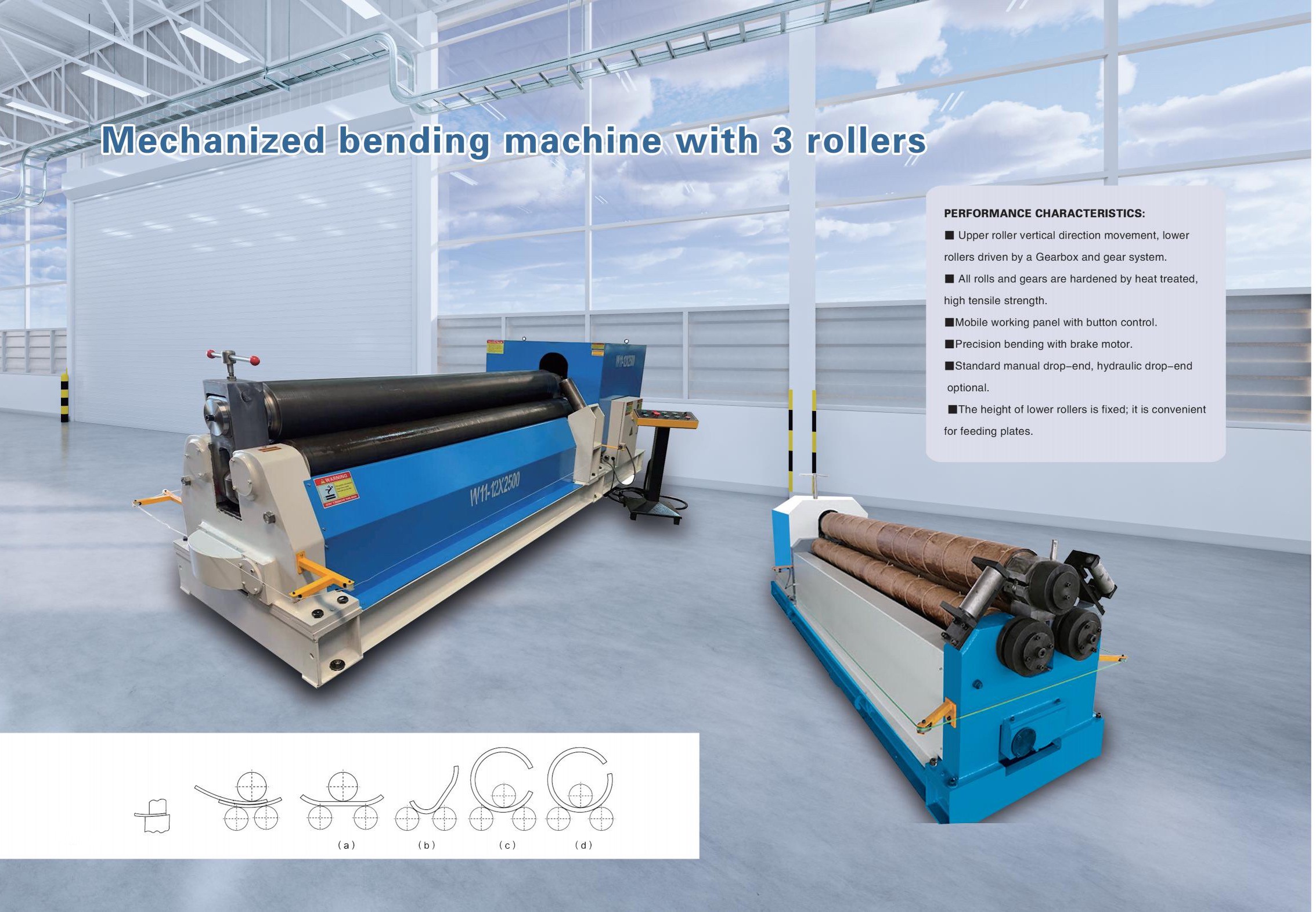
The common structural form is the three-roll symmetrical type. The upper roller moves vertically up and down at the symmetrical position between the two lower rollers. This movement is achieved through worm gear and worm wheel transmission; the two lower rollers rotate, and this rotation is achieved through the output gear of the reducer meshing with the gear of the lower roller, driving the plate to move.
The high-pressure oil output by the electric oil pump is sent through the high-pressure oil pipe into the working cylinder or motor, and the high-pressure oil pushes the piston inside the working cylinder or motor, generating thrust and torque. The mold components then bend the profile. The working principle is based on the principle of three points forming a circle, using the change in the relative position of the workpiece and the rotation motion to cause continuous plastic deformation of the plate. When the downward pressure applied by the upper roller exceeds the yield limit of the material, the material undergoes permanent deformation. The basic rolling process is: send the plate into the space between the upper and lower rollers and adjust it, then start the main motor, and complete the rolling work through multiple pressings, forward and reverse rotations.
The transmission system of the equipment is divided into main transmission and auxiliary transmission. The main transmission system is driven by the motor to drive the reducer and gear pair to rotate the lower rollers; the auxiliary transmission system (used for the up and down movement of the upper roller) is driven by another motor to achieve the movement of the worm wheel, worm gear and screw rod. The lubrication system mostly adopts manual addition or centralized lubrication methods, and regular maintenance is required to ensure the normal operation of the equipment.
products faq
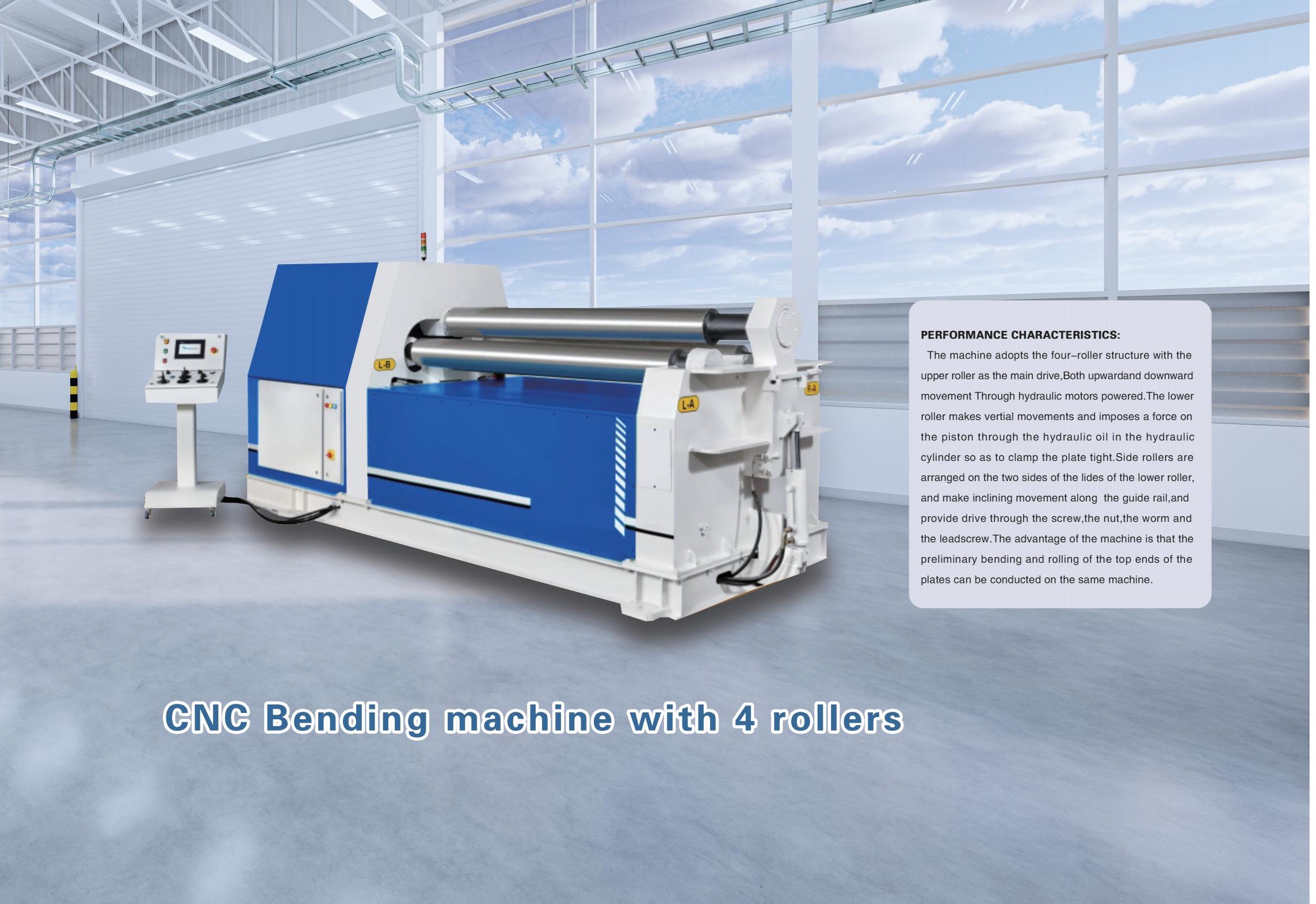
A 3-roller machine uses three rollers arranged in a pyramid or asymmetric configuration. It is simpler, more economical, and suitable for general fabrication. However, it typically requires the plate ends to be pre-bent separately or leaves a flat section on each end. A 4-roller machine adds a fourth (pinching) roller that securely clamps the plate edge, enabling pre-bending and rolling in a single pass with no flat ends—resulting in higher precision, faster operation, and less material waste, making it ideal for high-volume and precision work.
The machine can process a wide range of materials including carbon steel, stainless steel, aluminum, copper, and alloy plates. Thickness capacity varies by model: light-duty machines handle 2–12mm, medium-duty 12–40mm, and heavy-duty models can roll plates up to 120mm (or even 400mm on special configurations). Maximum width typically ranges from 1,000mm to 16,000mm. Capacity depends on material yield strength—higher strength steels require more force for the same thickness.
Yes. Many plate rolling machines support conical rolling. By adjusting the angle of the rollers relative to the plate feed, the machine can taper the curvature—forming truncated cones, tapered wind tower sections, and other conical shapes. This is achieved by angling the rollers or feeding the plate at a controlled angle relative to the roller axis.
Pre-bending is the process of bending the leading and trailing edges of the plate before full rolling. This ensures the plate ends form a continuous curve matching the rest of the cylinder—eliminating the flat sections that would otherwise need to be cut off or welded later. 4-roller machines perform pre-bending automatically in the same setup, while 3-roller machines may require a separate pre-bending attachment or a press brake. Proper pre-bending is critical for achieving full roundness and dimensional accuracy of the finished cylinder.