




Horizontal H Beam Making Line Explained: A Deep Dive into the Industry's Core Manufacturing System
What Is A Horizontal H Beam Making Line?
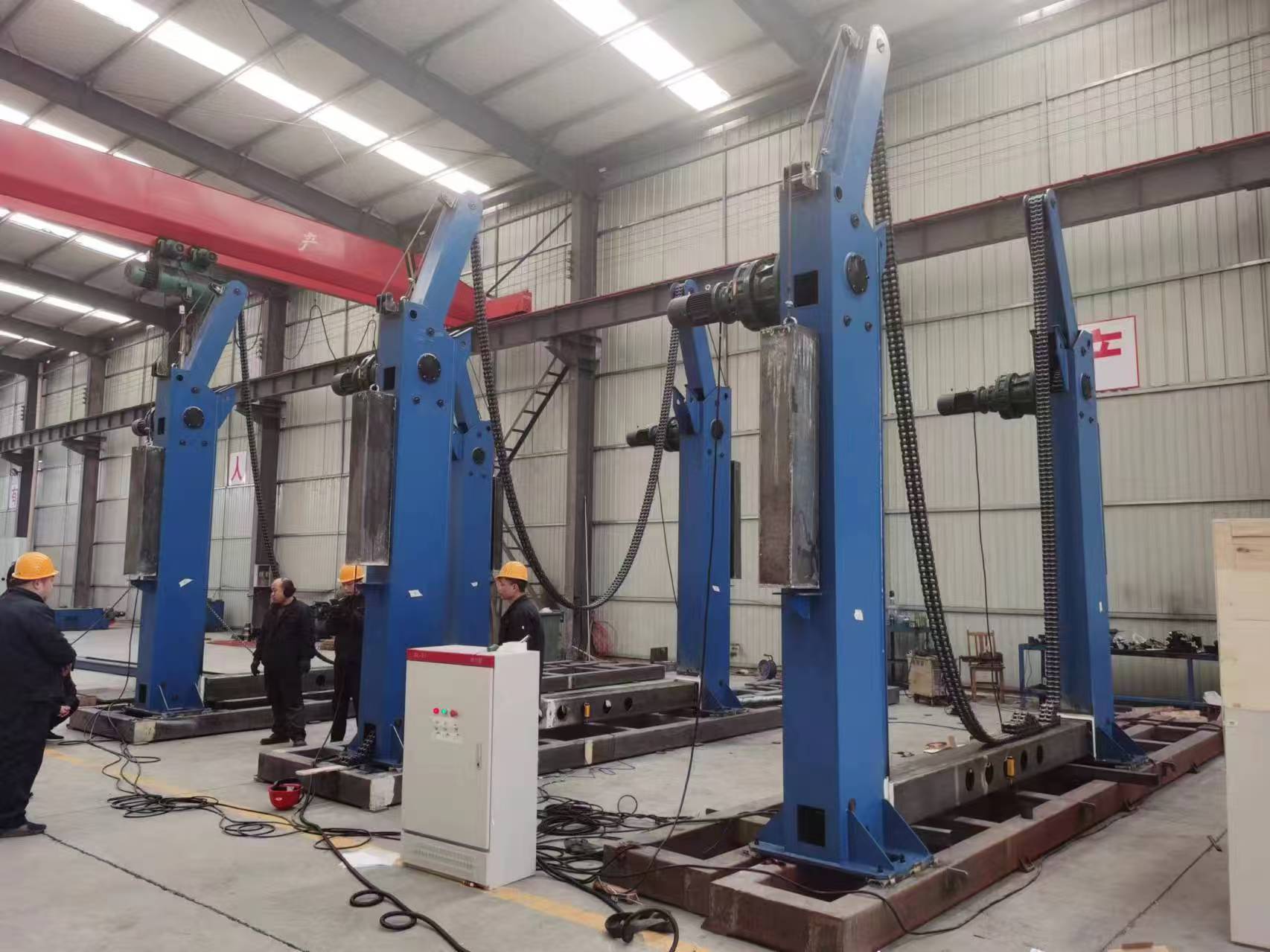
A Horizontal H Beam Making Line is a dedicated, automated production system designed to fabricate H-shaped steel beams from flat steel plates. Unlike traditional batch processing methods that require multiple standalone machines, this line integrates several workstations in a linear or cellular layout to perform assembly, welding, straightening, and cutting in a continuous flow. The term "horizontal" refers to the orientation of the beam during processing, typically with the web plate placed flat and flanges positioned vertically, allowing for easy access for welding torches and material handling.
At its core, the system transforms raw input materials—usually three separate plates (one web and two flanges)—into a single, strong I- or H-section profile. The standard process begins with an assembly station where components are aligned and tack-welded. The beam then moves to the main welding station, often equipped with submerged arc welding (SAW) heads that operate simultaneously on both sides of the web. After welding, a straightening machine corrects any thermal distortion, ensuring the beam meets strict dimensional tolerances. Modern lines may also include shot blasting for surface preparation, drilling for bolt holes, and final cutting to length.
This integrated method represents a significant leap from manual or semi-automatic fabrication. In a manual setup, each step—tack welding, main welding, flipping, straightening—requires separate machines and considerable crane involvement. A Horizontal H Beam Making Line uses automated material transfer, often via roller conveyors or chain turn-over devices, to move the beam through each stage without human intervention. This not only accelerates production but also reduces the risk of injury from heavy lifting and hot work. The result is a consistent, high-quality beam that can be produced at a rate of several units per shift.
From an industrial standards perspective, beams produced on these lines must conform to specifications such as ASTM A6, EN 10025, or JIS G3192. These standards dictate permissible tolerances for web depth, flange width, camber, sweep, and twist. A high-quality Horizontal H Beam Making Line achieves these tolerances through precise roller adjustments, synchronized welding speed and current control, and hydraulic pressure regulation in the straightener. The system is therefore not just a collection of machines but a finely tuned manufacturing ecosystem.
Why Automate With A Horizontal H Beam Making Line?
The primary driver for adopting a Horizontal H Beam Making Line is the dramatic increase in productivity and consistency. In traditional fabrication, each beam requires multiple setups and manual welds, leading to a typical output of 10-15 tons per shift for a small workshop. With an automated line, the same shop can achieve 30-50 tons per shift, depending on beam size and complexity. But the benefits extend far beyond speed.
Quality is the second critical advantage. Manual welding introduces variability—weld defects like porosity, undercut, or incomplete fusion are common when the operator becomes fatigued. An automated submerged arc welding (SAW) system in a Horizontal H Beam Making Line maintains constant arc length, travel speed, and wire feed rate. This produces uniform weld beads with excellent mechanical properties, reduced spatter, and minimal post-weld cleaning. Straightening is also more precise: the machine applies consistent pressure across the beam, correcting distortion without over-stressing the material.
Safety and labor management also improve. By reducing direct manual contact with hot metal, grinding sparks, and heavy lifting, manufacturers lower their accident rates significantly. Furthermore, one operator can oversee the entire line from a central control panel, allowing the plant to redeploy skilled welders to more complex value-added tasks. This is especially valuable in markets with a shrinking pool of qualified manual welders.
Another often-overlooked advantage is traceability. Modern control systems can log process parameters (welding current, voltage, speed, temperature, pressure) for each beam produced. This data is invaluable for quality assurance, compliance with client specifications, and continuous process improvement. For companies exporting to markets requiring certified weld procedures, this traceability simplifies documentation and reduces the risk of rework.
Who Needs A Horizontal H Beam Making Line?
The primary audience for a Horizontal H Beam Making Line includes mid-to-large scale steel structure fabrication shops, heavy equipment manufacturers, and specialized infrastructure contractors. These are businesses where steel beams form a major portion of their product mix, and manual methods have become a bottleneck. For example, a company producing columns and beams for multi-story buildings, warehouses, or industrial plants will find that an automated line drastically cuts lead times and reduces the need for storage space.
Shipbuilding and offshore construction are also key sectors. These industries require beams with stringent corrosion resistance and dimensional control, often in large volumes. An automated line ensures that each beam matches the design specifications, reducing fitting time in the yard. Similarly, manufacturers of bridges, cranes, and heavy machinery (like excavator booms or press frames) benefit from the consistency and throughput of an automated system.
At a more granular level, the typical decision-maker is a plant manager, production director, or a fabrication business owner. They are evaluating not just the machine cost, but the total value of reducing overtime, scrap, and warranty claims. They also need a supplier who understands their specific beam sizes (common depths range from 200 mm to 1500 mm, with flanges up to 50 mm thick) and can offer customization for non-standard profiles. Companies such as URALSTANKOIMPORT and Estructuras Metalicas Girders Chile Limitada represent the kind of international clientele that seeks robust, adaptable equipment.
Finally, the system is for organizations planning to expand their market reach. A steady, high-volume output of certified beams enables fabricators to bid on larger contracts and shorten delivery time. It also positions them as reliable suppliers for ESCOs (Engineering, Procurement, and Construction companies) who require consistent quality across multiple project sites. In short, any business where structural steel is a core product should consider automation.
Core Application Scenarios And Global Standards
A Horizontal H Beam Making Line is most effectively deployed in centralized fabrication yards that serve large-scale construction or industrial projects. The line produces beams that are then transported to the assembly site, minimizing on-site welding. Common applications include the erection of high-rise buildings, airport terminals, sports stadiums, and industrial sheds. For example, a supplier like Zein Steel Industries Co. LLC uses such lines to fulfill orders for complex portal frames and roof trusses.
The system also plays a vital role in the production of pipe racks and process skids for the oil and gas industry. These structures require beams that can handle heavy dynamic loads and corrosive environments. The consistency of an automated line ensures that bolt-hole patterns align perfectly, reducing assembly time in the field. Clients like BatysMunaiGazZhabdyktary LLP require beams that meet GOST standards, and the line must be calibrated to produce profiles within those specific tolerances.
From a standards perspective, global manufacturers must adhere to multiple codes. The ISO 9001 quality management system is a baseline, but advanced lines also comply with the EU CE Machinery Directive (2006/42/EC) and Low Voltage Directive (2014/35/EU), as demonstrated by Wuxi Samgins. Additionally, familiarity with ASME Section IX (welding qualifications) and API 2B (for offshore structures) is essential for international clients. The line's control system should allow for parameter adjustments to suit the required code-based weld procedures.
Timing is another factor. A line is typically installed during a capacity expansion phase or when replacement of aging equipment is critical. The payback period, often 12 to 24 months, depends on utilization rates and the value of scrap reduction. Maintenance intervals are scheduled based on throughput—typically every 500 hours of arc-on time for consumable checks and alignment verification. Partnering with a supplier who provides on-site commissioning and remote diagnostics, as Wuxi Samgins does, ensures minimal downtime during these critical periods.
Manufacturing Process And Quality Control
The typical production sequence for a Horizontal H Beam Making Line starts at the H Beam Assembly Machine, where the web and two flanges are precisely positioned using hydraulic clamps and side rollers. Tack welding, often using CO2 or flux-cored wire, holds the components together. This assembly must be accurate within 1-2 mm to ensure final weld quality. For large beams (12 m or longer), the assembly machine is designed to handle thermal expansion and maintain alignment.
The assembled beam then enters the main H Beam Welding Machine. This station uses up to four submerged arc welding heads (two on each side), allowing simultaneous welding of both fillet welds. The welding parameters— amperage (typically 400-800 A), voltage (26-34 V), and travel speed (40-80 cm/min)—are pre-set based on beam size and material grade. Advanced lines feature automatic tack-weld detection and adaptive filler wire feed to handle minor gaps. The use of high-quality flux and wire ensures a clean, slag-free weld that requires minimal grinding.
After welding, thermal distortion is inevitable. The H Beam Straightening Machine uses a series of horizontal and vertical rollers to apply mechanical force, correcting camber (bowing in the web plane) and sweep (bowing out of the web plane). Hydraulic pressure is adjusted in real-time based on feedback from laser or mechanical sensors. This ensures the final beam meets tolerances of typically 1/1000 of beam length for camber and 1/2000 for sweep. Quality control includes dimensional checks using gauges and periodic ultrasonic testing of welds.
Optional but highly recommended stations include a Shot Blasting Machine to remove mill scale and rust, and an H Beam 3D Drilling Machine for bolt holes. These integrated steps eliminate the need to re-handle the beam multiple times, preserving alignment and reducing cycle time. Throughout the process, the system's PLC records data for each beam, creating a digital twin for traceability. Components like servo motors and CNC controllers from reputable global brands enhance reliability, mirroring the approach used by Wuxi Samgins to guarantee long service life.
Total Cost Of Ownership And Roi Factors
When evaluating a Horizontal H Beam Making Line, the purchase price is only one element of the Total Cost of Ownership (TCO). Key cost drivers include the initial investment (ranging from $500,000 to $2,000,000 for a mid-range line), installation and foundation work, training, and the cost of spare parts. Consumables such as welding wire, flux, and grinding wheels represent ongoing operational expenses. Energy consumption is another factor; a fully automated line with four SAW heads draws about 100-150 kW.
Maintenance costs are typically 2-5% of the machine value per year. However, this can be minimized by selecting a line with high-quality components. For instance, using imported linear guides, ball screws, and hydraulic seals reduces unscheduled downtime. Wuxi Samgins emphasizes this by sourcing key hydraulic, servo, and CNC components from world-famous brands. A comprehensive after-sales agreement that includes remote diagnostics and regular on-site inspections further stabilizes TCO.
The Return on Investment (ROI) is driven by increased output, reduced labor cost, and lower rework rates. A shop producing 1000 tons per month manually might require 15-20 welders and fitters. With an automated line, that same volume can be achieved with 5-6 operators. Labor savings alone can repay the machine investment within 18 months. Additionally, reduced scrap and rework (from 5% to under 1%) directly improve profit margins. The ability to handle larger, more complex orders also opens new revenue streams.
For a precise calculation, potential buyers should request a production analysis based on their typical beam mix. Suppliers like Wuxi Samgins offer customized proposals that include throughput projections and a spare parts roadmap. It is also wise to budget for training (2-4 weeks) and a contingency fund for initial optimization. By considering both operating costs and revenue upside, fabricators can make a data-driven decision that aligns with their long-term growth strategy.
search

Recommended blogs
Send Us A Message
Send us a Message
A dedicated person will follow up on your needs one-on-one and provide personalized customized solutions according
to your needs.
Get In Touch
We look forward to hearing from you for in-depth communication on how to fulfill your mixing requirements.