




How Plate Leveling Equipment Works: An In-Depth Guide to Precision Flatness in Metal Processing
What Plate Leveling Equipment Means In Metal Processing
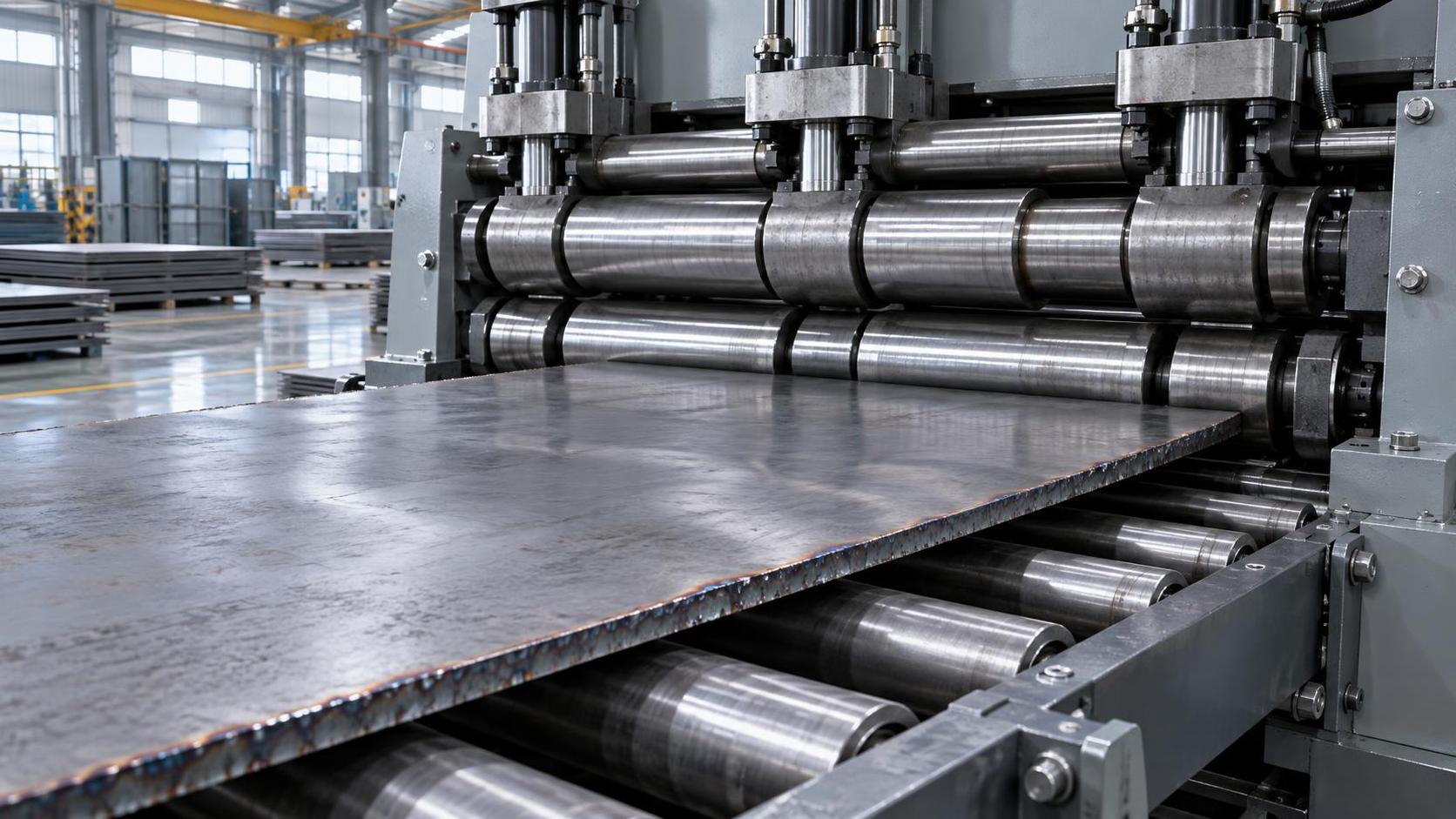
Plate leveling equipment is industrial machinery that improves the flatness of steel, stainless steel, aluminum, and other metal plates by repeatedly bending material through a controlled series of rolls. Its purpose is not simply to make a sheet look flat. Effective leveling reduces shape defects that can disrupt CNC cutting, welding fit-up, press-brake forming, machining, coating, and final assembly. Buyers normally evaluate both visible flatness and the consistency of flatness across the usable plate area.
Common defects include center buckle, edge wave, crossbow, coil set, longitudinal curvature, and local distortion caused by cutting, handling, welding, or uneven residual stress. Plate leveling equipment addresses these conditions by applying alternating elastic-plastic deformation. When material passes through successive upper and lower work rolls, the machine progressively redistributes strain through the thickness. The final result depends on material grade, thickness, width, yield strength, incoming shape, roll geometry, and operator settings.
Flatness requirements should be defined before a machine is specified. A plate intended for general fabrication may tolerate more variation than a panel for precision laser cutting or automated welding. Procurement documents should state material range, plate dimensions, surface condition, allowable residual curvature, production volume, and downstream process. This gives suppliers a practical basis for selecting roll diameter, roll quantity, frame rigidity, drive capacity, and automation level rather than proposing equipment solely by nominal thickness.
How Plate Leveling Equipment Creates Precision Flatness
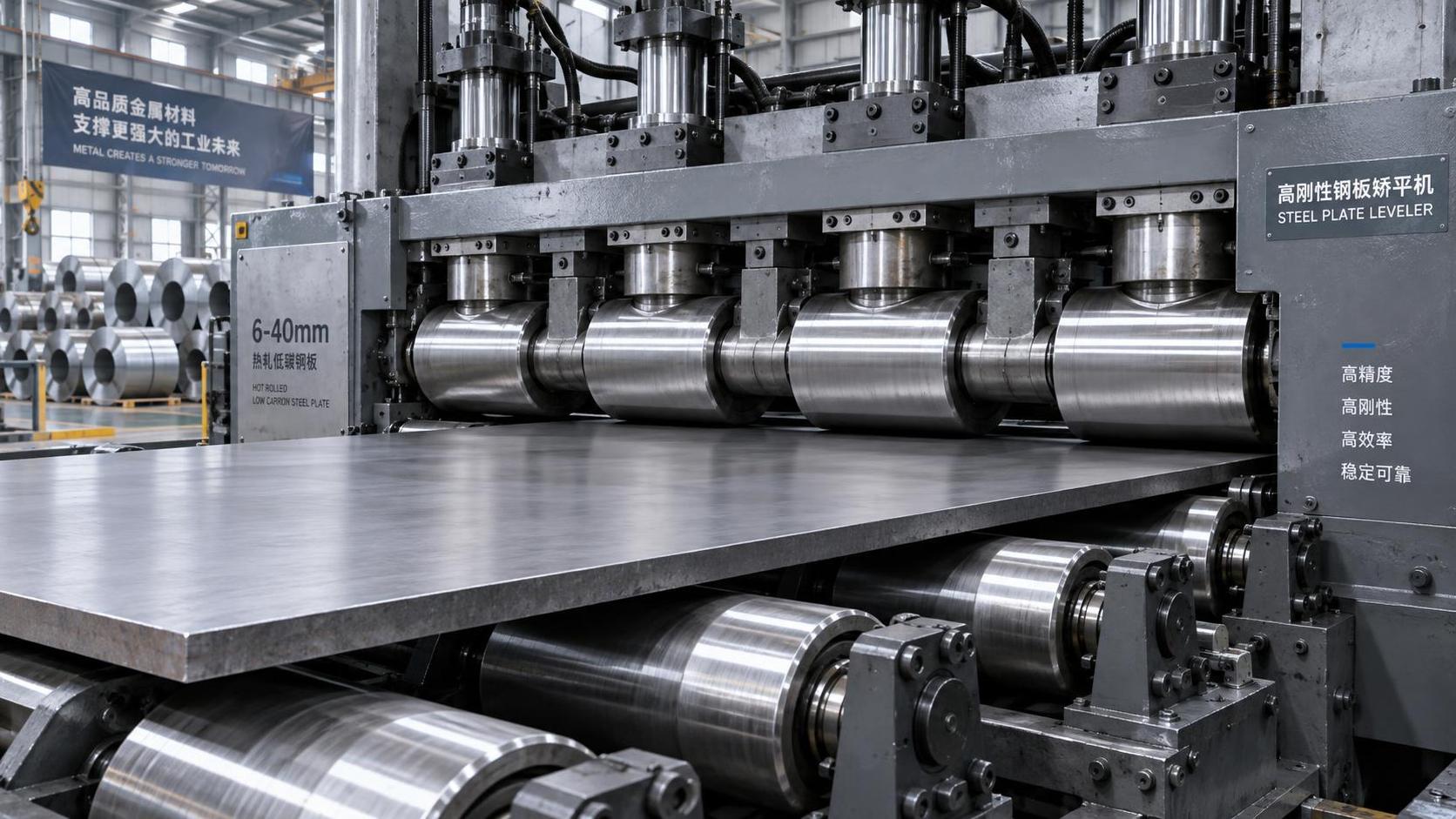
The operating principle of plate leveling equipment is controlled reverse bending. Material enters the machine between staggered upper and lower rolls. Entry rolls introduce sufficient bending to affect the existing shape, middle rolls continue the alternating deformation, and exit rolls gradually reduce the bending amplitude. This progressive approach is important because abrupt correction can leave stress concentrated in one zone or create new shape problems at the plate ends.
Roll penetration, sometimes described as the vertical relationship between upper and lower roll sets, is the main adjustment used to match the material. Higher-strength or thicker plate generally requires greater force, while thin material can be marked or overworked if settings are excessive. A well-designed machine combines accurate roll positioning with a rigid structure so the commanded setting remains stable under load. Hydraulic, servo, and CNC-controlled systems can improve repeatability where product mix and flatness demands justify the investment.
Leveling is distinct from straightening after welding, although both processes correct distortion. A plate leveler works on broad material before or between fabrication steps, while H-beam straightening equipment addresses deformation in structural members. In a complete fabrication line, a plate may be leveled before CNC flame, plasma, or fiber laser cutting, then formed, welded, and inspected. Controlling flatness early can reduce rework at each of these later stages.
Main Types Of Plate Leveling Equipment
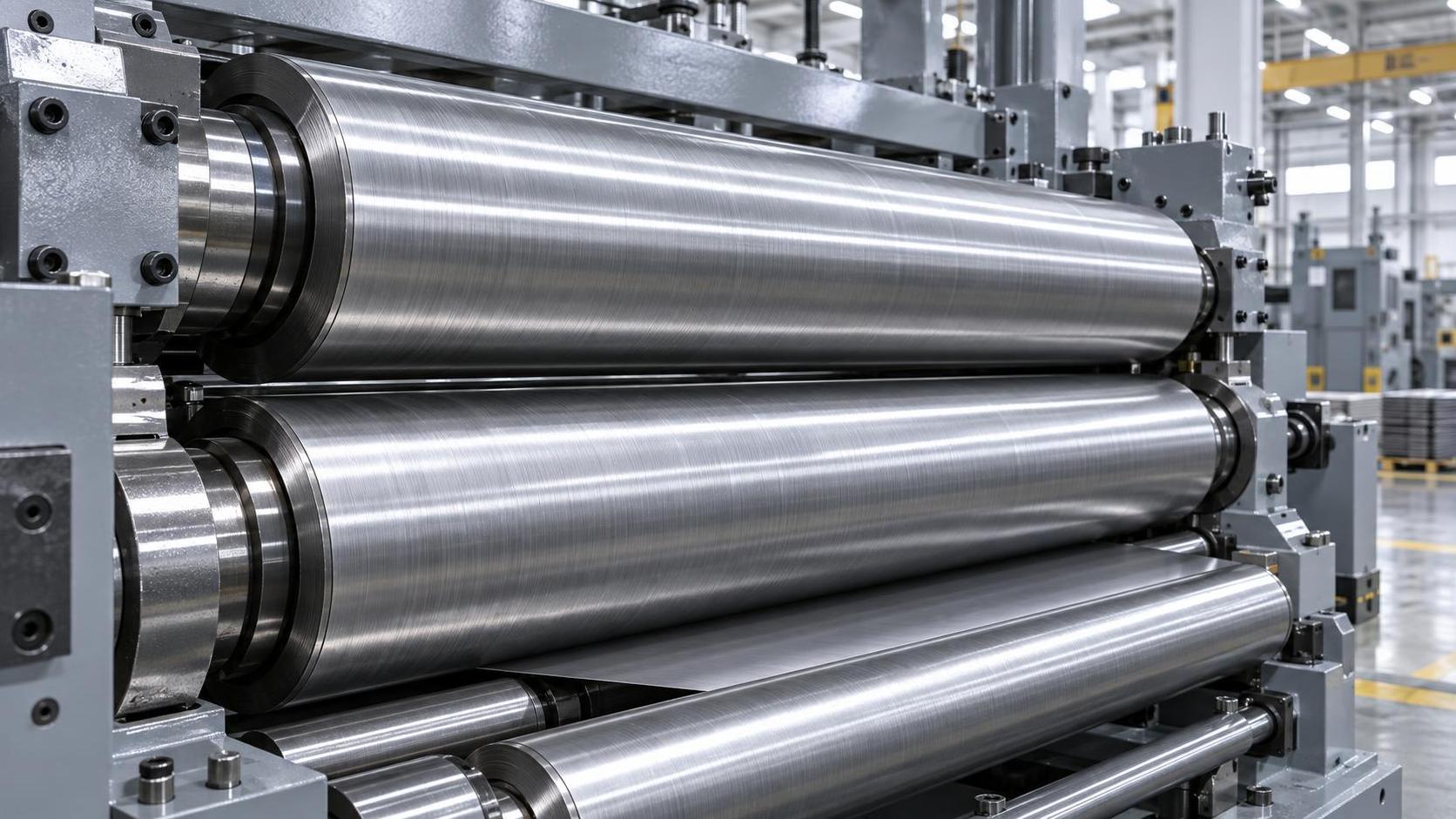
Roller leveling machines are the most widely used category. They use multiple small-diameter work rolls supported by backup rolls to process plate over a defined thickness and width range. More work rolls can create a shorter bending pitch and enable more gradual correction, but the appropriate configuration still depends on material properties and required throughput. Heavy plate applications typically need a more robust frame, higher drive torque, and larger roll system than thin sheet applications.
Press-type leveling systems use localized force from a press or multiple actuators to correct selected areas. They can be useful for low-volume work, oversized components, or plates with isolated deformation, but they are generally slower and more dependent on operator assessment than continuous roller leveling. Stretch leveling is another process, mainly used where controlled tension can remove shape defects in certain sheet products. It should be evaluated separately because its material handling and process window differ from roller leveling.
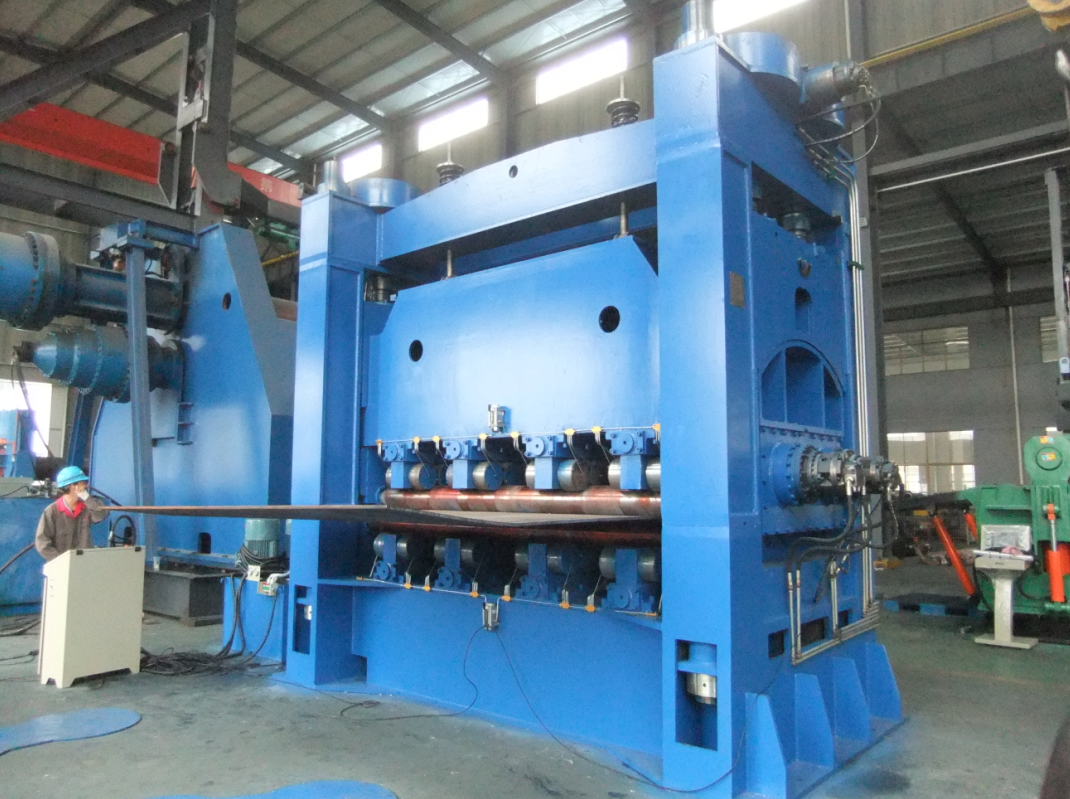
A practical specification also considers line configuration. Standalone plate leveling equipment may suit job shops that process varied incoming plates. Integrated lines can include loading tables, pinch rolls, feeding systems, measuring devices, shearing, deburring, or cutting equipment. Wuxi Samgins supplies plate leveling machines within a broader fabrication equipment range that includes CNC cutting machines, press brakes, plate rolling machines, H-beam lines, and welding systems. This can help buyers assess interfaces across connected processes.
Why Flatness Matters For Fabrication Quality And Cost
Poor plate flatness creates costs that are often recorded under other operations. An uneven plate can sit improperly on a cutting bed, alter torch or laser focus distance, move during handling, or produce components that require manual correction before welding. In automated production, inconsistency can interrupt material flow and complicate fixturing. For manufacturers of tanks, pipelines, steel structures, machinery, and sheet-metal assemblies, stable incoming material shape supports more predictable cycle times and dimensional control.
Using plate leveling equipment before cutting can also improve nesting and part handling. Flat plate is easier to position, clamp, transfer, and stack. After cutting, flatter blanks may enter bending and welding operations with less intervention. The actual gain varies by material condition and factory workflow, so buyers should compare current scrap, rework, setup time, and manual straightening activity against the proposed process. A supplier should be able to discuss these operating variables instead of relying on a generic output claim.
For projects requiring coordinated equipment, Wuxi Samgins can align leveling requirements with adjacent welding, cutting, rolling, and structural-steel machinery. Its stated customization capability includes equipment for tanks, pipelines, steel structures, and sheet-metal factories. Key hydraulic, servo, and CNC components use world-famous imported brands according to the company information provided, supporting a procurement focus on precision, stability, service life, and maintainable control architecture.
Who Uses Plate Leveling Equipment And Where It Fits
Typical users include steel service centers, sheet-metal fabricators, pressure-vessel workshops, shipbuilding suppliers, construction-equipment manufacturers, structural-steel producers, automotive component plants, and contractors producing tanks or pipelines. The right machine differs sharply among these users. A service center may prioritize width, speed, and rapid recipe changes, while a project-based fabricator may need flexibility for irregular plate sizes and grades. The downstream process should determine the configuration.
Plate leveling is normally positioned after incoming-material inspection and before cutting, bending, rolling, or welding. Some factories also use it after thermal cutting when heat distortion affects blanks, provided part size and machine capability are suitable. Material flow must account for safe loading, plate orientation, infeed alignment, outfeed support, and space for inspection. An installation review should map crane coverage, forklift movement, electrical supply, hydraulic-service access, foundation conditions, and operator visibility.
Wuxi Samgins lists international customers including URALSTANKOIMPORT, MD Calbah Industries Pty Ltd, Ersay International Transport, Contevix comercio e servicos ltda, Zein Steel Industries Co. LLC, BatysMunaiGazZhabdyktary LLP, and Lincoln Electric-MENA. These names indicate experience serving diverse international industrial markets, but buyers should request project-specific references, material ranges, acceptance criteria, and application details relevant to their own use case. The company reports more than 10 years of global export experience and familiarity with ASME, API, and local industry codes.
How To Select Install And Control A Leveling Line
Selection begins with the real operating envelope, not the most frequent material alone. Record minimum and maximum thickness, width, length, yield strength, surface finish, incoming defect types, and planned annual tonnage. Include the hardest material that must be processed regularly, because this condition influences frame strength and drive sizing. Also identify whether material arrives as plate, sheet, coil-derived blanks, flame-cut parts, or previously fabricated workpieces. These inputs allow a supplier to recommend a credible machine range and level of automation.
During installation, the equipment should be set on a suitable foundation and carefully aligned with the infeed and outfeed tables. Plates need continuous support to avoid sagging that can be mistaken for a leveling problem. Operators should receive procedures for roll cleaning, material entry, thickness setting, safe jam recovery, and inspection. Commissioning trials should use representative samples rather than only easy material. For repeat products, documented parameter recipes can reduce dependence on individual operator memory.
Quality control should combine visual observation with measured results. Depending on customer requirements, teams may check overall height variation on a reference surface, local waves, diagonal distortion, edge condition, and repeatability across several plates. Acceptance criteria need to be agreed before factory acceptance testing or site acceptance testing. Wuxi Samgins states that its machines comply with the ISO9001 quality system and EU CE Machinery and LVD directives; buyers should confirm the exact documentation, scope, and applicability for the delivered configuration and destination market.
Maintenance Total Cost Of Ownership And Future Trends
The purchase price is only one part of total cost of ownership for plate leveling equipment. Buyers should model transportation, installation, foundation work, electrical connection, operator training, spare parts, routine inspection, lubricant and hydraulic-fluid management, power consumption, tooling wear, and production downtime. Roll condition is especially important because damaged or contaminated rolls can mark material and affect results. A preventive-maintenance plan should specify inspection intervals, bearing checks, fastener checks, hydraulic-system checks, and roll-cleaning responsibilities.
Return on investment is usually driven by reduced manual straightening, lower scrap and rework, improved cutting and welding flow, fewer setup interruptions, and higher usable yield from purchased plate. The calculation should use a baseline from the buyer's own production records. Estimate labor hours spent correcting defects, cost of rejected or downgraded material, time lost at cutting and welding stations, and annual maintenance cost. Then compare these values with realistic throughput, financing, commissioning, and support assumptions over the intended equipment life.
Future plate leveling equipment is likely to place greater emphasis on servo adjustment, stored process recipes, production data collection, condition monitoring, and integration with automated cutting and handling. Demand for shorter lead times and more diverse materials will favor machines that change settings accurately and maintain traceable process records. Wuxi Samgins offers long-term warranties and services spanning design, manufacturing, sales, after-sales, and technical support. For a capital purchase, the final comparison should include response channels, spare-parts availability, training scope, remote-support capability, and clearly defined acceptance tests.
search

Send Us A Message
Send us a Message
A dedicated person will follow up on your needs one-on-one and provide personalized customized solutions according
to your needs.
Get In Touch
We look forward to hearing from you for in-depth communication on how to fulfill your mixing requirements.