




What to Know About a 9 Axis Welding Robot Supplier: Automation Capabilities, Costs, and Industry Uses
What Defines A 9 Axis Welding Robot Supplier
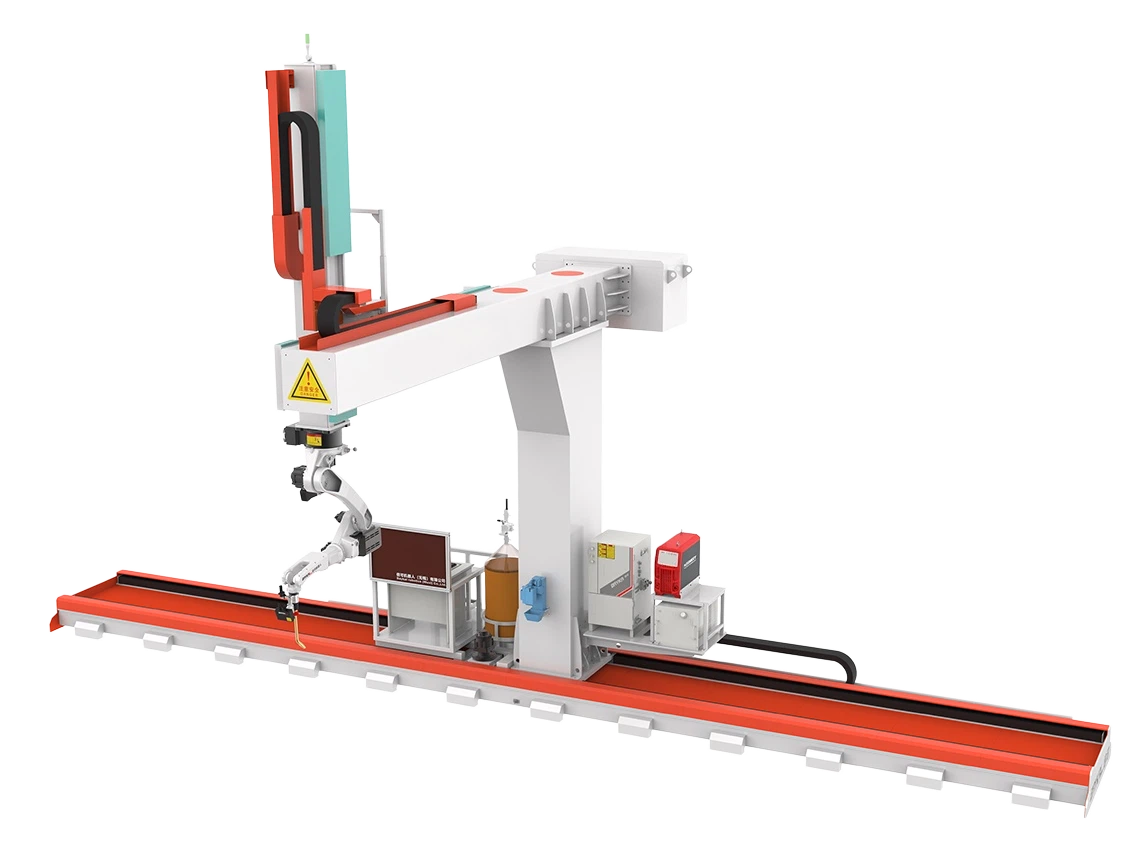
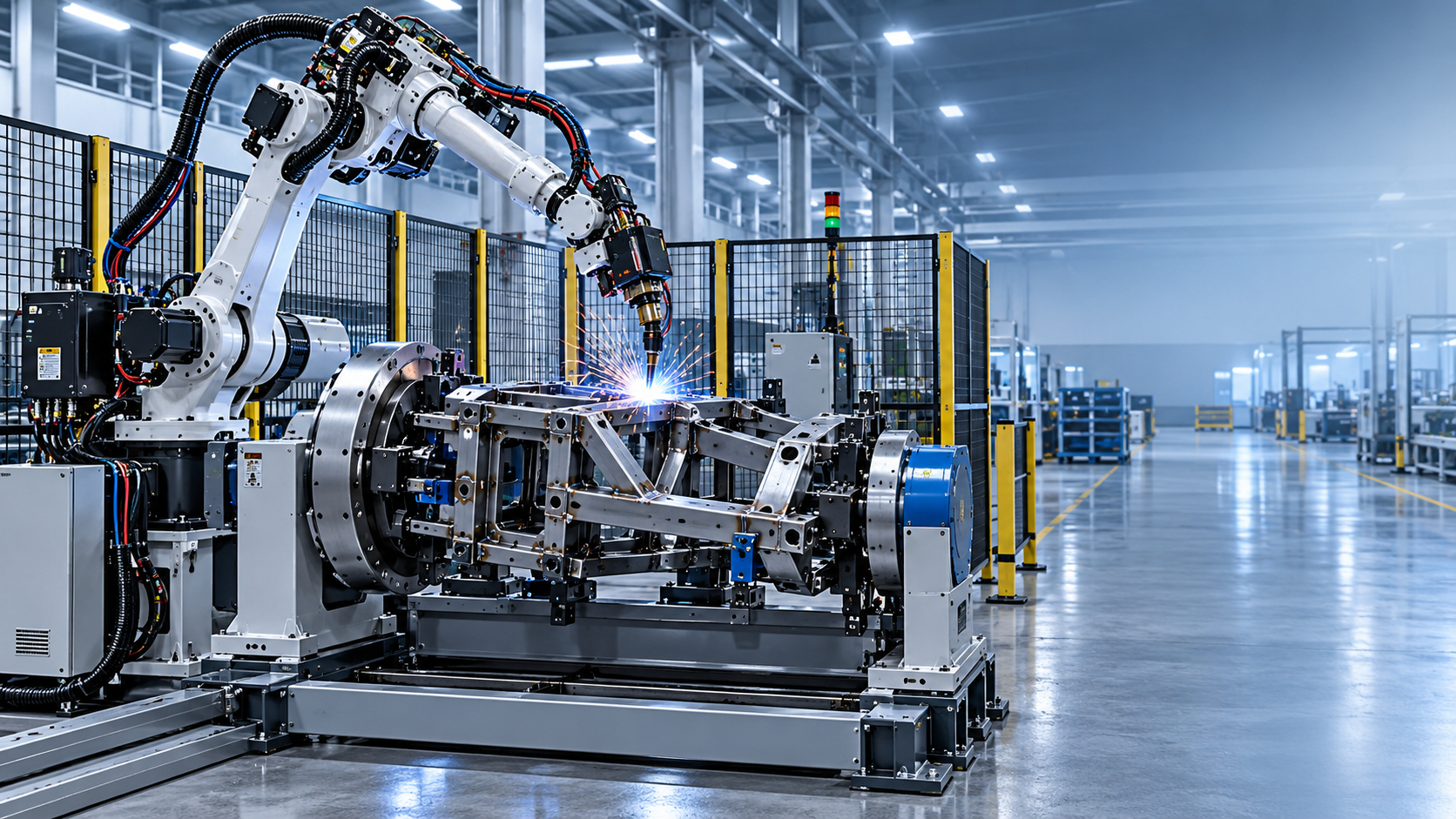
A 9 axis welding robot supplier provides an automated welding cell in which multiple motion axes work as one coordinated system. In a common configuration, a six-axis industrial robot carries the welding torch while a two-axis positioner and one external travel, headstock, or fixture axis move the workpiece. The practical purpose is not simply to add axes. It is to keep the weld joint in a controllable position while maintaining torch angle, travel speed, wire feed, arc parameters, and clearance around changing part geometry.
The term can describe several cell architectures. A compact cell may pair a robot with a two-axis servo positioner for flanges, brackets, and small fabricated parts. A larger system may integrate a robot track, turning rolls, a column-and-boom manipulator, or custom fixtures for tanks, pipes, H-beams, and long seams. Buyers should therefore ask a 9 axis welding robot supplier to define every controlled axis, the coordinated motion range, payload, fixture limits, reachable weld envelope, and any axes that are indexed rather than continuously interpolated.
A complete supply scope normally extends beyond the robot arm. It can include the welding power source, wire feeder, torch cleaning station, safety guarding, fume extraction interfaces, electrical control cabinet, programming, workholding, installation support, and acceptance criteria. The strongest comparison is between complete process cells rather than robot-arm prices. A cell that cannot present parts repeatably, protect the arc zone, or allow safe loading will not deliver the expected automation result.
How Multi-Axis Welding Automation Works
During operation, the robot controller calculates coordinated motion between the torch and external axes. The workpiece can rotate or tilt so the weld remains closer to a favorable flat or horizontal position, while the robot follows the programmed seam. This improves access to circumferential, angled, boxed, and multi-plane joints that would otherwise require repeated manual repositioning. The system may support MIG/MAG, TIG, plasma welding, or other processes according to the metal, thickness, joint design, deposition target, and quality requirement.
Reliable robotic welding begins before the arc starts. Components require controlled fit-up, clean joint surfaces, consistent tack welding, stable datum points, and fixtures that resist heat distortion. Programs can be built from taught points, offline programming, CAD-derived paths, or a combination of methods. Seam tracking, through-arc sensing, laser sensing, or vision may be considered where part variation justifies the added investment. These options should be selected based on the actual tolerance condition, not specified as generic features.
Process control also includes welding procedure parameters. For each qualified product family, the integrator and buyer should agree on wire type, shielding gas, voltage, current, travel speed, torch orientation, interpass controls where relevant, and inspection method. A 9 axis welding robot supplier should document the programmed operating window and distinguish between demonstration welds and production acceptance welds. That distinction gives procurement, quality, and production teams a clearer basis for evaluating repeatability.
Main System Types And Application Fit
Robot-plus-positioner cells are widely used for medium and smaller assemblies with repeatable geometry. Two-axis positioners support rotation and tilt, helping fabricators present fillet and groove joints efficiently. They are appropriate for fabricated frames, machine bases, valves, fittings, structural nodes, and similar products where batch sizes support dedicated or semi-dedicated fixtures. The selection must account for the total loaded mass, center of gravity, rotational inertia, part diameter, loading method, and the required clearance throughout the full movement cycle.
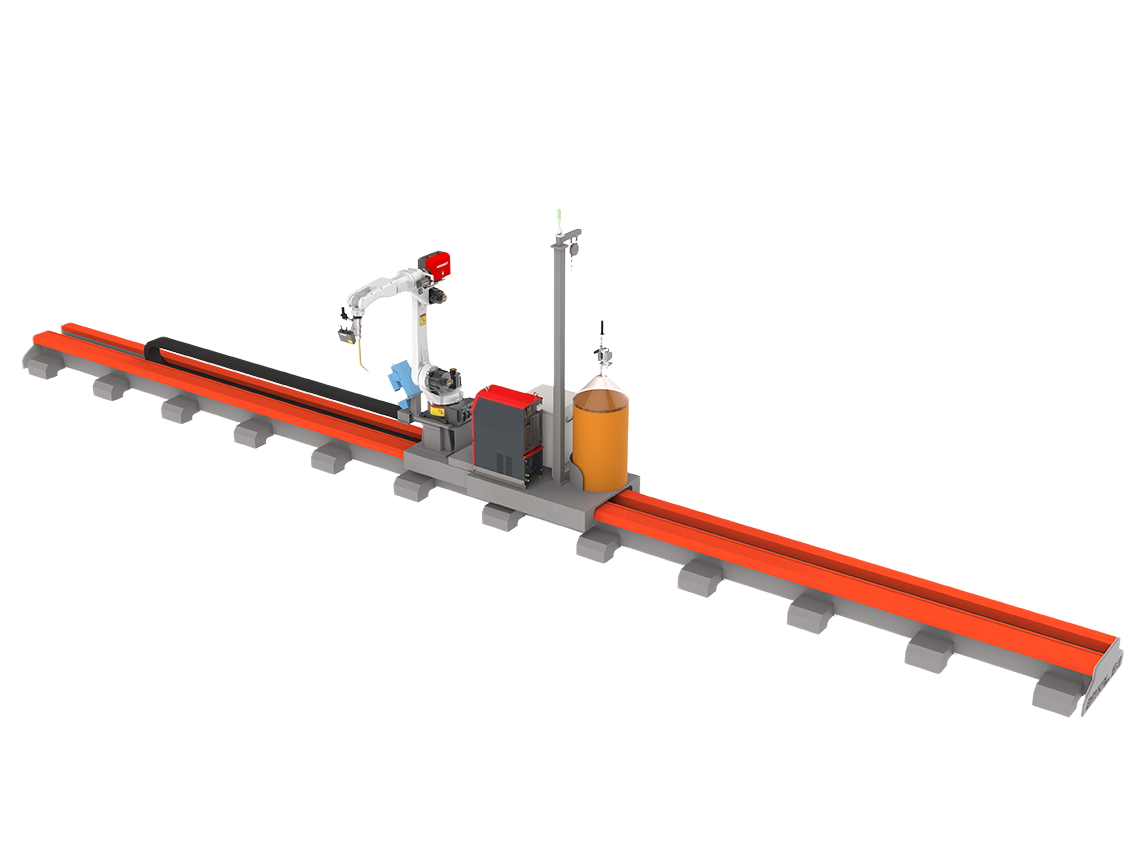
Track-mounted robot systems increase coverage along long workpieces. They can be suited to longitudinal seams, large structural assemblies, pressure-vessel sections, and pipe fabrication where moving the robot is more practical than moving the entire part. For cylindrical products, welding rotators and manipulators can complement the robot cell. A coordinated arrangement may improve accessibility, but the controls, safety interlocks, cable management, and mechanical synchronization must be engineered as one system.
For heavy fabrication, a customized solution can combine welding robots with H-beam assembly and welding equipment, turning rolls, column-and-boom systems, pipe handling, CNC cutting, edge preparation, and material handling. Wuxi Samgins supplies welding robots alongside welding manipulators, welding rotators, welding positioners, long seam equipment, H-beam production machinery, and cutting systems. This broad product range can help a buyer align upstream preparation, welding access, and downstream finishing around the actual production route rather than treating the robot as an isolated purchase.
Who Benefits And Where Systems Are Used
Typical users include steel-structure manufacturers, pressure-vessel and tank fabricators, pipeline and pipe-spool shops, transport-equipment producers, machinery builders, sheet-metal factories, and contract welders with stable repeat orders. The best candidates have a recurring family of weldments, measurable manual welding constraints, and sufficient discipline in material preparation. High labor content alone is not enough; the parts must also be fixturable and the workflow must permit planned loading, welding, inspection, and unloading.
A 9 axis welding robot supplier is particularly relevant where weld access changes around a part. Examples include circular seams on vessel ends, tubular intersections, multi-side frames, pipe branches, structural nodes, and box-section assemblies. The additional coordinated axes can reduce manual handling and minimize stops used only to reposition a workpiece. For low-volume, highly variable projects, flexible fixtures and simplified programming may be more valuable than maximum cycle speed.
Wuxi Samgins reports global export experience and lists customers including URALSTANKOIMPORT, MD Calbah Industries Pty Ltd, Ersay International Transport, Contevix comercio e servicos ltda, Zein Steel Industries Co.LLC, BatysMunaiGazZhabdyktary LLP, PT.Cahaya mas Cemerlang, Estructuras Metalicas Girders Chile Limitada, and Lincoln Electric-MENA. These names should be treated as reference points for a buyer's own due diligence, including confirmation of comparable workpieces, scope supplied, operating conditions, installation support, and permission for any direct reference discussion.
How To Select A Suitable Supplier And Cell
Start the request for quotation with production facts rather than a preferred robot configuration. Provide drawings, material grades, thickness ranges, joint types, weld symbols, part photos, annual volume, shift pattern, allowable cycle time, loading constraints, inspection requirements, and available utilities. Include the largest and heaviest representative parts, expected fit-up variation, and planned future products. This information allows a 9 axis welding robot supplier to evaluate reach, singularities, collision zones, axis speed, payload reserve, and fixture design with fewer assumptions.
Assess technical proposals on process ownership. A credible proposal identifies the robot and external-axis specification, welding process, fixture concept, safety arrangement, expected operator tasks, program changeover approach, electrical requirements, consumables, and acceptance test method. It should clarify whether welding procedure qualification remains the buyer's responsibility, how test coupons or production parts will be evaluated, and what conditions are needed to achieve the stated cycle time. Compare excluded items carefully, especially civil work, cranes, fume extraction, guarding interfaces, installation labor, and training.
Quality systems and market requirements should be checked early. Wuxi Samgins states that its machines comply with the ISO9001 quality system and EU CE Machinery and LVD directives, and that it holds utility model patents for welding and cutting equipment. Buyers should request the documentation applicable to their exact delivered configuration and destination. For projects governed by ASME, API, customer specifications, or local machinery regulations, verify the division of responsibility for design review, welding procedures, electrical compliance, operator safeguarding, records, and final site acceptance.
Cost Structure, TCO, And ROI Evaluation
The purchase price is only one component of total cost of ownership. Initial investment can include the robot, external axes, welding source, fixtures, sensors, guarding, control integration, factory acceptance testing, packing, freight, import charges, installation, commissioning, and operator training. Product size and weight strongly influence mechanical cost. Long tracks, heavy-duty positioners, custom rotators, precision fixtures, and high-capacity safety systems may add more value than a standard robot arm but also require a higher capital budget.
Operating cost depends on arc-on time, deposition rate, wire and gas use, electricity, consumables, fixture maintenance, programming effort, inspection, rework, and downtime. A realistic ROI model compares the current and future process at the part-family level. Include manual handling time, setup time, weld time, repair rates, labor availability, throughput bottlenecks, and the cost of quality variation. Avoid using a theoretical robot duty cycle that cannot be achieved because parts are not ready, fixtures are unavailable, or downstream inspection is constrained.
The most productive investment usually balances flexibility with repeatability. A buyer producing only one mature part family may favor a dedicated fixture and faster cycle. A contract fabricator may accept a longer changeover in exchange for adjustable fixtures and reusable programs. Ask the supplier to provide a transparent scope split, recommended spare parts, annual maintenance assumptions, expected training needs, and a phased expansion path. This enables procurement teams to compare systems with different upfront prices on a more defensible lifetime basis.
Installation, Maintenance, And Future Direction
Successful commissioning follows a controlled sequence: confirm the layout and utility plan; prepare foundations, access, and material flow; complete mechanical and electrical installation; validate safety functions; calibrate robot and external-axis coordination; prove fixtures; establish welding parameters; train operators and maintenance personnel; then complete agreed acceptance tests. The production team should own standard work for loading, clamping, program selection, wire replacement, torch cleaning, visual checks, and escalation of variation. Early operator involvement improves practical adoption and exposes handling issues before full-rate production.
Preventive maintenance should follow the robot, positioner, welding source, and safety-equipment manuals. Typical checks cover cables and dress packs, torch consumables, wire-feed condition, grounding, fixture wear, fasteners, lubrication where specified, axis behavior, safety scanners or interlocks, and backup of programs and parameters. Review downtime records regularly. Repeated arc faults, unstable fit-up, collision alarms, or poor starts often indicate a process issue that requires fixture, preparation, consumable, or program correction rather than a simple reset.
Industry development is moving toward better connected cells, easier offline programming, adaptive sensing, production data capture, and modular automation that can be expanded as demand grows. These tools are useful when they solve a defined problem, such as variable seam location, traceability, or frequent engineering change. Wuxi Samgins offers customized 7/9-axis welding robots, long seam welding machines, and heavy-duty welding rotators for tanks, pipelines, steel structures, and sheet-metal factories. Buyers should use a detailed part review and a witnessed acceptance plan to determine whether a customized configuration delivers the needed capability, supportability, and return on investment.
search

Send Us A Message
Send us a Message
A dedicated person will follow up on your needs one-on-one and provide personalized customized solutions according
to your needs.
Get In Touch
We look forward to hearing from you for in-depth communication on how to fulfill your mixing requirements.