




CNC Laser Cutting Machine Accuracy: What Really Affects Cut Quality
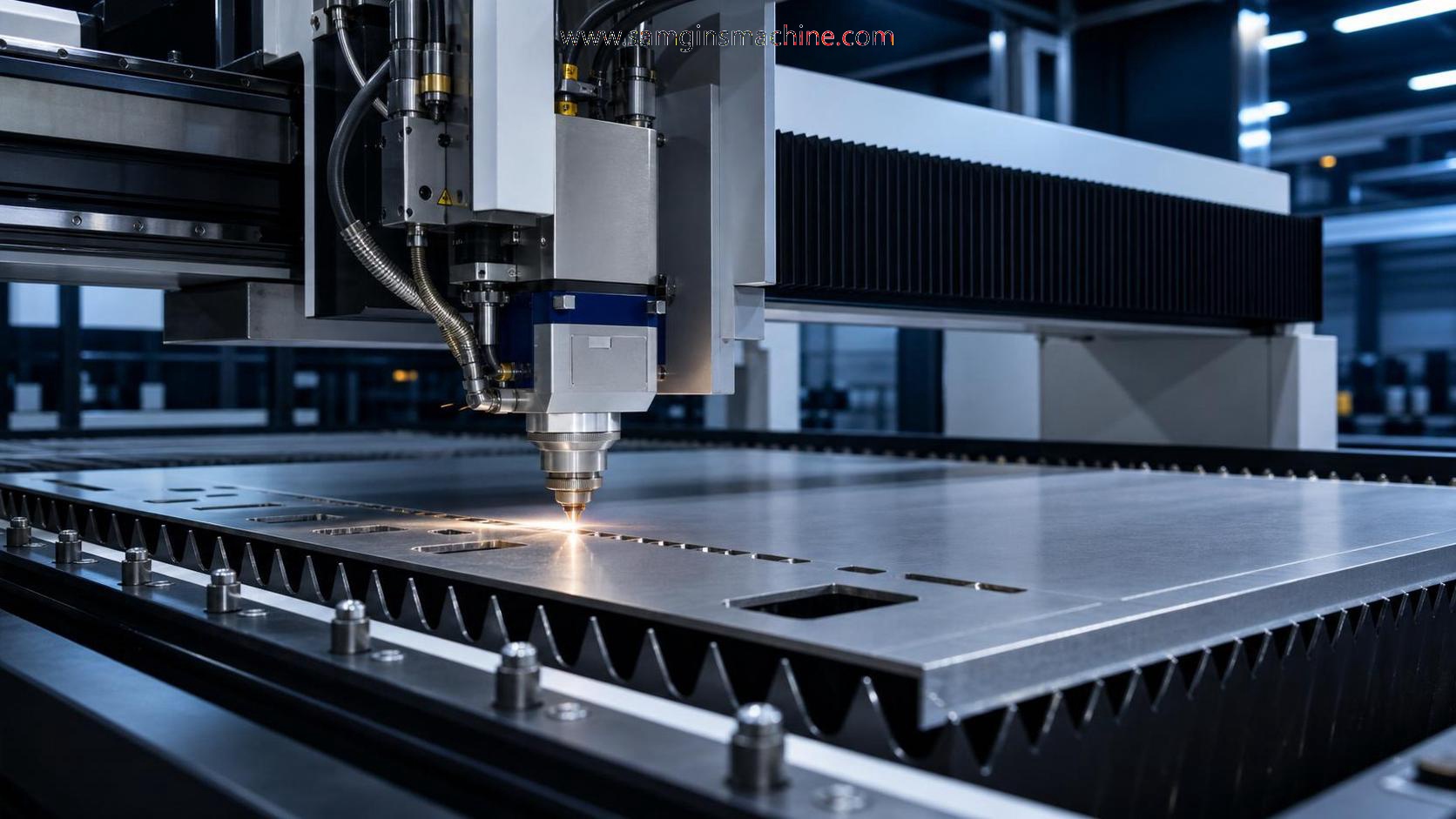
Cut quality in a Cnc laser cutting machine is shaped by a chain of variables, not a single accuracy claim. Bed rigidity, laser source stability, motion control, assist gas, material flatness, and parameter discipline all interact at the cut line.
That matters in fabrication because poor accuracy is rarely just a dimensional issue. It also appears as dross, taper, heat marks, unstable piercing, and inconsistent edge condition, all of which affect downstream welding, bending, and assembly.
For companies working across cutting, welding, machining, and plate processing, the real task is to judge whether a machine can hold precision day after day. In that context, equipment evaluation needs to be tied to production reality rather than brochure numbers.
Accuracy starts before the beam reaches the sheet
A Cnc laser cutting machine is often described by positioning accuracy and repeatability. Those figures are useful, but they only describe part of the system.
True cut quality depends on how the entire machine behaves under load, heat, speed changes, and continuous production. A machine that repeats well in a test cycle may still produce unstable edges in real work.
This is why technical evaluation should connect motion accuracy with thermal behavior, cutting head response, and process stability. In practice, the cut edge reveals more than the specification sheet.
Machine structure and drive system
The frame is the base of every precision result. If the bed lacks rigidity, vibration and deformation can appear during fast acceleration or long operating cycles.
That instability affects kerf width, corner sharpness, and part consistency. Thin material may show waviness, while thicker plate may develop uneven edge taper.
Drive components matter just as much. Linear guides, rack and pinion systems, servo motors, and transmission matching influence response speed and path accuracy.
A capable Cnc laser cutting machine should maintain smooth movement during straight lines, small holes, tight radii, and rapid direction changes. Weak dynamic control usually appears first at corners and pierce points.
What to check in the motion platform
- Frame welding and stress relief process
- Guide rail grade and installation accuracy
- Servo tuning quality at high acceleration
- Backlash control in long travel operation
- Vibration behavior during nested cutting patterns
Laser source, cutting head, and focus control
Even with a rigid platform, cut quality falls quickly if the beam is unstable. Power fluctuation changes the heat input and makes results drift from batch to batch.
Beam quality also affects how tightly the energy can be concentrated. Better beam characteristics usually improve fine detail, small apertures, and smoother edges.
The cutting head adds another layer. Nozzle condition, lens cleanliness, and capacitive height sensing all influence how consistently the beam meets the material surface.
Auto focus is especially important when thickness changes or when mixed jobs are processed. A Cnc laser cutting machine with weak focus control may look acceptable on one material, then lose quality on the next order.
Parameters often matter more than headline power
High power does not automatically mean high precision. Parameter matching is usually the stronger predictor of cut quality.
Speed, focus position, gas type, gas pressure, nozzle diameter, piercing time, and lead-in design all need to match material type and thickness.
For carbon steel, oxygen may deliver efficient cutting, but it can increase oxidation and edge variation if settings drift. For stainless steel, nitrogen helps produce cleaner bright edges, though gas demand rises sharply.
Small parts add another complication. Heat can accumulate across dense nests, making the last parts cut differently from the first ones. That is where process libraries and path optimization become valuable.
Parameter areas worth verifying during trials
- Edge roughness across different thicknesses
- Hole roundness and minimum hole diameter
- Corner burn behavior at high speed
- Pierce quality on thicker plates
- Dross tendency after long continuous runs
Material condition can distort the evaluation
A Cnc laser cutting machine may be blamed for defects that actually start in the material. Plate flatness, surface scale, coating condition, and internal stress all influence the final result.
Warped sheets can upset height sensing. Oily surfaces can affect piercing. Mill scale and inconsistent thickness can lead to varying edge appearance, even under stable settings.
This becomes more important in mixed production, where aluminum, stainless steel, and carbon steel are processed on the same line. Evaluation should use materials that reflect actual order structure, not only ideal samples.
Accuracy has downstream consequences
In fabrication shops, cutting quality affects more than the cutting department. Poor edge condition increases grinding time, fit-up correction, and welding inconsistency.
That is one reason integrated equipment judgment matters. A company such as Wuxi Samgins International Trade Co.,Ltd, established in 2012 in Wuxi, works across CNC cutting, welding equipment, machine tools, forming equipment, and H-beam production solutions.
This broader manufacturing view is useful because cut quality should be measured by what happens next: bending accuracy, weld preparation quality, assembly time, and final dimensional stability.
In cylindrical fabrication, for example, accurate cutting of shells, pipe ends, or prepared joints supports better rotation and seam positioning during welding. Equipment such as Self aligning welding rotator fits naturally into that production chain.
Its load range from 5T to 200T and VFD-based rotating control are relevant because stable handling of pressure vessels, tanks, and large pipes helps preserve fit-up quality after cutting.
How to judge a machine beyond brochure claims
A practical comparison should combine sample inspection with process evidence. Single demonstration parts are not enough.
The better approach is to compare the same Cnc laser cutting machine conditions across several materials, thicknesses, and geometric features taken from real jobs.
Attention should also be given to repeatability after time has passed. Some machines perform well in a brief trial, then drift when heat, dust, and workload build up.
Why standards and supplier discipline still matter
Machine accuracy is not only a design issue. It also reflects production control, assembly discipline, and quality assurance.
Suppliers operating under ISO9001 systems and CE-oriented design practice generally provide a clearer basis for traceability, consistency, and technical communication. That does not replace testing, but it reduces uncertainty.
For exported equipment used across Southeast Asia, Europe, the Americas, and Oceania, process consistency becomes even more important because operating environments and application mixes differ.
A more useful next step
The most reliable way to assess a Cnc laser cutting machine is to build a short evaluation matrix before comparing suppliers. Include material range, thickness band, tolerance targets, edge expectations, daily workload, and downstream process needs.
Then match those needs to trial cuts, structure quality, control capability, and service readiness. When accuracy is reviewed as a production system rather than a single number, equipment selection becomes clearer and far more defensible.
search
Products Navigation
Send Us A Message