




Can a Machine Tending Robot Arm Deliver ROI in High-Mix CNC Production?
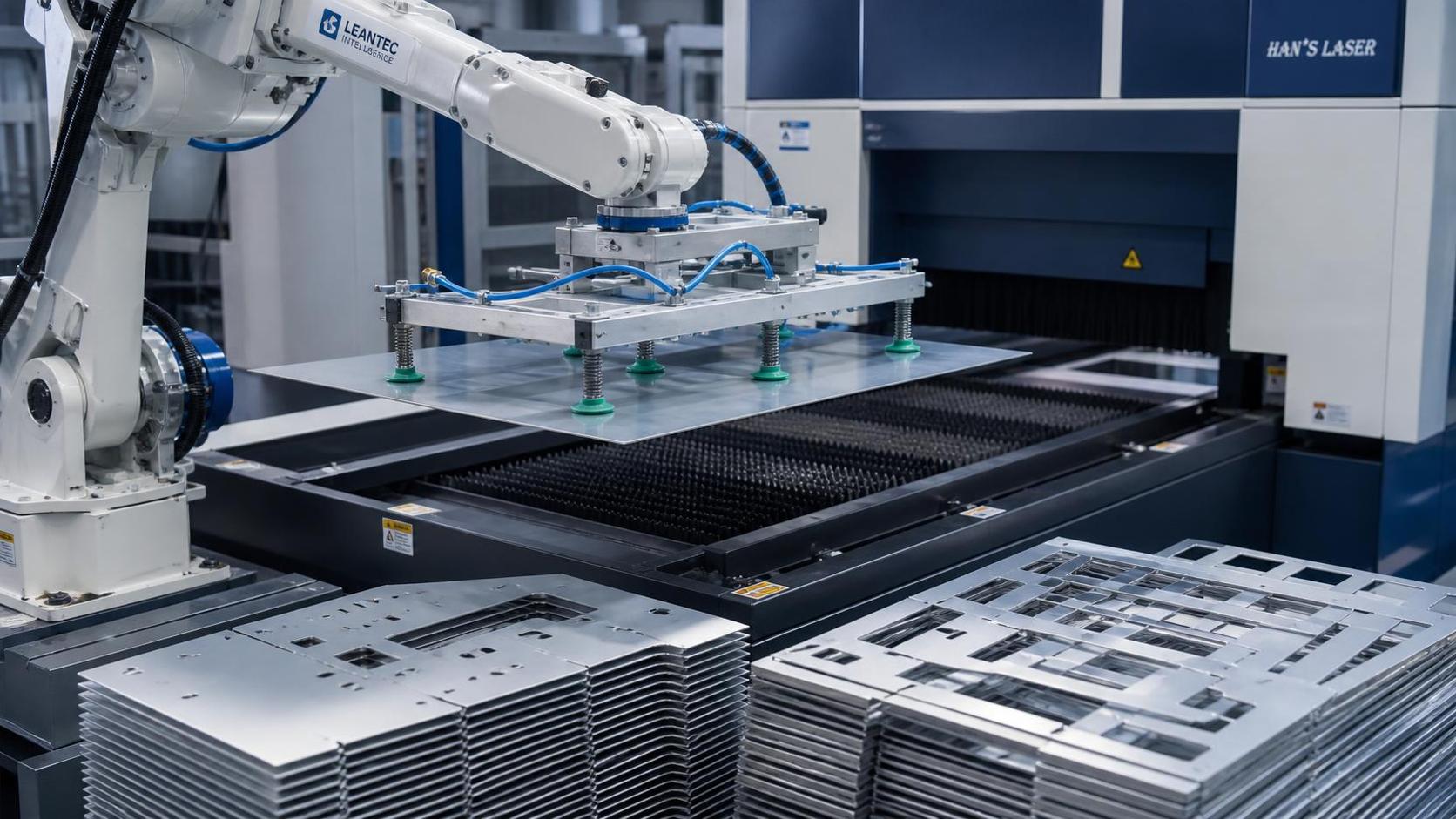
A machine tending robot arm can deliver a credible return in high-mix CNC production, but only when the investment is evaluated against the real sources of lost capacity—not against an assumed labor replacement figure. The strongest business case usually comes from recovering spindle time, stabilizing unattended operating windows, reducing handling-related variation, and making short production runs less dependent on the availability of a particular operator.
High mix does not automatically make robotic tending uneconomic. It does, however, change the ROI equation. In a repetitive, high-volume cell, a robot can be justified largely by throughput. In a high-mix environment, the value depends more on how rapidly the cell can move between part families, how reliably it can accommodate variation, and how much engineering effort is required to keep the automation usable after the initial commissioning period.
The wrong ROI question is “How many operators will the robot replace?”
Machine tending is often assessed as a direct labor substitution project: compare an operator’s annual cost with the cost of a robot, gripper, safety system, and integration. That approach can produce a misleading result in both directions. It may reject an automation project that protects profitable production capacity, or approve one that looks attractive on paper but creates excessive programming and changeover work.
The more useful question is: what economically valuable machine time is currently being lost because loading, unloading, inspection, part staging, shift coverage, or attendance constraints interrupt production?
A CNC machine is a capital-intensive asset. If it waits for an operator to unload finished parts, reload blanks, confirm orientation, or restart a cycle after a minor interruption, the business loses available spindle time. A machine tending robot arm is valuable when it removes these recurring interruptions without introducing new ones that are equally costly.
Its contribution is not limited to running a machine faster. The cutting cycle may remain unchanged. The gain comes from shortening the non-cutting interval between cycles, allowing the machine to continue operating during breaks or outside normal staffing windows, and making part movement more repeatable. For parts with long machining cycles, the labor-saving argument alone may be weak, but unattended operation can still change the economics materially. For parts with short cycles, even a few seconds of unreliable handling can determine whether the robot is an asset or a bottleneck.
High mix is not one operating condition
“High mix” covers very different production realities. A shop making 80 unrelated parts each month has a different automation challenge from a manufacturer producing 15 recurring part families in variable lot sizes. Both may describe themselves as high mix, but the second operation is usually far more suitable for robotic tending because its variation can be organized.
The critical distinction is between repeatable variation and unstructured variation. Repeatable variation includes part families with predictable dimensions, known gripping surfaces, established fixtures, and recurring CNC programs. Unstructured variation includes one-off work, inconsistent incoming blanks, manual fixture changes with no standardized location, uncertain machining cycle times, or parts requiring frequent visual judgment before loading.
A robot does not need every part to be identical. It needs the production system around the part to be sufficiently controlled. Standardized pallets, consistent datum locations, compatible chuck or vise arrangements, stable raw-material presentation, and documented end-of-cycle conditions all reduce the engineering burden of running multiple jobs through one cell.
This is why batch size, by itself, is an incomplete selection criterion. A batch of 20 parts that recurs every week and uses the same gripping logic may be a better automation candidate than a batch of 300 parts that appears only once and requires a custom end effector. Recurrence, commonality, and changeover discipline matter as much as volume.
Where the financial return is actually created
The total cost of a tending cell includes much more than the robot arm. A credible model should include the robot, robot controller, end-of-arm tooling, part presentation equipment, guarding or collaborative safety measures, interfaces with the CNC machine, vision or sensing where required, installation, programming, acceptance testing, training, spare parts, and ongoing support. Floor preparation, electrical work, pneumatic supply, chip and coolant management, and any machine modifications should also be visible in the budget.
Against those costs, the value side should be built from operating evidence rather than broad assumptions. Useful inputs include:
- average machining cycle time and average manual load/unload time;
- actual machine idle time caused by operator availability;
- planned production hours versus hours of productive spindle operation;
- frequency and duration of job changeovers;
- scrap, rework, or machine stoppages connected to inconsistent handling;
- the value of additional output that can be sold or used to reduce subcontracting;
- labor redeployment possibilities rather than assumed headcount reduction; and
- maintenance, programming, and supervision requirements after launch.
Not every recovered machine hour has the same value. If the plant has spare capacity and no constrained downstream process, more spindle hours may not immediately create incremental margin. If the relevant CNC machine is a production bottleneck, however, additional reliable hours can have a much higher economic value than the hourly wage of the person who previously loaded it.
Labor should therefore be treated carefully. If an operator remains necessary for setup, in-process checks, deburring, material replenishment, and exception handling, the robot may not eliminate a role. It can still improve the operation if it allows one skilled employee to supervise more than one process, spend less time on repetitive handling, or cover higher-value setup and quality tasks. Savings based on avoided overtime, reduced dependence on difficult-to-fill shifts, or less reliance on temporary labor should be separated from savings based on an actual reduction in labor hours.
Cycle time is only useful if the cell can sustain it
Suppliers may demonstrate an impressive pick-and-place sequence, but a procurement decision should focus on the sustained cycle of the complete cell. That includes door operation, chuck or vise actuation, part orientation, robot approach and retreat, blow-off or coolant drainage, confirmation signals, part deposition, and recovery from normal exceptions.
For short CNC cycles, robot motion must be measured against the machine cycle with unusual care. A robot that adds several seconds to every part can erase the intended gain. For longer cycles, the priority shifts toward reliable operation over extended periods: enough raw-material capacity, secure finished-part accumulation, predictable chip removal, adequate coolant control, and safe recovery when the process stops.
End-of-arm tooling is often the practical limit on flexibility. A simple two-finger gripper may work well for rigid, consistent blanks with accessible gripping surfaces. Complex castings, thin-walled parts, oily components, sharp edges, parts with changing dimensions, or components that cannot tolerate cosmetic marks may require custom jaws, pneumatic or electric grippers, magnetic handling, vacuum systems, mechanical locating features, or multiple tools.
Each added capability can improve coverage across part families, but it also adds purchase cost, maintenance requirements, setup time, and potential failure points. The aim should not be to automate every conceivable part. It should be to define a stable portfolio of parts that delivers enough productive hours to justify the cell.
Changeover economics determine whether “flexible” means profitable
A high-mix cell should not be judged merely by whether it can run different products. The relevant measure is the effort required to change between them. If every new part requires a programmer, custom robot paths, manual repositioning of sensors, different safety settings, and lengthy trial runs, flexibility exists in theory but may have little commercial value.
A robust cell design reduces variation at its source. This may involve common pallet dimensions, standardized workholding, repeatable tray locations, a defined library of gripper jaws, barcode or RFID job identification, and recipes linking a part number to CNC, robot, and inspection settings. Where part orientation varies, vision can be useful, but it should solve a clearly identified problem rather than compensate for poor material presentation.
There is also a governance issue. Someone must own the part-release process for the robotic cell. New jobs should not be added casually because a part “looks similar.” The release should verify gripping security, collision clearance, machine interface signals, chip behavior, part orientation, fixture condition, and the correct response to a failed pick or incomplete cycle. This discipline may sound administrative, but it protects the expected ROI from being consumed by avoidable interruptions.
Safety and machine compatibility are procurement risks, not afterthoughts
A robot can only operate as effectively as its interface with the CNC machine permits. Older machine tools may need interface upgrades before they can reliably exchange cycle-start, cycle-complete, door, clamp, alarm, and emergency-stop signals. A bidder should specify exactly what signals are available, which are required, and who is responsible for validating them.
Safety design also affects both capital cost and usable uptime. The choice between perimeter guarding, interlocked access, safety scanners, collaborative operation, or a hybrid arrangement must be based on the actual hazards of the cell. A “collaborative” robot does not automatically make an application safe without guarding. Sharp components, moving machine doors, pneumatic fixtures, hot parts, cutting fluids, and pinch points can require protective measures regardless of the robot’s payload class.
For cross-border equipment procurement, the contract should clearly allocate responsibility for conformity documentation, electrical compatibility, manuals, safety validation, installation support, and acceptance criteria for the destination market. ISO 10218 is widely referenced for industrial robot safety, while ISO/TS 15066 is relevant to collaborative robot applications; neither standard removes the need for a risk assessment of the complete installation. The delivered cell, rather than the robot arm in isolation, is what must operate safely and reliably.
Do not confuse machine tending with broader robotic automation
Procurement teams sometimes compare systems that solve different production problems simply because each contains industrial robots. A machine tending cell is designed around part flow into and out of a CNC machine. Its economics depend on machine utilization, handling consistency, and rapid job changeover. Welding automation, by contrast, is evaluated through weld access, joint repeatability, deposition requirements, heat distortion control, and workpiece positioning.
For example, the BR-2010A Pro/XB12-A8DP MAX Eight-Axle Cantilever Dual-Motor is configured for coordinated welding operations, including dual-robot work around a single operating table and zone-based welding of longer workpieces. Its design logic may be relevant to a fabrication facility assessing several automation investments, but it should not be treated as a substitute benchmark for a CNC tending cell. Combining unrelated automation use cases in one ROI model obscures the operational constraint each system is intended to address.
A practical approval threshold
The best candidates are rarely the most complex parts in the facility. They are usually parts or part families that combine recurring demand, stable workholding, manageable handling requirements, sufficient machine-cycle duration, and a meaningful level of lost unattended capacity. The cell should also have a clear fallback process when a gripper fault, material shortage, tool alarm, or quality issue occurs.
Before approving the investment, require the proposed system to run representative parts—not only ideal samples. The evaluation should include the smallest and largest planned parts, typical surface conditions, expected batch changes, realistic coolant and chip conditions, and the normal operator interventions that occur during production. Acceptance criteria should define sustained output, changeover time, handling reliability, safety function performance, recovery procedures, and documentation delivery. A demonstration that completes a few cycles is not evidence of an economically stable process.
A machine tending robot arm delivers ROI in high-mix CNC production when it is used to automate a disciplined, repeatable share of the workload rather than to impose automation on uncontrolled variation. The investment becomes weak when the organization expects the robot to compensate for inconsistent fixtures, poorly defined part flow, unreliable machine signals, or frequent one-off jobs. The central decision is not whether robots are flexible enough for high mix. It is whether the production system has enough repeatable structure for flexibility to be converted into sustained machine availability and measurable margin.
search
Products Navigation
Send Us A Message