




What Is a Servo Handling Robot? Key Components and How It Differs from Pneumatic or Hydraulic Handlers
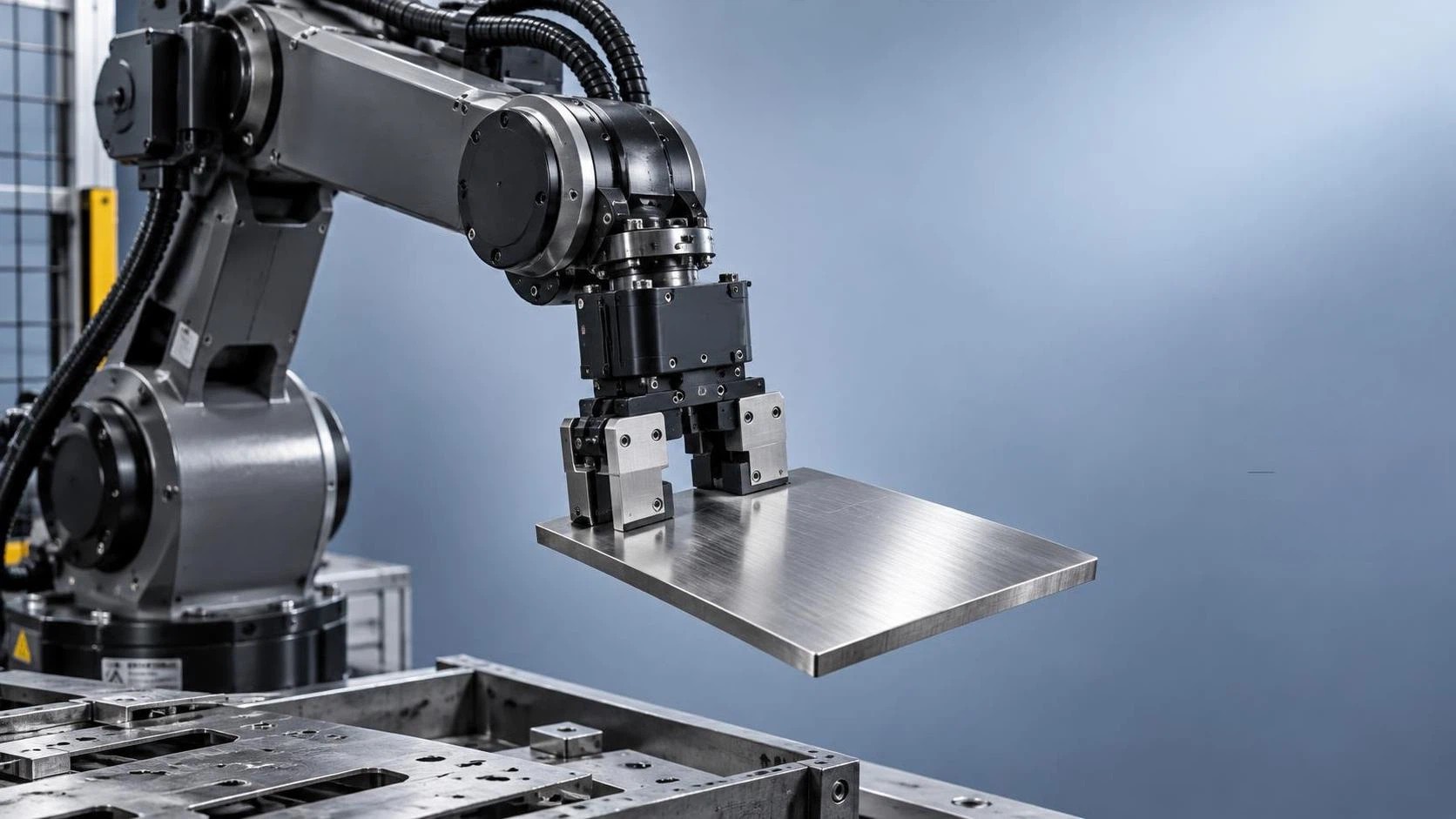
A servo handling robot is a high-precision, programmable automation solution widely used in modern manufacturing for reliable part transfer, loading/unloading, and assembly tasks. Unlike traditional pneumatic or hydraulic handlers—limited by speed, accuracy, and energy efficiency—servo handling robots leverage servo motors, advanced controllers, and real-time feedback systems to deliver superior repeatability, flexibility, and integration with CNC machines and welding cells.
Core Functional Architecture
The operational integrity of a servo handling robot stems from four interdependent subsystems: the mechanical structure, servo drive system, motion controller, and sensing interface. The mechanical frame—typically constructed from high-rigidity cast aluminum or precision-machined steel—must minimize deflection under dynamic loads while maintaining alignment across repeated cycles. Unlike pneumatic actuators that rely on compressed air pressure differentials, servo handling robots use brushless AC servo motors coupled directly to gearboxes or ball screws. This eliminates compressibility-related lag and enables precise torque control throughout the motion profile.
Critical to performance is the closed-loop feedback architecture. Each axis incorporates high-resolution rotary encoders (often 17-bit or higher) or linear scales mounted directly on the load-bearing rail. These feed position and velocity data to a real-time motion controller, which continuously compares actual vs. commanded values and adjusts motor output within microseconds. This responsiveness allows sub-millimeter repeatability—typically ±0.02 mm—even during rapid acceleration/deceleration phases common in high-cycle loading sequences.
Key Components Explained
Mechanical Structure: Not merely a passive support, the frame integrates load-path optimization. For instance, cantilevered arms require torsional stiffening at pivot points to prevent angular drift when handling asymmetric parts like machined flanges or welded brackets. Linear guide rails must be preloaded correctly; insufficient preload causes backlash, while excessive preload increases friction and accelerates wear—especially critical when handling parts above 50 kg.
Servo Drive System: Modern servo drives incorporate field-oriented control (FOC) algorithms that decouple torque and flux components, enabling smooth low-speed operation without cogging. Motor selection involves balancing inertia ratio (load-to-rotor inertia), thermal capacity, and peak torque requirements. A 3:1 inertia ratio is generally acceptable, but ratios exceeding 5:1 often necessitate gear reduction or active vibration damping to avoid resonance-induced positioning errors.
Motion Controller: Beyond trajectory generation, contemporary controllers embed adaptive tuning features. When integrated with a Table type cnc plasma cutting machine, the controller may synchronize part-handling timing with plasma arc ignition cycles—pausing gripper motion during non-contact arc initiation to prevent electromagnetic interference with position sensors. The Star Peak CNC Cutting System used in certain industrial-grade plasma tables relies on deterministic communication protocols (e.g., EtherCAT) to maintain microsecond-level synchronization between motion axes and auxiliary functions like torch height control.
Sensing & End-of-Arm Tooling: Vision-guided servo handlers often use structured-light 3D cameras calibrated against the robot’s base coordinate system. However, simpler applications deploy proximity sensors with analog outputs to detect part presence before gripper closure—avoiding reliance on vision processing latency. Gripper design must match part geometry: vacuum cups suit flat sheet metal, while servo-electric parallel grippers with force feedback are preferred for delicate castings where over-clamping can distort thin-walled features.
Fundamental Differences from Pneumatic and Hydraulic Handlers
Pneumatic systems operate on binary logic: actuator extends or retracts based on valve state. There is no inherent position feedback—accuracy depends entirely on mechanical stops, cushioning, and air pressure stability. Variations in supply pressure (±10% is common in factory environments) directly alter stroke speed and endpoint consistency. In contrast, servo systems maintain positional fidelity regardless of ambient conditions because the controller compensates for load changes via continuous current modulation.
Hydraulic handlers offer high force density but suffer from fluid compressibility, seal leakage, and temperature-dependent viscosity shifts. A 10°C rise in oil temperature can reduce system stiffness by up to 25%, leading to measurable settling time increases during precision placement. Servo systems avoid these variables entirely—their dynamics depend solely on electrical input, motor winding resistance, and mechanical rigidity, all of which remain stable across typical workshop temperature ranges (15–35°C).
Energy efficiency presents another decisive divergence. Pneumatic systems waste 80–90% of input energy as heat in compressors and throttling valves. Hydraulic pumps run continuously, consuming power even during idle periods. Servo motors draw current only when accelerating, holding, or decelerating—achieving 75–85% electrical-to-mechanical conversion efficiency. Over a 10-year lifecycle, this translates to significantly lower operating costs, especially in facilities with tiered electricity pricing.
Integration Realities in Metal Fabrication Workflows
When interfacing with equipment such as CNC plasma cutting systems, servo handling robots must accommodate process-specific constraints. For example, the Table type cnc plasma cutting machine operates with rapid lateral movements (up to 6,000 mm/min) and generates intense electromagnetic noise near the plasma arc. Servo handlers co-located on the same gantry must use shielded cabling, ferrite cores on encoder lines, and stainless-steel shielding on signal connectors to prevent encoder pulse corruption—a failure mode that manifests as sudden, uncommanded axis stops or position jumps.
Material compatibility also influences design choices. Handling titanium or nickel alloys requires non-marring tooling and clean-room-compatible lubricants, whereas carbon steel parts tolerate standard grease formulations. Similarly, plasma-cut stainless steel plates retain residual magnetism that can interfere with Hall-effect sensors—necessitating alternative sensing strategies like optical encoders or capacitive proximity switches in such cases.
Maintenance intervals differ substantially. Pneumatic cylinders demand regular lubricator refills and filter replacements every 3–6 months; hydraulic systems require oil analysis and filter changes every 500–1,000 operating hours. Servo handling robots, by comparison, typically need only periodic inspection of coupling fasteners and grease replenishment in gearboxes every 10,000 hours—provided ambient dust levels remain below ISO Class 8 and ambient humidity stays below 85% RH.
In summary, servo handling robots represent a paradigm shift from actuator-based motion to digitally governed positioning. Their advantages—precision, adaptability, energy efficiency, and diagnostic transparency—are not abstract benefits but measurable engineering outcomes rooted in electromechanical principles. When deployed alongside high-performance fabrication tools like plasma cutting systems, they form the backbone of scalable, responsive production cells capable of adapting to changing part geometries and material specifications without hardware reconfiguration.
search
Products Navigation
Send Us A Message