




What drives handling robot arm price in automated production lines?
What drives handling robot arm price in automated production lines?
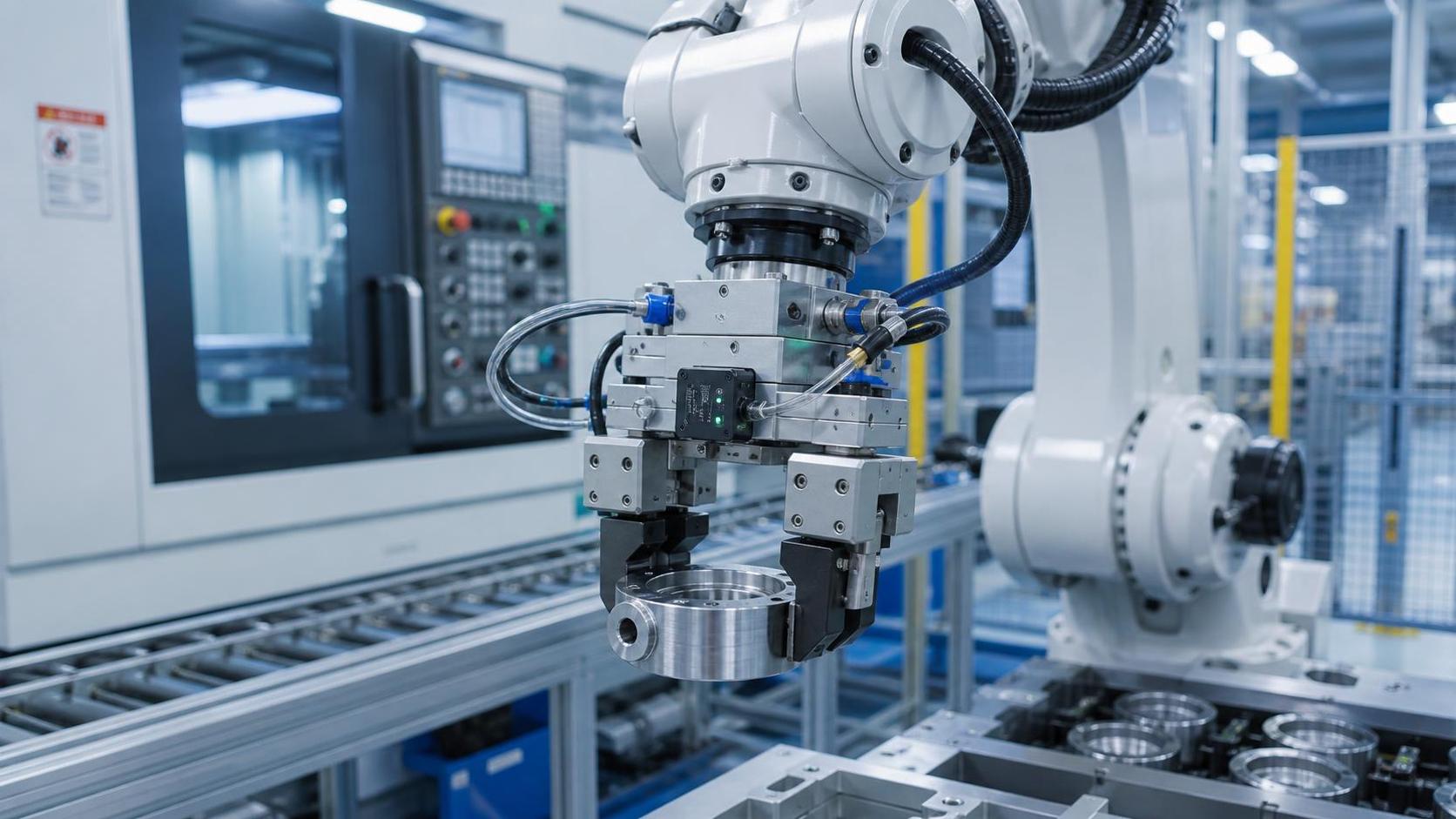
A handling robot arm can look inexpensive in an initial quotation and still become a high-cost automation project once it is installed, guarded, programmed, and connected to production equipment. For a financial approver, the useful question is therefore not simply “What is the handling robot arm price?” It is: what level of throughput, reliability, and labor reduction does this particular cell need to achieve, and which parts of the investment are unavoidable to achieve it?
The robot body is only one cost element. Payload and reach set the mechanical baseline, but tooling, infeed and outfeed design, safety, controls integration, cycle-time validation, and commissioning can materially change the approved budget. A lower arm price can be justified when it fits a stable, simple task. It becomes a false economy when a system lacks the reach, environmental protection, or integration scope needed for the line to run consistently.
Start with the job, not the robot list price
Handling applications are often described too broadly: loading a CNC machine, moving stamped parts, transferring trays, palletizing cartons, tending a welding fixture, or picking castings from a conveyor. These tasks may all use six-axis or four-axis industrial robots, but they do not demand the same motion range, tool design, accuracy, or duty cycle.
The first pricing driver is the load at the robot flange. This is more than the workpiece weight. The approved payload must include the gripper or end effector, adapter plates, sensors, cable dress pack, and any accumulated parts carried during the cycle. A robot selected too close to its rated payload may require reduced speed or create limits when the tool is revised. Selecting a much larger model “just in case,” however, raises capital cost, floor loading requirements, energy use, and often the price of the associated safety and tooling package.
Reach has a similar effect. A robot only needs enough working envelope to access every required pickup, process, and placement position with acceptable joint posture. Excess reach can add cost without improving output. Insufficient reach is more serious: it can force a redesigned fixture layout, an added axis, a second robot, or manual intervention at the very points where automation was expected to remove labor.
Before comparing suppliers, finance and operations should agree on a short set of design inputs:
- Maximum carried mass, including tooling and allowances for future part changes.
- Required reach to the furthest operating point, including clearance around fixtures and guards.
- Target cycle time, expected operating hours, and planned production mix.
- Part presentation condition: consistent location, random orientation, nested parts, oily surfaces, hot surfaces, or variable dimensions.
- Required accuracy at pickup and placement, rather than the robot’s catalogue repeatability alone.
- Conditions around the cell, such as dust, welding fume, coolant mist, humidity, temperature, and washdown exposure.
These inputs make quotations comparable. Without them, one supplier may price a basic arm and gripper while another includes vision, interlocks, tool changing, and line controls. The price gap then says little about the value of either proposal.
Payload, reach, and speed are linked cost decisions
Robot specifications are frequently read as independent numbers. They are not. A long-reach arm carrying a tool near its payload limit may not achieve the same practical acceleration as a smaller load handled closer to the base. A quoted cycle time also needs to include gripper actuation, sensor checks, door interlocks, conveyor indexing, machine-ready signals, and any dwell required by the upstream or downstream process.
For financial approval, the appropriate model is an application-level cycle time, not a maximum-axis-speed comparison. A robot with fast individual joints does not automatically produce more completed parts per hour if the bottleneck is a machine tool, weld cycle, inspection station, or material presentation process.
Repeatability also needs careful interpretation. It describes the robot’s ability to return to a programmed position under stated conditions; it does not guarantee that every incoming part is presented correctly. If components arrive with position variation, the project may need locating nests, mechanical stops, compliance devices, sensors, or vision guidance. Each can be justified, but each shifts the handling robot arm price from a simple equipment purchase toward a more capable cell.
For instance, a fabrication operation considering a robot for fixture tending and welding may evaluate a model such as the 6 Axis 1800mm ArmSpan MlG Industrial Welding Robot . Its 1,945 mm maximum working radius, 6 kg maximum payload, and +/-0.08 mm repeatability describe a useful operating envelope for a welding torch and related tooling. They do not, by themselves, define the complete project cost. The fixture, torch package, wire feeding arrangement, fume control, safety enclosure, workpiece loading method, and weld-program development determine whether that arm becomes a productive workstation or an underused asset.
The cell around the arm often determines the budget variance
In straightforward handling cells, the robot may represent a substantial share of the investment. In more complex lines, its share can fall because the surrounding equipment is doing much of the economic work. A reliable cell needs parts to arrive predictably, be held securely, move only when safe, and leave the station without creating a downstream bottleneck.
End-of-arm tooling is a major variable. Vacuum cups can be economical for flat, clean, nonporous sheet material, but they require enough surface area and dependable vacuum monitoring. Mechanical grippers may suit castings, forgings, or irregular parts, yet jaw design, changeover needs, and part variation can make them more expensive. Magnetic tools can work well for suitable ferrous components but need controls for safe release, material-condition checks, and separation of double blanks where relevant.
Tooling decisions should be assessed against the actual product range. A dedicated gripper can offer the best cycle time and repeatability for a high-volume part family. A flexible gripper may reduce fixture changes across a varied schedule, though it can add programming and maintenance complexity. Neither approach is automatically cheaper over the project life. The cost depends on how frequently the mix changes and how costly manual changeovers are to production.
Part presentation carries the same financial importance. A robot picking from a fixed locating nest is a different project from one picking randomly oriented parts from a bulk container. The latter may require vision, bin-picking software, specialized grippers, lighting, and more commissioning time. Those additions may still pay back where labor is scarce or the task is unsuitable for manual work, but they should be approved as part of the required capability rather than treated as late-stage extras.
Safety is a functional requirement, not an optional add-on
Some early estimates understate safety because they focus on the arm, controller, and gripper. In a production environment, guarding and safety controls must reflect the actual hazards of the complete cell: robot motion, sharp parts, pinch points, welding arc exposure, hot material, powered conveyors, and interaction with adjacent machines.
The cheapest guarding layout can create a costly operating problem if operators cannot replenish materials, clear minor faults, inspect tooling, or perform routine maintenance without extended stoppages. Conversely, adding access doors, interlocked stations, scanners, or carefully designed loading zones can increase the capital request while reducing the time lost to normal operating tasks.
Safety scope should be visible in the quotation. Approval documentation should identify the included enclosure or safeguarding method, access points, emergency-stop architecture, reset logic, and responsibility for final site validation. This avoids a common budget problem: a project appears affordable until the final installation phase reveals that line modifications are needed to make the arrangement operable.
Integration cost depends on interface clarity
Robots do not deliver value in isolation. They must exchange signals with machines and material-handling equipment, respond correctly to fault conditions, and provide a defined recovery sequence after interruptions. Even a simple machine-tending cell needs clear rules for when a machine is ready, when a part is present, what happens if the gripper fails to confirm a pickup, and how an operator safely restarts the sequence.
Financial teams should ask suppliers to separate standard equipment supply from line-specific integration. The distinction matters because an arm, controller, and teach pendant are relatively standard. Linking that package to a CNC door, loader, inspection gauge, ERP traceability signal, or existing PLC can require site-specific engineering.
A useful purchase specification defines:
- The equipment and interfaces included in the supplier’s scope.
- The party responsible for electrical, pneumatic, structural, and controls work at the site.
- The part samples, fixtures, and production data needed before programming starts.
- The agreed cycle-time basis, including operator actions and material replenishment.
- The conditions for factory acceptance and site acceptance.
- The handover materials: electrical drawings, programs, backup files, operating instructions, and training.
This is less about contract formality than cost control. When interfaces are vague, the cost of resolving them normally appears after the arm has been ordered, when schedule pressure makes options more expensive.
Do not confuse purchase price with installed cost or lifecycle cost
A practical capital review separates three figures: equipment purchase price, installed project cost, and expected cost of ownership. The purchase price is easy to see. Installed cost includes freight, installation, guarding, utilities, fixtures, integration, programming, training, and production validation. Cost of ownership extends further into spare parts, preventive maintenance, backup support, downtime exposure, and future changeover work.
For a stable, high-volume application, a higher installed cost may be reasonable when it protects availability and keeps output predictable. For a low-volume or frequently changing product mix, the same level of fixed automation may struggle to earn its cost back unless the cell has been designed for rapid reprogramming and flexible tooling.
Labor savings should also be modeled realistically. The relevant gain is not always one full operator removed from payroll. It may be fewer manual lifts, lower overtime dependence, steadier machine utilization, reduced rework caused by inconsistent handling, or the ability to operate a process with one operator supervising several stations. Those benefits can be substantial, but their value varies with the production schedule and staffing structure.
Likewise, uptime assumptions should not be based solely on the robot manufacturer’s reputation or a quoted technical feature. Availability depends on gripper wear, sensor reliability, part quality, fixture condition, consumables, operator recovery procedures, and response time when a fault occurs. A robust support plan and accessible spare parts can carry a visible cost, yet may be economically preferable for a line whose stoppage disrupts multiple downstream operations.
Questions that expose an incomplete quotation
Before approving a handling robot project, a finance team can uncover most avoidable omissions with a focused review. Ask for the loaded payload calculation, reach study, layout drawing, cycle-time sequence, and clear itemization of safety and integration scope. Request that any excluded work be stated plainly rather than assumed to be “by others.”
It is also useful to ask what happens at the edge of normal operation: a part is missing, a double blank is picked, a door fails to close, a fixture is changed, a sensor is contaminated, or power is interrupted mid-cycle. A proposal that describes only normal motion may not yet describe a production-ready system.
The handling robot arm price becomes decision-ready when it is tied to a defined application, a complete scope, and measurable acceptance conditions. That approach may reveal that the least expensive arm is adequate for the job. It may also show that a larger initial investment in tooling, safety, or integration is necessary to obtain the output on which the financial case depends.
search
Recommended Products
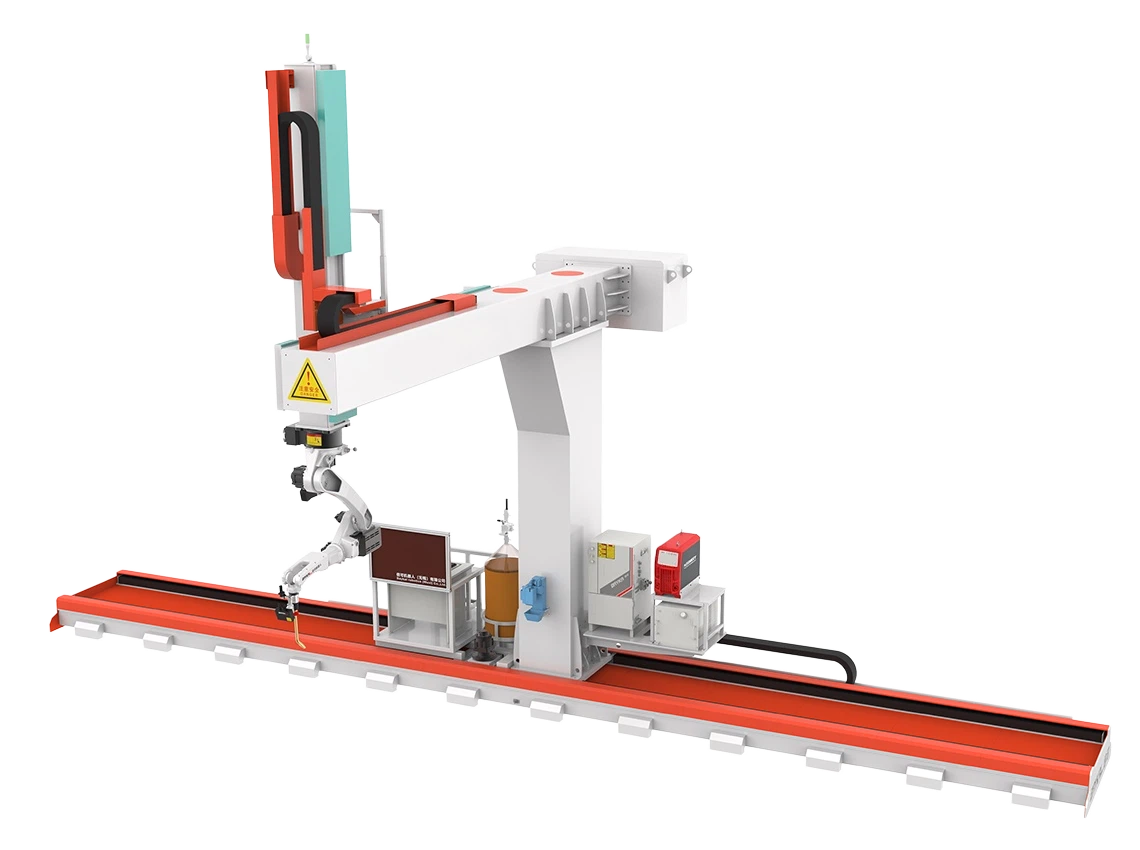
 9 axis cantilever type welding robot9 axis cantilever type welding robot for large steel workpieces with auto tracking, 3D import, and efficient CNC welding automation.
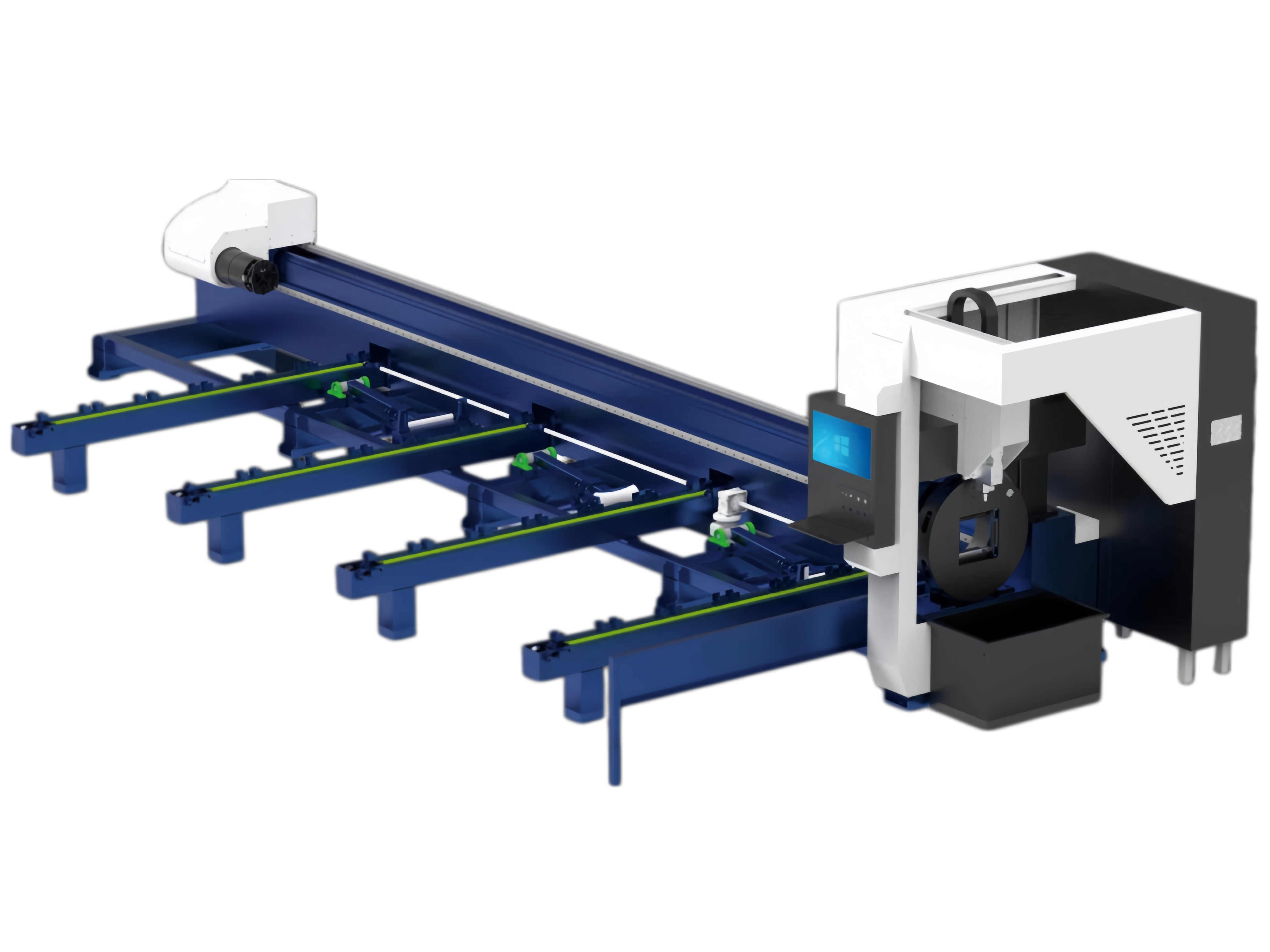
 Pipe cnc fiber laser cutting machine1.Introduction for Pipe cnc fiber laser cutting machine:
The laser cutting machine focuses the laser beam emitted from the laser source through the optical path system into a high-power-density laser beam. This laser beam is directed onto the surface of the workpiece, causing it to reach the melting point or boiling point. At the same time, the high-pressure gas coaxial with the laser beam blows away the molten or vaporized metal. Beveling & Milling Edge For Heavy TankThis series of heavy tank beveling and milling edge machines is a specialized, high-efficiency solution designed for beveling large storage tanks, pressure vessels, and heavy structural components. The main frame features an integrated welded construction followed by high-temperature stress-relief annealing, effectively eliminating internal stresses to ensure long-term dimensional stability and prevent deformation. The machine combines high-rigidity design with advanced control technology, purpose-built to handle the challenges of extra-thick plates and oversized workpieces.
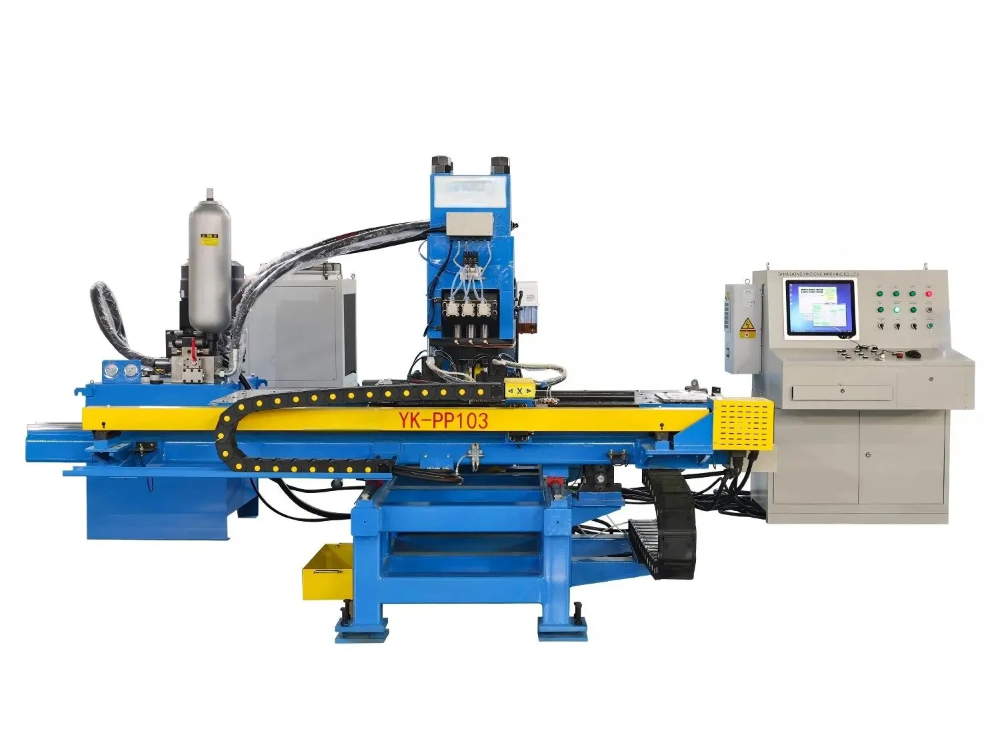
- CNC Punching And Marking Machine For Steel PlatesModels: YK-PP103 / YK-PPR103 / YK-PP104 / YK-PPR104
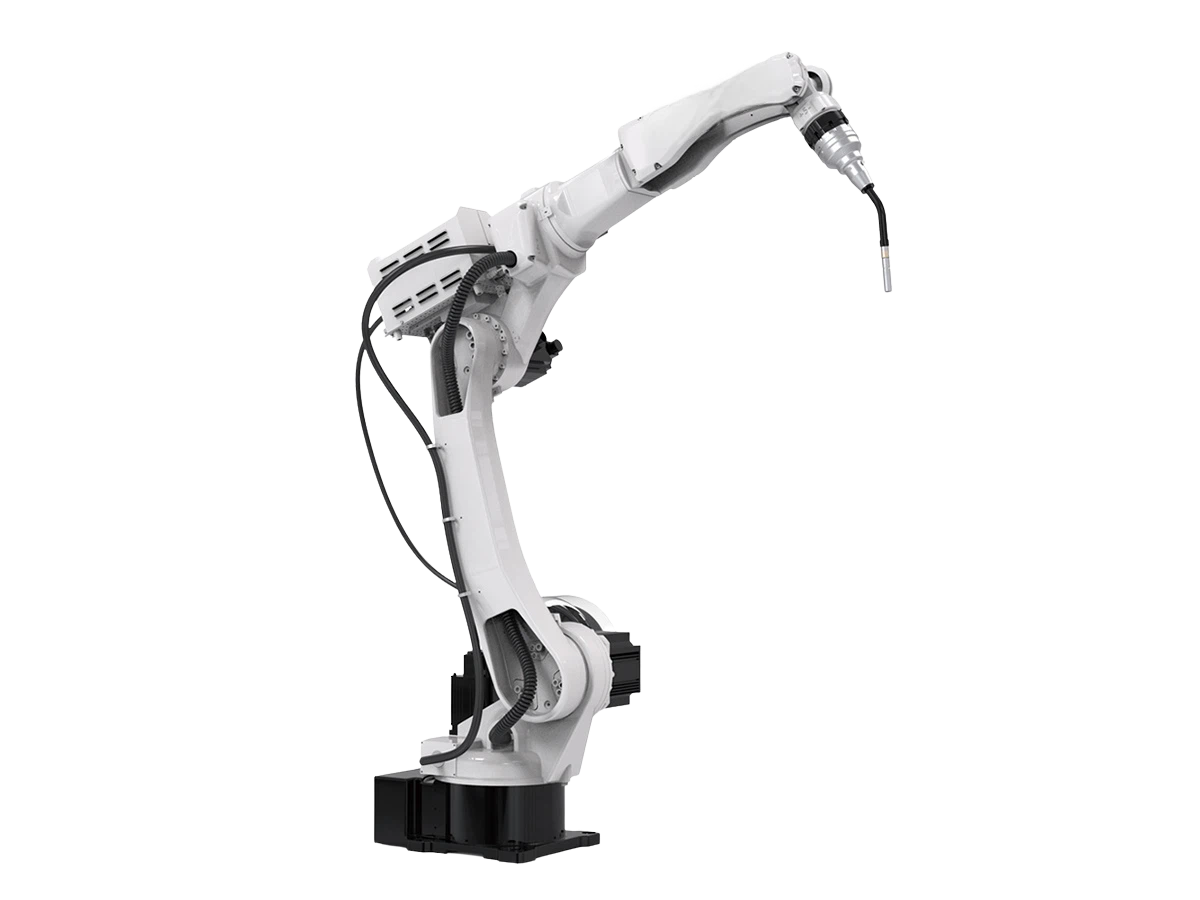
This series is a specialized CNC punching and marking machine designed primarily for steel plate processing in the steel tower industry. It is also well-suited for punching and marking applications across various other industrial sectors. - 6 Axis 2000mm ArmSpan MlG Industrial Welding RobotThis welding robot is designed for reliable arc welding in harsh production environments, featuring a long reach, stable repeatability, and flexible installation.
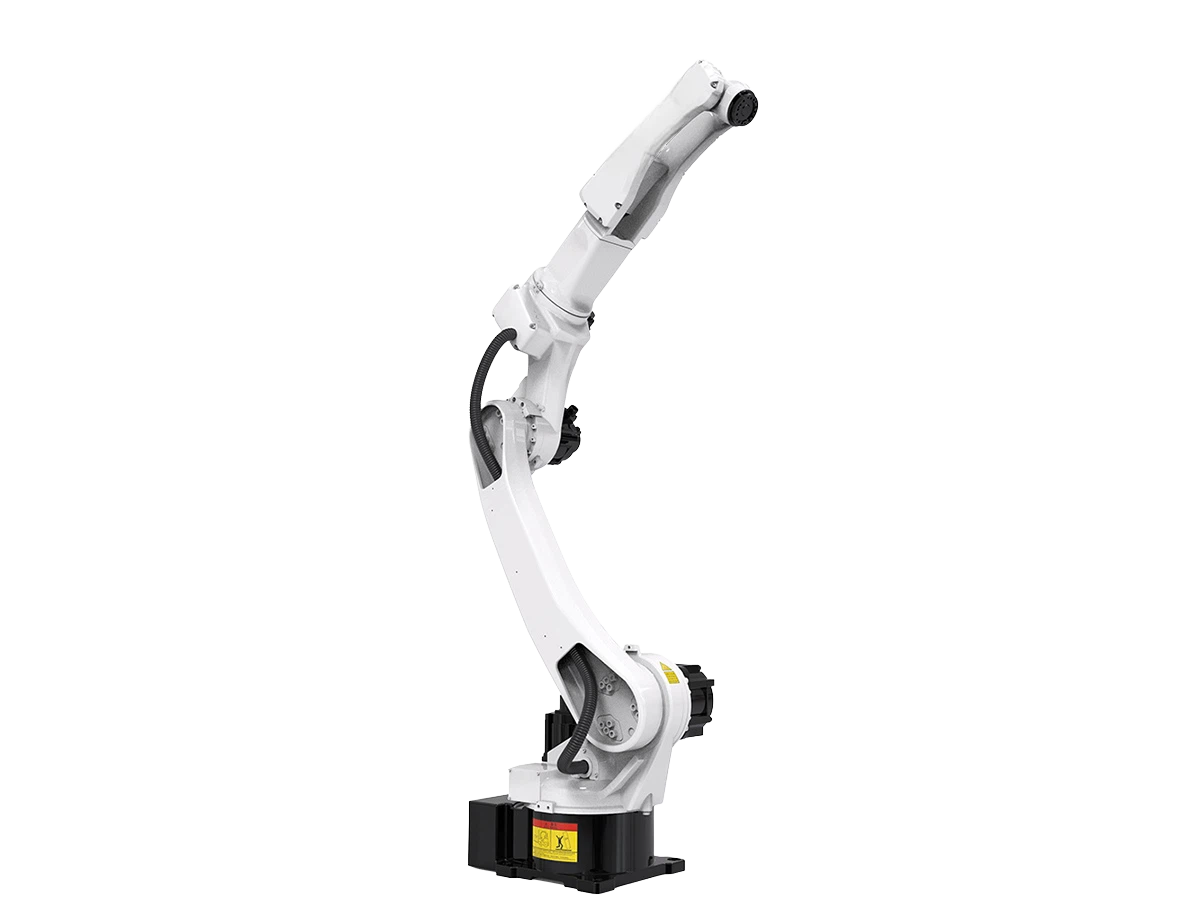
- Multipurpose Handing Robot BR20iB-20Explore the BR20iB-20 multipurpose robot for handling, welding, and cutting with 6-axis motion, ±0.08 mm repeatability, and flexible installation.

Send Us A Message