




When is a 6 axis handling robot arm better for complex part placement?
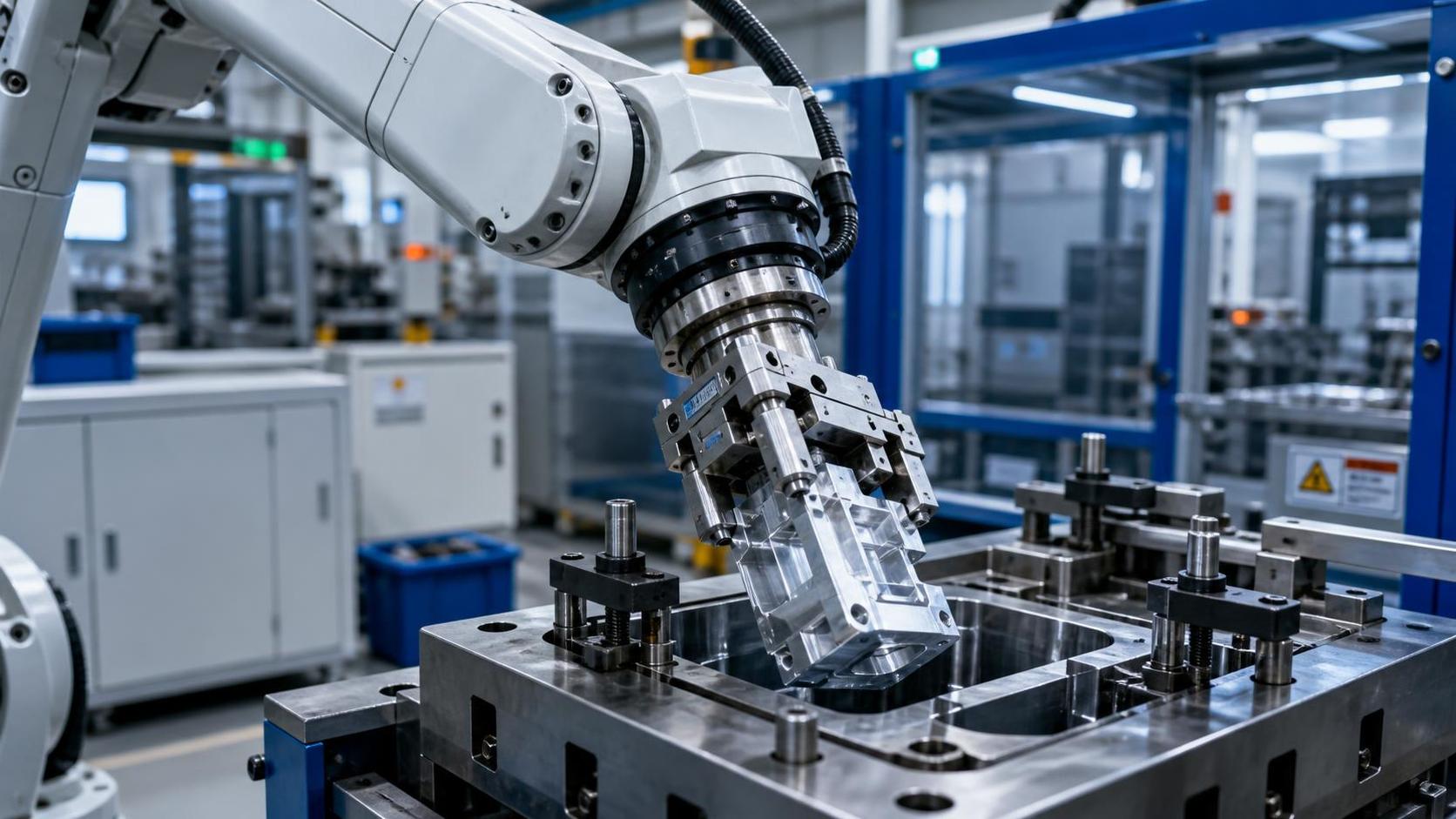
When Is a 6 Axis Handling Robot Arm Better for Complex Part Placement?
A 6 axis handling robot arm is often the preferred solution when complex part placement requires multiple approach angles, precise orientation, and reliable repeatability.
For technical evaluators, the central decision is whether six-axis flexibility produces measurable gains over simpler automation, rather than merely adding mechanical sophistication.
The answer is usually clear when a part must be rotated, tilted, inserted, aligned, or transferred around fixtures, tooling, guards, and changing production conditions.
In these situations, a robot with fewer axes may complete a basic pick-and-place task but struggle to maintain feasible tool orientations throughout the motion.
A six-axis design provides positional movement plus wrist articulation, allowing the end effector to control both the location and orientation of a component.
This article explains when that capability matters, how to evaluate its practical value, and which integration factors determine whether the investment is justified.
Start With the Placement Problem, Not the Robot Specification
Technical evaluations should begin by defining the exact placement requirement, including source position, destination geometry, permissible approach paths, and acceptable orientation tolerance.
A robot should not be selected simply because the process sounds complex or because a six-axis configuration is widely used in advanced manufacturing.
The important question is whether the workpiece must follow a motion path that cannot be achieved consistently with three, four, or five controlled axes.
For example, placing a flat blank onto an open conveyor is fundamentally different from loading a formed component into a deep welding fixture.
The second application may require the part to pass through a narrow opening, avoid clamps, rotate around locating pins, and settle onto reference surfaces.
Those requirements create coupled position-and-orientation constraints, which are exactly where a 6 axis handling robot arm generally becomes more valuable.
Document the task using actual parts, fixtures, and cycle conditions. A theoretical reach envelope alone rarely reveals all collision, clearance, and accessibility issues.
Simulation is useful, but it should be validated against realistic gripper dimensions, cable routing, part variation, operator access zones, and downstream equipment movement.
Multiple Approach Angles Are the Strongest Reason to Use Six Axes
A six-axis robot is particularly effective when parts cannot enter or leave a station along one fixed vertical or horizontal direction.
Many fixtures deliberately constrain access because they prioritize welding quality, machining stability, measurement accuracy, or reliable datum location over automation convenience.
In these cases, the robot must approach from an angle, reorient the part during travel, and align its final pose without contacting surrounding hardware.
The final wrist axes allow the gripper and workpiece to roll, pitch, and yaw independently enough to accommodate these demanding access conditions.
This is valuable in machine tending, welding-cell loading, press brake support, assembly, inspection transfer, and fixture-to-fixture material handling operations.
A four-axis palletizing robot can be highly productive when parts remain upright, but it is less suitable when the required placement orientation changes continuously.
Similarly, a gantry may offer excellent stiffness and long travel, yet it often becomes expensive or mechanically restrictive when substantial angular manipulation is needed.
Six axes are not automatically necessary for every angled move. They are justified when orientation changes must occur during the path rather than only before pickup.
That distinction matters because a separate rotary device can sometimes handle static reorientation more economically than a full articulated robot.
Complex Fixtures Often Determine the Automation Architecture
Fixture complexity is one of the most reliable indicators that an articulated robot deserves serious consideration during concept selection.
Locating pins, pneumatic clamps, nest walls, welding guns, sensors, and protective barriers can create access corridors that are narrow and irregular.
A part may need to enter at one angle, rotate after clearing a clamp, then lower precisely onto datums near the end of travel.
With fewer axes, engineers may compensate by redesigning fixtures, adding conveyors, increasing clearances, or introducing manual intervention, each with associated tradeoffs.
A 6 axis handling robot arm can preserve a process-proven fixture design while supplying the dexterity needed to navigate its geometry.
This can be more economical than changing welding tooling or downstream stations, especially where those systems have already been qualified for product quality.
However, evaluators should avoid assuming that robot flexibility eliminates all fixture design discipline. Poor datum strategy still produces unstable placement and excessive recovery events.
Good automation fixtures provide clear lead-ins, sensible locating surfaces, repeatable clamping, protected sensor locations, and enough clearance for normal part variation.
Robot dexterity should solve real access constraints, not mask preventable inconsistencies in the mechanical process.
Part Geometry and Orientation Changes Drive the Business Case
Part geometry influences robot selection because irregular, asymmetric, flexible, or high-value components are harder to present consistently to downstream equipment.
Long tubular frames, bent sheet-metal components, castings, fabricated assemblies, and machined parts commonly require controlled orientation throughout handling.
Center-of-gravity position is especially important. An off-center load can create wrist torque, deflection, and gripper instability that affect final placement accuracy.
The robot payload rating must include the component, gripper, brackets, adapters, sensors, pneumatic hardware, and an appropriate margin for dynamic loading.
Evaluators should examine the payload curve at the actual wrist center distance, rather than relying only on the headline maximum payload value.
A robot may nominally carry the load but still deliver insufficient speed or poor positional behavior when the tool inertia approaches its permitted limit.
Orientation-sensitive components add another layer of complexity. Parts with cosmetic surfaces, delicate edges, machined faces, or unstable loose features must avoid uncontrolled contact.
Six-axis motion helps maintain a preferred carrying attitude while moving around obstructions, reducing the need for intermediate rests or manual repositioning.
That capability can protect product quality, although gripper selection, acceleration limits, and part-support strategy remain equally important.
Precision Means Repeatability, Process Capability, and Recovery
Robot repeatability is commonly cited in selection discussions, but it should not be confused with absolute accuracy at the final placement location.
Repeatability describes how consistently the robot returns to a taught pose, while accuracy depends on calibration, tooling, fixture stability, and coordinate relationships.
For complex part placement, final performance is often governed by the combined system rather than by the robot arm alone.
A well-designed cell may use locating features to absorb small robot position deviations, allowing the robot to place the part near the datum efficiently.
Where direct insertion tolerances are tight, vision guidance, force sensing, compliance devices, or mechanical lead-ins may be necessary.
Six-axis motion supports these methods because it permits the end effector to make small orientation corrections as well as translational corrections.
This is particularly useful for loading components into machining centers, assembly nests, gauging stations, or welding fixtures with limited clearance.
Technical evaluators should request process-level acceptance criteria, such as insertion success rate, placement time, rejected parts, intervention frequency, and restart recovery duration.
Those metrics reveal whether the proposed system can sustain production rather than merely demonstrate a successful cycle under ideal conditions.
Cycle Time Must Be Assessed as a Complete Cell Outcome
A six-axis robot can reduce handling time by combining pickup, reorientation, obstacle avoidance, and placement into one coordinated path.
That does not mean it will always be faster than simpler equipment. High-speed linear transfer systems can outperform articulated robots in repetitive, unconstrained routes.
The right comparison includes gripping time, waiting for machine signals, safety-zone delays, fixture clamp sequencing, scanning, quality checks, and release confirmation.
In many cells, robot travel time is only one portion of the total cycle. Optimizing a few seconds of arm motion may not improve throughput.
Conversely, a flexible robot can eliminate a manual transfer, a turning station, or an additional handling device, improving total flow despite modest motion speed.
Analyze best-case, nominal, and worst-case cycle times. Include expected part variation, tool changes, stoppage recovery, and buffer behavior between connected operations.
It is also important to consider future mix changes. A robot that supports several part variants may prevent later capital expenditure on dedicated transfer tooling.
For lower-volume, higher-mix production, this adaptability can outweigh the raw speed advantage of a purpose-built mechanism.
Gripper Design Can Decide Whether the Robot Succeeds
The robot arm provides motion capability, but the end effector determines whether the part can be picked, retained, sensed, and placed reliably.
Vacuum, magnetic, pneumatic, electric, mechanical, and hybrid grippers each create different limitations for force, surface condition, accessibility, and product protection.
A highly capable robot cannot compensate for a gripper that allows part slip, obstructs fixture access, or creates unpredictable deflection under acceleration.
For sheet metal, surface oil, perforations, curvature, burrs, and thickness variation can affect vacuum performance and separation reliability.
For fabricated profiles and tubes, clamp placement must avoid distortion while leaving sufficient access for fixtures, welding interfaces, or machining datums.
Tool-change requirements should also be assessed early. Multiple product families may justify automatic gripper changing, but this adds interfaces, maintenance points, and validation work.
Part-presence sensing is essential where missed picks or double picks could damage equipment. Reliable confirmation improves automatic recovery and reduces operator intervention.
During evaluation, request a gripper concept with mass, center of gravity, opening range, holding force, sensing method, and service requirements clearly defined.
Integration With Fabrication Equipment Requires More Than Material Transfer
In fabrication environments, handling robots frequently connect machines that have different cycle rates, safety requirements, part conditions, and control interfaces.
For example, a robot may remove a bevel-prepared tube or plate component, orient it for inspection, and present it to a welding or assembly station.
Upstream consistency directly influences robotic reliability. Edge quality, burr condition, thermal distortion, and dimensional variation can change gripping and placement performance.
Where bevel preparation is part of the workflow, equipment such as a CNC Square & Pipe Beveling Machine can support predictable downstream handling by producing repeatable bevel profiles.
Its capability to process square, rectangular, and round tubes without accessory changes can be relevant where automated cells handle multiple profile types.
For technical planning, the key issue is not simply bevel quality but whether part presentation, thermal condition, and edge geometry remain consistent for robotic pickup.
Processing speeds from 0 to 1500 mm/min and one-pass bevel formation may support flow planning, but the complete line still needs practical buffering.
Communication architecture should define machine-ready signals, robot permissions, fault ownership, part identification, safety interlocks, and restart sequence behavior before commissioning begins.
When a Simpler Robot or Mechanism Is the Better Choice
Choosing six axes when they are unnecessary can increase capital cost, programming effort, maintenance requirements, and safety-cell complexity without delivering useful production value.
A Cartesian system may be preferable for long straight travel, heavy payloads, simple vertical loading, or applications requiring highly predictable linear motion.
Four-axis palletizing robots are often better for repetitive stacking, depalletizing, and transfer tasks where the product remains upright and access is open.
Two-axis or three-axis loaders may be sufficient for CNC machine tending when workpieces are rotationally symmetric and fixtures are designed for direct vertical loading.
Dedicated automation can also be compelling for very high-volume products with stable geometry, minimal variants, and a proven process sequence.
The key is to identify the actual degrees of freedom the task requires. Unused flexibility should not be mistaken for engineering margin.
Still, product roadmaps matter. If part designs, fixture layouts, or production mix are likely to evolve, extra axes can create valuable future capacity.
A sound decision compares present requirements with credible future scenarios, rather than choosing only for the easiest current part or an unlikely maximum case.
A Practical Evaluation Checklist for Technical Teams
Before selecting a 6 axis handling robot arm, define every pickup and placement pose, including required orientations and the allowable approach corridor.
Measure the largest and smallest parts, payloads, center-of-gravity locations, gripping surfaces, dimensional variation, and expected condition after upstream processing.
Map fixture obstructions in three dimensions. Include clamps in every state, doors, sensors, cables, operator zones, machine movement, and maintenance access.
Establish required throughput using complete-cell cycle time, not only robot motion estimates supplied during early concept discussions.
Specify quality criteria at the final station. These may include orientation error, seating confirmation, insertion force, damage limits, and recovery expectations.
Review the proposed gripper as carefully as the robot. Its mass, reach impact, holding method, changeover demands, and sensor logic affect the entire design.
Ask suppliers to demonstrate the most difficult production-representative parts, especially those with restricted access, worst-case tolerances, and maximum inertia.
Finally, evaluate maintainability. Access to grippers, cables, safety devices, fixture sensors, and wear components strongly affects long-term availability.
Conclusion
A 6 axis handling robot arm is better for complex part placement when successful automation depends on changing orientation, constrained access, precise approach paths, and adaptable motion.
Its primary advantage is not simply additional movement. It is the ability to coordinate position and orientation while preserving safe clearance around real production tooling.
Technical evaluators should justify six-axis capability through fixture accessibility, part geometry, quality requirements, cycle performance, gripper behavior, and future production flexibility.
When the task is open, repetitive, and orientation-stable, simpler automation may offer a better return. When placement geometry is genuinely demanding, six-axis flexibility becomes a practical manufacturing asset.
search
Products Navigation
Send Us A Message