




Sheet Metal Deburring Machines Explained: Processes, Technologies, and Surface Finishing Results
What Sheet Metal Deburring Machines Do
Sheet metal deburring machines are industrial finishing systems designed to remove burrs, sharp edges, micro-projections, oxide scale, and surface contamination from fabricated metal parts. Burrs commonly form after laser cutting, plasma cutting, punching, drilling, milling, shearing, and machining. Their removal improves handling safety, protects downstream equipment, and creates a more controlled surface for coating, welding, assembly, or inspection.
The result is not limited to making a part feel smooth. A properly selected machine can break edges to a defined radius, reduce localized stress points, clean laser oxide, blend directional scratch patterns, and prepare surfaces for paint or powder coating. The required finish depends on the material, thickness, cutting method, part geometry, and the next manufacturing operation.
In production terms, sheet metal deburring machines convert a variable manual task into a repeatable process. Typical workpieces include carbon steel brackets, stainless steel panels, aluminum enclosures, cabinets, electrical components, precision blanks, structural parts, and laser-cut profiles. Buyers should distinguish between simple burr removal, edge rounding, oxide removal, surface finishing, and multi-step processing because each requires different abrasive contact methods.
How The Deburring Process Works
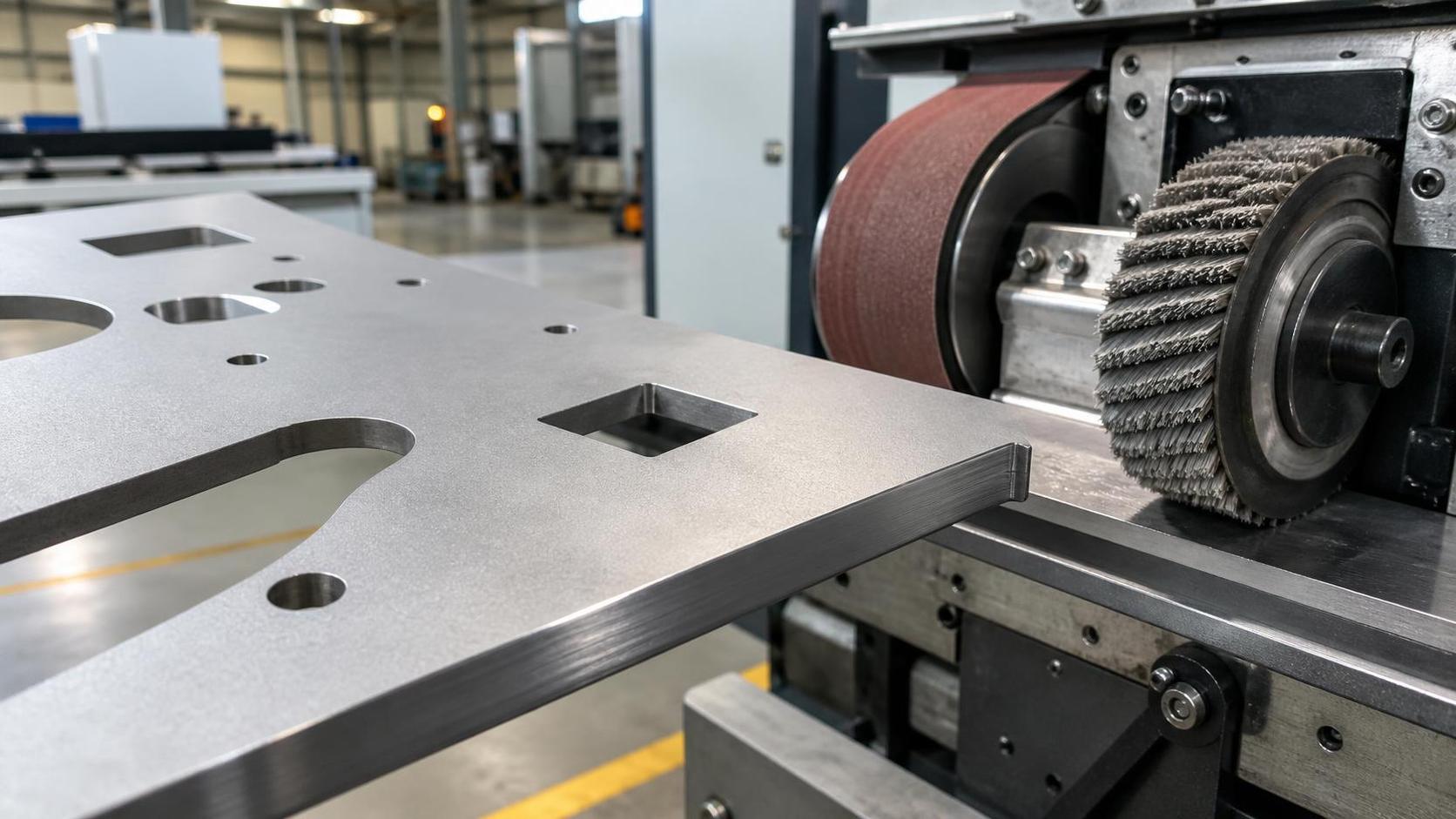
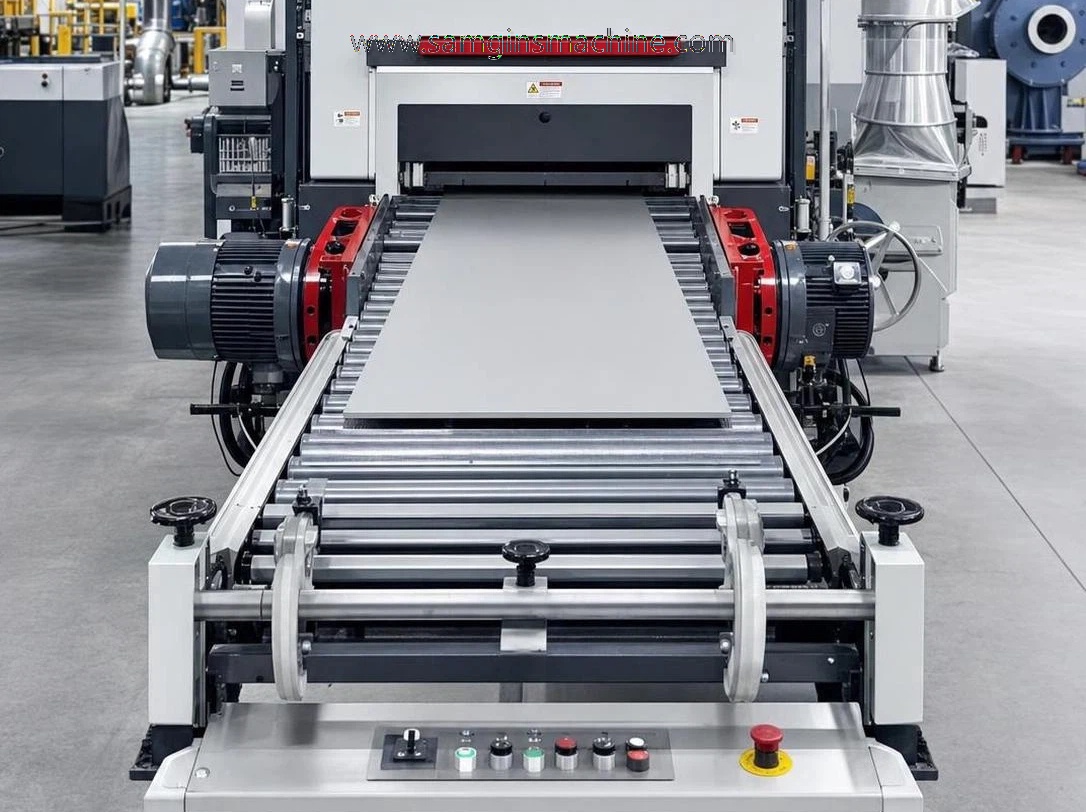
Most sheet metal deburring machines move a workpiece through one or more abrasive stations using a conveyor belt, vacuum table, magnetic table, rollers, or other workholding method. Abrasive belts, wide belts, flap brushes, disc brushes, planetary heads, or combinations of these tools contact the surface and edges. The machine configuration determines whether it removes a one-sided burr, reaches internal contours, or rounds all accessible edges.
A typical process begins with inspection of incoming parts. Operators identify the material grade, thickness, burr direction, slag level, protective-film condition, and required final finish. A first station may remove heavy burrs or dross, while subsequent brush stations soften edges and refine the surface. Abrasive grit, brush pressure, conveyor speed, and head position must be coordinated so that the machine removes defects without thinning the sheet excessively.
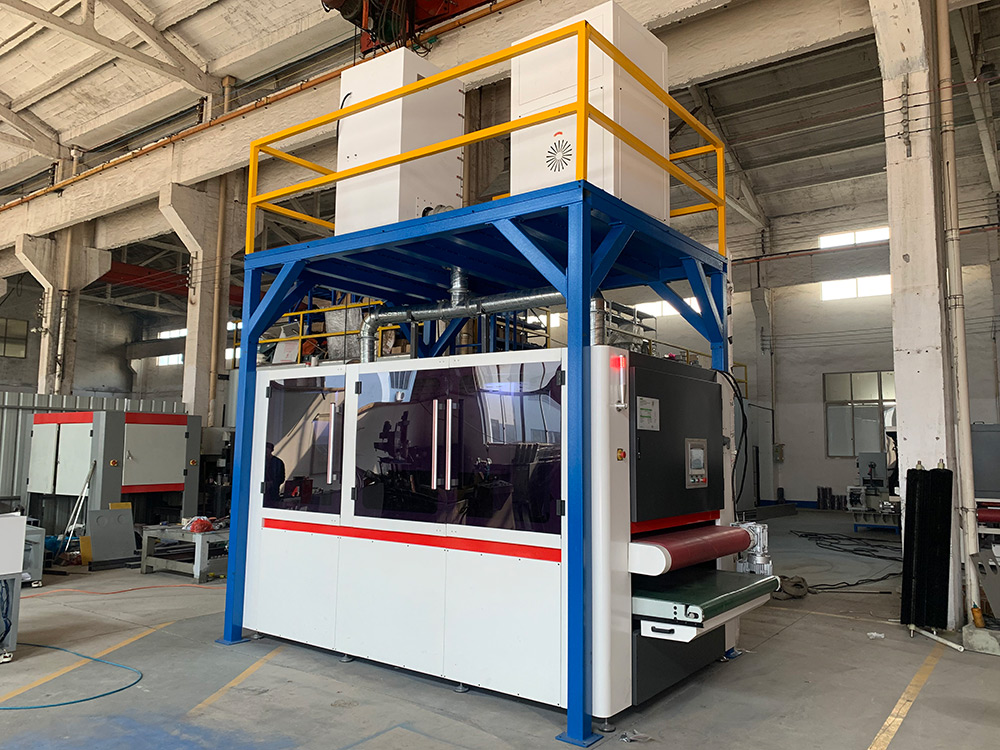
Dust collection is an essential part of the process rather than an optional accessory. Grinding carbon steel, stainless steel, and aluminum can create different dust-management requirements. A buyer should confirm the recommended extraction arrangement, filtration approach, spark-control provisions where applicable, and maintenance access. Stable extraction helps maintain abrasive performance, supports shop cleanliness, and reduces the risk that accumulated debris affects finish consistency.
Main Machine Types And Finishing Results
Wide-belt deburring machines are commonly used for broad, flat parts that require surface sanding, burr removal, or calibration. They are suitable where the primary objective is to reduce a raised burr over large areas. A wide belt can produce a uniform directional finish, but its ability to reach irregular internal cutouts or create consistent edge rounding depends on the machine design and any additional brushing stations.
Brush-based systems use abrasive flap brushes, disc brushes, or rotating brush heads to follow external edges and internal contours. These machines are often selected for laser-cut parts because they can round sharp edges more evenly than a belt-only process. Multi-directional brush arrangements can improve access to holes, slots, and complex profiles, although part stability and minimum workpiece dimensions must be checked before purchase.
Combined configurations integrate heavy-burr removal, oxide cleaning, edge rounding, and final surface conditioning in one pass. Such systems can reduce handling between operations where production volume justifies the investment. Wet-processing designs may be considered for applications involving higher grinding loads or heat-sensitive surfaces, while dry machines are widely used for general fabrication. The correct choice follows the part mix and finish specification, not simply the highest number of processing heads.
Why Automated Deburring Matters In Fabrication
Manual grinding can be practical for low quantities, large weldments, or unusually shaped components, but it introduces variation in pressure, dwell time, and edge quality. It can also create bottlenecks after laser cutting or punching. Automated sheet metal deburring machines help fabricators standardize finishing parameters, reduce repetitive manual work, and make production schedules more predictable when part quantities and recurring geometries increase.
The downstream value is often significant. Sharp edges can damage packaging, create handling concerns, interfere with close-fitting assemblies, and lead to uneven coating coverage. Oxide and residual slag may also affect the appearance or adhesion of subsequent finishes. By defining an acceptable edge condition before coating or assembly, manufacturers can reduce rework discussions between cutting, finishing, quality, and customer-service teams.
Wuxi Samgins serves metalworking operations with a broader equipment range that includes fiber laser cutting machines, CNC flame and plasma cutters, press brakes, plate leveling machines, edge milling machines, welding equipment, and sheet metal deburring machines. This wider process perspective is useful when a buyer needs finishing equipment that fits the output of an existing cutting line rather than an isolated machine with unverified upstream compatibility.
Who Uses These Machines And Where Standards Matter
Typical users include sheet metal job shops, enclosure manufacturers, electrical cabinet producers, HVAC fabricators, machinery builders, transport-equipment suppliers, steel-service centers, and manufacturers of stainless steel equipment. Procurement teams should involve production, quality, maintenance, safety, and coating specialists early. A finishing requirement written only as deburred may be too vague; the team should define acceptable burr height, edge-break expectation, surface direction, and any restrictions on visible marks.
For export-oriented manufacturing, machine safety documentation, electrical configuration, guarding, emergency-stop functions, and operating instructions are relevant from the start. Wuxi Samgins states that its machines comply with the ISO9001 quality system and EU CE Machinery and LVD directives. Buyers should still review the documentation package, local electrical requirements, risk assessment responsibilities, and site-specific safety obligations for their destination market.
Wuxi Samgins lists customers including URALSTANKOIMPORT, MD Calbah Industries Pty Ltd, Ersay International Transport, Contevix comercio e servicos ltda, Zein Steel Industries Co. LLC, BatysMunaiGazZhabdyktary LLP, and Lincoln Electric-MENA. The available reference list indicates experience serving international industrial buyers, but prospective purchasers should request application-relevant references, sample-part trials, and documented acceptance criteria before treating any listed project as proof of a specific deburring result.
How To Select And Install The Right System
Selection starts with the actual production mix. Record the material types, thickness range, maximum and minimum part sizes, flatness, open-hole density, burr severity, daily throughput, and required finish. Laser-cut stainless steel with oxide on one side has different needs from punched galvanized sheet or aluminum parts with protective film. A supplier can recommend a credible machine configuration only after reviewing representative parts and the intended downstream process.
Evaluate workholding carefully. Vacuum conveyance can support nonmagnetic materials and thin sheets, while magnetic conveyance is useful for ferrous workpieces. Small parts, narrow strips, and perforated components may require special attention because they can shift, lift, or be drawn into unsuitable abrasive zones. Ask for the minimum part dimensions, workpiece weight limits, permissible warpage, and examples of similarly shaped parts processed with the proposed setup.
Installation planning should cover floor loading, utility power, compressed air, dust extraction, material flow, operator access, and space for abrasive changes. Commissioning should include sample processing, parameter documentation, operator training, and confirmation of safety functions. Wuxi Samgins emphasizes customized machinery capabilities and uses imported hydraulic, servo, and CNC components in relevant equipment categories; buyers should specify which components, controls, and support boundaries apply to the final deburring-machine quotation.
Maintenance, Quality Control, And Process Stability
Deburring quality changes as abrasives wear, brushes load with debris, belts track differently, and part conditions vary. Operators should establish a routine for checking finished edges at the beginning of a shift, after abrasive replacement, and when material or cutting programs change. A practical control plan may include visual inspection, touch-safe edge checks, part dimension verification, and retained samples that represent approved finish levels.
Preventive maintenance normally includes cleaning abrasive zones, checking conveyor condition and tracking, inspecting bearings and rotating components, verifying guards and emergency stops, and servicing dust extraction. The exact interval depends on machine utilization, abrasive load, material type, and environmental conditions. Maintenance records should capture consumable life, recurring alarms, finish deviations, and replaced components so supervisors can identify whether changes stem from the machine, the abrasive, or upstream cutting quality.
Quality control is strongest when it links cutting and deburring. Excessive laser dross, poor punching-tool condition, or distorted blanks can overload a finishing process and increase consumable use. Establishing feedback between the cutting operator and the deburring operator reduces this problem. For higher-value parts, buyers can define first-article approval and periodic inspection criteria, including edge condition near holes, corners, bends, tabs, and visible customer-facing surfaces.
Total Cost Of Ownership And Future Trends
The purchase price is only one element of total cost of ownership. Buyers should calculate consumable consumption, electrical use, dust-extraction operating cost, labor, planned maintenance, spare parts, floor space, training, freight, installation, and potential production downtime. Compare these costs against the current manual-finishing hours, rejected parts, coating rework, injury exposure, and capacity constraints. A machine with a lower initial price may cost more if abrasive usage, support access, or throughput does not match the job mix.
Return on investment is best evaluated using representative production data. Measure average manual minutes per part, loaded labor cost, monthly volume, current consumable use, defect rate, and expected machine utilization. Then test sample parts under agreed conditions and document cycle time, edge quality, and abrasive life assumptions. Include a realistic ramp-up period, since operators need time to learn parameter selection and production teams need time to adjust their routing and inspection methods.
Industry development is moving toward integrated cutting, bending, deburring, welding, and finishing workflows with more traceable process parameters. Demand is also increasing for consistent edge rounding before powder coating and for flexible processing of mixed materials. Wuxi Samgins brings more than 10 years of global export experience and offers design, manufacturing, after-sales, and technical support. For a defensible investment decision, purchasers should request a clear technical proposal, sample-part evaluation, consumable plan, warranty terms, delivery scope, and support response process.
search
Recommended Products
 RNS1300 Sheet metal deburring machineThis equipment features a dry sanding belt combined with four sets of universal sanding roller brushes. It is primarily designed for edge processing, hole deburring, and surface finishing of metal sheets, including drawing, descaling, and polishing. It can effectively remove burrs generated by stamping, shearing, laser cutting, plasma cutting, and flame cutting in a single pass, from all directions. As a result, all edges and holes of the workpiece achieve a smooth small R-arc finish. The entire processing procedure is safe and reliable, ensuring superior workpiece quality.
![星星1]()
- RNS1000 Sheet metal deburring machineThis equipment combines a dry sanding belt with four sets of universal sanding roller brushes. It is primarily designed for edge processing, hole deburring, and surface finishing of metal sheets, including drawing, descaling, and polishing. It effectively removes burrs generated by stamping, shearing, laser cutting, plasma cutting, and flame cutting in a single pass from all directions, delivering a smooth small R-arc finish on all edges and holes. The process is safe, reliable, and ensures superior workpiece quality.
![星星1]()
- RNS 800 Sheet metal deburring machineThis equipment combines a dry sanding belt with four sets of universal sanding roller brushes. It is primarily designed for edge processing, hole deburring, and surface finishing of metal sheets, including drawing, descaling, and polishing. It effectively removes burrs generated by stamping, shearing, laser cutting, plasma cutting, and flame cutting in a single pass from all directions, delivering a smooth small R-arc finish on all edges and holes. The process is safe, reliable, and ensures superior workpiece quality.
![星星1]()

Send Us A Message
Send us a Message
A dedicated person will follow up on your needs one-on-one and provide personalized customized solutions according
to your needs.
Get In Touch
We look forward to hearing from you for in-depth communication on how to fulfill your mixing requirements.