




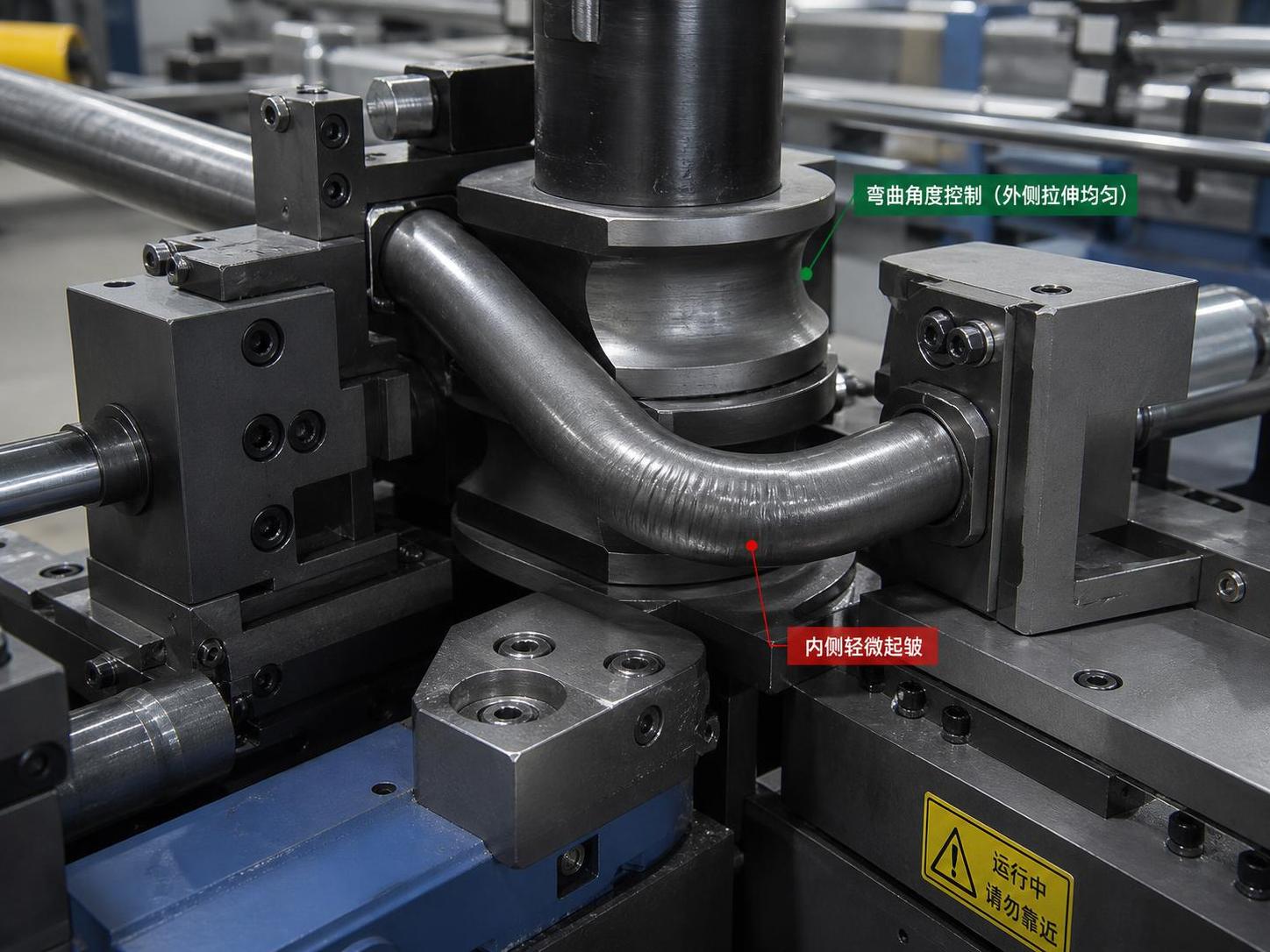
Hydraulic Tube Bending Machine Troubleshooting: Common Angle and Wrinkle Defects
When a hydraulic tube bending machine starts producing the wrong bend angle or visible wrinkles, the problem usually shows up at the worst time: during repeat production, sample approval, or urgent rework. A small deviation in bend quality can quickly turn into assembly issues, scrap, extra inspection, and machine downtime.
In many workshops, the first reaction is to adjust pressure or correct the program immediately. That sometimes helps, but it also causes wasted time when the real issue is tooling fit, unstable clamping, inconsistent tube material, or poor setup sequence. A more reliable approach is to treat angle error and wrinkle defects as symptoms, then check the machine, tooling, material, and process in a practical order.
Why these defects cause bigger production problems than they first appear
Angle inaccuracy and wrinkles are often treated as separate defects, but on a hydraulic tube bending machine they are closely connected to how the tube flows during forming. If the bend angle is too small or too large, later parts in the process may not line up. If the inside of the bend wrinkles, the part may still look usable from a distance, but it can fail dimensional checks, affect fluid flow, weaken appearance quality, or make welding and assembly harder.
These problems also create confusion on the shop floor because they are not always constant. One batch may bend correctly, while the next batch shows springback changes or local deformation. That inconsistency often points to a process control issue rather than one broken component. It is common to lose time replacing hydraulic parts first, even though the root cause is sometimes as simple as mismatched bend dies, worn pressure dies, poor lubrication, or tube wall variation.
For maintenance teams, operators, and production supervisors, the goal is not just to fix one bad part. The goal is to restore repeatable bending so that the same setup produces the same result across the shift.
Start with the symptoms before changing settings on the hydraulic tube bending machine
A useful way to troubleshoot is to identify exactly how the defect appears. Angle problems and wrinkle defects do not all come from the same source. If the bend angle is consistently off by the same amount, the likely causes are different from a condition where some parts are correct and others drift. The same applies to wrinkles: shallow wrinkles near the tangent point suggest one kind of issue, while heavy folds deeper inside the bend suggest another.
Before making adjustments, check these basic symptom patterns:
- All parts are under-bent or over-bent by a similar amount.
- Angle varies from part to part even with the same program.
- Wrinkles appear only on thin-wall tube or tight-radius bends.
- Wrinkles increase after a tooling change or material batch change.
- Defects appear on one side more than the other.
- The first part is acceptable, but later parts gradually drift.
Writing these observations down is more useful than adjusting multiple parameters at once. Once several settings are changed without a record, it becomes difficult to know what actually improved the result.
Common causes of bend angle error
When a hydraulic tube bending machine produces inaccurate angles, the first assumption is often hydraulic pressure loss. Pressure instability is important, but it is only one possibility. In practice, angle error usually comes from one of several groups of causes.
1. Springback not matched to the actual material
Different tube materials and even different batches of the same material can spring back differently after bending. Stainless steel, high-strength alloys, and tubes with harder temper conditions usually need more compensation than mild steel. If the machine setting was based on a previous material batch, the programmed angle may no longer be enough.
2. Tooling radius or groove does not match the tube properly
If the bend die, clamp die, or pressure die is not correctly matched to the tube outside diameter and wall thickness, the tube may shift slightly during forming. That small movement changes the final angle and often creates inconsistent results between pieces.
3. Clamp force is too low or unstable
Insufficient clamping allows the tube to slip during the bend cycle. This is one of the most common reasons for under-bending. In some cases, the machine reaches the programmed motion, but the tube itself has not fully followed the die because the grip was not firm enough.
4. Hydraulic system fluctuation
Low oil level, internal leakage, pressure valve drift, contaminated hydraulic oil, or delayed cylinder response can all affect repeatability. If angle variation is random rather than constant, hydraulic inconsistency becomes more likely.
5. Encoder, stopper, or mechanical limit deviation
On machines with position feedback or programmed bend control, angle error can come from calibration drift, loose linkage, worn pivot points, or incorrect zero reference. This is especially worth checking when the defect appeared suddenly after maintenance or collision.
What usually causes wrinkle defects during tube bending
Wrinkles form when the inside wall of the tube is pushed into compression and does not have enough support or controlled material flow. This is not just a cosmetic issue. It means the deformation is no longer balanced correctly across the bend.
1. Pressure die assistance is not correct
If the pressure die does not support the tube smoothly as it feeds into the bend zone, the inside wall can buckle. Too little support is a common cause, but excessive drag can also create unstable flow.
2. Mandrel position is wrong or no mandrel is used when one is needed
Thin-wall tubes, tight bend radii, and higher-quality surface requirements often need internal support. If the mandrel is set too far back, the tube loses support near the tangent. If it is too far forward, it may interfere with flow and cause other marks or instability.
3. Wiper die setup is poor
For demanding bends, the wiper die helps control the start of wrinkling on the inside radius. If its position, angle, or edge condition is wrong, wrinkle defects can appear quickly, especially on softer materials or tighter bends.
4. Tube wall is too thin for the bend requirement
Sometimes the setup is basically correct, but the combination of tube diameter, wall thickness, and centerline radius is too aggressive. In that case, the process window becomes narrow and wrinkles are more likely unless tooling and support are upgraded.
5. Lubrication is missing or inconsistent
Improper lubrication changes friction between the tube and tooling surfaces. That changes how the material feeds and compresses, which directly affects wrinkle formation and angle consistency.
A practical troubleshooting sequence that saves time
It is usually faster to diagnose these problems in a fixed order instead of chasing the most obvious symptom first. The sequence below works well for many workshops because it separates setup errors from machine faults.
- Confirm the defect type clearly. Measure actual bend angle, note whether the error is constant or random, and identify where wrinkles start on the bend.
- Verify tube specification. Check outside diameter, wall thickness, material grade, and whether the current batch differs from the previous one.
- Inspect tooling condition. Look for wear, surface damage, poor die fit, incorrect die radius, and looseness in the clamp area.
- Check clamping and support settings. Confirm clamp pressure, pressure die force, mandrel position, and wiper die contact if used.
- Review lubrication. Make sure the correct lubricant is used and applied consistently to the required contact areas.
- Test hydraulic stability. Observe pressure response during repeated cycles and inspect for leakage, contamination, overheating, or slow cylinder action.
- Recheck machine calibration. Verify zero point, mechanical stop condition, sensor or encoder reading, and linkage wear.
- Adjust only one variable at a time. Run a small trial after each change and record the effect before moving to the next item.
This approach prevents a common mistake: correcting the angle by overcompensation while the real cause is slippage or unstable support. That kind of shortcut can make wrinkle defects worse.
How to correct angle defects without creating new problems
If the main issue is bend angle error, the best correction method depends on whether the deviation is consistent or unstable.
For a consistent under-bend or over-bend, first compare the current material with the setup standard used previously. If material hardness or springback has changed, a program offset may be enough. However, only make that adjustment after confirming that the tube is not slipping in the clamp. If slipping exists, changing the angle target only hides the root cause.
If the angle varies from part to part, focus on repeatability before changing compensation values. Check hydraulic pressure stability, clamp die condition, and mechanical play in moving parts. Random variation usually means the system is not controlling the bend the same way every cycle.
Also pay attention to how the part is loaded. Inaccurate positioning against the stopper or inconsistent tube length can produce angle differences that look like machine faults. In many production cells, loading consistency is part of bend accuracy, not a separate issue.
How to reduce wrinkles without overloading the tube
Wrinkle correction is usually about improving support and controlling compression, not simply adding more force everywhere. A common mistake is to increase clamp force or hydraulic pressure too much. That may reduce visible wrinkling for a short time, but it can also mark the tube surface, increase drag, or create flattening.
A better method is to review support conditions around the bend zone. Start with pressure die setup and confirm that the tube is guided smoothly into the bend. Then check whether a mandrel is required for the current wall thickness and bend radius. If a mandrel is already installed, fine adjustment of insertion depth and ball position can matter more than large pressure changes.
For difficult materials or complex shapes, process consistency before bending also matters. In fabrication lines that combine cutting and bending, poor cut-end quality can affect loading, centering, and repeatability. That is one reason some shops standardize upstream preparation with equipment such as H beam cnc fiber laser cutting machine for high-precision cutting tasks in broader metal processing workflows. It does not replace tube bending tooling, but stable part preparation and dimensional control upstream can reduce setup variation when multiple forming operations are connected in one production chain.
Checklist for deciding whether the problem is tooling, material, or hydraulics
When troubleshooting time is limited, this quick distinction helps narrow the search:
- Likely tooling issue: defects started after die replacement, marks appear on the tube, wrinkles occur at the same position every time, or angle changes after visible clamp slippage.
- Likely material issue: setup was stable before, defects began with a new batch, springback increased, or wrinkle tendency changed without machine adjustments.
- Likely hydraulic issue: angle variation is inconsistent, cylinder motion feels uneven, machine response changes after warming up, or pressure readings drift over repeated cycles.
- Likely setup issue: first-piece approval is difficult, different operators get different results, or multiple parameters were changed without records.
This kind of classification is simple, but it prevents a lot of unnecessary part replacement.
Ways to prevent the same defect from returning
Once the immediate issue is solved, the next step is process discipline. Many repeat problems come back because the correction was made informally and never turned into a standard check.
Useful preventive measures include keeping a setup record for each tube specification, logging springback compensation by material type, inspecting dies for wear at fixed intervals, and defining standard positions for mandrel and wiper die where applicable. It also helps to separate first-piece approval from mass production settings so that trial changes are not left in the program without confirmation.
Upstream preparation and downstream fit-up should also be reviewed together. In mixed metal fabrication environments, shops often combine bending, cutting, welding, and machining under one process management routine. Wuxi Samgins International Trade Co.,Ltd works across this broader machinery field, including bending, CNC cutting, welding, and sheet metal equipment, so the practical lesson is straightforward: bend quality is usually more stable when the full process chain is controlled rather than treating the hydraulic tube bending machine as an isolated station.
Frequently Asked Questions
Why does my bend angle look correct on the first part but change later?
This often points to repeatability issues rather than a simple program offset. Check hydraulic temperature changes, pressure stability, clamp slippage, and whether tooling loosens during repeated cycles.
Can I solve wrinkle defects just by increasing hydraulic pressure?
Usually no. Wrinkles are more often related to support, material flow, mandrel position, pressure die setup, or tube geometry. More force alone can create surface damage or flattening without solving the root cause.
How do I know if I need a mandrel for a hydraulic tube bending machine?
If you are bending thin-wall tube, using a tight bend radius, or trying to control inside-surface quality, internal support may be necessary. The decision depends on tube diameter, wall thickness, radius, and quality requirement.
What should I check before changing the bend program?
Confirm tube specification, tooling fit, clamp condition, lubrication, and hydraulic stability first. If those are not correct, program changes may only hide the actual source of the problem.
Can material changes alone cause both angle error and wrinkles?
Yes. Different material hardness, wall tolerance, and surface condition can affect springback, friction, and compression behavior. That is why a new batch should be checked before assuming a machine fault.
Conclusion
The fastest way to troubleshoot a hydraulic tube bending machine is to resist random adjustment and follow the defect logically. Angle error usually comes from springback mismatch, clamping, calibration, or hydraulic instability. Wrinkles usually point to poor support, incorrect tooling setup, difficult geometry, or uncontrolled material flow. When those factors are checked in order, the root cause becomes much easier to isolate, and the fix is more likely to hold in production instead of only improving one sample part.