




Metal Fabrication Handling Robot Standards: ISO 10218-1 vs. ANSI/RIA R15.06 – Which Applies to Your Robotic Cell Layout?
Metal Fabrication Handling Robot Standards: ISO 10218-1 vs. ANSI/RIA R15.06 – Which Applies to Your Robotic Cell Layout?
Ensuring compliance for your metal fabrication handling robot is critical—especially when designing or auditing a robotic cell layout. With ISO 10218-1 and ANSI/RIA R15.06 setting distinct yet overlapping safety requirements, misalignment can risk worker safety, regulatory nonconformance, and production downtime. As a Wuxi-based manufacturer of welding robots, CNC machine tools, and automated metalworking systems—certified to ISO 9001 and CE standards—we help quality and safety managers navigate these standards confidently. This article clarifies key differences, applicability scopes, and practical implications for your specific cell configuration.
What’s the Real Search Intent Behind “Metal Fabrication Handling Robot” + Standards?
When quality or safety professionals search this phrase, they’re rarely seeking textbook definitions. They’re under pressure: a new robotic cell is being commissioned; an audit is scheduled; a near-miss occurred; or a supplier’s documentation raises red flags. Their core need is actionable clarity—not theoretical alignment, but *which standard governs their actual installation*, and *what evidence they must produce* to pass internal audits or third-party inspections. They care about jurisdictional scope, integration boundaries (e.g., robot + end-effector + workholding), and how standards treat hybrid systems like CNC-integrated handling cells.
ISO 10218-1: The Global Baseline—Where It Starts and Stops
ISO 10218-1:2011 (Robots and robotic devices — Safety requirements for industrial robots — Part 1: Robots) defines safety requirements *for the robot itself*: its mechanical structure, control system architecture, emergency stop functionality, and inherent risk-reduction features (e.g., speed/force limiting). Crucially, it applies only to *industrial robots*—defined as “reprogrammable, multifunctional manipulators”—and excludes fixed automation like gantry loaders or dedicated part-transfer mechanisms unless they meet the full reprogrammable/multifunctional criteria. For metal fabrication shops using collaborative-style handling robots in welding or deburring cells, ISO 10218-1 sets the foundational robot-level performance requirements—but stops short of defining how that robot integrates into the larger cell.
ANSI/RIA R15.06: The U.S. Holistic Cell Standard—Your Real Audit Checklist
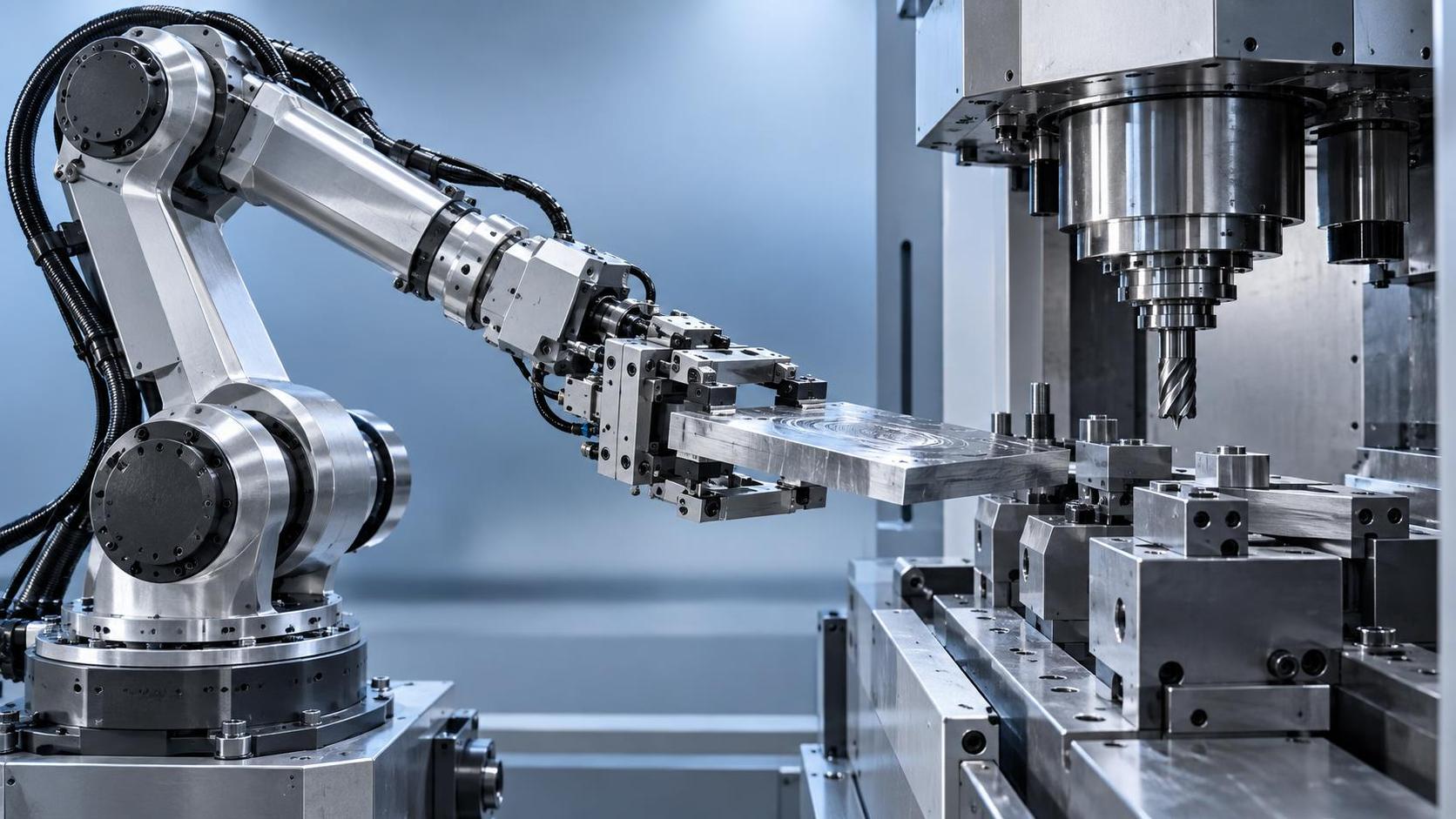
ANSI/RIA R15.06-2012 (Safety Requirements for Industrial Robots and Robot Systems) goes significantly further. It treats the *entire robotic system*—robot, controller, end-effector, peripheral equipment (e.g., positioners, conveyors, safety fencing), and even human interaction zones—as one integrated unit. Its risk assessment methodology (Annex A) mandates evaluating hazards across all operational modes: automatic, teach, setup, and maintenance. For metal fabrication facilities exporting to North America—or operating U.S.-based subsidiaries—R15.06 isn’t optional; it’s the de facto benchmark for OSHA enforcement and insurance validation. If your cell includes a welding robot loading plates onto a Heavy Edge Milling Machine, R15.06 requires validating the interface between robot gripper and mill’s clamping system—not just the robot’s standalone behavior.
Critical Overlap—and Where They Diverge Most
Both standards require risk assessment, safeguarding (e.g., light curtains, safety mats), and validated emergency stops. But divergence appears where integration matters most. ISO 10218-1 permits “inherent safety” design (e.g., low-mass arms) to reduce reliance on external safeguards; R15.06 demands layered protection—even for inherently safe robots—when humans enter defined zones during non-automatic modes. More critically, R15.06 explicitly covers *non-robotic components* that affect safety: hydraulic power units, pneumatic valves controlling part fixtures, or even the electrical isolation of a CNC-controlled edge mill’s feed motor. ISO 10218-1 does not. For your team, this means: if your robotic cell feeds material directly into a machining station, R15.06’s scope extends to that station’s safety controls—where ISO 10218-1 ends at the robot flange.
Practical Decision Tree: Which Standard Governs *Your* Layout?
Ask three questions before finalizing your compliance strategy: (1) *Where is the cell installed?* EU-based facilities must comply with ISO 10218-1 + Machinery Directive 2006/42/EC; U.S. sites fall under R15.06 + OSHA 1910.212. (2) *Who performs the risk assessment?* If a U.S. integrator designed your cell, R15.06 compliance is embedded—even if the robot bears CE marking. (3) *What’s the integration depth?* A robot simply palletizing finished parts after milling? ISO 10218-1 likely suffices. A robot that loads raw plate, triggers the Heavy Edge Milling Machine’s CNC cycle, then unloads beveled edges? R15.06’s system-level requirements apply unequivocally. Our engineering team routinely reviews such interfaces—ensuring end-effectors match the mill’s clamping force specs and that safety PLC logic synchronizes robot motion with the mill’s feed system shutdown.
Why “Certified to ISO 9001 and CE” Isn’t Enough for Robotic Cell Safety
Our ISO 9001 certification ensures consistent design and manufacturing processes; our CE marking confirms conformity to EU essential health and safety requirements *for individual machines*. But robotic cell safety isn’t about single-machine compliance—it’s about *system interoperability*. A CE-marked welding robot doesn’t guarantee safe interaction with your existing H-beam line’s transfer conveyor unless the entire system undergoes integrated risk assessment per R15.06 or ISO 10218-2 (which covers robotic systems). That’s why we provide not just equipment, but application-specific safety documentation: validated safety distance calculations, PL/SIL verification reports for safeguarding devices, and interface schematics showing how our CNC cutting machines synchronize emergency stops with upstream handling robots.
Actionable Next Steps for Quality & Safety Managers
Start with your cell’s physical boundary: draw a line around every component involved in material flow—including conveyors, sensors, and secondary machining stations. If any part lies within 2 meters of robot motion, R15.06 likely governs. Then, verify whether your robot controller supports dual-channel safety I/O (mandatory for R15.06 Category 3/4 architectures) and whether your end-effector’s force limits are documented per ISO/TS 15066. Finally, audit your training records: R15.06 requires documented competency for *all* personnel entering the cell—even for brief tool changes. We embed these requirements into our commissioning packages, including operator training modules aligned with ANSI Z432 and hands-on validation of light curtain response times against your specific robot’s deceleration profile.
Conclusion: Compliance Is Contextual—Not Cosmetic
Choosing between ISO 10218-1 and ANSI/RIA R15.06 isn’t about preference—it’s about jurisdiction, integration depth, and enforceable accountability. For global manufacturers, dual compliance is often strategic: ISO 10218-1 provides the robot’s safety DNA; R15.06 defines how that DNA expresses itself in real-world metal fabrication workflows. As you finalize your next robotic cell layout—whether integrating a laser cutting machine with a handling robot or linking a CNC lathe to an automated deburring station—remember: the safest cell isn’t the one with the most safeguards, but the one whose standards alignment was decided *before* the first bolt was tightened. And when precision edge preparation is part of that workflow, choosing a solution built for integration—like our Heavy Edge Milling Machine—means fewer interface risks and faster path to compliant automation.
search
Products Navigation
Send Us A Message