




NC Hydraulic Shearing Machine vs CNC: Which Option Fits Routine Sheet Cutting Jobs?
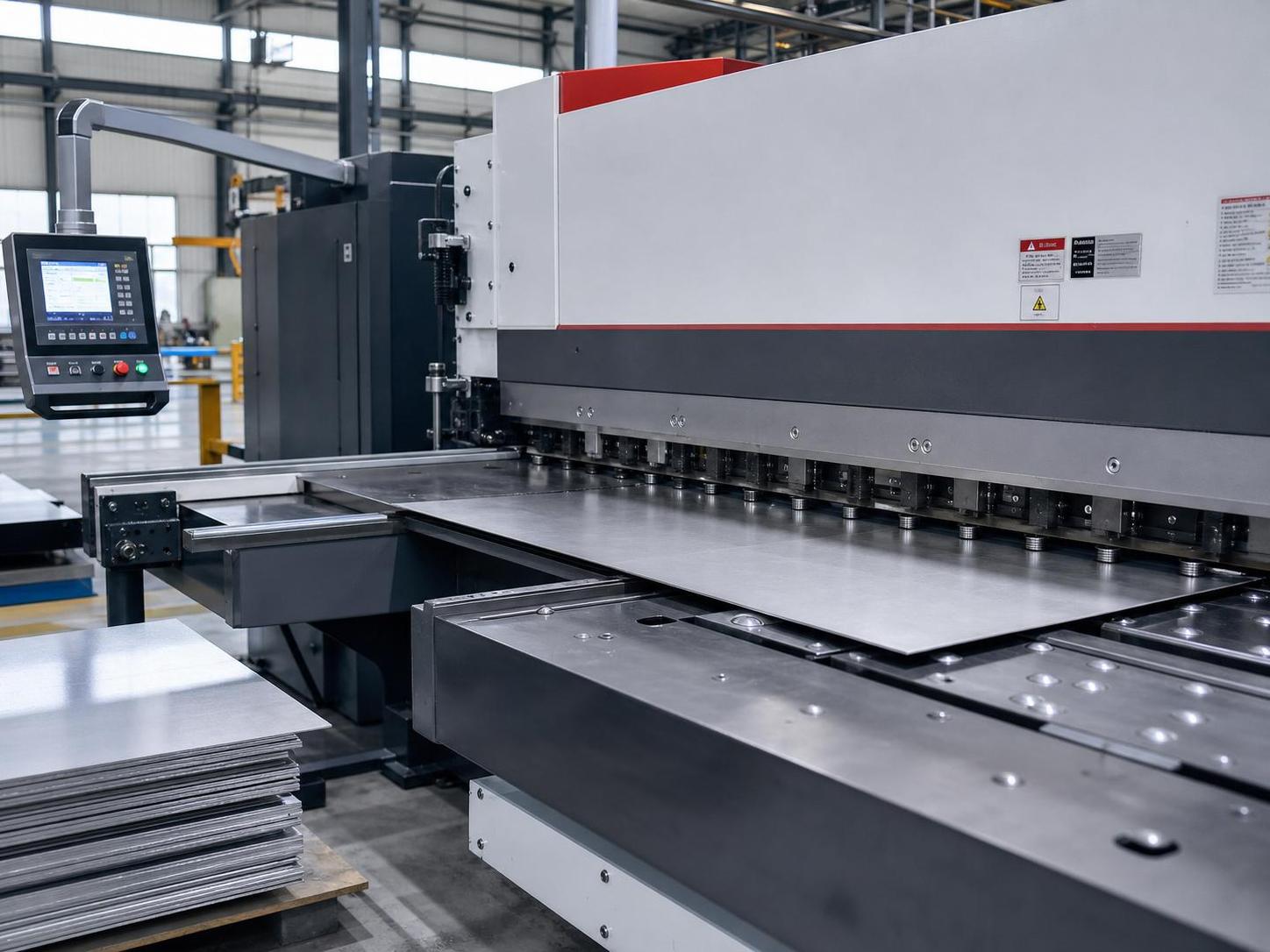
Routine sheet cutting rarely fails because a machine lacks headline features. More often, the problem is mismatch. An nc hydraulic shearing machine may already meet daily throughput, tolerance, and cost targets, while a CNC model may add value only when job variation, traceability, or programming demands justify it.
That is why the comparison matters in fabrication workshops, metal service centers, and general machinery plants. In these settings, cutting quality affects downstream bending, welding, deburring, and assembly, so the right shearing platform has consequences beyond the cutting station itself.
What separates NC hydraulic shearing from CNC in practice
Both machine types use hydraulic force to shear sheet metal. The real difference lies in control logic, operator interaction, and how flexibly the machine handles changing production tasks.
An nc hydraulic shearing machine usually controls core functions such as backgauge positioning, cutting length, and stroke settings through a simpler numerical interface. It is designed for repeatable work without deep programming complexity.
A CNC shearing machine extends that concept. It typically offers more programmable axes, stored job libraries, sequencing support, tighter integration with drawings or nesting data, and more detailed parameter management.
For routine cutting jobs, that distinction is important. If production mostly repeats standard lengths and common sheet grades, the extra control depth of CNC may not create proportional business value.
Why this choice matters in current fabrication work
Sheet metal operations are under pressure from several directions. Material prices fluctuate, labor availability is uneven, and customers expect shorter lead times with fewer secondary corrections.
In that environment, machine selection is no longer only about maximum capability. It is about stable output, manageable training, serviceability, and whether the equipment fits the actual production mix.
This is especially relevant for suppliers handling broad equipment portfolios. Wuxi Samgins International Trade Co., Ltd, established in 2012 in Wuxi, works across shearing, bending, rolling, welding, CNC cutting, and related machinery under ISO9001 and EU CE aligned production practices.
That broader manufacturing context matters because sheet cutting is rarely isolated. A cut part often moves directly to press braking, rolling, welding, deburring, or profile forming, so machine choice should support the full line.
Where an nc hydraulic shearing machine usually fits best
An nc hydraulic shearing machine tends to perform well in stable, repetitive environments. These are jobs where thickness range is predictable, sheet sizes are standard, and changeovers are limited.
- Batch cutting of carbon steel or stainless sheets with repeated dimensions
- General fabrication shops producing brackets, panels, covers, and base plates
- Workflows where operators need quick setup without advanced program editing
- Plants prioritizing low acquisition cost and straightforward maintenance
In these conditions, the machine can offer a practical balance. It delivers hydraulic cutting strength, acceptable positional control, and dependable repetition without the overhead of a more sophisticated control architecture.
Simple does not mean crude. A well-built nc hydraulic shearing machine can still support production discipline when frame rigidity, blade quality, hold-down performance, and backgauge consistency are properly specified.
When CNC starts to justify the extra investment
CNC becomes easier to defend when production is less predictable. High-mix manufacturing, stricter tolerance control, and frequent program changes create a stronger case for digital flexibility.
CNC is also useful when downstream steps are tightly linked to cut accuracy. If the sheared blanks feed automated bending cells, robotic welding, or serialized part flows, better data handling may outweigh the higher initial cost.
Accuracy is only one part of the decision
A common mistake is comparing only nominal precision. For routine jobs, effective productivity often depends more on setup speed, repeatability over a shift, and how consistently the machine holds cut quality across different operators.
Blade clearance adjustment, sheet support, hydraulic stability, and backgauge reliability all influence result quality. If these basics are weak, a higher-end controller will not solve the underlying process limitation.
Maintenance should be considered the same way. An nc hydraulic shearing machine usually has fewer layers of software and electronic complexity. That can simplify troubleshooting and reduce downtime in facilities with limited technical support.
CNC systems may improve repeatable setup for complex work, but they also require stronger discipline in parameter management, backups, diagnostics, and operator training.
Questions that sharpen the comparison
- How many part sizes repeat weekly, and how many change daily?
- What scrap cost is caused by setup errors or gauge inconsistency?
- Does the cutting station feed manual or automated downstream processes?
- Can current maintenance resources support a more advanced controller?
- Is the target improvement throughput, tolerance control, traceability, or labor reduction?
Looking beyond the shearing station
The best evaluation often considers how cut parts behave in later forming steps. Flatness, edge condition, and dimensional repeatability directly affect rolling, bending, and fit-up quality.
For example, some production lines move from sheet cutting into profile or section forming. In those cases, process consistency matters more than isolated machine specifications.
A useful reference is the Profile bender used in automotive, elevator, petrochemical, steel structure, and machinery manufacturing applications. Its single-pass pre-bending, coiling, and rounding capability shows how integrated forming equipment reduces handling and variation.
Features such as horizontal and vertical operation, hydraulic linear roller movement, and digital displacement readout reflect the same principle that matters in shearing: control should match the task, not exceed it without reason.
That equipment also targets ±0.1mm forming precision with hardened high-grade steel rolls and distortion correction support. The lesson is broader than one product. Production value comes from stable process design across connected machines.
A practical way to choose
For many routine sheet cutting operations, an nc hydraulic shearing machine remains the more rational choice. It covers essential production needs with lower cost, easier training, and less complicated service requirements.
CNC is the stronger option when product mix changes often, process documentation matters, or cut blanks must feed a more automated manufacturing chain. The value comes from workflow control, not from automation for its own sake.
A sound next step is to map one month of actual cutting data. Track sheet types, repeat orders, tolerance failures, setup frequency, and downtime causes. That will show whether the current bottleneck is control capability or core machine fundamentals.
Once those numbers are visible, the comparison between an nc hydraulic shearing machine and CNC becomes much clearer. The right choice is the one that supports routine output, protects downstream quality, and stays economically justified over years of daily use.
search
Products Navigation
Send Us A Message