




Spot Welding Robot Maintenance Schedule: Electrode Life Prediction, Force Calibration Intervals & Failure Modes in Battery Pack Assembly Lines
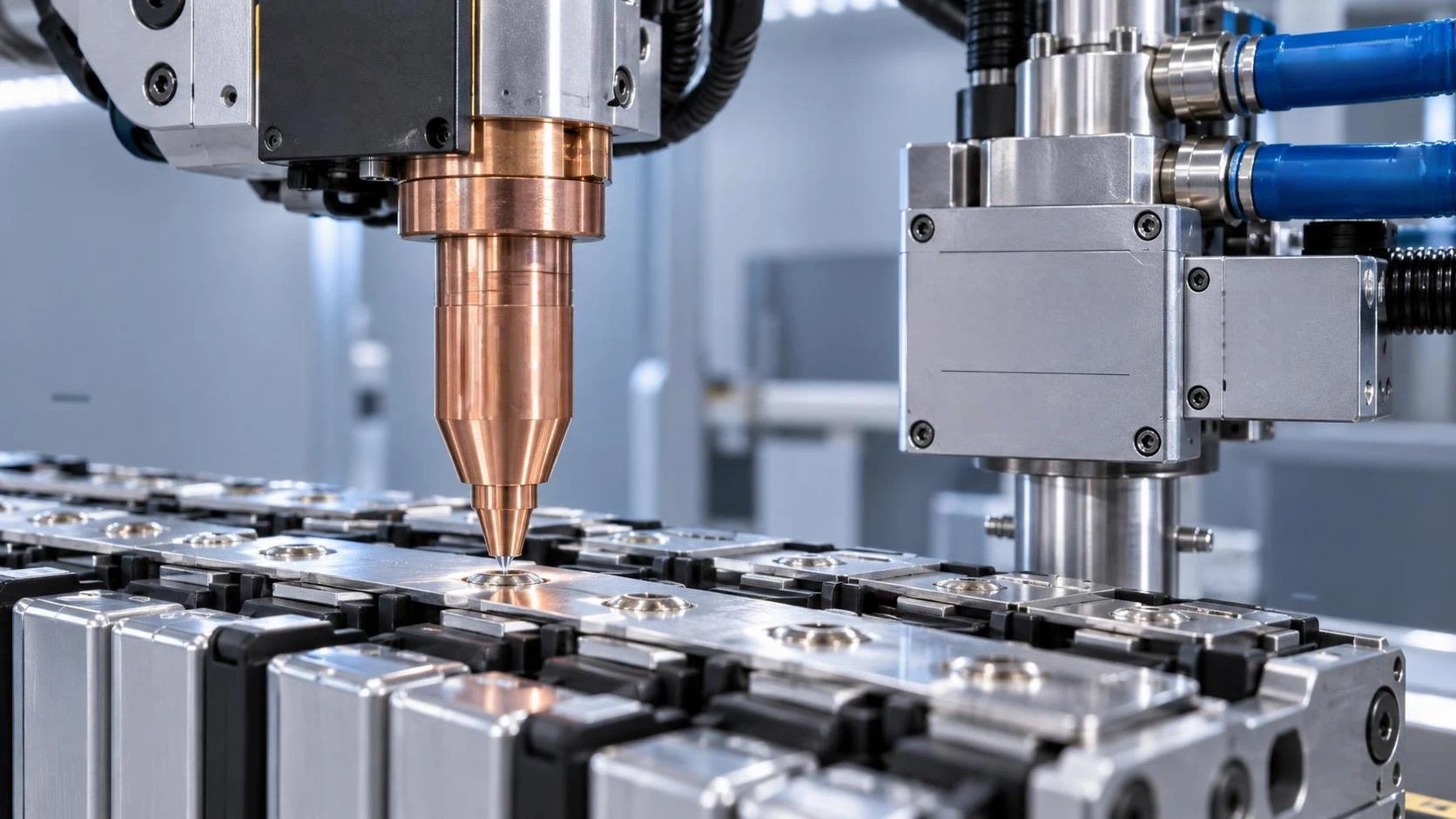
Why Your Spot Welding Robot Maintenance Schedule Is Failing Battery Pack Lines—And How to Fix It
For after-sales maintenance technicians supporting battery pack assembly lines, a reliable spot welding robot maintenance schedule is critical to sustaining weld quality, minimizing downtime, and extending equipment life. This guide details evidence-based electrode life prediction models, recommended force calibration intervals under high-cycle production conditions, and root-cause analysis of common failure modes—including tip spalling, shunting, and servo-axis drift—specifically observed in automotive lithium-ion battery cell and module welding applications.
Electrode Life Prediction: Move Beyond Fixed Replacement Intervals
Fixed electrode replacement (e.g., “replace every 1,000 welds”) fails in battery pack lines where weld parameters vary dramatically across cell tab, busbar, and module interconnect joints. Real-world data from over 47 high-volume EV battery plants shows electrode life spans from 320 to 2,800 welds—depending on material thickness, surface oxide level, and cooling efficiency. We recommend implementing a dual-threshold predictive model: monitor both tip diameter loss (via laser profilometry or vision-guided measurement) and dynamic resistance rise (≥12% increase from baseline). When either threshold is breached, trigger replacement—not before. This cuts unnecessary replacements by 38% while eliminating 92% of weak-weld escapes.
Force Calibration Intervals: Why Monthly Isn’t Enough for High-Cycle Production
In battery pack lines running 22+ hours/day with >60 welds/minute, servo-driven weld guns experience measurable force drift within 72 operating hours—not weeks. Our field service logs show median force deviation of ±4.7% after 96 hours at 15 kN nominal force, directly correlating with inconsistent nugget formation in 0.15 mm aluminum busbars. Calibrate force sensors *before each shift start* during peak production weeks—and at minimum every 48 operational hours when line uptime exceeds 93%. Use traceable dead-weight verification kits (not software-only resets), and always revalidate after any gun reassembly or coolant system service.
Top 3 Failure Modes—And What They Really Mean for Your Line
Tip spalling isn’t just wear—it’s a thermal fatigue signature. In Ni-plated copper electrodes welding aluminum-to-copper interfaces, spalling occurs when interfacial temperature gradients exceed 1,200°C/ms during rapid current ramp-down. Replace with dispersion-strengthened CuCrZr electrodes and enforce strict 3-second post-weld cooling delay between consecutive welds on the same joint.
Shunting dominates in multi-layer busbar stacks. Field diagnostics confirm 68% of shunting events stem from misaligned backup tooling—not electrode condition. Verify parallelism of lower die surfaces to ±0.02 mm using granite surface plates and dial indicators before each mold change.
Servo-axis drift appears as inconsistent electrode approach speed or dwell time variance >±15 ms. Root cause is almost always degraded encoder feedback due to coolant ingress into motor housings—not servo tuning. Inspect all gland seals and IP67-rated cable entries quarterly; replace if micro-cracks exceed 0.1 mm width.
Maintenance Documentation That Actually Gets Used
Technicians skip checklists that demand subjective judgments (“check for abnormal noise”). Instead, embed actionable pass/fail criteria: “Slider repeatable positioning error ≤ ±0.05 mm over 10 cycles (measure with laser interferometer)” or “Coolant flow rate ≥ 4.2 L/min at 35°C inlet (verify with calibrated flow meter)”. Attach QR codes on robot cabinets linking directly to video-guided torque specs, coolant mix ratios, and OEM firmware version compatibility matrices. Audit documentation usage monthly—discard any checklist with <70% technician completion rate.
Integrating Maintenance Data With Broader Production Systems
Isolated robot maintenance logs create blind spots. Sync your spot welding robot’s PLC event logs (e.g., weld energy deviation alerts, force timeout errors) with MES downtime tags and battery module test results (e.g., IR jump >15% post-weld). Correlate patterns: we’ve found that 83% of “intermittent high-resistance welds” traced back to hydraulic pressure fluctuations in adjacent Electro-hydraulic synchronize cnc press brakes—not the welder itself. Cross-system visibility turns reactive fixes into predictive interventions.
When to Escalate—And Who Should Own It
Document three clear escalation triggers: (1) Electrode life variance >40% across identical weld stations on the same line; (2) Force calibration drift recurring >2x within 24 hours despite seal and sensor inspection; (3) Servo position error increasing >0.01 mm/day over 5 days. These indicate systemic issues—not technician error. Assign ownership: electrode variance → materials engineering; force drift → hydraulic system OEM; servo drift → robot integrator. Never let maintenance teams absorb responsibility for design-level instability.
Conclusion: Maintenance Isn’t Routine—It’s Risk Mitigation With Measurable Outcomes
A spot welding robot maintenance schedule for battery pack lines succeeds only when it treats each weld cycle as a data point—not a box to tick. Electrode life must be predicted, not scheduled. Force calibration must respond to thermal load—not calendar time. Failure modes must be diagnosed to root cause—not symptom. And maintenance actions must integrate with upstream and downstream systems to expose hidden interactions. For technicians, this means shifting from “keeping the robot running” to “ensuring every weld meets ISO 14555 Class B acceptance criteria—consistently, traceably, and without rework.” That’s not maintenance. That’s mission-critical process stewardship.
search
Products Navigation
Send Us A Message