




What causes springback in a bending machine and how to control it
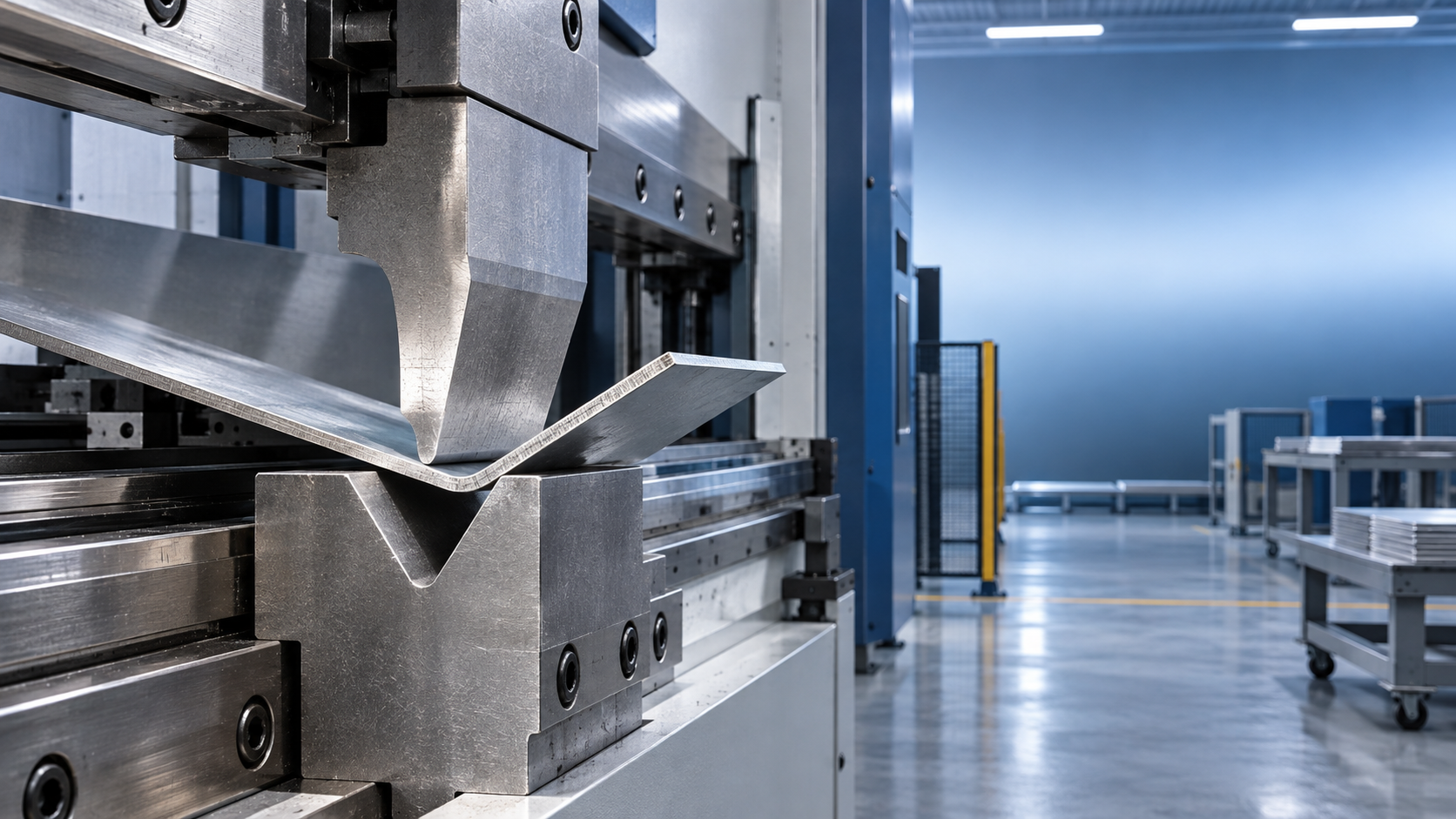
What Causes Springback in a Bending Machine and How to Control It
Springback is one of the most familiar frustrations for anyone operating a Bending machine. The ram comes up, the part looks correct while it is under pressure, and then the sheet relaxes. A 90-degree bend may open to 92 or 94 degrees. On a simple bracket, that may be a small nuisance. On a panel with several bends, a cabinet door, a structural channel, or a part that must fit a welded assembly, it can turn into rework, scrap, and a long series of trial bends.
The basic reason is simple: metal has elastic memory. Yet controlling springback is not as simple as “bend it farther.” Material condition, bend radius, tooling, grain direction, machine deflection, forming method, and even a small variation between sheets can influence the final angle. The practical goal is not to eliminate springback completely—because that is rarely possible—but to make it predictable and repeatable.
What Actually Happens When Sheet Metal Is Bent?
During bending, the material on the inside of the bend is compressed while the outside is stretched. Between these two zones is a neutral axis where the material experiences relatively little change in length. If the applied force exceeds the yield strength of the metal, the sheet takes on permanent plastic deformation. At the same time, part of the material is only elastically deformed.
Once the punch pressure is released, that elastic portion attempts to return to its original shape. The bend opens slightly, and this recovery is called springback. It is normal material behavior, not necessarily a sign that the Bending machine or operator has made a mistake.
The challenge is that the amount of recovery is rarely identical for every job. A setting that works well for mild steel may be unsuitable for stainless steel. Even two batches of nominally identical sheet can behave differently if their thickness, tensile strength, temper, or surface condition varies.
The Main Causes of Springback
Material strength and hardness
High-strength materials tend to spring back more than softer, lower-strength materials. Stainless steel, high-strength low-alloy steel, spring steel, and many aluminum alloys can show significant elastic recovery because they resist permanent deformation more strongly.
For example, a mild steel part may require only a small overbend, while a high-tensile sheet of the same thickness can need a noticeably deeper bend to reach the same finished angle. This is why operators should not transfer bend settings from one material grade to another without verification.
Sheet thickness variation
Thickness directly affects the relationship between the punch, die opening, and bending force. A small difference in sheet thickness may change the final angle, especially in air bending. Coils and sheets supplied within a permitted tolerance range can still produce angle variation in sensitive work.
Before blaming the machine, measure the actual thickness with a reliable micrometer. Use readings from more than one area if the material is large or comes from a new batch. A nominal 2 mm sheet is not always exactly 2.00 mm, and that difference matters when tight angle control is required.
Bend radius and die opening
A larger inside bend radius generally produces more springback. When the metal is bent gradually over a broad radius, a greater proportion of the deformation remains elastic. A tighter radius drives more of the material into plastic deformation and usually reduces recovery, although excessive tightening can create cracking, tool marks, or unacceptable thinning.
The V-die opening has a strong influence on the formed radius. A wide V opening tends to create a larger radius and more angle variation. A die that is too narrow may require excessive tonnage and overload the tooling or machine. The correct die opening should be selected for the material thickness, strength, desired inside radius, and bending method rather than by habit alone.
Grain direction
Rolled sheet has a grain direction. Bending parallel to the grain can produce a different result from bending across it. In many materials, bending across the grain offers more stable forming behavior and lowers the risk of cracking. When parts have multiple bends in different directions, grain orientation should be included in the flat-pattern and nesting decision.
If one production run shows inconsistent springback, check whether blanks were rotated compared with the approved sample. This detail is easy to miss on the shop floor, particularly when several operators share the same material stack.
Air bending versus bottoming and coining
Air bending is widely used because it is flexible and requires fewer tools. The punch presses the sheet into the V-die without forcing it fully against the die surfaces. Since the final angle depends partly on ram penetration, air bending is more sensitive to springback and material variation.
Bottoming brings the workpiece much closer to the final die angle and reduces the degree of elastic recovery. Coining uses even higher pressure to plastically deform the bend zone more completely. It can provide excellent repeatability, but it needs suitable tooling and substantially more force. Coining should never be chosen casually if the press brake, punch, die, or job setup is not rated for it.
Machine and tooling deflection
Even a well-built press brake deflects under load. The ram and bed may flex slightly, often causing the center of a long bend to differ from the ends. Worn punches, damaged die shoulders, loose tool clamping, or incorrect crowning settings can make the final bend angle inconsistent from one location to another.
This is especially noticeable on long panels. If both ends measure correctly but the middle opens up, the problem may not be material springback alone. It may be load deflection. Crowning compensation, whether mechanical or CNC-controlled, is designed to address this condition.
How to Diagnose the Source Before Changing Settings
A common mistake is to keep adjusting the bend angle without identifying what has changed. A short diagnostic routine saves material and makes future setups easier.
- Form a test piece from the actual production material. Do not use an offcut from another grade or thickness.
- Measure the angle after the part has fully released. Check immediately and again after a short interval if the application is especially sensitive.
- Measure at several points along long bends. Compare both ends and the center to reveal deflection.
- Inspect the bend radius and surface. An unexpectedly large radius, slipping material, or marks near the die shoulder may point to a tooling or setup issue.
- Record the actual material data. Include thickness, grade, grain direction, tooling, die opening, punch radius, bend length, and final correction.
That record becomes valuable when the job returns months later. The best setup sheets do not merely list a programmed angle; they capture the practical compensation that produced an acceptable part on a particular machine.
Practical Ways to Control Springback
Use deliberate overbending
Overbending is the most direct control method. The machine forms the part beyond the target angle so that it springs back into the required position. If a finished 90-degree angle repeatedly opens to 93 degrees, the programmed bend may need to be adjusted to approximately 87 degrees, subject to the actual tooling and material response.
This should be done through measured trials, not guesswork. Make one controlled adjustment at a time. Changing ram depth, die opening, material orientation, and pressure all at once makes it impossible to know which factor improved or worsened the result.
Select tooling for the material, not only the thickness
Thickness is a starting point, but tensile strength and desired bend geometry matter just as much. A die opening that is suitable for mild steel may produce excessive springback in stainless steel or high-strength plate. Choose a punch radius that supports the specified inside radius and avoids unnecessary stress concentration.
Where the part design permits it, a smaller practical inside radius can reduce springback. However, do not force a sharp radius into material that cannot tolerate it. Cracks on the outer bend surface are a more serious defect than a modest angle correction.
Use bottoming when repeatability matters more than flexibility
For recurring parts with demanding angle tolerances, bottoming may be a sensible option. It reduces the influence of normal material recovery and can simplify production once the proper tools are established. The trade-off is reduced flexibility: a specific die angle is generally needed for a specific finished angle.
Evaluate tonnage carefully. Bottoming and coining increase load dramatically compared with air bending. Check the machine capacity, tool load limits, bend length, and material properties before changing methods.
Apply crowning for long workpieces
On long bends, use crowning to compensate for the natural deflection of the press brake bed and ram. The exact correction depends on tonnage, bend length, material, and tool layout. CNC systems may calculate an initial value, but the operator should still inspect the first part across its full length.
A good practice is to measure the angle at the left, center, and right positions, then adjust the crowning value in small increments. This approach is calmer and more reliable than attempting to correct a long part by changing the overall bend angle alone.
Keep the process stable
Springback becomes much easier to manage when unnecessary variables are removed. Use consistent material batches where possible. Confirm that punch and die surfaces are clean. Make sure tools are seated correctly and aligned. Check backgauge position, sheet support, and part orientation before every run.
For thin or wide sheets, poor support can allow the workpiece to move or sag during bending, creating angle inconsistencies that look like springback. Followers, front supports, or a second operator may be appropriate for larger parts, provided safe working procedures are followed.
Common “Fixes” That Often Create New Problems
Increasing pressure alone is not a universal cure. In air bending, more tonnage does not necessarily eliminate springback if the punch penetration and tool geometry remain unchanged. Excess force may only damage tooling, leave marks, or overload the press brake.
Another risky shortcut is choosing the narrowest available V-die to make bends sharper. This can increase forming force, raise the chance of cracking, and leave the part with an inside radius that does not match the drawing. Likewise, trying to correct a long-bend center error by overbending the entire part may leave the ends out of tolerance.
Do not assume that a CNC angle database is permanently correct. It provides a useful starting point, but real production conditions still require first-piece inspection. Tool wear, material supplier changes, and seasonal temperature differences in the workshop can all make a previously reliable program behave differently.
Springback Control Is Part of the Whole Fabrication Route
Bending accuracy does not exist in isolation. A part may be laser cut, bent, welded, machined, and threaded before it reaches final assembly. Errors accumulated at each stage can affect fit-up and downstream productivity. For that reason, shop teams benefit from treating bend correction data as part of the part’s complete manufacturing record.
For example, fabricated construction components may require both accurately formed brackets and strong threaded fasteners. After bending settings have been stabilized, thread production can be matched to the same workflow using equipment such as the Z28-500 thread rolling machine. Its chipless radial cold-forming process is intended for precision external threads, including anchor bolts and larger-pitch workpieces. This is a different process from bending, but the same principle applies: consistent material control and correctly selected tooling produce more dependable assemblies.
A Shop-Floor Checklist for More Consistent Bends
- Verify actual sheet thickness and material grade before setup.
- Confirm grain direction against the approved flat pattern.
- Choose punch radius and V-die opening based on material strength as well as thickness.
- Run and measure a first-off sample after it is released from the tooling.
- Use controlled overbend values and record proven corrections.
- Check angles at multiple points on long workpieces.
- Set crowning when center-to-end variation is present.
- Inspect tools for wear, damage, contamination, and secure clamping.
- Revalidate settings when changing material supplier, batch, thickness, or tooling.
In daily production, springback is less mysterious once it is treated as a measurable response rather than an unpredictable defect. The operator who understands why a bend opens can choose the right correction: a small overbend for normal elastic recovery, revised tooling for an excessive radius, crowning for long-part deflection, or a different forming method for high-strength material.
A properly set Bending machine does more than produce the right angle on one sample. It gives the operator confidence that the next fifty or five hundred parts will fit as intended, with less adjustment at assembly and less waste on the floor.
search
Products Navigation
Send Us A Message