




Automatic 7 Axis Welding Robot Explained: Applications, Advantages, and Key Technologies
What Is An Automatic 7 Axis Welding Robot
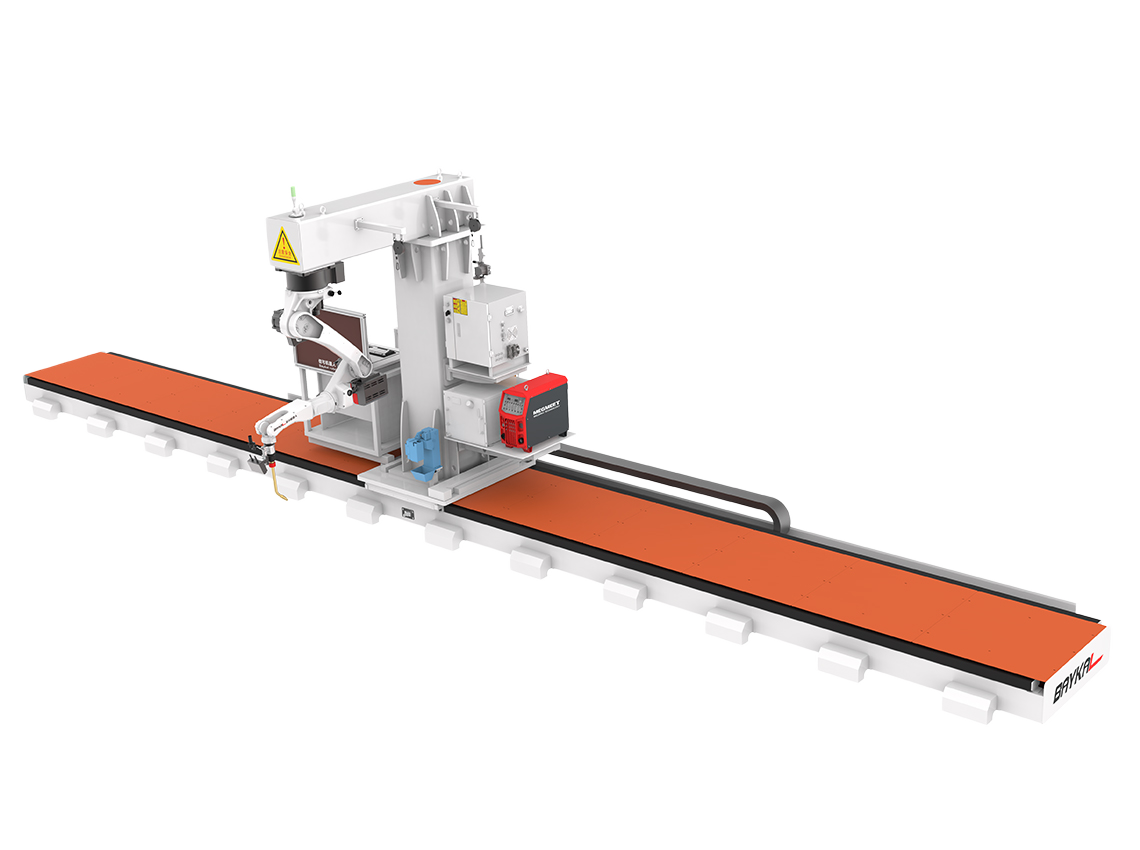
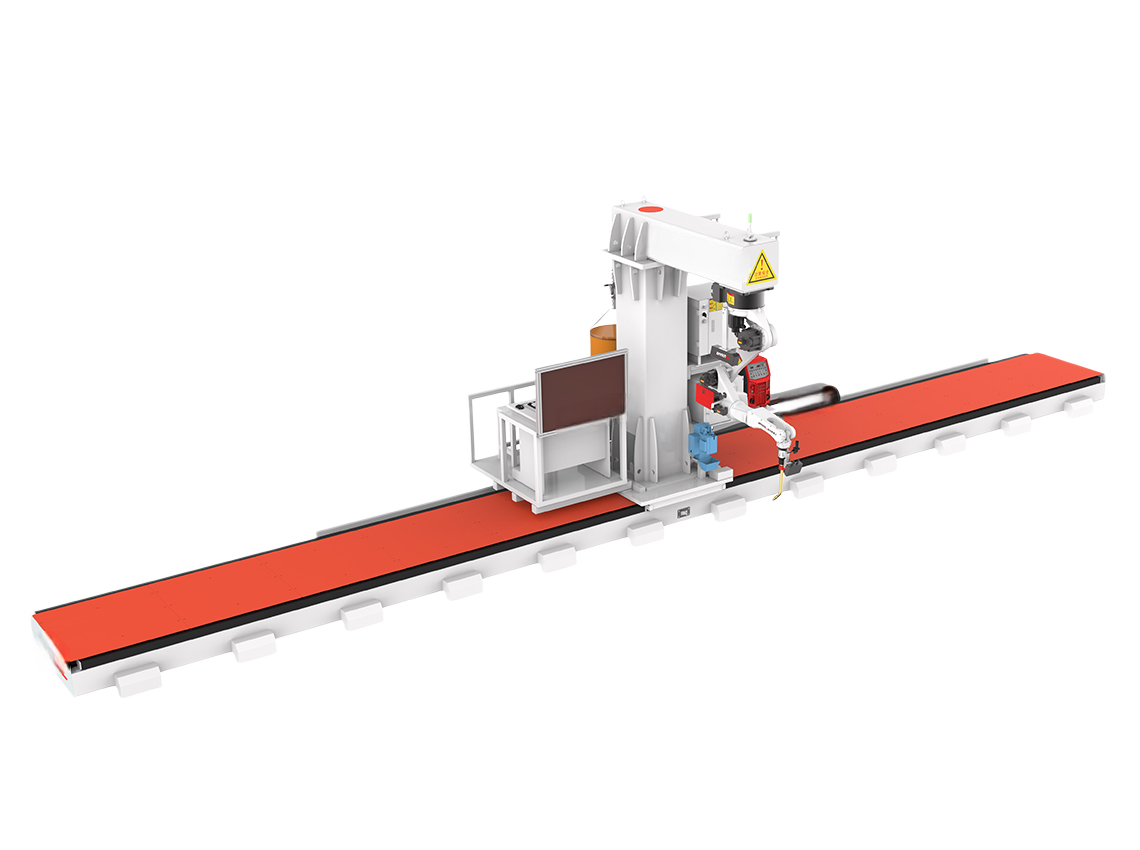
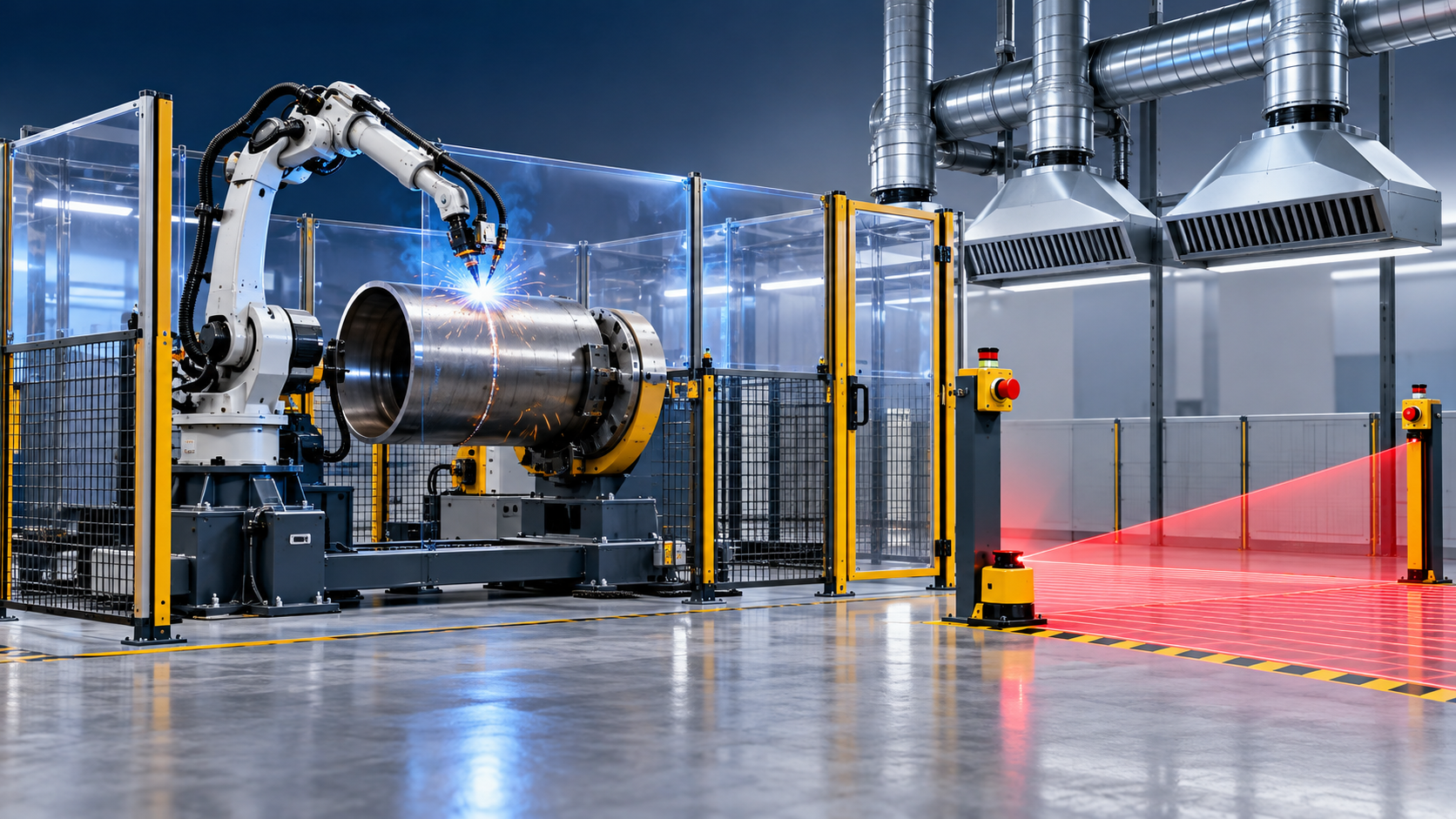
An automatic 7 axis welding robot is an automated welding system with seven independently controlled axes of motion. In practical configurations, the axes may combine a multi-joint robot arm, a linear travel track, a rotating workpiece positioner, or another external servo-controlled axis. The additional degree of freedom allows the torch to approach complex joints while maintaining a more suitable working angle, travel direction, and clearance from fixtures.
Unlike a conventional fixed welding station, the system coordinates robot movement with arc parameters, wire feeding, shielding gas, and, where required, workpiece rotation. Its purpose is not simply to replace a welder's hand movement. It is to repeat an approved weld path with controlled speed and orientation across batches of components, including assemblies that cannot be efficiently reached from one static robot position.
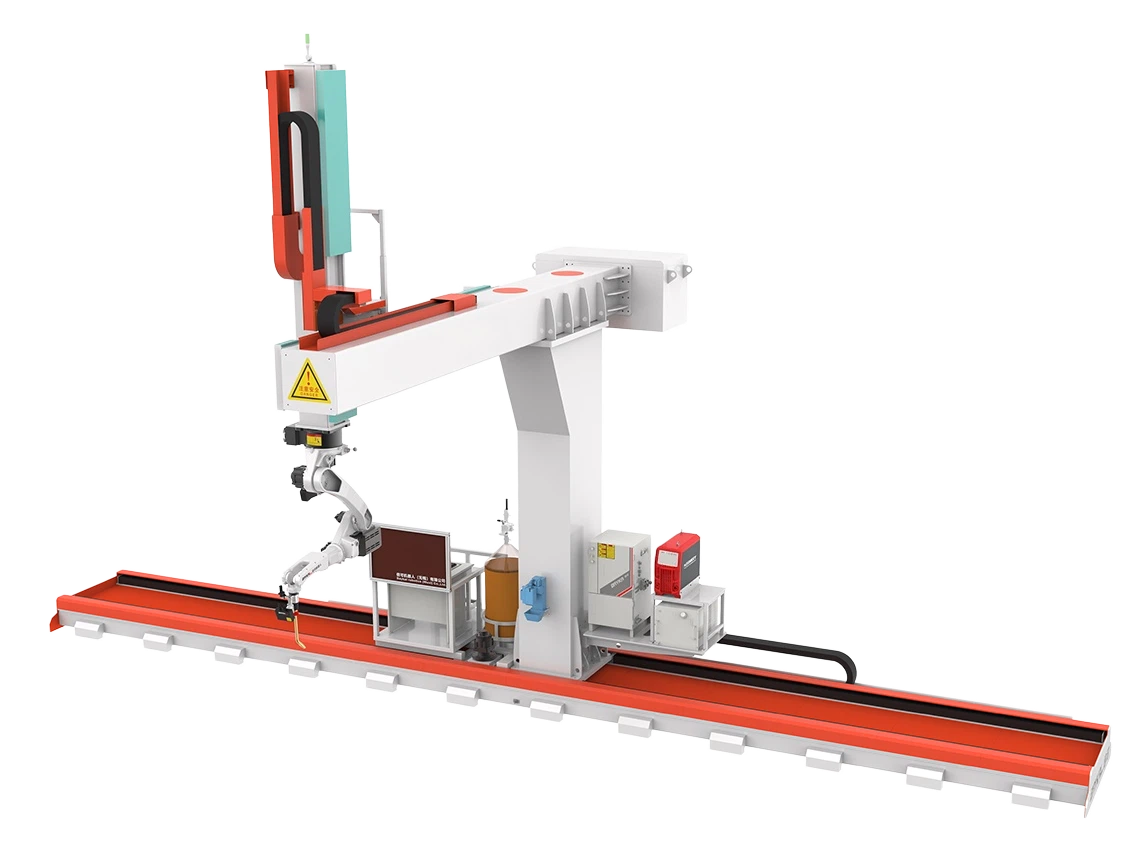
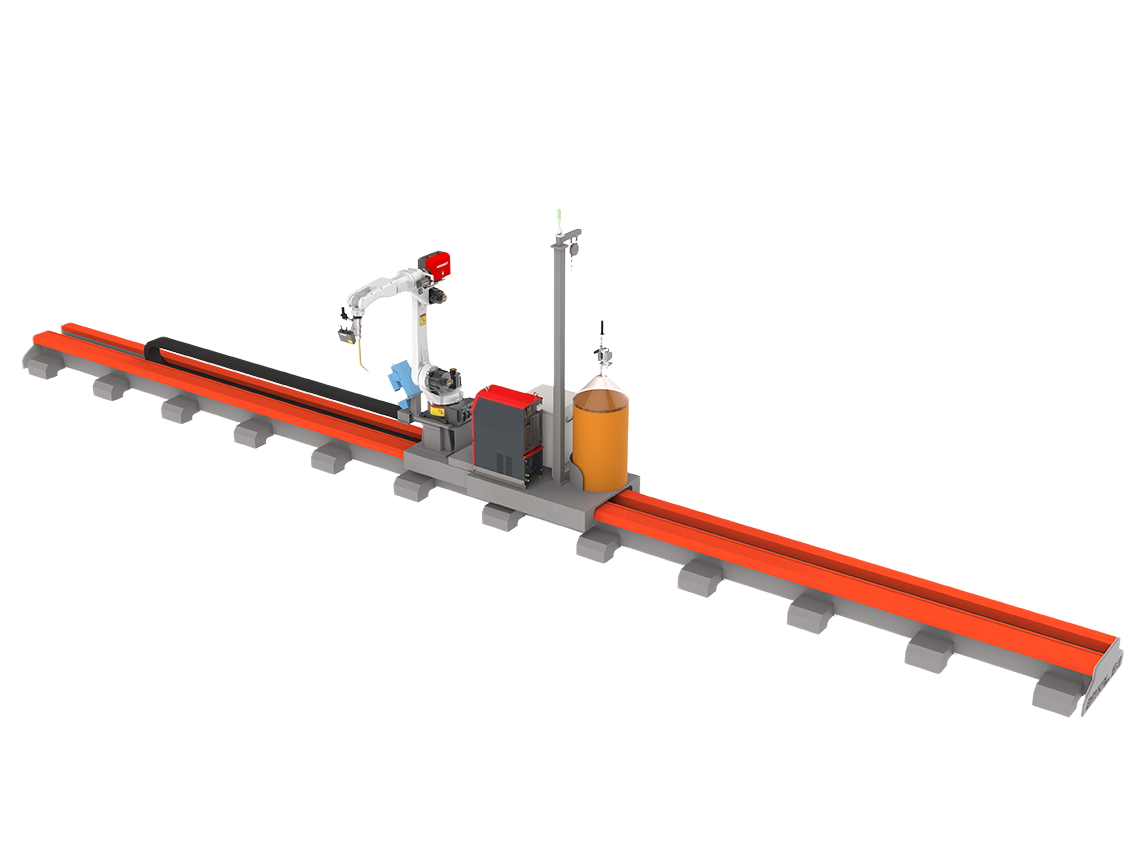
The term does not define one universal mechanical layout. Buyers should distinguish between a seven-axis articulated robot, a six-axis arm mounted on a servo travel rail, and an arm paired with a synchronized positioner. A 7 axis cantilever type welding robot is one relevant arrangement for work requiring extended reach or access around large steel assemblies. The correct interpretation depends on part geometry, welding process, payload, and cell layout.
How The Welding System Works
The automatic 7 axis welding robot begins with a programmed or taught coordinate path. The controller converts this path into synchronized motion commands for the robot axes and any external axes. During welding, it regulates travel speed and sends coordinated signals to the power source and wire feeder. The aim is to preserve the qualified relationship among torch angle, contact-tip-to-work distance, arc length, heat input, and joint position.
Gas metal arc welding is widely used for fabricated steel because it supports productive continuous welds. Depending on the component and specification, a cell may also be configured for flux-cored arc welding, gas tungsten arc welding, or another suitable process. Seam tracking, through-touch sensing, laser-based sensing, or vision equipment can be considered when part fit-up varies, but their value depends on the repeatability of incoming components and fixtures.
A reliable cell also requires disciplined upstream preparation. Parts must be cut, formed, cleaned, fixtured, and tack welded within agreed tolerances. A robot can reproduce a path accurately, but it cannot compensate indefinitely for inconsistent joint gaps, loose clamps, heavy mill scale, or unstable tack locations. Integration should therefore connect welding automation with material handling, workholding, safety guarding, fume extraction, and inspection procedures.
Why Seven Axis Automation Matters
The seventh axis improves reachability. On long, deep, curved, or obstructed workpieces, a standard arm can encounter a joint limit, lose its preferred torch angle, or require manual repositioning. An external axis lets the robot travel, rotate the part, or alter its relationship to the joint. This can reduce non-welding movement and make more of a component accessible in one coordinated cycle.
For manufacturers, the strongest business case usually comes from stable repeat production, controlled quality requirements, and welding capacity constraints. Automated paths can improve consistency between shifts, reduce dependence on repeated manual manipulation, and provide a clearer basis for documenting parameters. Benefits remain application-specific: high variation, low volume, difficult loading, or weak part preparation can limit the economic advantage of automation.
Wuxi Samgins supplies welding robots alongside welding manipulators, rotators, positioners, long seam welding machines, pipe welding equipment, and steel-structure production machinery. This wider equipment range is relevant when a buyer needs a coordinated fabrication solution rather than an isolated robot. Customized 7/9-axis robot concepts and heavy-duty handling equipment can be evaluated around tanks, pipelines, steel structures, and sheet metal fabrication workflows.
Who Uses These Robotic Welding Cells
Typical users include fabricators producing pressure-related vessels, storage tanks, pipe spools, structural steel members, construction machinery frames, transport equipment, and repetitive sheet-metal assemblies. The best candidates have recurring joint families and enough volume to justify fixture development, programming, validation, and operator training. A robot cell is especially useful where joint access, consistent bead appearance, or welding schedule control is difficult to maintain manually.
Engineering teams, production managers, quality personnel, and maintenance departments should participate in the purchase decision. Engineering defines joint requirements and allowable access. Production evaluates throughput and material flow. Quality determines inspection and traceability needs. Maintenance assesses service access, spares, utilities, and operator competence. Purchasing should compare proposals on usable cycle time, included tooling, technical support scope, and acceptance criteria rather than on robot price alone.
International projects may also require alignment with customer-specific fabrication codes. Wuxi Samgins states that its team has more than 10 years of export experience and familiarity with ASME, API, and other local industry codes. That experience can support early technical discussion, but the buyer remains responsible for confirming the applicable weld procedure, inspection plan, safety requirements, and project-specific code obligations with qualified parties.
Applications And Industry Standards
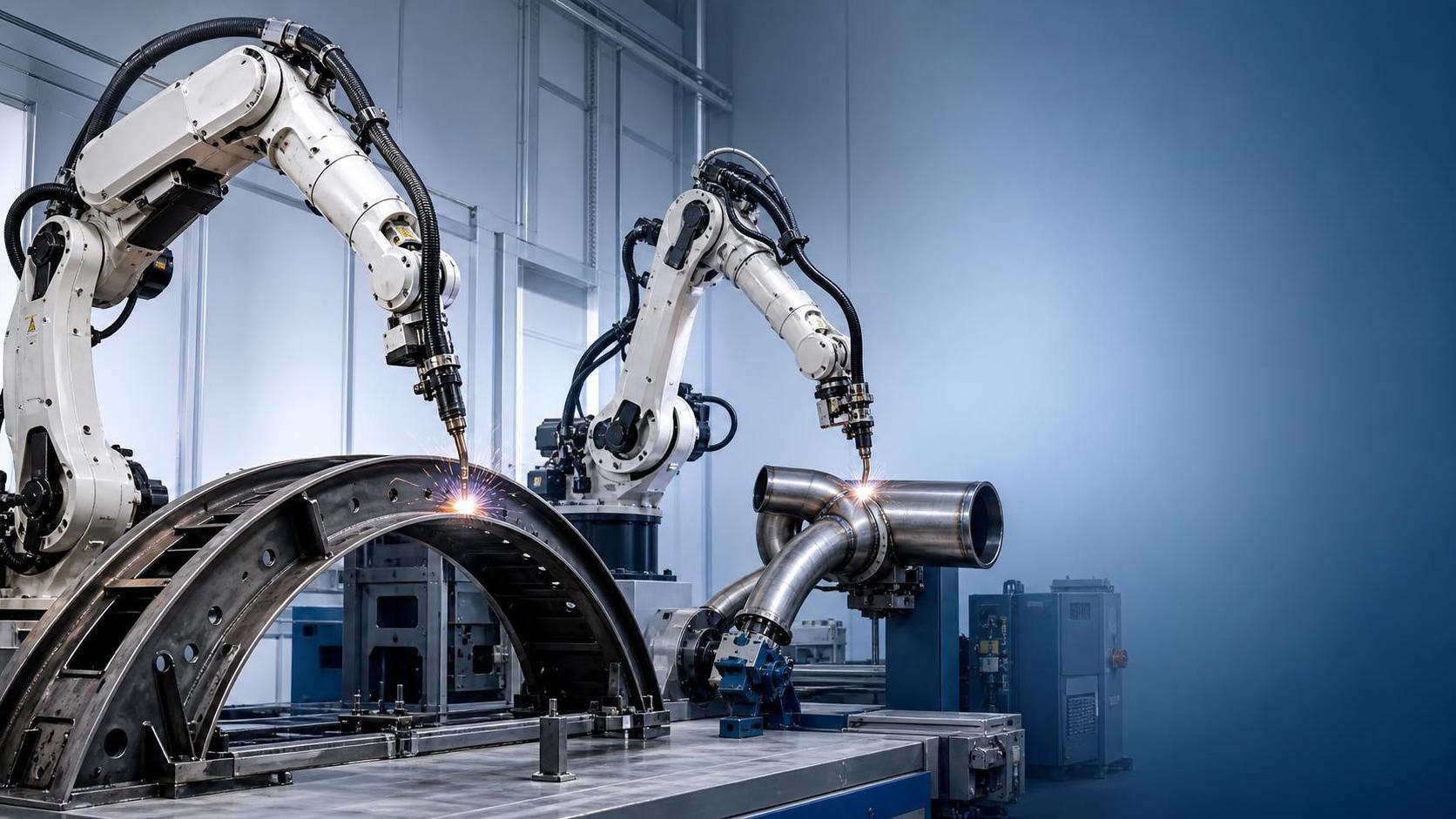
In tank fabrication, an automatic 7 axis welding robot can address longitudinal seams, circumferential seams, nozzles, supports, and reinforcement details when paired with suitable rotators or positioners. In structural steel production, it can support repetitive fillet welds on beam assemblies, brackets, columns, and built-up members. In pipe work, the preferred solution depends on pipe diameter, wall thickness, joint type, material, and whether the pipe or torch should move.
The installation must be engineered as a complete safety system. This normally includes guarded access, safety-rated interlocks, emergency-stop circuits, risk assessment, controlled workpiece loading, and suitable welding fume management. For export markets, machine documentation and conformity obligations vary by destination. Wuxi Samgins reports that its machines comply with its ISO9001 quality system and EU CE Machinery and LVD directives; buyers should verify the documents and scope applicable to their quoted configuration.
Named customers including URALSTANKOIMPORT, MD Calbah Industries Pty Ltd, Ersay International Transport, Zein Steel Industries Co. LLC, BatysMunaiGazZhabdyktary LLP, and Lincoln Electric-MENA indicate experience serving varied international industrial markets. These references should be treated as starting points for due diligence, not as a substitute for a project-specific review. Ask for comparable part examples, proposed cycle assumptions, layout drawings, factory acceptance criteria, and a clear responsibility matrix.
How To Select And Implement The Right System
Selection starts with representative parts, not a generic axis count. Provide drawings, material grades, thickness ranges, joint preparations, weld lengths, target output, welding positions, current inspection results, and expected product mix. Define what must be automatic: loading, clamping, tack welding, seam finding, root pass, fill passes, unloading, marking, or data capture. This information determines whether a cantilever robot, gantry, manipulator, positioner, or dedicated seam machine is appropriate.
Evaluate reach envelopes and interference in a simulated or reviewed layout. Check torch access to every required joint, cable routing, collision zones, part center of gravity, positioner payload, floor loading, and maintenance access. The robot should retain acceptable kinematics through the actual weld path, not only reach the start point. Fixtures need enough rigidity to hold parts repeatably while allowing fast loading and realistic tolerance adjustment.
A sound implementation proceeds through design review, fixture approval, equipment manufacture, dry-run testing, welding trials, factory acceptance, shipment, site installation, commissioning, and operator training. Wuxi Samgins emphasizes design, manufacturing, sales, after-sales, and technical support as part of its service approach. Its use of world-famous imported hydraulic, servo, and CNC components is intended to support precision and service life; purchasers should request the exact component list, warranty terms, spare-parts recommendation, and commissioning deliverables.
Total Cost Of Ownership And Return On Investment
The purchase price is only one part of total cost of ownership. The budget should include the robot and controller, welding power source, external axis equipment, fixtures, safety enclosure, extraction, electrical installation, programming, commissioning, training, freight, spare parts, and planned maintenance. A lower initial quotation can become less competitive when it excludes tooling, integration labor, acceptance testing, documentation, or local support requirements.
ROI should be modeled using measured baseline data. Compare manual and automated labor content, arc-on time, changeover time, deposition and consumable use, rework, scrap, throughput, overtime, and capacity demand. Include expected utilization rather than assuming continuous operation. The financial model should also account for product mix and the time required to program new parts. A cell with fast loading and dependable fixturing can produce a better return than one with a theoretically faster weld speed.
Preventive maintenance protects both output and weld quality. Daily checks commonly cover torch consumables, wire feeding, gas flow, cable condition, fixture cleanliness, and safety devices. Scheduled work should address lubrication, calibration checks where required, gearbox condition, axis alarms, software backups, and wear components. Maintain weld programs, approved parameter ranges, inspection records, and a spare-parts plan so that changes are traceable and unplanned downtime is easier to manage.
Future Trends In Robotic Welding
Future automatic 7 axis welding robot projects will increasingly combine motion control with better sensing, production data collection, offline programming, and adaptive process monitoring. These tools can shorten setup for known part families and help identify drift in fit-up or welding conditions. Their practical value depends on data quality, robust fixtures, disciplined change control, and technicians who can interpret alarms and validate process changes.
Flexible manufacturing cells are also becoming more important as fabricators manage smaller lot sizes and broader product ranges. Modular positioners, quick-change fixtures, coordinated travel axes, and software libraries can make a cell more adaptable. However, flexibility should be balanced against unnecessary complexity. A dedicated long seam welding machine may remain the stronger option for a narrow, high-volume product family, while a seven-axis system may be better for varied geometries.
For buyers, the most durable strategy is to specify the automatic 7 axis welding robot around verified parts, qualified welding requirements, and a realistic expansion path. Request a technical proposal that states payload, reach, external-axis synchronization, welding process, safeguards, fixture assumptions, acceptance standards, documentation, training, warranty, and support boundaries. This enables meaningful comparison between suppliers and helps turn automation investment into a controlled production capability.
search
Recommended Products
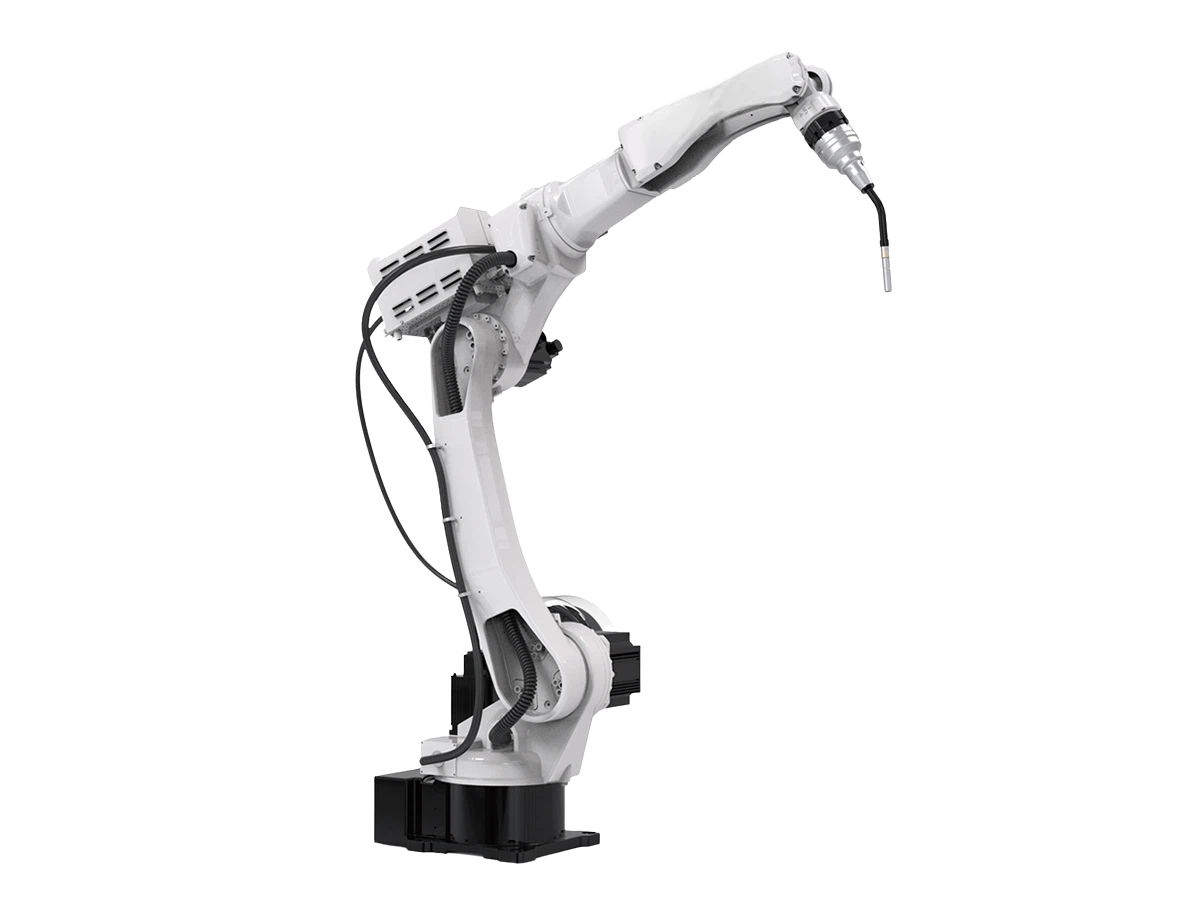
 6 Axis 2000mm ArmSpan MlG Industrial Welding RobotThis welding robot is designed for reliable arc welding in harsh production environments, featuring a long reach, stable repeatability, and flexible installation.
![星星1]()
 9 axis cantilever type welding robot9 axis cantilever type welding robot for large steel workpieces with auto tracking, 3D import, and efficient CNC welding automation.
![星星1]()
- 7 axis cantilever type welding robot7 axis cantilever type welding robot for long steel workpieces up to 12m, featuring automatic seam tracking, 7 CNC axes, and efficient zone welding.
![星星1]()
- Cantilever type welding robot BR-2010A Pro/DG12Explore the BR-2010A Pro/DG12 cantilever welding robot for long workpieces, automated arc tracking, and efficient CNC welding.
![星星1]()
- 6 Axis 1800mm ArmSpan MlG Industrial Welding RobotThe welding robot with 1945mm reach, 6kg payload and ±0.08mm repeatability for consistent automated welding.
![星星1]()
- 6 Axis 1500mm ArmSpan Industrial Welding RobotWith a maximum reach of 1594 mm, the robot is well suited to medium-scale welding cells where coverage matters.
![星星1]()

Send Us A Message
Send us a Message
A dedicated person will follow up on your needs one-on-one and provide personalized customized solutions according
to your needs.
Get In Touch
We look forward to hearing from you for in-depth communication on how to fulfill your mixing requirements.