




Deburring Machines for Sheet Metal Explained: Essential Technologies for Edge Finishing and Surface Quality
What Deburring Machines For Sheet Metal Do
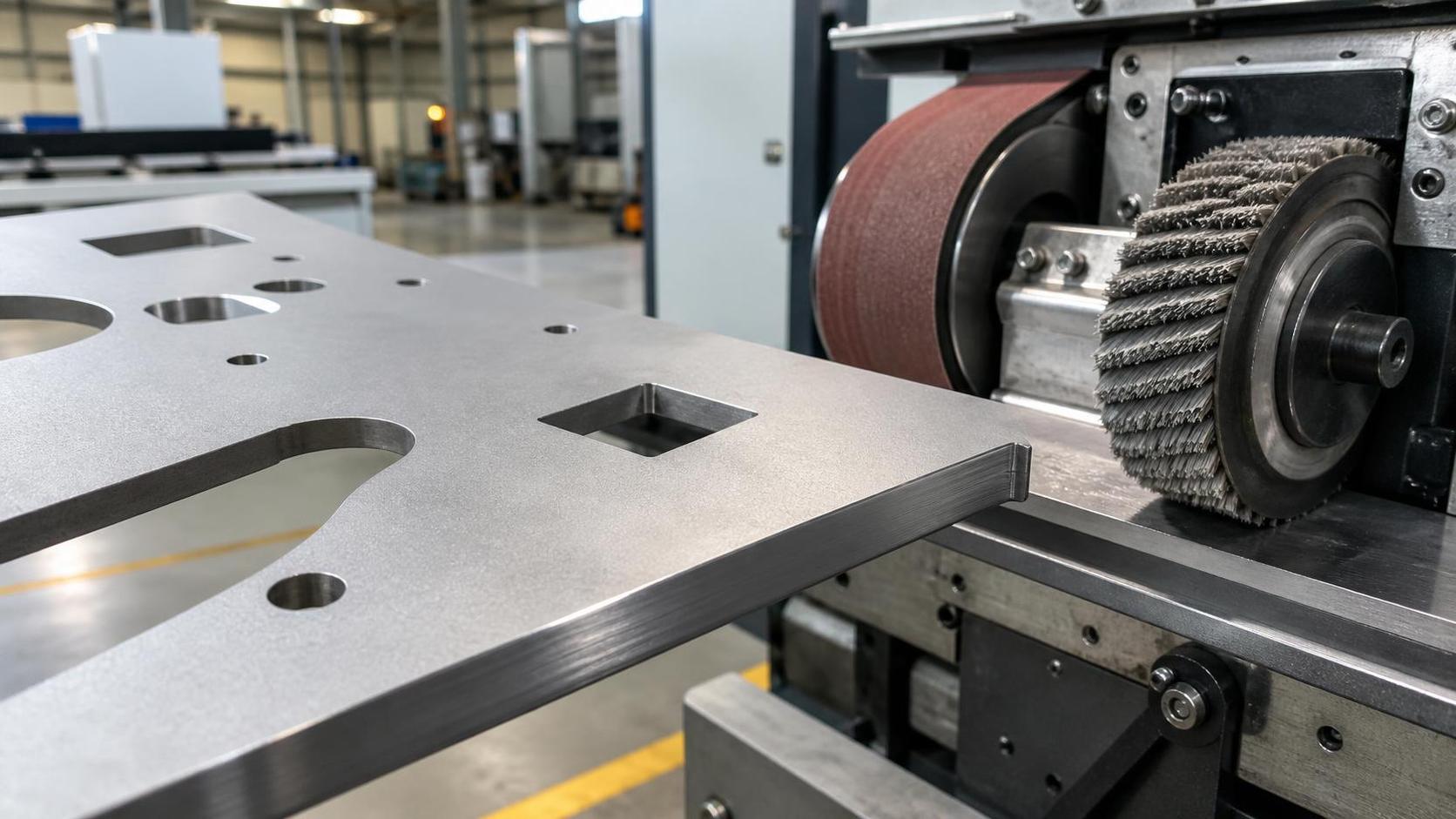
Deburring machines for sheet metal are industrial finishing systems that remove sharp edges, residual burrs, oxide scale, and surface imperfections created during cutting, punching, drilling, milling, or forming. Their objective is not simply to make a part feel smoother. A controlled deburring process improves handling safety, dimensional consistency at edges, coating adhesion, weld preparation, and the visual quality expected in fabricated products.
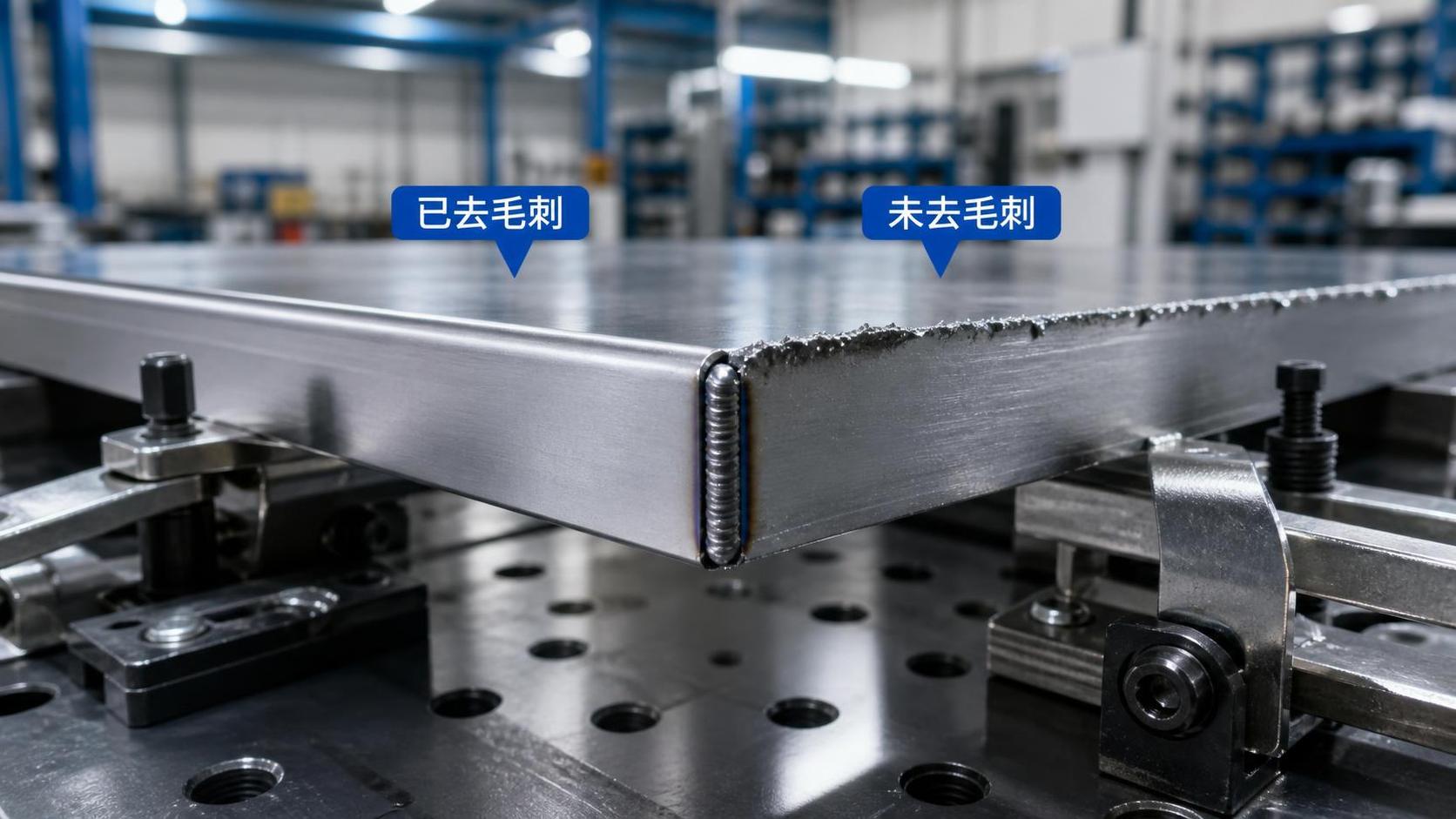
A burr is displaced material rather than a designed feature. It may appear as a thin sharp lip, a rollover edge, a raised exit burr, or localized slag attached after thermal cutting. Burr severity depends on material grade, sheet thickness, tool condition, cutting parameters, support condition, and part geometry. Stainless steel, aluminum, galvanized sheet, carbon steel, and coated materials may therefore require different abrasive media, pressure settings, and cleaning methods.
In production terms, sheet metal deburring is usually specified by the required edge break, remaining burr height, surface roughness, flatness preservation, and whether the finish must be uniform on one or both sides. Buyers should distinguish between basic burr removal and edge rounding. Edge rounding intentionally creates a consistent radius, which is particularly valuable before powder coating, liquid painting, plating, handling-intensive assembly, and products exposed to corrosion.
Deburring machines for sheet metal can be configured as standalone finishing equipment or integrated into a broader fabrication route. Typical upstream processes include CNC fiber laser cutting, plasma cutting, flame cutting, punching, shearing, and edge milling. Typical downstream operations include bending, welding, fastening, painting, blasting, assembly, and inspection. The right machine should support the complete process sequence rather than solve one isolated surface problem.
Why Controlled Edge Finishing Matters
Manual grinding, hand files, and hand-held flap discs remain useful for prototypes, oversized fabrications, and occasional rework. However, they make output dependent on operator technique and can introduce inconsistent edge radii, heat tint, scratches, or uneven material removal. For recurring part families, automated deburring machines for sheet metal provide a more repeatable process window and reduce the exposure of workers to sharp-edge handling and repetitive finishing work.
A properly finished edge can reduce downstream disruption. Sharp burrs may damage protective gloves, scratch adjacent components, interfere with close-fitting assemblies, trap coating unevenly, or create localized corrosion initiation points after painting. On welded or structural components, removing slag and sharp cut edges can also make fit-up, visual inspection, and subsequent handling more predictable. The relevant benefit depends on the part function and acceptance criteria.
For fabricators processing laser-cut parts, deburring often becomes a throughput constraint after cutting capacity increases. A laser may produce accurate profiles rapidly, while racks of parts wait for manual edge treatment before bending or coating. A conveyorized finishing machine can balance the line by processing multiple parts consistently, provided that operators control part spacing, orientation, abrasive condition, dust extraction, and material-specific recipes.
Wuxi Samgins operates across welding, cutting, forming, leveling, milling, and sheet metal processing equipment. This broader production perspective is useful when a buyer needs to assess how a deburring station relates to CNC cutting, press brake work, weld preparation, and material flow. Rather than selecting on abrasive head count alone, a project should define the required finish at each handoff between processes.
Main Technologies And Machine Categories
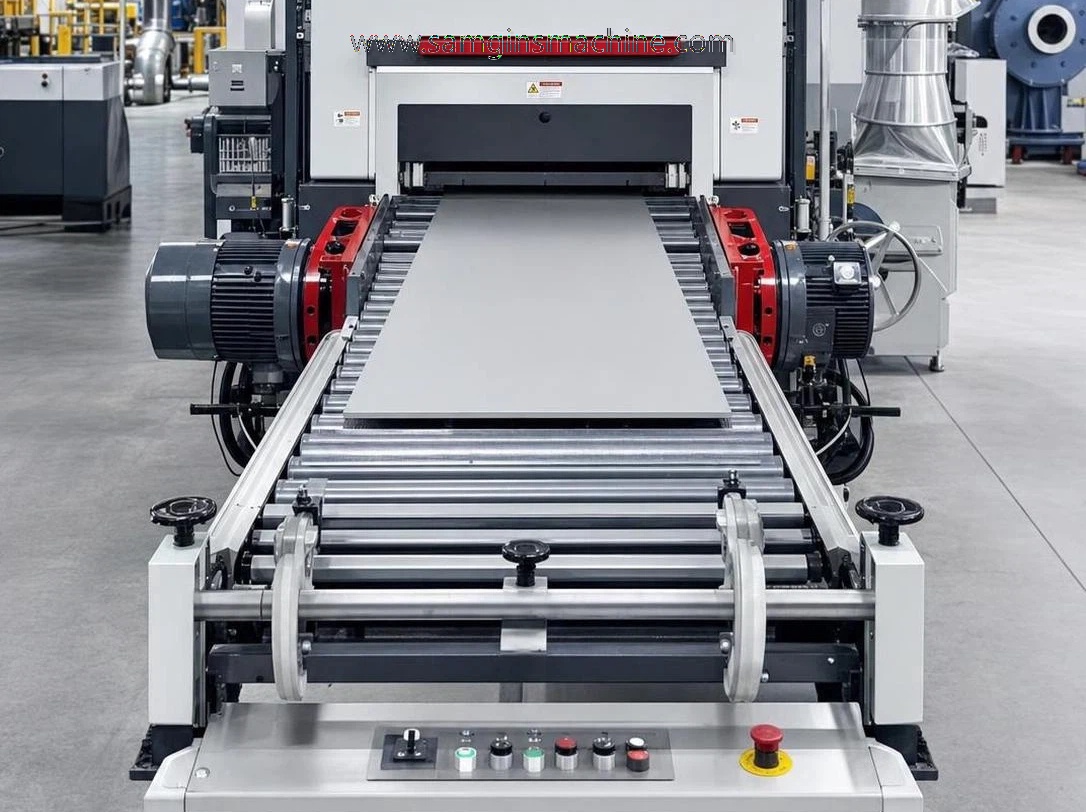
Wide-belt abrasive machines are commonly used for surface deburring, oxide removal, and broad-area finishing. A contact drum or platen supports an abrasive belt while a conveyor transports the workpiece. This format can be productive for flat parts, but it must be matched carefully to sheet thickness, minimum part size, part rigidity, and allowable stock removal. Excessive pressure can reduce flatness or alter delicate features.
Rotary brush and abrasive barrel systems are often selected where multidirectional edge rounding is required. Their compliant abrasive elements can reach outer contours, internal cutouts, slots, and irregular profiles more evenly than a single linear abrasive action. They are particularly relevant for laser-cut components that need a consistent edge break before powder coating. Results depend on brush type, grit, rotational direction, feed speed, and the number of processing stations.
Disc, wheel, and cross-belt arrangements target specific burr directions or edge conditions. Machines may use combinations of sanding belts, disc brushes, flap wheels, Scotch-Brite-type nonwoven media, or specialized heads for oxide and dross removal. A multi-station design can separate heavy burr removal from final edge rounding, reducing the risk that one aggressive step leaves a surface unsuitable for visible architectural or appliance-grade parts.
Wet deburring systems use coolant or water-based process control to manage dust, heat, and certain material risks. Dry systems can be practical and efficient when paired with correctly designed extraction and housekeeping procedures. The preferred route depends on material mix, site safety requirements, expected oxide or slag load, consumable strategy, and local environmental controls. Buyers should review the full dust collection scope instead of treating it as an optional afterthought.
Who Uses These Systems And Where They Fit
Primary users include sheet metal job shops, electrical enclosure manufacturers, HVAC producers, elevator and door suppliers, transport equipment builders, agricultural machinery manufacturers, steel structure fabricators, and contract manufacturers. These users commonly process varied batches and materials, so they need deburring machines for sheet metal that offer practical setup changes, controllable finishing intensity, reliable conveying, and clear consumable replacement procedures.
High-volume manufacturers may prioritize automatic feeding, recipe management, stable belt tracking, extraction integration, and repeatable edge rounding over multiple shifts. Mixed-volume workshops may place greater value on broad material compatibility, rapid adjustment, accessible maintenance points, and the ability to process both small nested parts and larger panels. The production schedule, not only the part dimensions, should guide the automation level.
Wuxi Samgins has supplied manufacturing equipment to international customers including URALSTANKOIMPORT, MD Calbah Industries Pty Ltd, Ersay International Transport, Zein Steel Industries Co. LLC, BatysMunaiGazZhabdyktary LLP, PT. Cahaya Mas Cemerlang, Estructuras Metalicas Girders Chile Limitada, and Lincoln Electric-MENA. These named references demonstrate experience serving varied industrial markets, but each deburring project should still be evaluated against the buyer's own material, drawing, finish, and production requirements.
The installation location should provide safe material loading and unloading, adequate clearance for maintenance, stable electrical supply, suitable grounding, and a properly designed extraction connection. It should also preserve an orderly flow from cutting to finishing to bending or coating. Placing the machine too far from the cutting department can create unnecessary handling; placing it without space for inspection and finished-part protection can undermine the quality gains delivered by automated finishing.
How To Select The Right Machine
Start with representative samples rather than a generic material description. Provide the supplier with material type, thickness range, maximum and minimum part dimensions, open-hole sizes, part weight, cut process, burr location, desired edge radius, surface finish expectation, and monthly production volume. A laser-cut stainless enclosure panel with protective film has a different finishing requirement from a plasma-cut carbon steel bracket with heavy bottom dross.
Evaluate whether the process must remove top burrs, bottom burrs, oxide, dross, sharp internal contours, or surface scratches. One-sided machines can be suitable where only one face needs treatment, while double-sided processing may be necessary for parts handled on both sides or requiring balanced preparation. Confirm whether the conveyor and vacuum holding method can securely process small parts, narrow strips, perforated sheets, and components with large cutouts.
Technical selection should include abrasive head arrangement, motor power, conveyor speed range, working opening, pressure control, control interface, dust extraction needs, electrical specification, safety guarding, and access for media replacement. Request evidence from a trial using your actual parts whenever possible. A trial should inspect not only appearance but also edge consistency, corner behavior, dimensional changes, embedded abrasive residue, and the condition of parts after coating or assembly.
Wuxi Samgins emphasizes precision through hydraulic, servo, and CNC components from well-known imported brands in applicable equipment configurations. Its customization capability across welding robots, long seam welding machines, and heavy-duty welding rotators also supports buyers planning wider fabrication projects. For a sheet metal deburring machine, the practical requirement is a documented configuration that matches the intended material flow, quality target, service access, and plant utilities.
Quality Control, Installation, And Maintenance
A dependable finishing process begins before shipment. Machine acceptance should cover mechanical assembly, guarding, electrical functions, conveyor movement, abrasive head operation, emergency stops, and the agreed sample-processing criteria. For export projects, buyers should confirm the documentation package, machine identification, manuals, spare-parts recommendations, and the standards applicable to the destination. Wuxi Samgins states that its machines comply with the ISO9001 quality system and EU CE Machinery and LVD directives.
During commissioning, technicians should verify machine leveling, electrical connection, rotation direction, extraction performance, conveyor tracking, abrasive alignment, and material handling safety. Initial settings should be established conservatively, then adjusted through documented sample runs. Operators need clear work instructions for loading orientation, part spacing, recipe selection, visual inspection, and the handling of parts that fall below the minimum safe size for the selected conveying method.
Routine maintenance commonly includes checking abrasive wear, brush condition, belt tracking, bearing noise, conveyor condition, extraction filters, dust accumulation, guarding, and emergency-stop functions. The exact interval should follow the machine manual and operating load, not a fixed calendar assumption. A maintenance log linking consumable changes with finish results helps identify gradual quality drift before it becomes a customer complaint or an expensive batch rework event.
Quality inspection should use agreed visual samples and measurable criteria where the application requires them. These can include acceptable residual burr, target edge break, surface scratch direction, edge-radius consistency, and absence of untreated oxide. For coated components, inspect a finished coated sample because a visually acceptable bare-metal edge may still produce thin coating coverage around sharp corners. Wuxi Samgins provides design, manufacturing, sales, after-sales, and technical support as part of its service approach.
Total Cost Of Ownership And Return On Investment
The purchase price is only one component of total cost of ownership for deburring machines for sheet metal. Buyers should account for freight, installation, electrical work, extraction equipment, operator training, abrasive belts or brushes, replacement parts, planned maintenance, energy consumption, floor space, and possible material handling equipment. Wet systems may also add fluid management and treatment considerations, while dry systems require disciplined extraction and dust-management planning.
The strongest return often comes from labor redeployment, shorter queue time after cutting, lower rework, improved coating preparation, and fewer handling-related defects. Calculate the current manual finishing minutes per part, labor cost, annual part volume, scrap or rework cost, and anticipated consumable cost. Then compare that baseline with a realistic machine cycle time, staffing model, utilization rate, and allowance for setup, inspection, preventive maintenance, and unplanned stoppages.
Avoid ROI calculations based on maximum advertised throughput alone. Production output is influenced by nesting patterns, part orientation, manual loading, small-part handling, material changes, burr severity, and the time required to meet a visible-surface standard. A conservative calculation based on representative part families normally gives procurement teams a more defensible investment case and helps determine whether one versatile machine or a dedicated finishing cell is more suitable.
Commercial evaluation should also consider response time for technical support, recommended spare parts, warranty terms, export packing, and the availability of operating documentation. Wuxi Samgins reports more than 10 years of global export experience and familiarity with ASME, API, and other local industry codes. These capabilities can be relevant for broader fabrication projects, while the final purchase decision should remain anchored in documented scope, sample results, and service commitments.
Future Trends In Sheet Metal Deburring
Demand for consistent edge rounding is increasing as manufacturers automate laser cutting, bending, coating, and assembly. Customers increasingly judge both functional performance and finished appearance, especially for enclosures, consumer-facing metal products, transportation components, and export assemblies. This shifts deburring from a secondary cleanup activity to a controlled production process with defined acceptance criteria, traceable settings, and closer links to upstream cutting quality.
Flexible automation will remain important because many fabricators operate with high product variation and smaller batch sizes. Future-oriented systems are likely to emphasize easier recipe storage, simpler abrasive changes, condition monitoring, material tracking, and integration with automated loading or unloading where production volume supports it. However, automation should be justified by actual handling demand; an overly complex cell can reduce flexibility in a job-shop environment.
Sustainability considerations will also influence machine selection. Longer-lasting consumables, efficient dust collection, reduced rework, lower energy waste, and better separation of process residues can improve both operating discipline and cost control. Buyers should ask suppliers about consumable life under representative conditions and evaluate extraction requirements as part of the process design, especially when processing aluminum, stainless steel, coated sheet, or materials that create combustible dust risks.
For manufacturers expanding cutting and fabrication capacity, the next practical step is to map the current part flow, identify the highest-cost edge-finishing bottlenecks, and test representative parts with a proposed configuration. Wuxi Samgins can be considered for projects that combine sheet metal deburring with laser cutting, press braking, welding, leveling, milling, or structural fabrication equipment. Clear technical specifications and sample-based acceptance remain the foundation of a successful investment.
search
Recommended Products
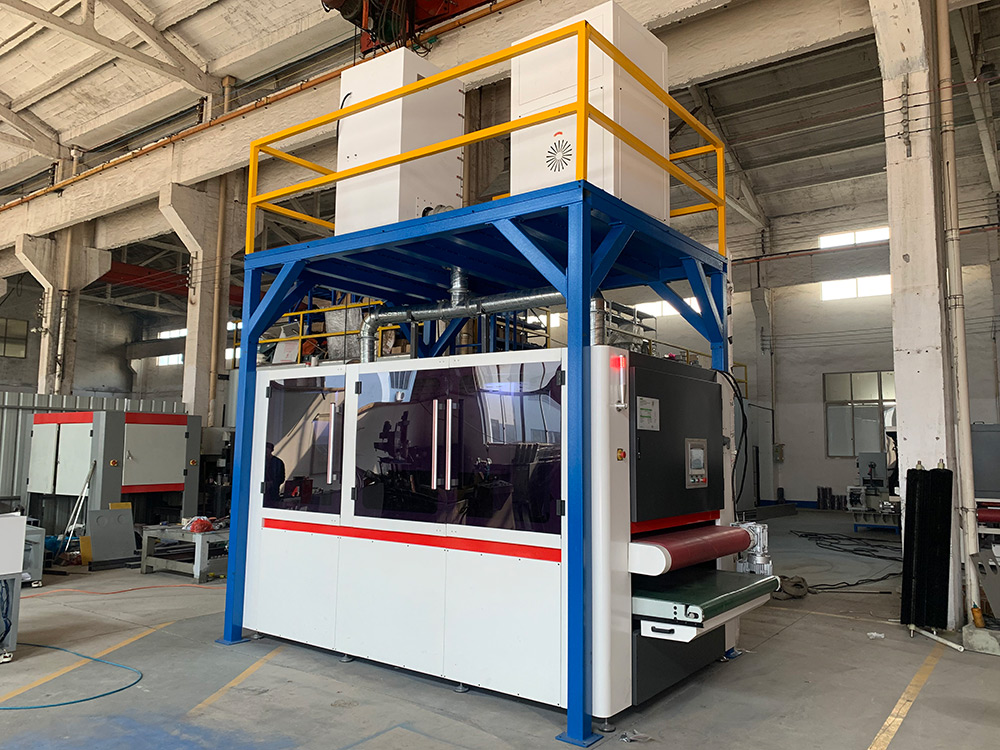
 RNS1300 Sheet metal deburring machineThis equipment features a dry sanding belt combined with four sets of universal sanding roller brushes. It is primarily designed for edge processing, hole deburring, and surface finishing of metal sheets, including drawing, descaling, and polishing. It can effectively remove burrs generated by stamping, shearing, laser cutting, plasma cutting, and flame cutting in a single pass, from all directions. As a result, all edges and holes of the workpiece achieve a smooth small R-arc finish. The entire processing procedure is safe and reliable, ensuring superior workpiece quality.
![星星1]()
- RNS1000 Sheet metal deburring machineThis equipment combines a dry sanding belt with four sets of universal sanding roller brushes. It is primarily designed for edge processing, hole deburring, and surface finishing of metal sheets, including drawing, descaling, and polishing. It effectively removes burrs generated by stamping, shearing, laser cutting, plasma cutting, and flame cutting in a single pass from all directions, delivering a smooth small R-arc finish on all edges and holes. The process is safe, reliable, and ensures superior workpiece quality.
![星星1]()
- RNS 800 Sheet metal deburring machineThis equipment combines a dry sanding belt with four sets of universal sanding roller brushes. It is primarily designed for edge processing, hole deburring, and surface finishing of metal sheets, including drawing, descaling, and polishing. It effectively removes burrs generated by stamping, shearing, laser cutting, plasma cutting, and flame cutting in a single pass from all directions, delivering a smooth small R-arc finish on all edges and holes. The process is safe, reliable, and ensures superior workpiece quality.
![星星1]()

Recommended blogs
Send Us A Message
Send us a Message
A dedicated person will follow up on your needs one-on-one and provide personalized customized solutions according
to your needs.
Get In Touch
We look forward to hearing from you for in-depth communication on how to fulfill your mixing requirements.