




The Complete 2026 Guide to Deburring Machine for Sheet Metal: Types, Processes, and Selection
What Is A Deburring Machine For Sheet Metal?
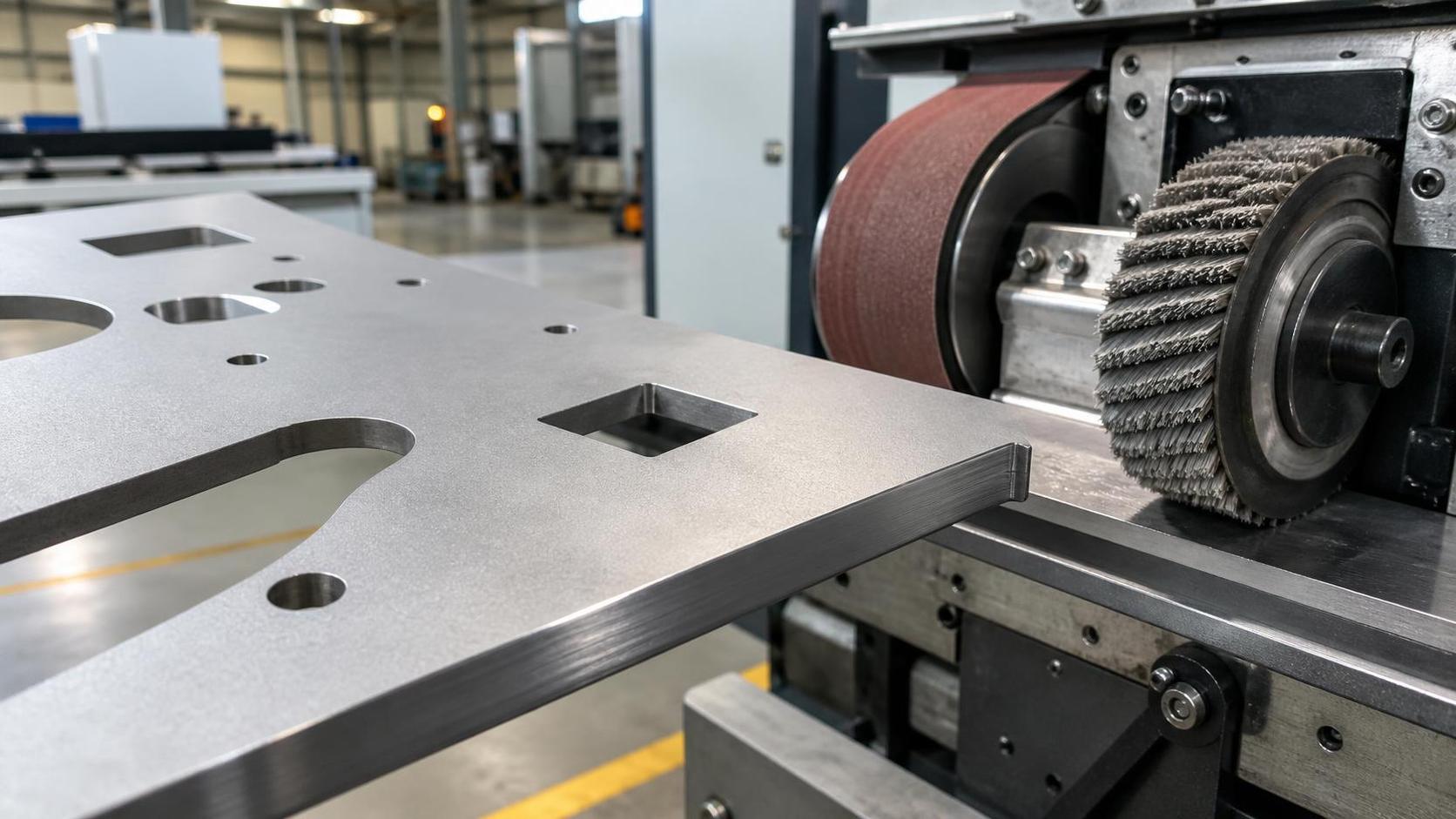
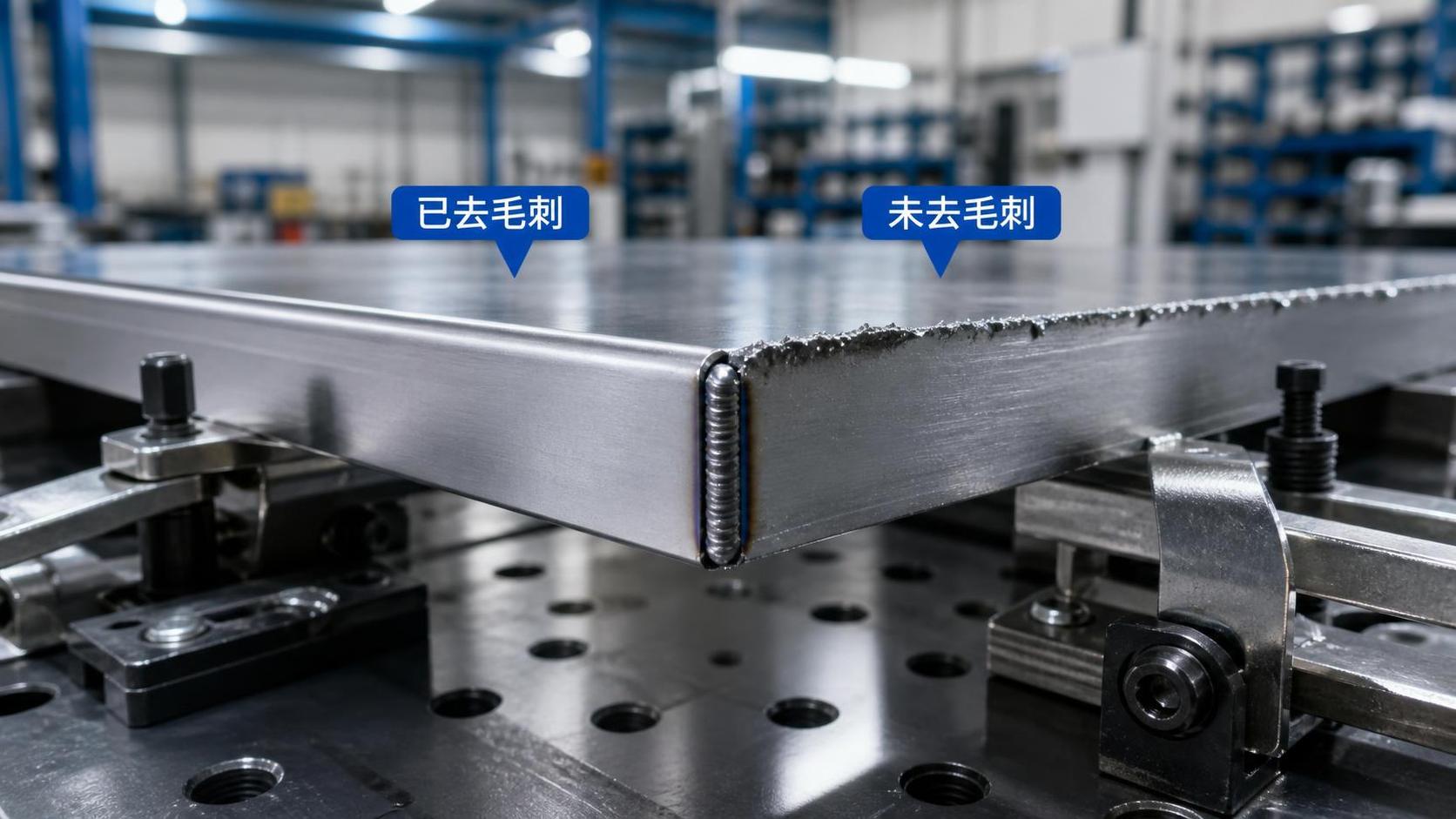
A deburring machine for sheet metal is industrial finishing equipment designed to remove sharp projections, rollover edges, micro-burrs, slag, and surface contamination from fabricated metal parts. These defects commonly arise after laser cutting, plasma cutting, flame cutting, punching, drilling, milling, or shearing. The machine applies controlled mechanical abrasion, brushing, impact, or finishing media so that edges become safer to handle and more suitable for welding, coating, assembly, and final delivery.
The term covers more than simple edge rounding. Depending on the machine configuration, a deburring process may remove laser oxide, break internal-hole edges, improve surface uniformity, or create a repeatable edge radius. Results are influenced by workpiece material, thickness, cut quality, burr height, geometry, and the required downstream process. Carbon steel, stainless steel, aluminum, galvanized sheet, and coated materials each require different abrasives and process control.
For B2B buyers, the relevant specification is not merely whether a part feels smooth. It is whether the machine can consistently achieve the edge condition needed by the drawing, customer acceptance criteria, safety policy, paint supplier, or welding procedure. A properly selected deburring machine for sheet metal makes finishing measurable, repeatable, and easier to integrate into production planning than manual grinding alone.
Why Deburring Matters In Fabrication
Burrs create practical risks throughout a factory. Operators can be injured during handling, parts may snag in automated feeding systems, and sharp edges can damage packaging or mating components. Burrs also complicate robotic welding and assembly because inconsistent part edges affect fixturing and repeatability. In coated products, unprepared edges can become weak points where paint coverage is thinner and corrosion resistance may be reduced.
Manual deburring remains useful for prototypes, low volumes, and unusually shaped parts, but its output varies with operator technique, abrasive condition, fatigue, and access to internal features. Automated finishing can stabilize cycle time and reduce rework when part families repeat. The objective is not to replace skilled operators in every task; it is to move predictable, high-volume finishing work into a controlled process with defined settings and verification.
Wuxi Samgins supports sheet metal factories with equipment spanning fiber laser cutting, CNC flame and plasma cutting, press brakes, plate leveling, edge milling, welding systems, and sheet metal deburring machines. This broader manufacturing perspective helps purchasers assess upstream cut quality and downstream requirements together. A finishing machine is most effective when its feed direction, abrasive method, and capacity are matched to the preceding cutting process rather than selected as an isolated purchase.
How Sheet Metal Deburring Technologies Work
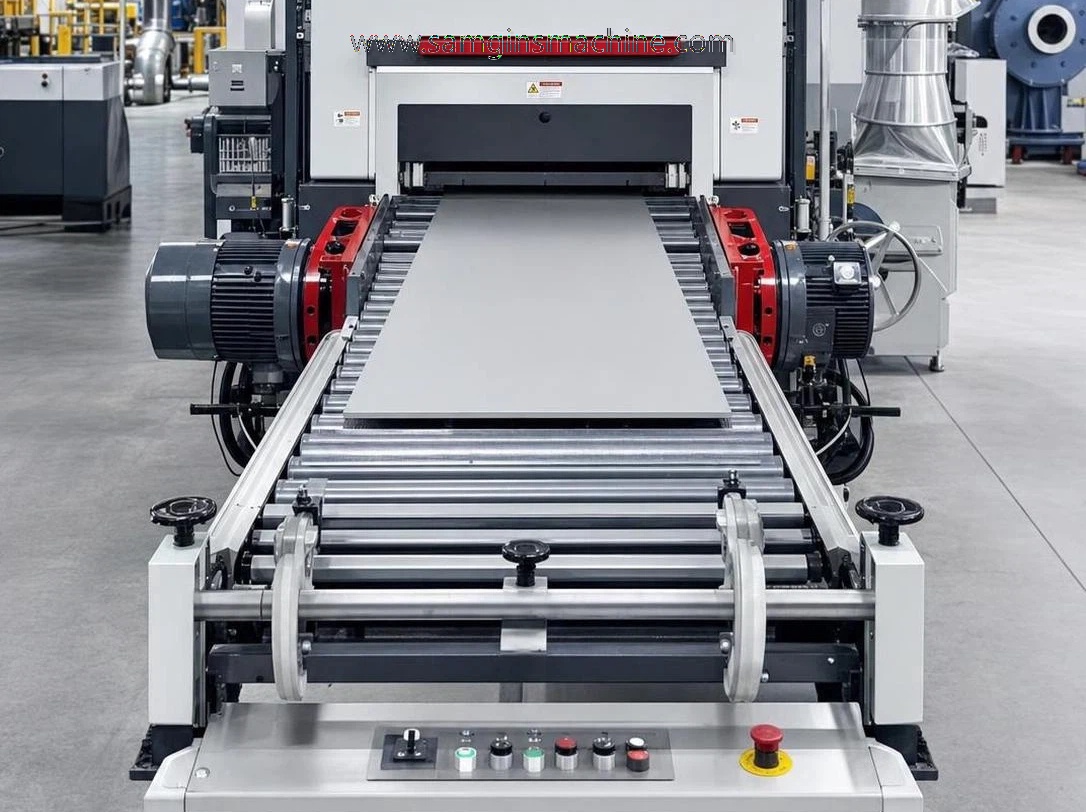
Wide-belt abrasive systems are commonly used for initial burr removal and surface calibration. A conveyor transports the sheet beneath an abrasive belt, while contact pressure and belt grit determine the aggressiveness of material removal. This approach can be productive for broad, flat workpieces, but excessive pressure or unsuitable grit may alter surface appearance, round edges beyond specification, or remove protective coatings. Stable workholding and correct belt tracking are essential.
Rotary brush systems use abrasive brushes, discs, or pin assemblies to reach external contours and internal holes. Counter-rotating heads can process edges from multiple directions, making them valuable for laser-cut parts with slots, perforations, and complex profiles. Brush media generally follows contours more gently than a wide belt, although its effectiveness depends on brush density, speed, pressure, and the size of the burr produced by the upstream operation.
Some production lines combine a belt stage with brush heads, while wet processing systems use coolant to manage dust, heat, and specific material conditions. Slag removal may require a more aggressive first stage than fine edge rounding. The right sequence is determined through representative samples: inspect cut-edge condition, establish acceptable edge treatment, select media, then validate the result after the actual welding, bending, painting, or assembly process.
Main Types And Suitable Applications
Single-belt machines are often considered when the main task is burr removal on flat parts with a relatively uniform surface condition. They can suit operations processing simple laser-cut blanks before forming or welding. Their limitations become more apparent where a buyer needs consistent treatment around holes, both sides of a part, or detailed contour geometry. Buyers should distinguish flat-surface sanding from true all-edge deburring when comparing offers.
Brush deburring machines are suited to parts requiring edge break treatment on outer profiles and internal cutouts. Multi-head brush arrangements can improve directional coverage, especially for nested laser-cut components. They are commonly evaluated by metal furniture, electrical enclosure, HVAC, agricultural equipment, cabinet, elevator, and general fabrication producers. For thin sheet, control of conveyor support and contact force is critical to avoid vibration, distortion, or inconsistent finishing.
Combination machines address more demanding workflows by pairing slag removal, deburring, edge rounding, and surface finishing stages. Wet deburring machines can be considered for applications where dust management, thermal control, or material-specific process conditions justify the added system complexity. Wuxi Samgins can discuss a sheet metal deburring machine in relation to the customer’s cutting method, material mix, component size, and intended production route instead of treating every workshop as having identical needs.
How To Select The Right Machine
Start with the parts, not the catalog. Record material grades, sheet thickness range, maximum and minimum workpiece dimensions, part weight, hole sizes, cut methods, burr location, and daily production volume. Include representative samples from normal and difficult jobs, such as small perforated components, long narrow strips, heavily oxidized laser edges, and parts with protective film. This information allows suppliers to evaluate whether feeding, vacuum retention, magnetic support, or other handling arrangements are appropriate.
Define the required finish in language that can be inspected. Useful criteria include removal of sharp edges, maximum acceptable burr, target edge radius where applicable, surface roughness expectations, absence of heat discoloration, and coating readiness. If a customer drawing references a standard or internal quality rule, provide it during technical review. Test pieces should be checked on both visible faces and internal features, then assessed after the downstream operation that matters most.
Capacity should include more than conveyor width. Evaluate throughput at the required finish, media life, changeover time, power demand, dust extraction or coolant requirements, operator access, and local service capability. Wuxi Samgins uses imported world-famous brands for key hydraulic, servo, and CNC components where applicable to support precision, stability, and service life. Buyers should request a documented technical scope that separates included equipment, optional accessories, utilities, commissioning, training, and spare parts.
Installation, Quality Control, And Compliance
Installation planning begins with a verified foundation area, electrical supply, material infeed and outfeed space, lifting access, and a suitable dust or wet-process management arrangement. The layout should allow operators to inspect parts safely without creating congestion around cutting, bending, or welding stations. Before commissioning, confirm the direction of material flow and identify how finished parts will be protected from scratches, contamination, or mixed batches after deburring.
A practical acceptance process uses agreed samples and records settings for each qualified part family. Inspectors can check edge feel with appropriate safety precautions, visual condition, burr residue in holes, surface consistency, and dimensions where finishing may affect critical features. Track consumable identification and replacement intervals because worn belts or brushes can cause gradual variation that is difficult to detect without routine checks. First-article checks and periodic in-process audits help maintain consistency.
For global projects, buyers should align machine documentation, guarding, electrical specifications, and local workplace requirements before shipment. Wuxi Samgins states that its machines comply with the ISO9001 quality system and EU CE Machinery and LVD directives, while its team has export experience and familiarity with ASME, API, and other local industry codes. The purchaser remains responsible for confirming the final installation and product requirements applicable in the destination market and facility.
Who Uses These Machines And Where
Typical users include sheet metal job shops, structural steel fabricators, enclosure manufacturers, transport equipment suppliers, machinery builders, energy equipment contractors, and producers of tanks, pipelines, cabinets, brackets, and fabricated assemblies. A deburring machine for sheet metal is particularly relevant where laser cutting has increased part output and manual finishing has become a bottleneck. It can also support shops seeking more predictable preparation before powder coating, painting, robotic welding, or assembly.
International projects often require communication across engineering, purchasing, production, and commissioning teams. Wuxi Samgins lists customers including URALSTANKOIMPORT, MD Calbah Industries Pty Ltd, Ersay International Transport, Contevix comercio e servicos ltda, Zein Steel Industries Co. LLC, PT. Cahaya mas Cemerlang, Estructuras Metalicas Girders Chile Limitada, and Lincoln Electric-MENA. These names indicate experience serving international customers, but each prospective project should be evaluated against its own material, process, delivery, and site conditions.
The best application point is usually immediately after cutting and before parts enter processes that make defects more expensive to correct. Removing burrs before bending can improve handling; doing so before coating can improve edge preparation; and doing so before assembly can reduce injury and fit-up issues. For heavy plate or structural work, the finishing decision should consider whether slag removal, edge milling, shot blasting, or a dedicated deburring stage is the correct process for the part geometry.
Maintenance, Total Cost, And 2026 Trends
Total cost of ownership includes purchase price, shipping, installation, utilities, extraction or coolant equipment, abrasive consumables, labor, preventive maintenance, spare parts, downtime, and reject risk. A lower initial machine price may not provide the lowest cost per part if media changes are frequent, setup is slow, or output quality requires secondary manual work. Buyers should calculate annual finished volume and compare the cost of the current manual process against the expected automated process at realistic utilization levels.
Maintenance routines should cover daily cleaning, conveyor inspection, belt tracking, brush wear, drive components, extraction performance, guards, emergency stops, and electrical connections according to the supplier manual. Monitor output quality rather than relying only on calendar intervals: changing burr patterns can reveal media wear or upstream cutting drift. Keep critical consumables and recommended spare parts available, especially where production schedules make long delivery times costly. Operator training should include safe adjustments and fault reporting.
In 2026, demand is moving toward integrated fabrication cells in which cutting, material handling, deburring, bending, and welding are planned as connected operations. Buyers are also prioritizing traceable settings, faster changeovers, safer dust control, lower manual handling, and finishing quality that supports automation downstream. Wuxi Samgins offers customization for broader welding and fabrication equipment, plus long-term warranty, technical support, and services from design and manufacturing through after-sales support. A sound investment begins with sample-based validation, a defined quality target, and a lifecycle cost review.
search
Recommended Products
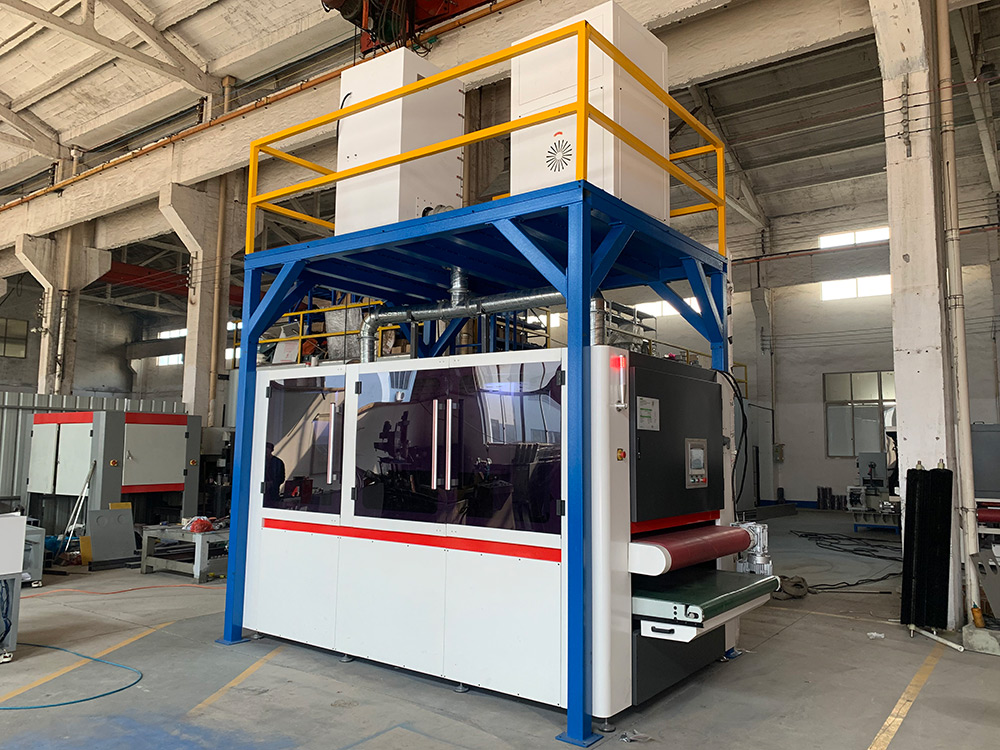
 RNS1300 Sheet metal deburring machineThis equipment features a dry sanding belt combined with four sets of universal sanding roller brushes. It is primarily designed for edge processing, hole deburring, and surface finishing of metal sheets, including drawing, descaling, and polishing. It can effectively remove burrs generated by stamping, shearing, laser cutting, plasma cutting, and flame cutting in a single pass, from all directions. As a result, all edges and holes of the workpiece achieve a smooth small R-arc finish. The entire processing procedure is safe and reliable, ensuring superior workpiece quality.
![星星1]()
- RNS1000 Sheet metal deburring machineThis equipment combines a dry sanding belt with four sets of universal sanding roller brushes. It is primarily designed for edge processing, hole deburring, and surface finishing of metal sheets, including drawing, descaling, and polishing. It effectively removes burrs generated by stamping, shearing, laser cutting, plasma cutting, and flame cutting in a single pass from all directions, delivering a smooth small R-arc finish on all edges and holes. The process is safe, reliable, and ensures superior workpiece quality.
![星星1]()
- RNS 800 Sheet metal deburring machineThis equipment combines a dry sanding belt with four sets of universal sanding roller brushes. It is primarily designed for edge processing, hole deburring, and surface finishing of metal sheets, including drawing, descaling, and polishing. It effectively removes burrs generated by stamping, shearing, laser cutting, plasma cutting, and flame cutting in a single pass from all directions, delivering a smooth small R-arc finish on all edges and holes. The process is safe, reliable, and ensures superior workpiece quality.
![星星1]()

Recommended blogs
Send Us A Message
Send us a Message
A dedicated person will follow up on your needs one-on-one and provide personalized customized solutions according
to your needs.
Get In Touch
We look forward to hearing from you for in-depth communication on how to fulfill your mixing requirements.