




plate rolling machines for complex applications: A Complete Guide to Types, Capabilities, and Selection
Understanding Plate Rolling Machines For Complex Applications
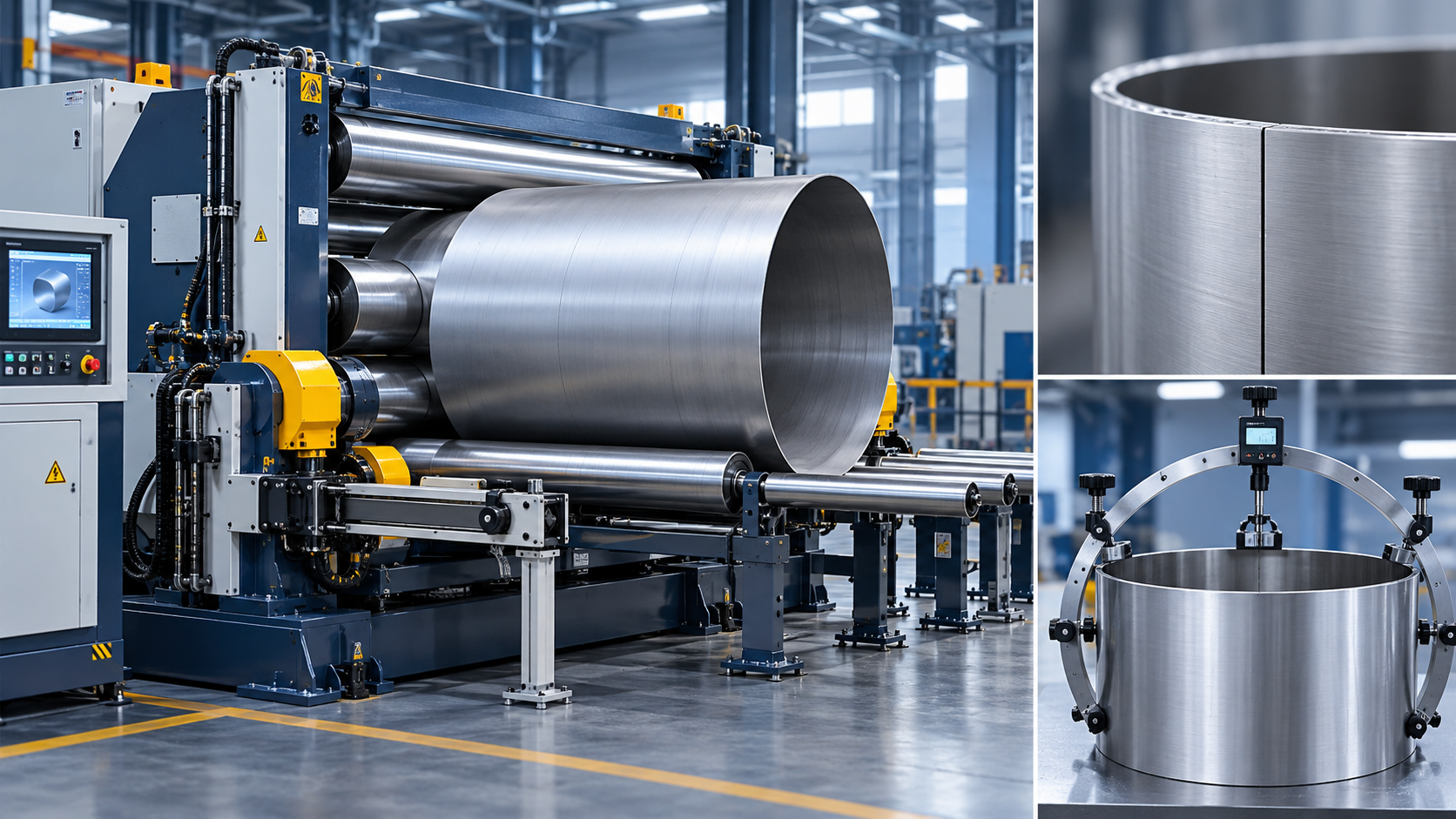
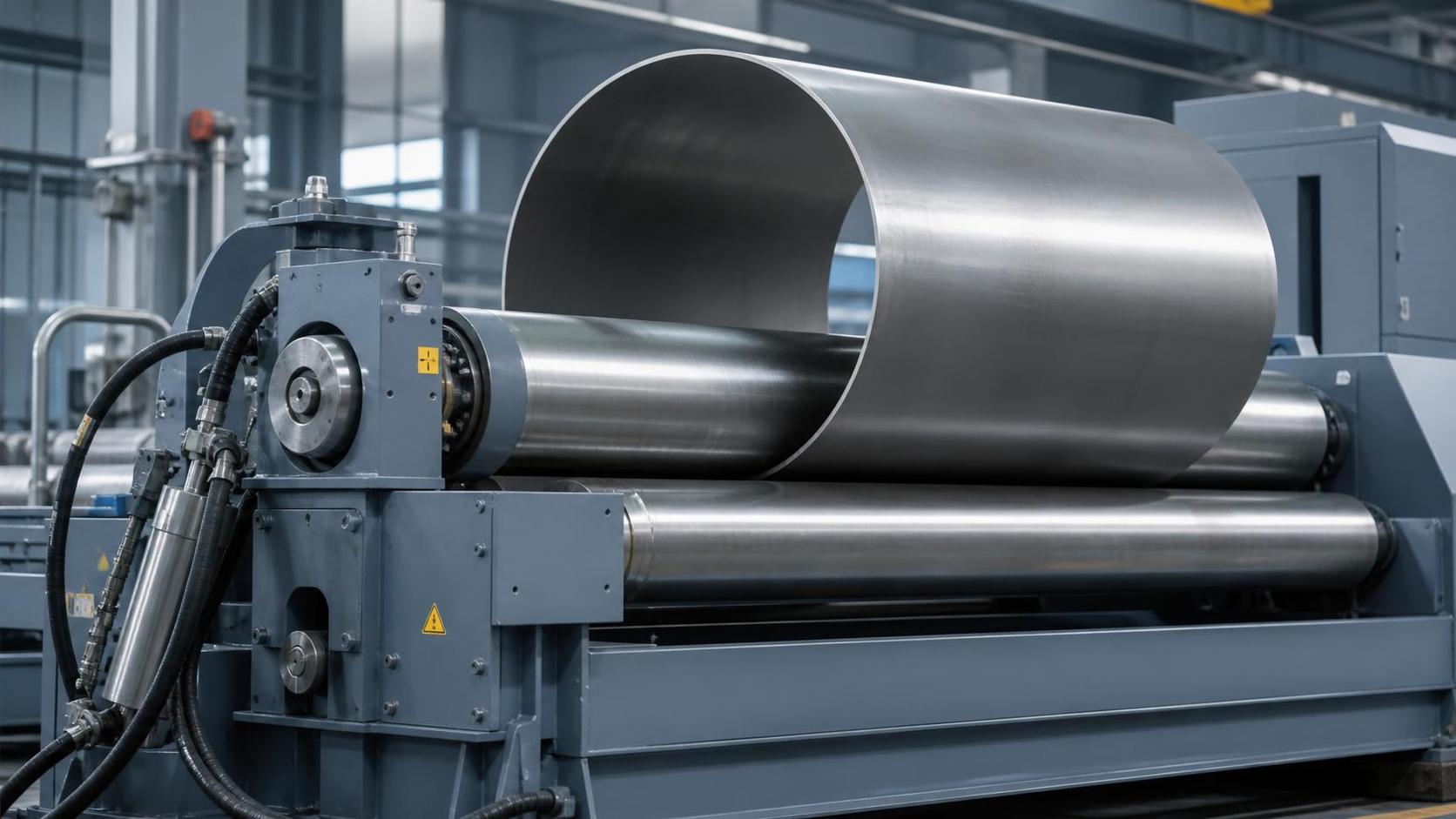
Plate rolling machines progressively bend flat metal plate into curved components by passing it between rotating rolls. Complex applications extend beyond straightforward cylindrical shells to include cones, small diameters, thick sections, variable radii, and materials with demanding mechanical properties. The required result is defined by geometry, dimensional tolerances, surface condition, and downstream fabrication requirements. A machine suitable for routine mild steel cylinders may require different tooling, supports, or controls for these more demanding tasks.
Typical buyers include pressure vessel manufacturers, tank fabricators, structural steel contractors, process equipment builders, and specialist subcontractors. Their production may involve stainless steel shells, transition sections, heavy cylinders, or large components that cannot support their own weight during forming. These applications place different demands on roll stiffness, drive torque, plate positioning, and material handling. Defining the intended component family is therefore more useful than selecting equipment from a nominal thickness rating alone.
The practical capability of plate rolling machines for complex applications depends on the interaction between material, thickness, working length, and finished diameter. Plate grade and delivery condition matter because yield strength influences the force required to initiate permanent bending. Diameter also matters: a thickness achievable at a generous radius may be unsuitable at a tighter radius. Published capacities should always be read with their stated material properties, working dimensions, and forming conditions.
A useful purchase specification describes acceptable finished parts rather than listing machine features alone. Include nominal and maximum plate thickness, actual material grades, plate width, internal diameter, cone geometry, and permitted straight ends. Add tolerances for roundness, seam alignment, surface marking, and repeatability. Where multiple products share one machine, identify their production volumes and relative importance. This establishes a realistic basis for comparing proposals and organizing an acceptance demonstration.
How Rolling Mechanics And Material Behavior Determine Results
During rolling, the rolls apply a bending moment that takes part of the plate cross section beyond its elastic limit. The material retains curvature after unloading, but elastic recovery causes springback. Higher yield strength generally increases the required forming effort and can increase springback under comparable conditions. Operators compensate through roll positioning, additional passes, or verified control settings. Reliable results require actual material information because nominally similar grades can behave differently between batches.
Prebending reduces the straight portions left near the leading and trailing edges of a plate. Its rated capacity is often lower than the machine's rolling capacity because the loading geometry differs. Excessive straight ends can complicate longitudinal seam fit-up or require trimming, increasing material loss. Buyers should therefore request separate rolling and prebending capacities for their target plate width, material strength, and diameter, together with an explanation of the proposed operating sequence.
Roll deflection affects curvature across the plate width, particularly when forming wide or thick material. Machine structure, roll diameter, bearing arrangements, and appropriate crowning help manage this effect. However, a crown optimized for one loading condition may not produce identical results across every plate width and thickness. Large, thin shells introduce another problem: deformation under their own weight. Overhead and lateral supports can stabilize these parts when correctly sized and positioned.
Conical rolling requires different material travel across the plate width, making guidance and control more demanding than cylindrical rolling. Suitability depends on cone angle, small-end diameter, thickness, material, and the machine's approved configuration. Stainless steel and coated plates also require attention to cleanliness and contact surfaces. For work susceptible to contamination or cosmetic damage, establish handling procedures and suitable roll protection, while checking whether protective measures affect traction or achievable accuracy.
Main Machine Types And Their Practical Capabilities
Three-roll initial-pinch machines typically use an offset roll arrangement to grip and bend the plate. Depending on the design, forming both ends may require reversing or repositioning the workpiece. They can suit general fabrication where the product mix, handling arrangements, and production rate make this sequence acceptable. Buyers should examine the complete cycle, including loading and end preparation, because a lower equipment price can be offset by additional handling on demanding components.
Three-roll double-pinch machines use adjustable side rolls to support prebending at both plate ends with less repositioning than many initial-pinch arrangements. Variable-geometry three-roll machines provide adjustable roll spacing and positioning, offering flexibility for certain heavy plate and wide diameter applications. These categories should not be treated as interchangeable. Compare their actual geometry, prebending method, minimum diameter, and handling requirements against representative drawings rather than relying on the number of rolls as a performance indicator.
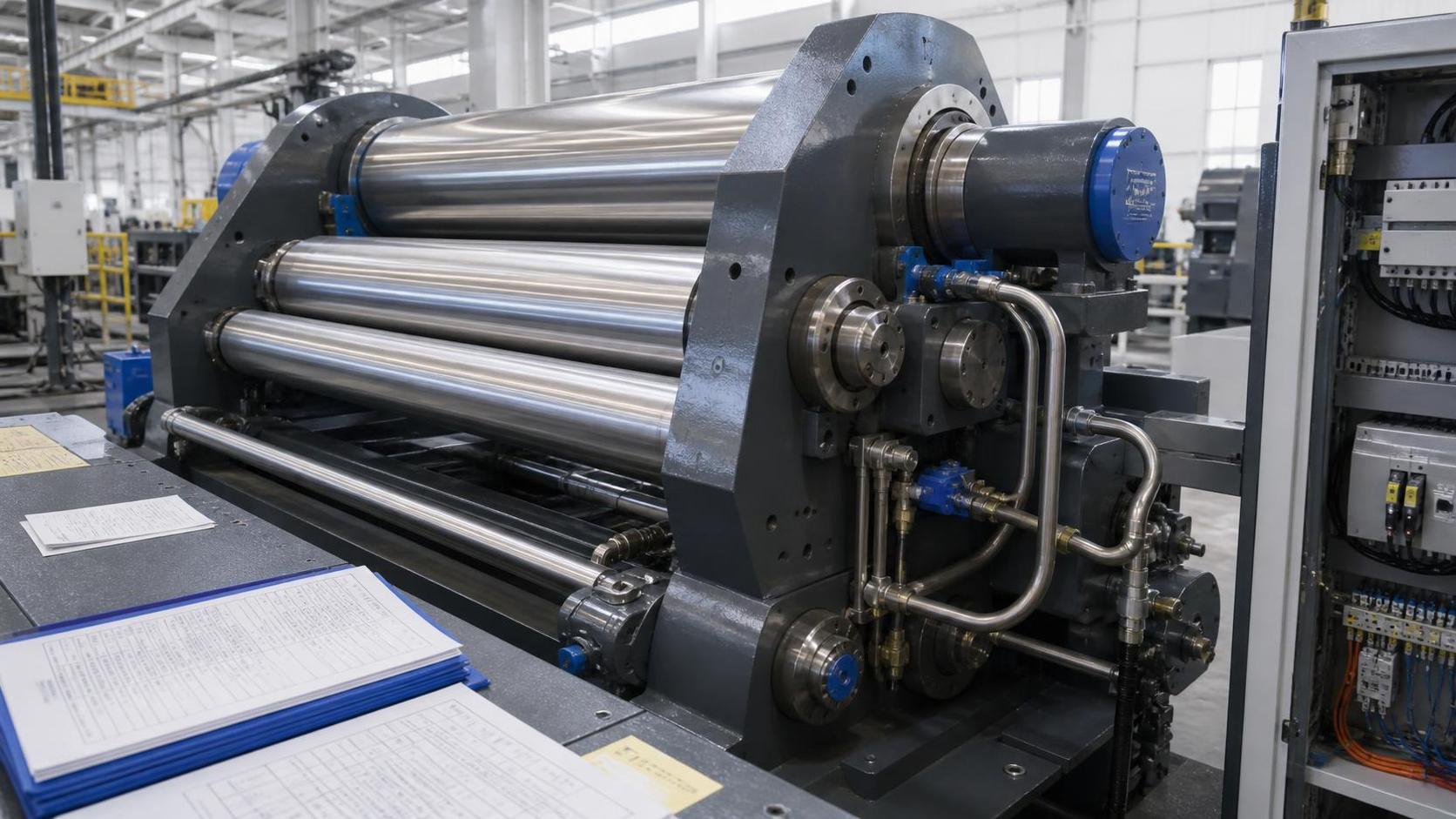
Four-roll machines clamp the plate between the upper and lower rolls while side rolls establish curvature. This arrangement can simplify plate referencing, support controlled feeding, and facilitate automated production sequences. It is often attractive for repeat shell production and suitable cone work. Nevertheless, four rolls do not automatically guarantee better finished accuracy. Material variation, calibration, support equipment, operator setup, and the quality of the forming program still influence the result.
CNC control adds programmable roll movements, stored recipes, and varying levels of sequence automation to compatible machine designs. Its value is greatest when programs can be reused and adjusted systematically across recurring parts. For high-mix work, accessible manual control and straightforward program editing remain important. Confirm what the control actually measures: a displayed roll position does not necessarily represent measured part radius, and automatic springback correction requires appropriate sensing and validated functionality.
Selection Criteria For Demanding Production Requirements
Start with a matrix of representative parts covering routine production and the most demanding combinations. Record material grade, yield strength range, thickness, width, required diameter, and annual quantity. Include cone drawings and unusual tolerances separately. Ask each supplier to identify which combinations are supported, conditionally supported, or outside the proposed machine's capability. This approach exposes limitations that a single maximum-capacity figure can hide and keeps quotations comparable.
Check minimum achievable diameter alongside top-roll diameter, but avoid assuming a universal ratio between them. Achievable geometry depends on machine construction, plate thickness, material, loading, and removal clearance. Assess the opening mechanism and the space needed to extract completed shells. For cones, request confirmation of the permissible angle range and any required accessories. For thin plates, examine gripping and support arrangements as carefully as the machine's maximum force capacity.
Assess productivity through a complete operating cycle: loading, alignment, prebending, rolling, checking, correction, and unloading. Rolling speed alone gives an incomplete comparison. Ask whether support adjustments are powered, whether handling needs a crane throughout the cycle, and how many operators are required. Include floor layout, lifting access, foundation requirements, electrical supply, and hydraulic cooling conditions. A capable machine can still become a production bottleneck if its surrounding workflow is poorly planned.
Make acceptance criteria measurable before ordering. A representative trial should use the agreed material grade and dimensions, with documented measurement methods and inspection points. Specify how roundness, diameter, straight ends, seam alignment, and surface condition will be assessed. Clarify whether measurements occur before welding, after welding, or after calibration, since these are different process stages. Record required accessories and operating conditions so the demonstrated capability matches the delivered production configuration.
Application Planning, Industry Standards, And Supplier Evaluation
Pressure equipment, storage tanks, pipelines, and structural assemblies follow different design and fabrication requirements. An ASME vessel specification, an applicable API tank standard, or a structural project specification can affect material selection, forming procedures, inspection, and traceability. Compliance of a finished assembly depends on the complete manufacturing process. Purchasing a rolling machine does not by itself establish conformity with a product code or authorize a workshop to apply a certification mark.
Wuxi Samgins offers plate rolling machines alongside plate leveling machines, edge milling machines, cutting equipment, welding manipulators, and welding rotators. This range is relevant when a purchaser needs to coordinate blank preparation, shell forming, seam welding, and subsequent handling. A useful supplier discussion should follow the actual component route and identify compatibility between stages, including finished shell dimensions, workpiece weight, welding access, and the support arrangements needed to preserve geometry.
The company reports more than ten years of export experience, familiarity with ASME and API requirements, and the use of internationally recognized hydraulic, servo, and CNC components. Its supplied background also states ISO 9001 quality management and CE-related compliance. Buyers should request current documentation applicable to the quoted equipment, confirm the named component specifications, and check destination requirements. ISO 9001 concerns quality management; machinery conformity and electrical obligations require their own applicable documentation.
The supplied customer list includes URALSTANKOIMPORT, Zein Steel Industries, and Lincoln Electric-MENA, among others. However, the available material does not identify their purchased models, applications, delivery dates, or verified production results. Treat these names as potential reference leads and request relevant, shareable project evidence. For a demanding rolling project, the strongest reference is a comparable material and geometry supported by an acceptance record, a documented demonstration, or customer feedback provided with permission.
Production Integration, Installation, And Quality Control
A typical fabrication route begins with material verification and blank preparation, followed by edge preparation where the welding procedure requires it. Operators then align the plate, prebend the ends, roll progressively, and inspect geometry before seam joining. Some products need further calibration after welding under an approved procedure. Cutting accuracy, edge condition, and plate flatness influence rolling consistency, so upstream preparation should be included when investigating dimensional variation or repeated fit-up problems.
Installation should follow the manufacturer's requirements for foundation loading, anchoring, leveling, utilities, and access. Confirm lifting arrangements for installation and routine production, including safe removal of completed shells. Commissioning should check roll alignment, hydraulic operation, controls, lubrication, support movements, and specified protective functions. Operator training should cover approved operating sequences, pinch hazards, plate stability, emergency procedures, and machine limits. Local workplace requirements should inform the final risk assessment and operating arrangements.
Quality control should connect incoming material records with part identification, forming settings, and inspection results. Templates, suitable gauges, or dimensional measurement systems can verify curvature according to component size and tolerance. Track out-of-roundness and seam fit-up at defined locations rather than relying solely on visual judgment. When a problem appears, distinguish material variation from alignment errors, roll deflection, inadequate support, and welding distortion before changing machine settings or authorizing rework.
For an integrated Wuxi Samgins proposal, request an equipment interface plan covering the rolling machine, welding rotators, manipulators, and relevant preparation machinery. Confirm load ratings against the actual workpiece and the manufacturer's rating conditions. State which fixtures, lifting devices, installation services, and training are included. The company's stated design, manufacturing, sales, and technical support services become more useful when the quotation assigns clear responsibilities, deliverables, and acceptance requirements to each stage.
Ownership Costs, Maintenance, And Investment Evaluation
Total ownership cost includes purchase price, freight, installation, foundations, training, tooling, support equipment, utilities, maintenance, and eventual refurbishment. Production costs add labor, setup time, scrap, rework, and disruption from downtime. Compare proposals over the same operating period and production assumptions. A lower purchase price may remain attractive for occasional work, while a more automated configuration may justify its cost when recurring demand supports higher utilization and measurable labor savings.
Evaluate investment using the annual cash benefit expected from realistic production. Include savings from reduced subcontracting, improved material yield, shorter handling time, or additional contribution from confirmed demand. Deduct added operating, staffing, and maintenance costs. Simple payback equals the installed investment divided by annual net cash benefit, provided that benefit is positive. For larger purchases, compare discounted cash flows and test sensitivity to lower utilization, slower commissioning, and changes in the product mix.
Maintenance intervals should follow the specific machine manual, operating hours, loading pattern, and working environment. Routine checks commonly cover lubrication, hydraulic leaks, roll cleanliness, fasteners, and protective devices. Planned service may include filter replacement, oil condition assessment, alignment checks, and inspection of wear components. Avoid adopting a universal oil-change interval without considering the manufacturer's requirements. Maintaining service records helps identify recurring problems and supports decisions about repairs, spare parts, and process adjustments.
After-sales terms need the same scrutiny as forming capacity. Wuxi Samgins states that it offers long-term warranties and technical support, but purchasers should confirm the actual duration, coverage, exclusions, response arrangements, and responsibility for travel or replacement labor. Request recommended spare parts, control backup procedures, technical manuals, and component identification. International buyers should also establish how remote troubleshooting, on-site service, and replacement shipments will work before production depends on the equipment.
Future Trends And A Practical Procurement Roadmap
Development in plate rolling machines for complex applications increasingly focuses on process consistency, easier programming, and integration with production data. Depending on the equipment, useful capabilities may include stored recipes, operating records, diagnostic access, and interfaces for material handling. Their value should be demonstrated through an actual production task. Buyers should ask which functions are included, which require optional hardware or software, and how operating data can be retrieved and maintained.
Higher-strength materials and tighter fabrication schedules increase the importance of verified capacity and controlled springback compensation. Meanwhile, large thin shells continue to demand effective support and handling. Automation can reduce variation caused by repeated manual positioning, but it still depends on consistent incoming material and suitable sensing or inspection. Evaluate these developments against current bottlenecks: software alone cannot resolve an undersized machine, inadequate supports, or unstable blank preparation.
Upgrade decisions should follow evidence from production records. Persistent rework may justify improved inspection or supports before complete machine replacement. Repeated capacity shortfalls, unavailable spare parts, obsolete controls, or excessive downtime may support a broader investment. Compare a retrofit with new equipment using achievable capability, integration effort, service life, and interruption to production. Any modification affecting controls or protective functions should receive an appropriate engineering assessment and corresponding documentation.
To request a technically useful proposal from Wuxi Samgins, provide representative drawings, material specifications, thickness and width ranges, target diameters, tolerances, and expected output. Include available floor space, utilities, handling equipment, destination, and required delivery timing. Ask for a written capability assessment, proposed machine configuration, relevant accessories, acceptance plan, and lifecycle support terms. This gives both parties a concrete basis for selecting equipment and identifying technical gaps before committing to an order.
search
Recommended Products
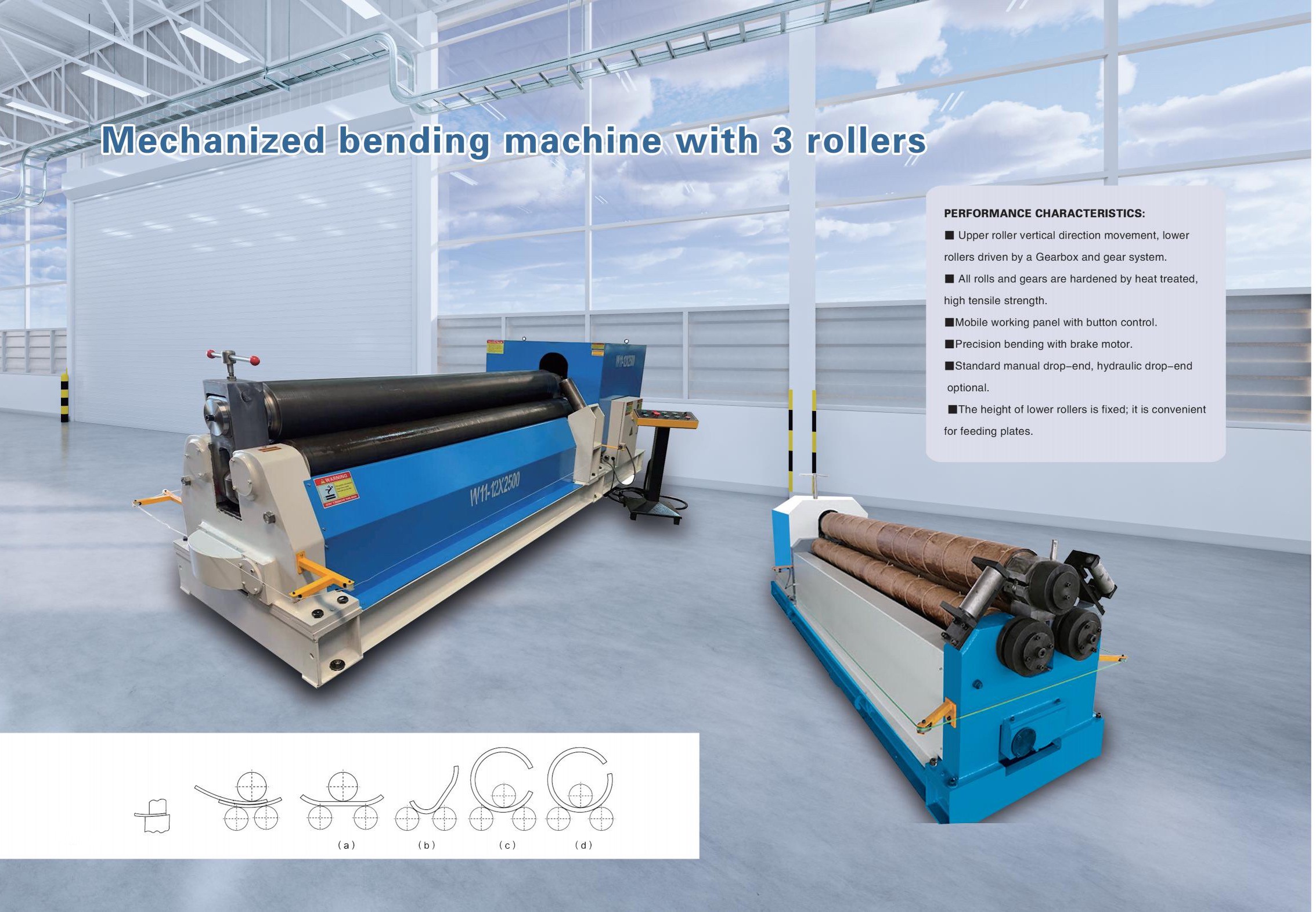
 Mechanized bending machine with 3 rollerA roll forming machine is a processing device that bends sheet materials into desired shapes through the action of working rollers. It is capable of producing various components, including cylindrical and conical parts, making it essential equipment in metal fabrication.
The machine operates by applying external forces—hydraulic or mechanical—to move the working rollers, which bend or roll the sheet into shape. Depending on the rotational movement and positional changes of differently shaped rollers, it can process elliptical, arc-shaped, and cylindrical workpieces.![星星1]()
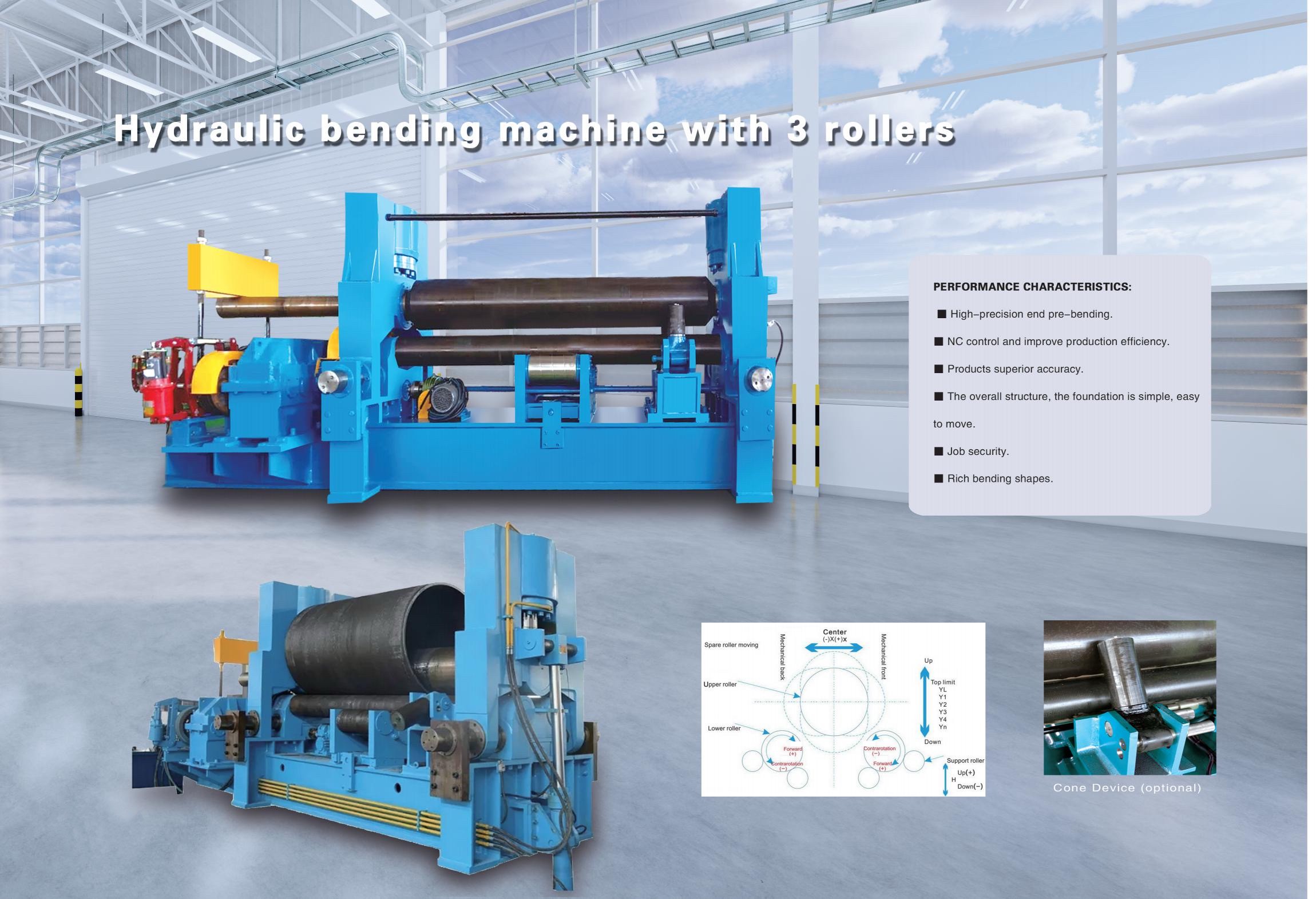
 Hydraulic bending machine with 3 roller1.Introduction for Hydraulic bending machine with 3 roller:
A roll forming machine is a device that bends sheet materials into shapes through the action of working rolls. It can form various parts such as cylindrical pieces and conical pieces. It is a very important processing equipment. The working principle of a roll forming machine is to use external forces such as hydraulic pressure and mechanical force to make the working rolls move, thereby bending or rolling the sheet materials into shapes. Depending on the rotational movement and position changes of the working rolls of different shapes, parts such as elliptical pieces, arc-shaped pieces, and cylindrical pieces can be processed.![星星1]()

Recommended blogs
Send Us A Message
Send us a Message
A dedicated person will follow up on your needs one-on-one and provide personalized customized solutions according
to your needs.
Get In Touch
We look forward to hearing from you for in-depth communication on how to fulfill your mixing requirements.