




China metal deburring machine Selection Guide: What to Know About Materials and Surface Finish
What A China Metal Deburring Machine Does
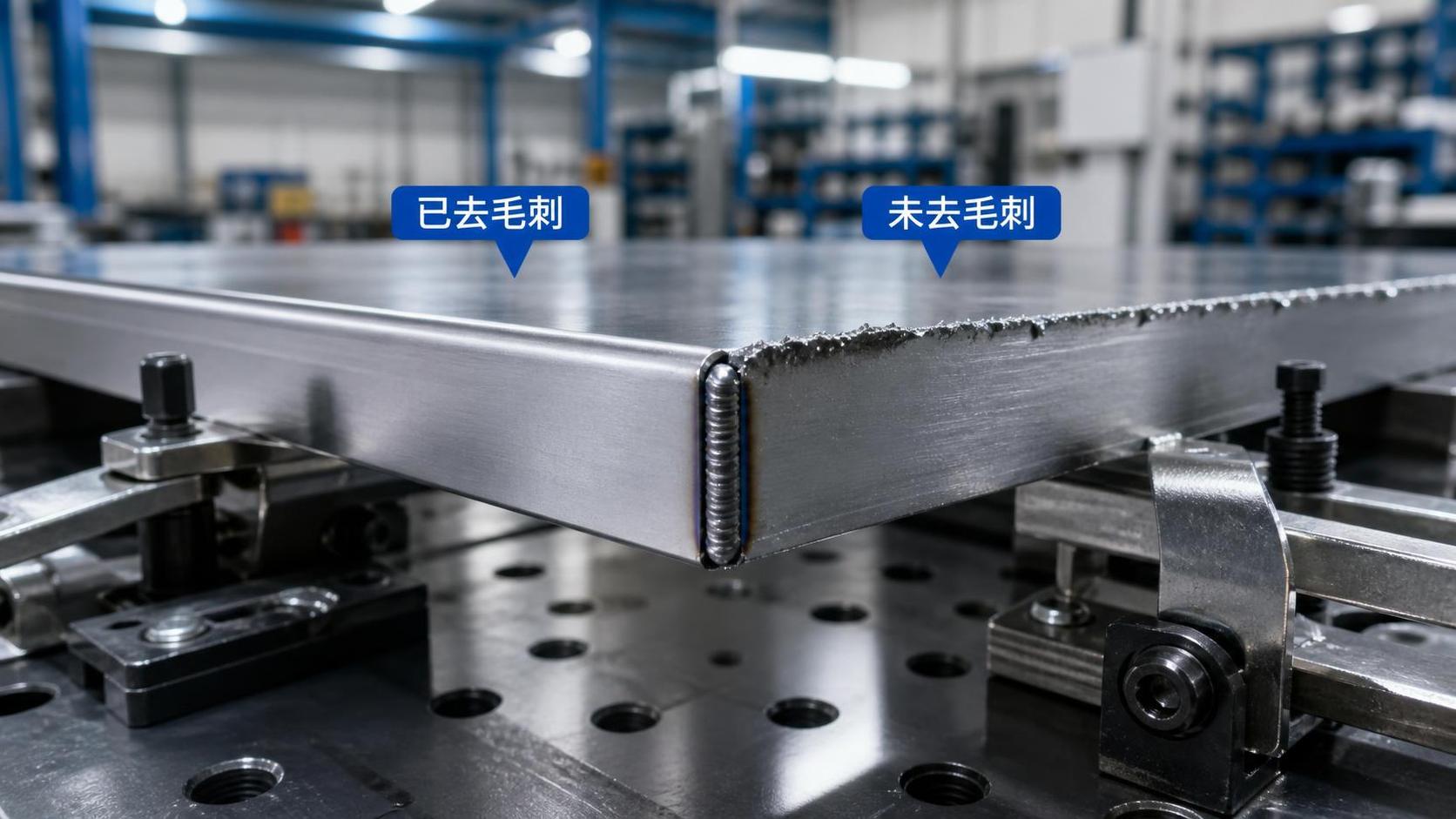
A China metal deburring machine is industrial finishing equipment sourced from China that removes unwanted projections from metal edges, holes, or surfaces. Burrs commonly arise during laser cutting, plasma cutting, punching, sawing, and machining. Depending on its configuration, the equipment may also round edges, remove selected oxide layers, or produce a directional surface texture. Country of origin identifies the sourcing market; suitability depends on the machine configuration, demonstrated processing capability, documentation, and support available for the intended application.
Deburring, edge rounding, and surface finishing are related operations with different acceptance criteria. Deburring removes unwanted material, while edge rounding deliberately changes edge geometry. Surface finishing modifies the appearance or texture of a face. A part can look attractive yet retain a sharp internal edge, and a safely rounded component can still have an unsuitable cosmetic finish. Procurement specifications should therefore describe these outcomes separately, including which faces, external contours, holes, and cutouts require treatment before downstream production begins.
Typical users include sheet metal subcontractors, enclosure manufacturers, machinery builders, and fabricators producing components for welding or coating. The process can reduce manual handling risks and improve consistency before bending, assembly, or painting. However, a deburring machine does not correct inaccurate cutting dimensions or replace every finishing operation. Thick slag, inaccessible features, and components with strict dimensional tolerances may require additional preparation or a different process. Define the actual production problem before comparing supplier descriptions or headline throughput figures.
How Materials Affect Process Choice And Surface Finish
Carbon steel processing often centers on removing cutting burrs, addressing adherent slag, and preparing edges for subsequent fabrication or coating. The severity of the required treatment depends on cutting quality, plate thickness, and burr attachment. Heavy deposits may need a dedicated slag removal stage before finer abrasives can work efficiently. For painted components, specify edge preparation and surface condition against the coating system requirements. A bright or uniform appearance alone does not demonstrate adequate cleanliness, adhesion potential, or corrosion protection.
Stainless steel requires particular attention to surface appearance and contamination control. Abrasives or handling equipment previously used on carbon steel can transfer ferrous contamination, potentially contributing to later rust staining. Consider dedicated media, cleaning practices, and material segregation where the application requires them. Directional grain, scratch depth, and consistency across batches may matter as much as burr removal for visible panels. Mechanical finishing does not automatically replace cleaning, pickling, or passivation when these treatments are required by the drawing or service conditions.
Aluminum can load abrasives, mark easily, and generate combustible dust. Thin sheets also require controlled contact pressure and reliable support to avoid distortion or unwanted material removal. Galvanized sheet introduces another concern: abrasive contact may remove protective zinc from treated areas. Mixed material workshops should evaluate contamination, extraction, and changeover procedures before selecting one machine for every job. Ask suppliers to process the actual alloys, coatings, and thicknesses used in production, since a sample made from a different material may give misleading results.
Technical Principles Behind Burr Removal And Edge Rounding
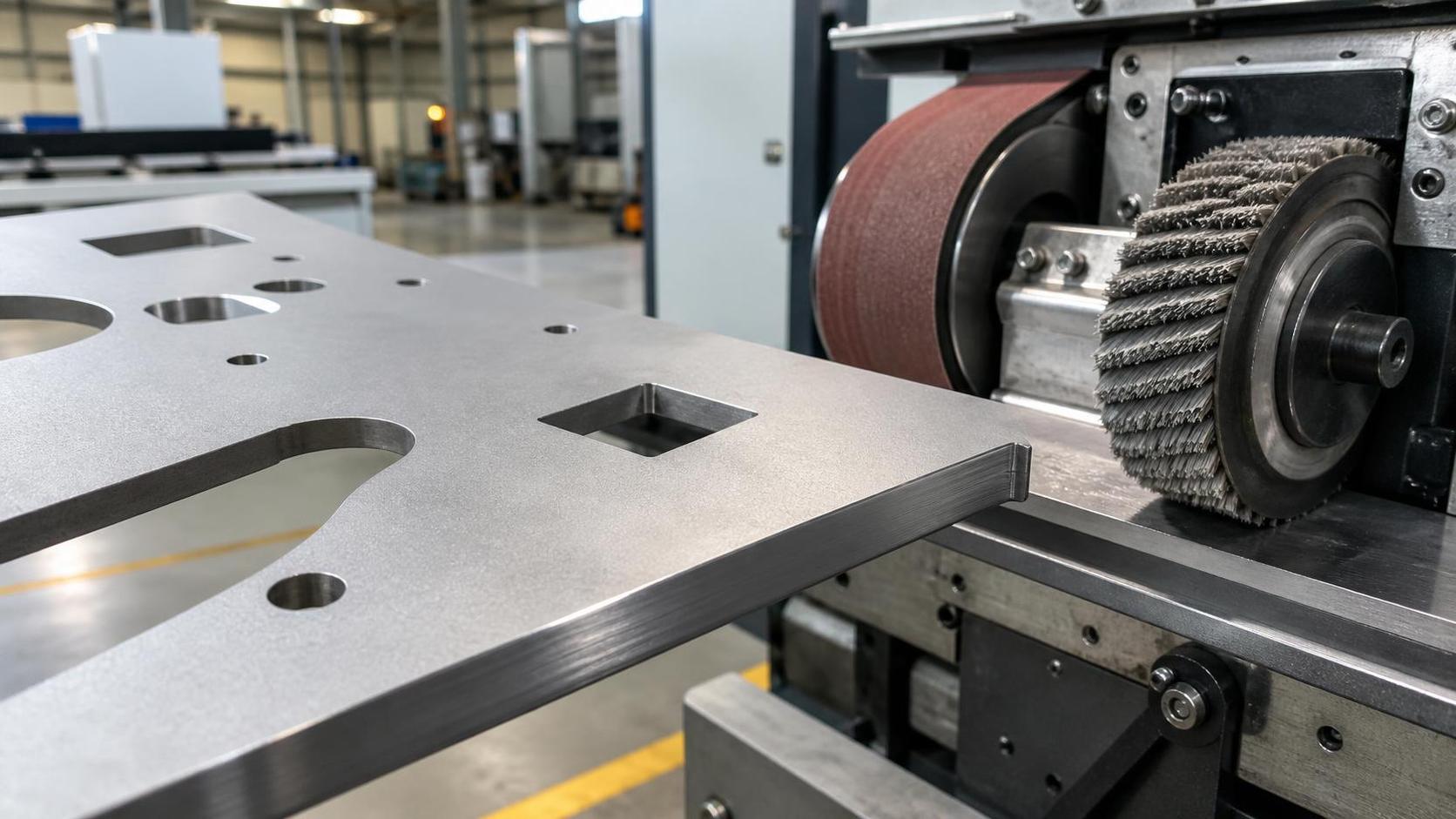
Abrasive belt heads remove material through controlled contact between the moving abrasive and the workpiece. They can reduce raised burrs and create a directional finish on exposed faces. The result depends on abrasive type, grit, contact pressure, belt condition, and conveyor speed. Coarser abrasives generally remove material more aggressively, while finer stages refine the scratch pattern. Increasing pressure to compensate for an unsuitable abrasive can create heat, excessive stock removal, or inconsistent results, so settings must be validated together.
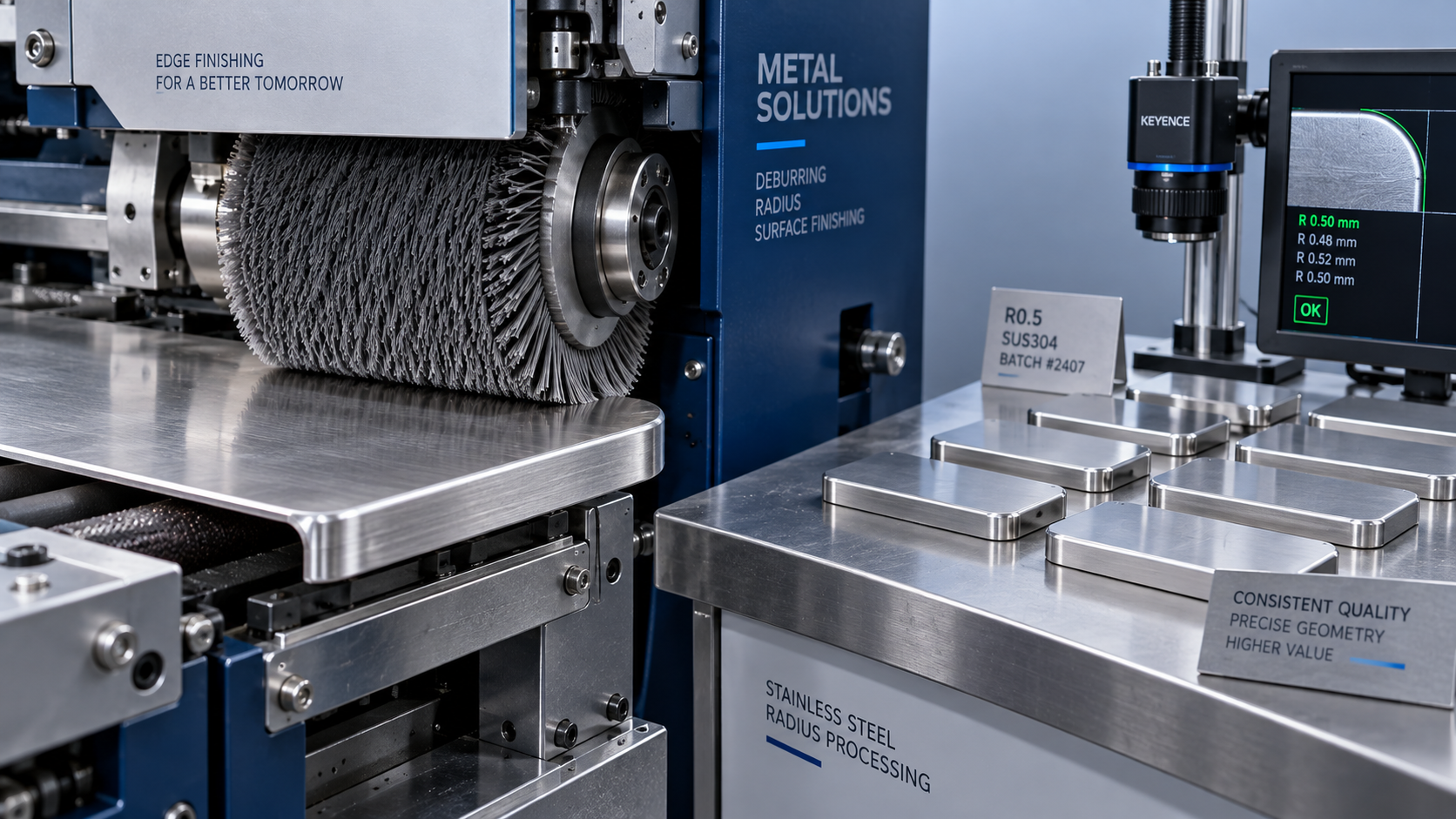
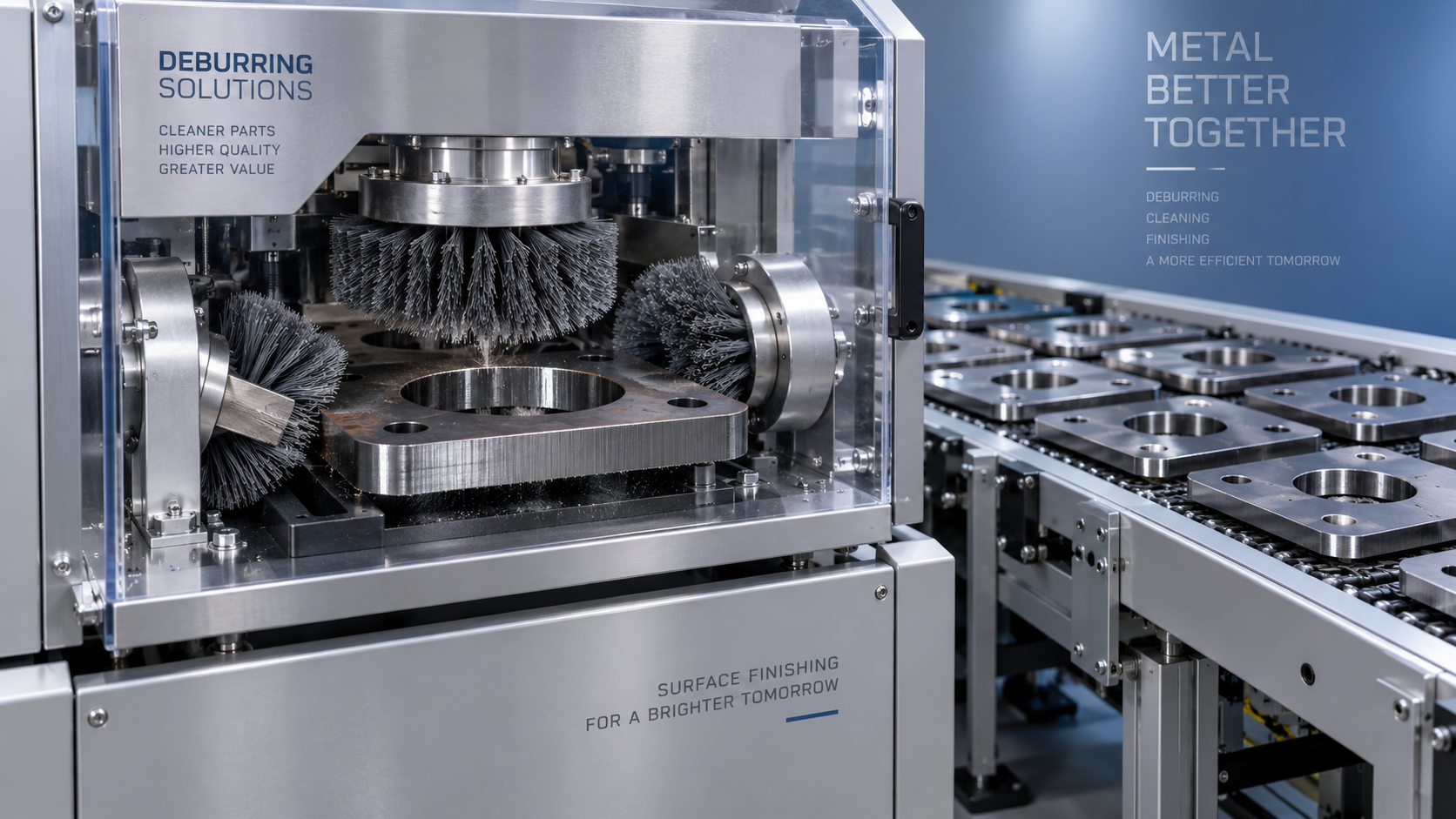
Rotating brushes and abrasive discs contact edges from different directions, helping remove residual burrs and create a more uniform edge break. Some configurations reach internal cutouts effectively, while others struggle with small holes, deep recesses, or obstructed features. Edge rounding depends on contact time, tool flexibility, wear, and part geometry. A single setting may produce different results on an external perimeter and a narrow slot. Buyers should inspect these features separately instead of accepting one measurement from an easily accessible edge.
Workholding is equally important because abrasive forces can move, lift, or damage a poorly supported part. Conveyor friction, vacuum assistance, or magnetic support may be used, depending on the machine and material. Magnetic holding is unsuitable for many nonferromagnetic workpieces, while vacuum effectiveness depends on contact area, openings, and the support arrangement. Ask how the proposed system retains the smallest and thinnest production parts. Safe processing limits should be established through representative trials and the supplier's operating instructions.
Main Machine Types And Their Practical Limits
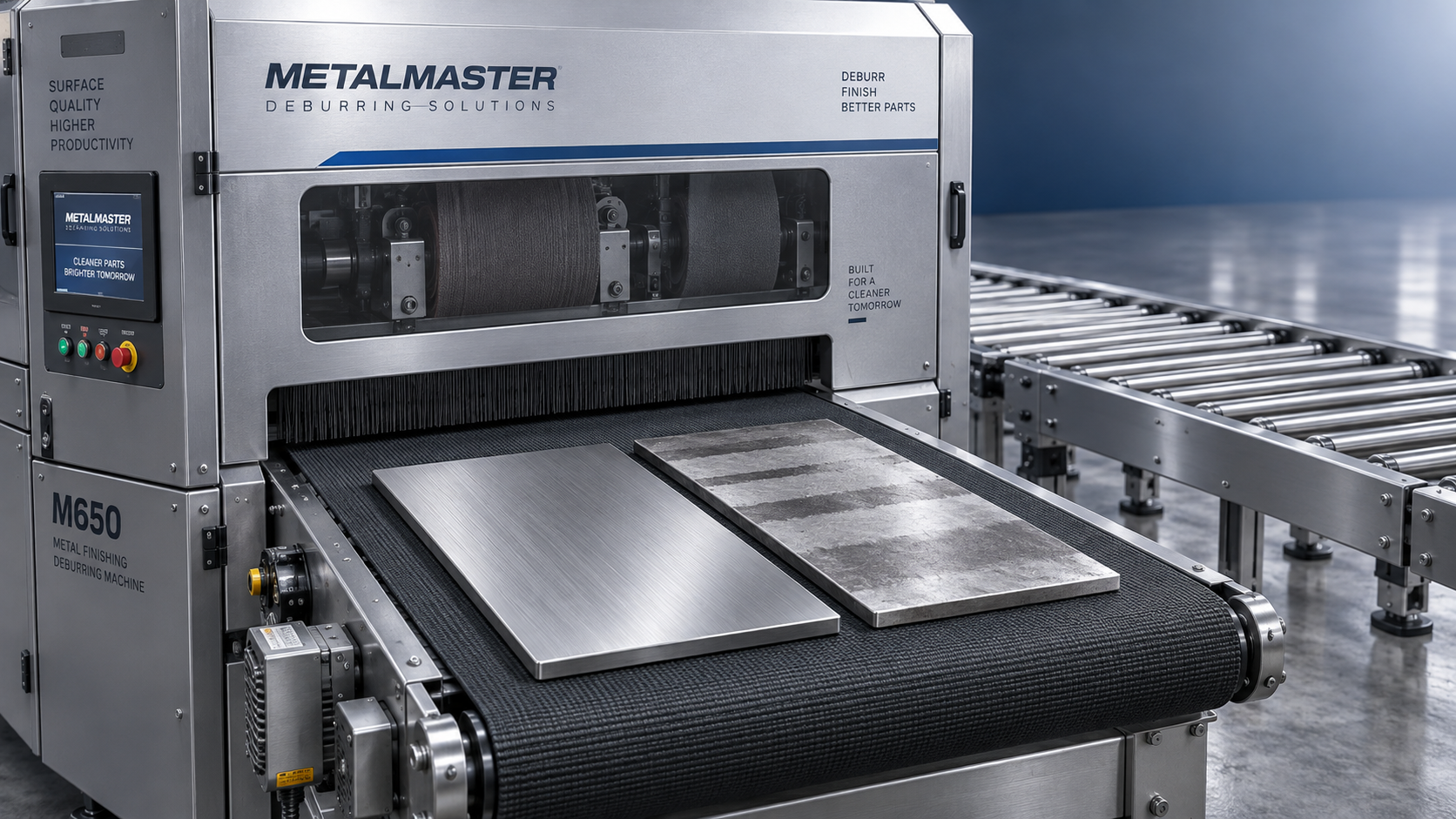
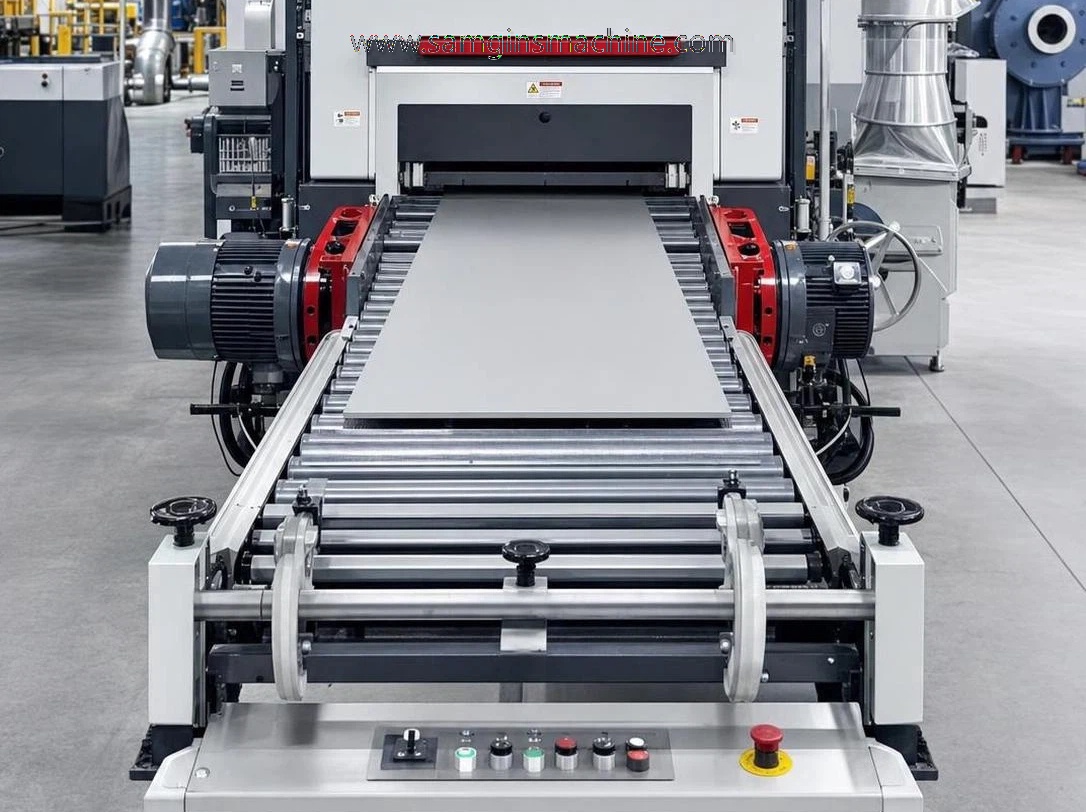
Wide belt machines suit flat components that need burr reduction or a consistent face finish. Brush machines emphasize edge treatment, and combined belt and brush configurations can perform several operations in one pass. These categories overlap, so the sequence and purpose of each processing head matter more than the general machine label. For a China metal deburring machine handling variable cutting conditions, determine whether each stage can be adjusted independently and whether unnecessary stages can be bypassed without compromising safe operation.
Dry machines require extraction designed for the generated dust and the processed materials. Wet machines use liquid in the processing system and may help control heat or airborne dust under suitable conditions. They also introduce filtration, sludge handling, liquid maintenance, and drying requirements. Neither arrangement is universally preferable. Aluminum and mixed metal processing require a specific hazard assessment; water, dust, and incompatible materials can introduce additional risks. Obtain a documented explanation of the complete process and collection system before choosing either approach.
Small components may suit batch finishing methods, including magnetic polishing for appropriate materials and geometries. These processes differ from conveyor machines used for large flat sheets and should not be treated as interchangeable. Wuxi Samgins lists both sheet metal deburring machines and magnetic polishing machines within its product range, giving buyers two categories to discuss during application screening. Confirm part size limits, accessible features, dimensional effects, and finish expectations through trials before assigning either process to precision components or delicate assemblies.
Selection Criteria And Sample Acceptance Testing
Begin with a part matrix covering alloy, thickness, maximum dimensions, minimum part size, flatness, cutout geometry, and incoming burr condition. Include typical production parts and difficult examples, such as thin panels, small brackets, or components with narrow slots. Record upstream cutting methods because laser burrs, punched burrs, and plasma slag impose different demands. Required capacity should reflect the actual product mix and handling time. Nominal conveyor speed does not establish hourly output when loading, unloading, inspection, and repeat passes become production constraints.
Define acceptance criteria before requesting a demonstration. Useful criteria include permitted residual burr, required edge radius or edge break, dimensional change, flatness, and cosmetic appearance. Specify surface roughness only where it serves a functional requirement, and identify the measurement method and direction. An Ra value alone does not fully describe visible grain or isolated scratches. For appearance controlled parts, retain approved reference samples and agree on lighting and inspection conditions so purchasing, production, and quality teams assess the same result.
Require trial records showing machine settings, abrasive specifications, number of passes, processing time, and inspection results. Examine both faces where necessary and check internal features rather than only the perimeter. Include an extended run when tool wear, heating, or repeatability could affect production. A China metal deburring machine should be evaluated as a complete operating process, including extraction, workholding, cleaning, and handling. Incorporate agreed sample outcomes into factory acceptance criteria, then confirm performance after installation under the buyer's actual site conditions.
Industry Standards And Production Line Integration
Machine safety and finished part acceptance require separate documentation. Depending on the destination and configuration, relevant machinery standards may include ISO 12100 for risk assessment and IEC 60204-1 for electrical equipment. European deliveries require assessment against the legislation applicable when the machine is placed on the market. Request the declaration of conformity, applicable technical documentation, and operating instructions for the exact supplied configuration. CE marking addresses applicable conformity requirements; it does not demonstrate a particular burr removal rate or surface finish.
Wuxi Samgins states that its machines comply with its ISO 9001 quality system and relevant EU Machinery and LVD requirements. It also reports utility model patents for welding and cutting equipment and more than ten years of export experience. Buyers should verify current certificates, their scope, and the documents accompanying the quoted machine. ISO 9001 concerns quality management rather than product certification. Familiarity with ASME or API requirements can support technical discussions, but it does not establish that a deburring machine or finished component meets those codes.
Wuxi Samgins offers equipment spanning fiber laser cutting, plasma cutting, sheet metal deburring, press brakes, welding, and plate leveling. This range can support discussions about where finishing belongs in a broader fabrication workflow. Its supplied customer list includes MD Calbah Industries Pty Ltd and Lincoln Electric-MENA, although no deburring project specifications or measured outcomes are provided. Request application references relevant to the proposed machine. Also confirm which imported hydraulic, servo, or CNC components apply to the quotation and how replacement parts will be supported.
Ownership Costs Maintenance And Investment Return
Total ownership cost includes the machine, freight, import charges, site preparation, installation, extraction or liquid treatment, operator training, and commissioning. Recurring expenses include abrasives, brushes, filters, electricity, maintenance labor, waste disposal, and spare parts. Production losses from changeovers, rejected components, or unavailable consumables also matter. Compare quotations using an identical scope and realistic annual utilization. A lower purchase price can lose its advantage if the proposed configuration requires additional passes, frequent manual correction, or expensive consumables with long replacement lead times.
Estimate the cost per accepted part by dividing relevant operating costs by the number of conforming parts produced. Evaluate investment return using measured reductions in manual finishing, rework, and other avoidable costs, then subtract additional operating expenses. Include labor savings only when staff time can actually be redeployed or overtime reduced. Use conservative utilization assumptions and test sensitivity to abrasive life and demand changes. Supplier demonstrations provide useful inputs, but the purchasing decision should reflect the buyer's production schedule and achievable operating conditions.
Maintenance intervals should follow the manufacturer’s instructions, adjusted for workload and observed condition. Routine checks commonly cover abrasive wear, conveyor condition, tracking, guards, extraction performance, and liquid systems where fitted. Planned work may include lubrication, filter replacement, electrical inspection, and verification of safety functions. Before servicing, follow the specified isolation and lockout procedures. Wuxi Samgins describes long-term warranty and technical support services; obtain written terms covering duration, exclusions, remote assistance, spare parts, and onsite support costs before including these benefits in an ownership calculation.
Future Trends And A Practical Purchasing Brief
Development is moving toward more repeatable settings, easier recipe management, automated handling, and better process monitoring. These capabilities can help workshops with frequent product changes, provided that recipes remain tied to material, geometry, incoming burr condition, and tool wear. Digital controls cannot compensate for an unsuitable processing head or unstable cutting quality. Buyers should prioritize functions that address a documented bottleneck and ask suppliers to demonstrate them on representative parts, rather than assigning value to automation features solely because they appear on a specification sheet.
Demand for controlled edge preparation and consistent cosmetic finishes also encourages closer coordination between cutting and finishing operations. Improving upstream cutting parameters can reduce the burden on abrasives and improve throughput, while better part tracking can help identify recurring defects. Environmental considerations increasingly affect decisions about dust collection, consumable use, liquid treatment, and waste handling. Evaluate upgrades when existing equipment cannot meet validated quality requirements or when rising maintenance and operating costs justify replacement. Base that decision on production records and achievable improvements.
To request a China metal deburring machine proposal from Wuxi Samgins, provide drawings, material grades, thickness ranges, production volumes, burr photographs, and representative samples. State the required edge condition, visible surface expectations, downstream operations, site utilities, and destination market. Ask for a recommended configuration, documented sample results, acceptance criteria, consumable requirements, delivery scope, and support terms. This brief allows the supplier to connect machine selection with measurable outcomes and gives the purchasing team a clear basis for comparing technical suitability, production capacity, and total cost.
search
Recommended Products
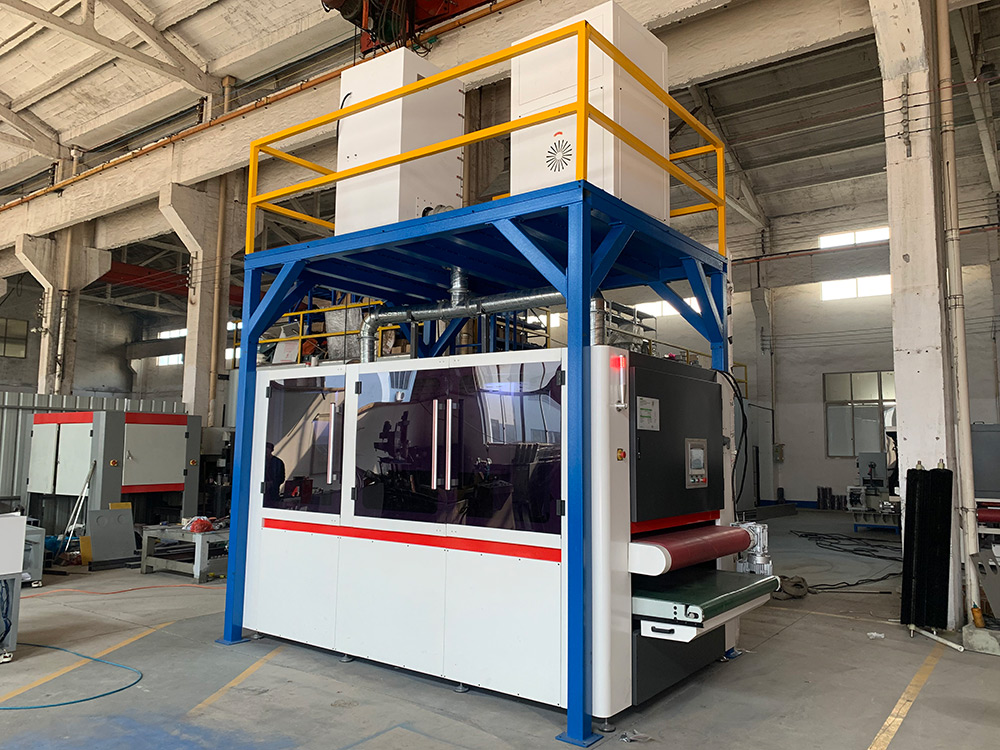
 RNS1300 Sheet metal deburring machineThis equipment features a dry sanding belt combined with four sets of universal sanding roller brushes. It is primarily designed for edge processing, hole deburring, and surface finishing of metal sheets, including drawing, descaling, and polishing. It can effectively remove burrs generated by stamping, shearing, laser cutting, plasma cutting, and flame cutting in a single pass, from all directions. As a result, all edges and holes of the workpiece achieve a smooth small R-arc finish. The entire processing procedure is safe and reliable, ensuring superior workpiece quality.
![星星1]()
- RNS1000 Sheet metal deburring machineThis equipment combines a dry sanding belt with four sets of universal sanding roller brushes. It is primarily designed for edge processing, hole deburring, and surface finishing of metal sheets, including drawing, descaling, and polishing. It effectively removes burrs generated by stamping, shearing, laser cutting, plasma cutting, and flame cutting in a single pass from all directions, delivering a smooth small R-arc finish on all edges and holes. The process is safe, reliable, and ensures superior workpiece quality.
![星星1]()
- RNS 800 Sheet metal deburring machineThis equipment combines a dry sanding belt with four sets of universal sanding roller brushes. It is primarily designed for edge processing, hole deburring, and surface finishing of metal sheets, including drawing, descaling, and polishing. It effectively removes burrs generated by stamping, shearing, laser cutting, plasma cutting, and flame cutting in a single pass from all directions, delivering a smooth small R-arc finish on all edges and holes. The process is safe, reliable, and ensures superior workpiece quality.
![星星1]()

Recommended blogs
Send Us A Message
Send us a Message
A dedicated person will follow up on your needs one-on-one and provide personalized customized solutions according
to your needs.
Get In Touch
We look forward to hearing from you for in-depth communication on how to fulfill your mixing requirements.