




How Does a Plate Roller Machine Work? A Comprehensive Guide to Plate Rolling Processes
What Is A Plate Roller Machine?
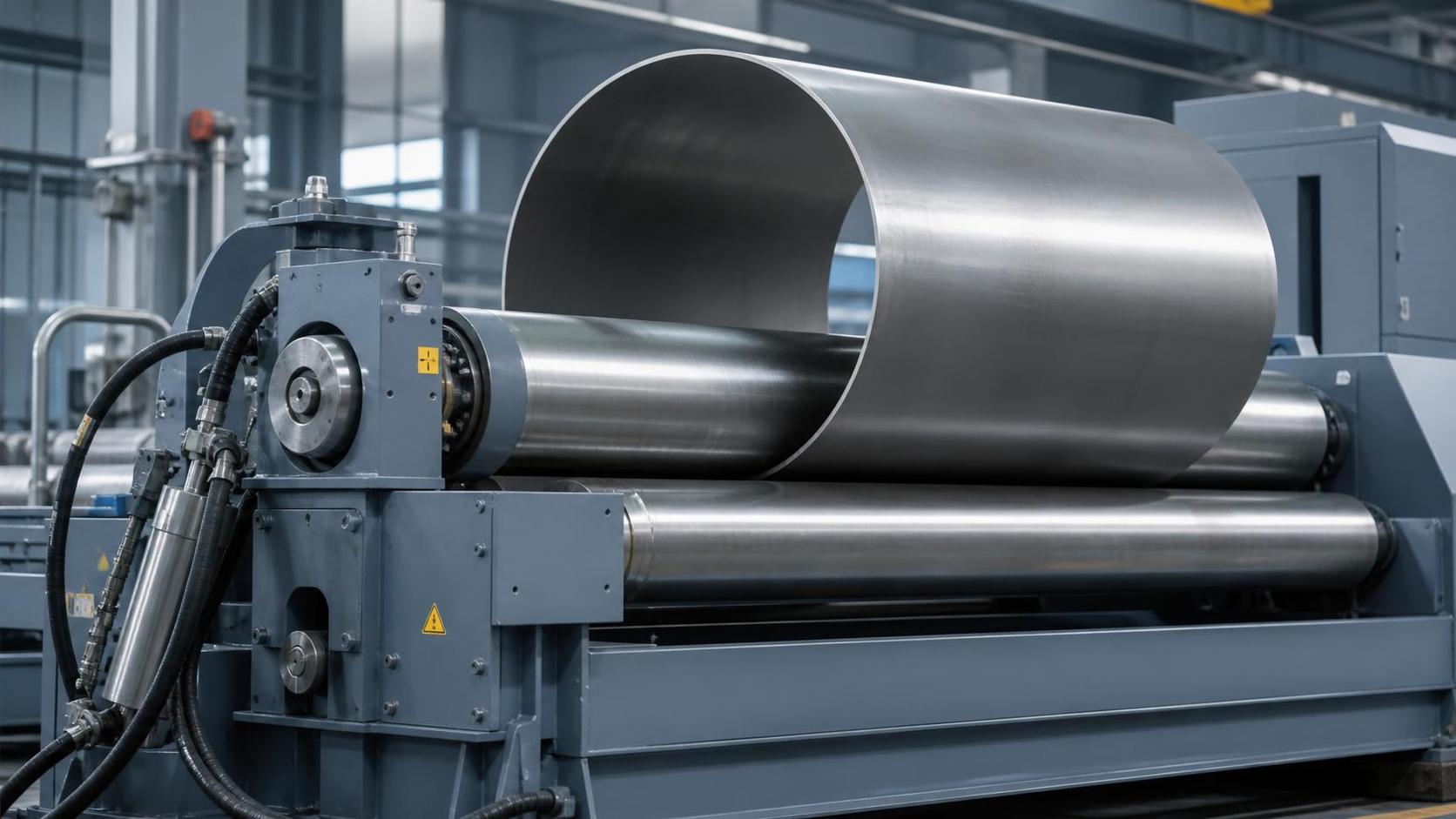
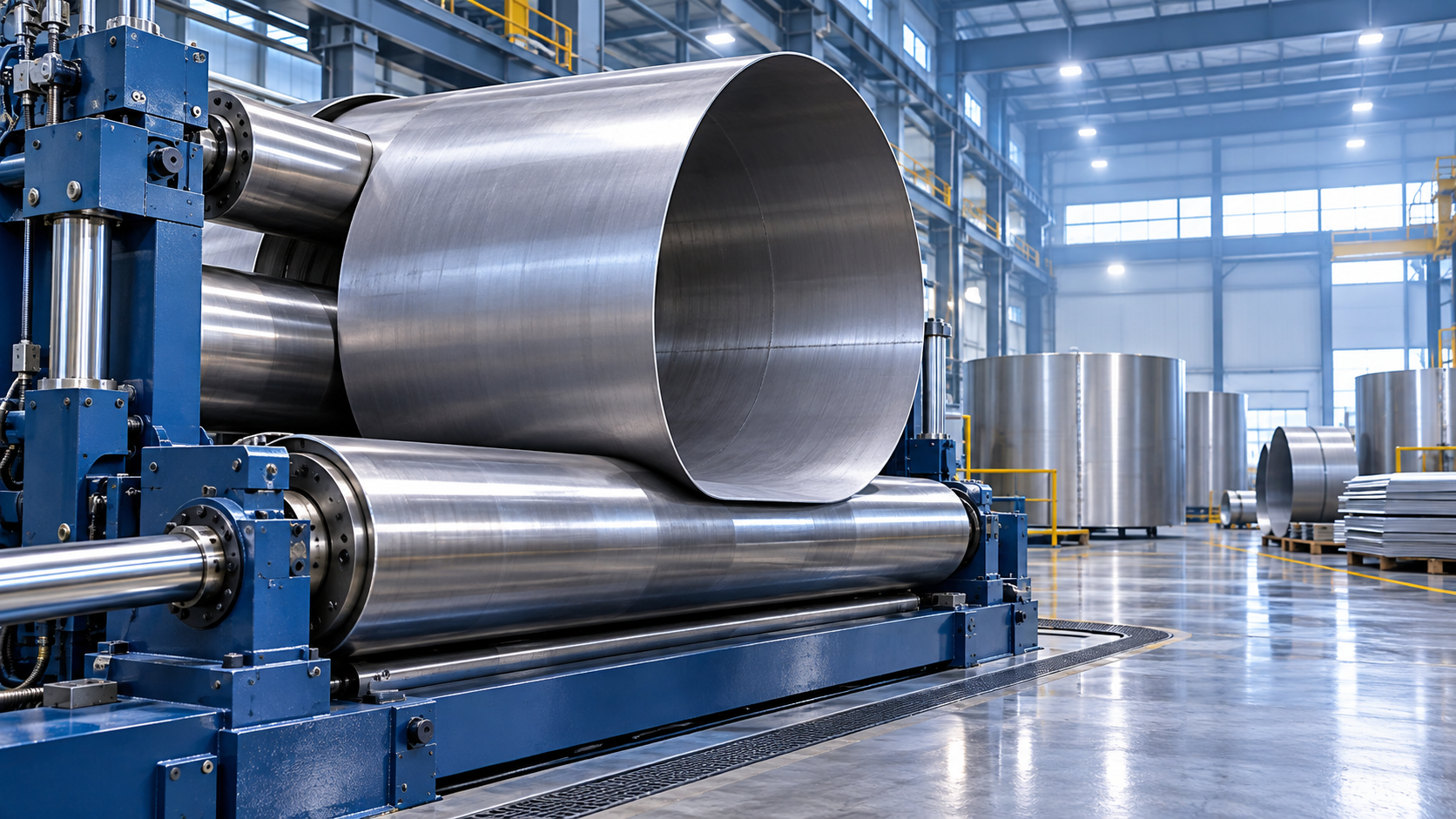
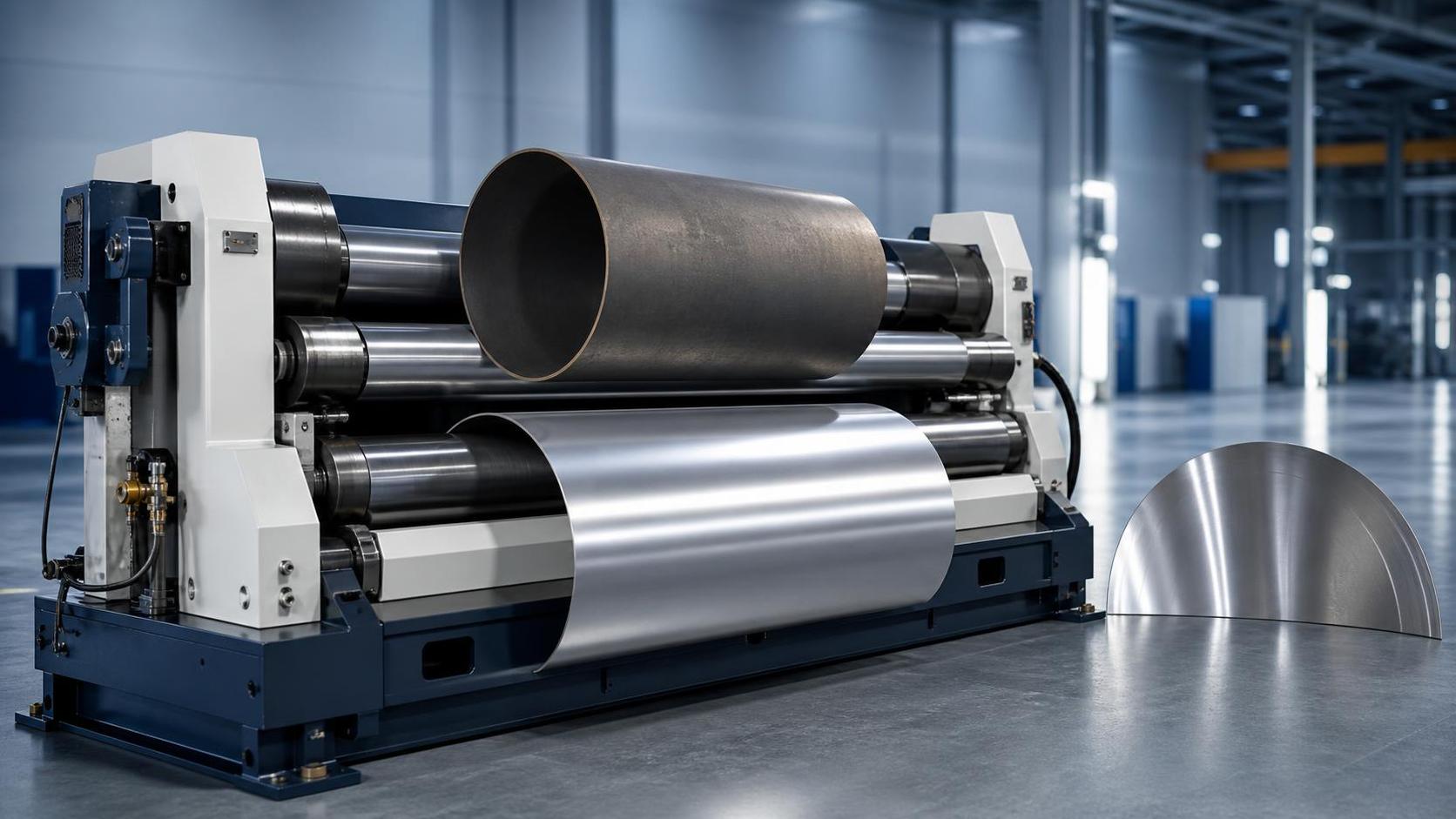
A plate roller machine, also called a plate rolling machine or plate bending roll, forms flat steel, stainless steel, aluminum, and other ductile metal plates into curved shapes. Its principal outputs include cylindrical shells, conical shells, tank courses, duct sections, pressure-vessel components, and curved structural parts. Unlike press bending, which creates localized bend lines, rolling progressively distributes deformation along the plate, producing a continuous radius that can be welded into a closed shell.
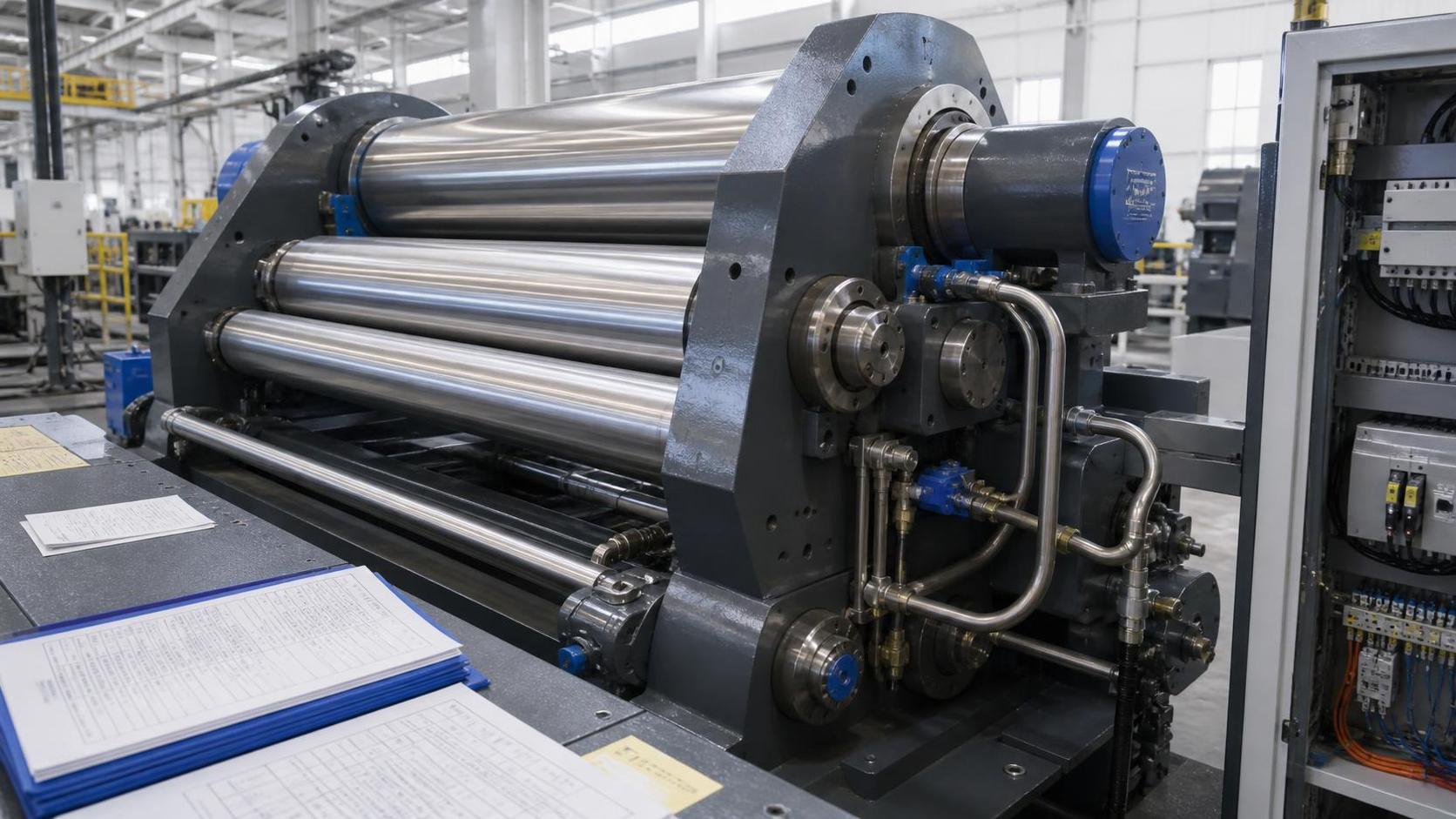
The basic machine contains two or more powered or idler rolls arranged to grip and bend a plate. A three-roll configuration normally uses one upper roll and two lower or side rolls; a four-roll design adds a second lower roll for better plate control. Modern machines may use hydraulic cylinders, planetary drives, digital position displays, CNC controls, support devices, and cone-bending attachments. The correct configuration depends on material grade, thickness, width, target diameter, production volume, and required geometric accuracy.
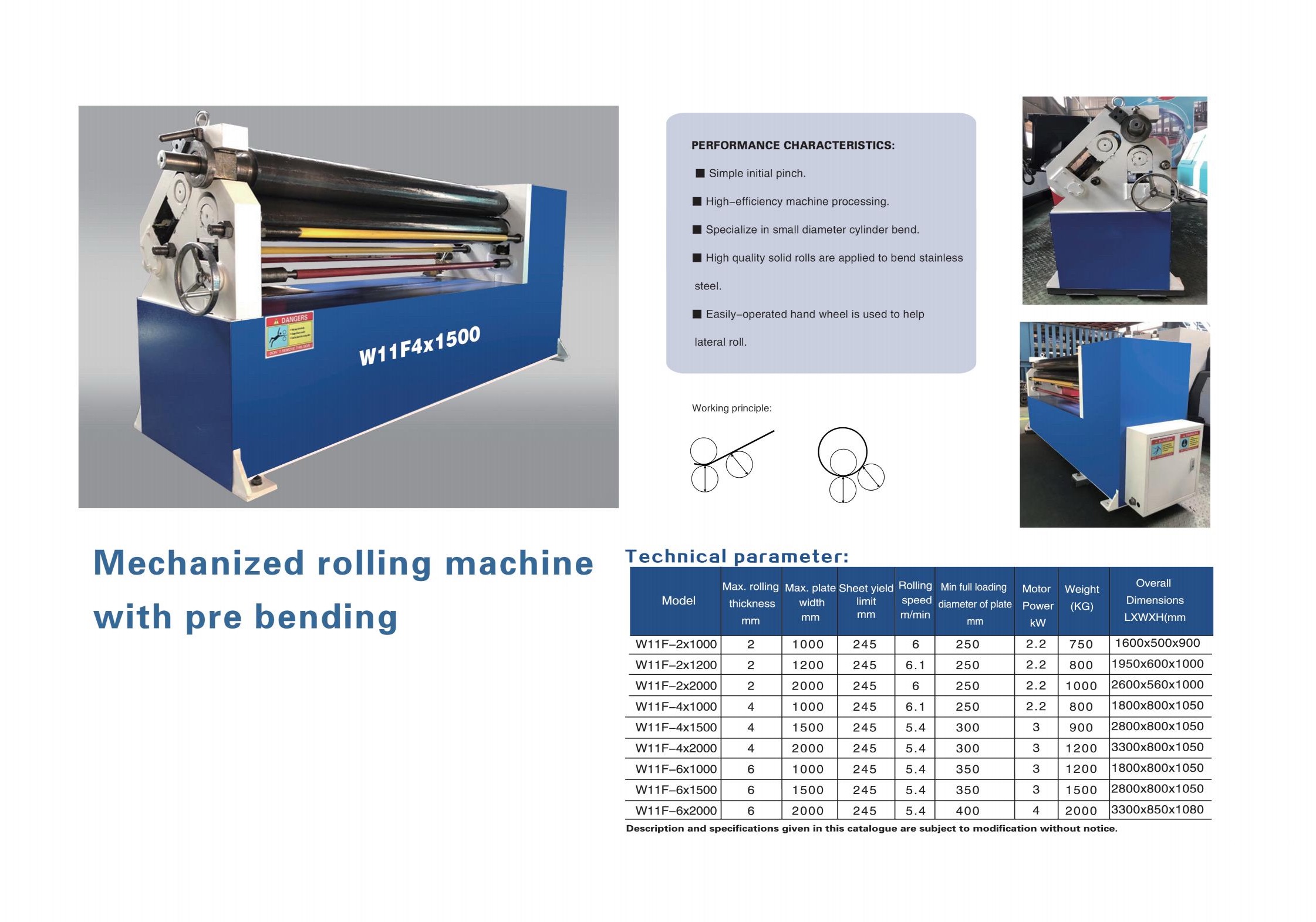
Capacity should never be defined by thickness alone. A stated rolling capacity is meaningful only when paired with plate width, material yield strength, minimum rolling diameter, and whether the figure applies to pre-bending or full-length rolling. High-strength plate requires more forming force than mild steel at the same thickness. Procurement specifications should therefore state the actual workpiece conditions, allowable diameter tolerance, out-of-roundness limit, and required surface condition before comparing a plate roller machine.
In fabrication workflows, the plate roller machine commonly follows cutting, edge preparation, and inspection, then precedes longitudinal seam welding, circumferential welding, grinding, testing, and finishing. This position makes rolling accuracy commercially important: consistent shell geometry improves fit-up, reduces tack-welding adjustment, and helps downstream welding equipment operate more predictably. For shops producing repeated shell sizes, reliable roll positioning can also reduce setup variation between operators and production shifts.
How The Plate Rolling Process Works
Plate rolling relies on controlled plastic deformation. The plate passes between rotating rolls while a lower or side roll moves upward or inward to create a bending moment. Material near the outside of the curve elongates, while material near the inside compresses. Once stress exceeds the material yield point, the plate retains a permanent curve after it leaves the rolls. Operators compensate for elastic springback by applying a calculated amount of over-bending.
A typical cycle begins with plate identification and dimensional inspection. The operator aligns the plate square to the rolls, pre-bends the leading edge, rolls the central area through successive passes, reverses or repositions the plate as needed, and pre-bends the trailing edge. Pre-bending matters because an unformed flat section remains at each end if the plate cannot be brought close to the roll contact point. A well-selected plate roller machine minimizes these flats while preserving edge quality.
For cylindrical work, the goal is a uniform radius along the full width. For cone work, the plate follows a tapered path, often requiring a dedicated cone-bending device, adjustable roll angles, or operator-controlled feeding. Thick plates may need several light passes rather than one aggressive pass to manage load, springback, and surface marking. Work rolls must be kept clean because scale, chips, or hardened debris can imprint the workpiece during high-pressure contact.
Quality checks should occur during rolling rather than only after the shell is complete. Useful controls include checking edge parallelism, shell diameter, roundness, seam gap, cylinder straightness, and contact with a template or gauge. For applications involving pressure-containing equipment, additional fabrication and inspection requirements may arise from the governing project code. The rolling operation does not replace weld procedure qualification, material traceability, non-destructive examination, or pressure testing where those controls are required.
Main Types Of Plate Rolling Machines
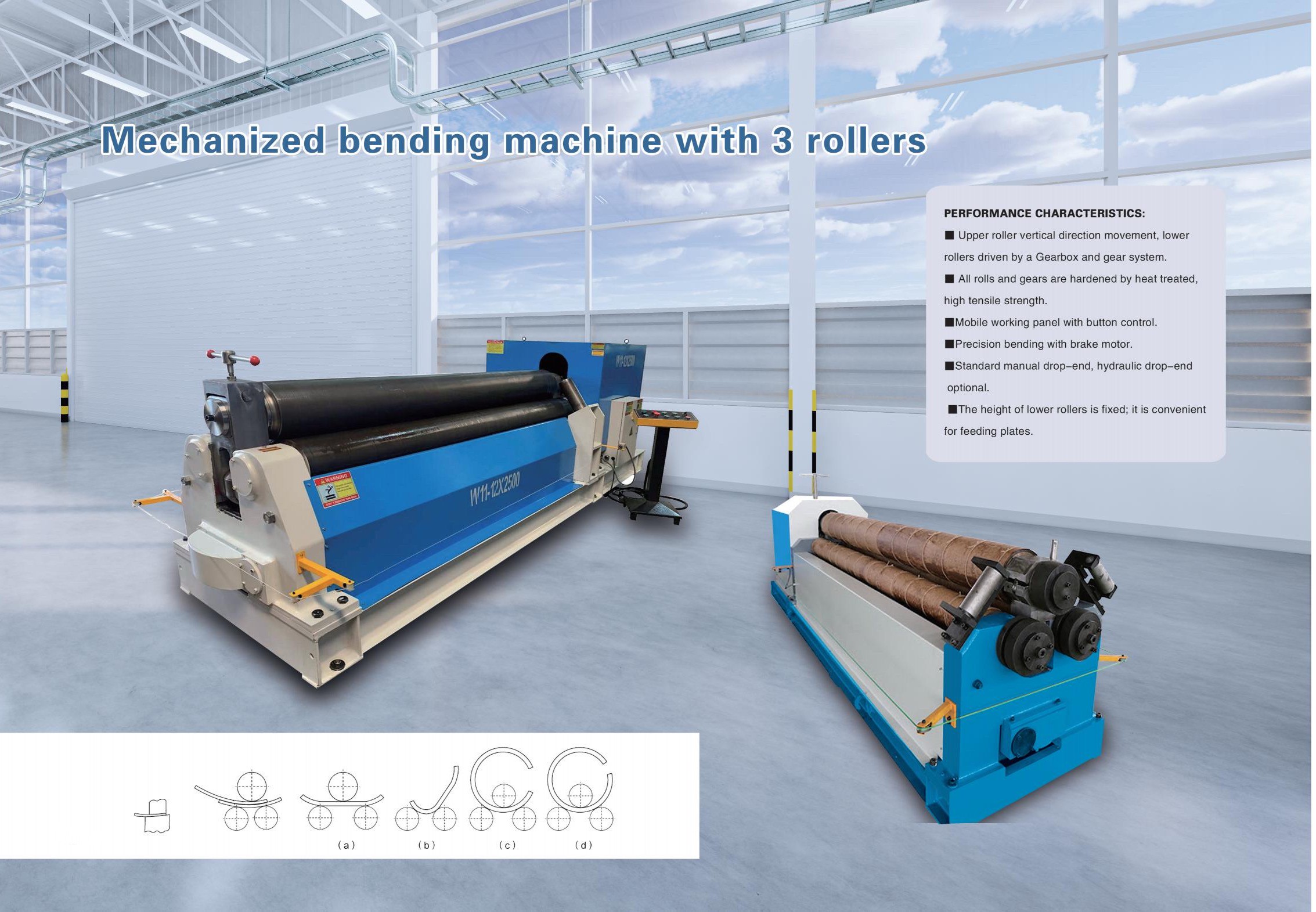
Manual and mechanical three-roll machines are generally suited to lighter-duty, lower-volume tasks where straightforward operation and limited capital expenditure are priorities. Their construction can be appropriate for maintenance departments, small workshops, and thin-gauge sheet applications. However, more manual handling and repeated trial adjustments may be necessary, particularly when jobs require close diameter consistency, large widths, or frequent product changes.
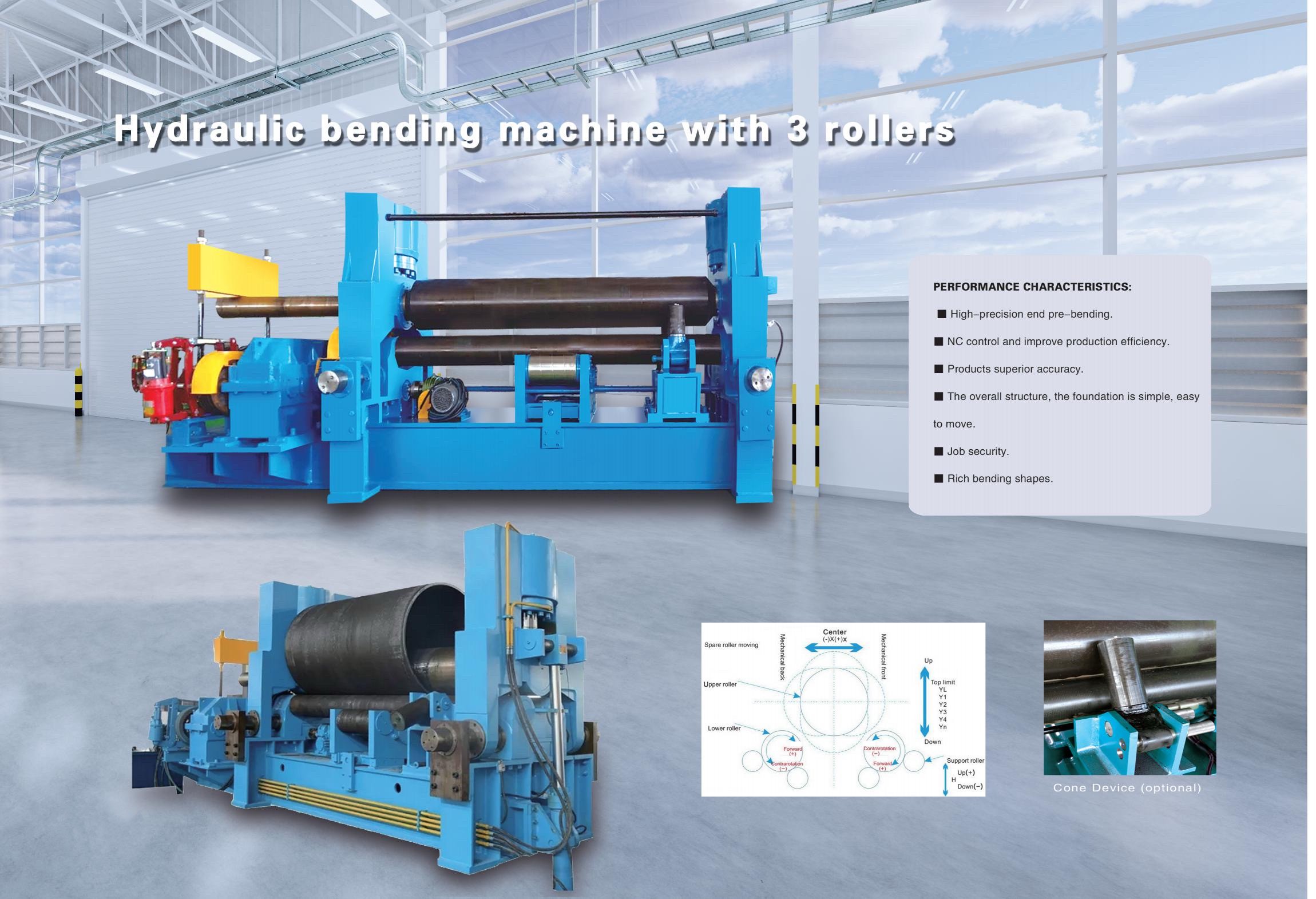
Hydraulic three-roll machines provide greater force and controlled roll movement for medium and heavy plate. Pyramid-style machines position the upper roll above two lower rolls, while asymmetric or variable-geometry designs move side rolls to improve pre-bending and rolling flexibility. The geometry affects how closely edges can be pre-bent, how easily short plates can be handled, and how well the machine adapts to different diameters. Buyers should review roll movement, drive arrangement, and unloading method rather than relying on machine labels alone.
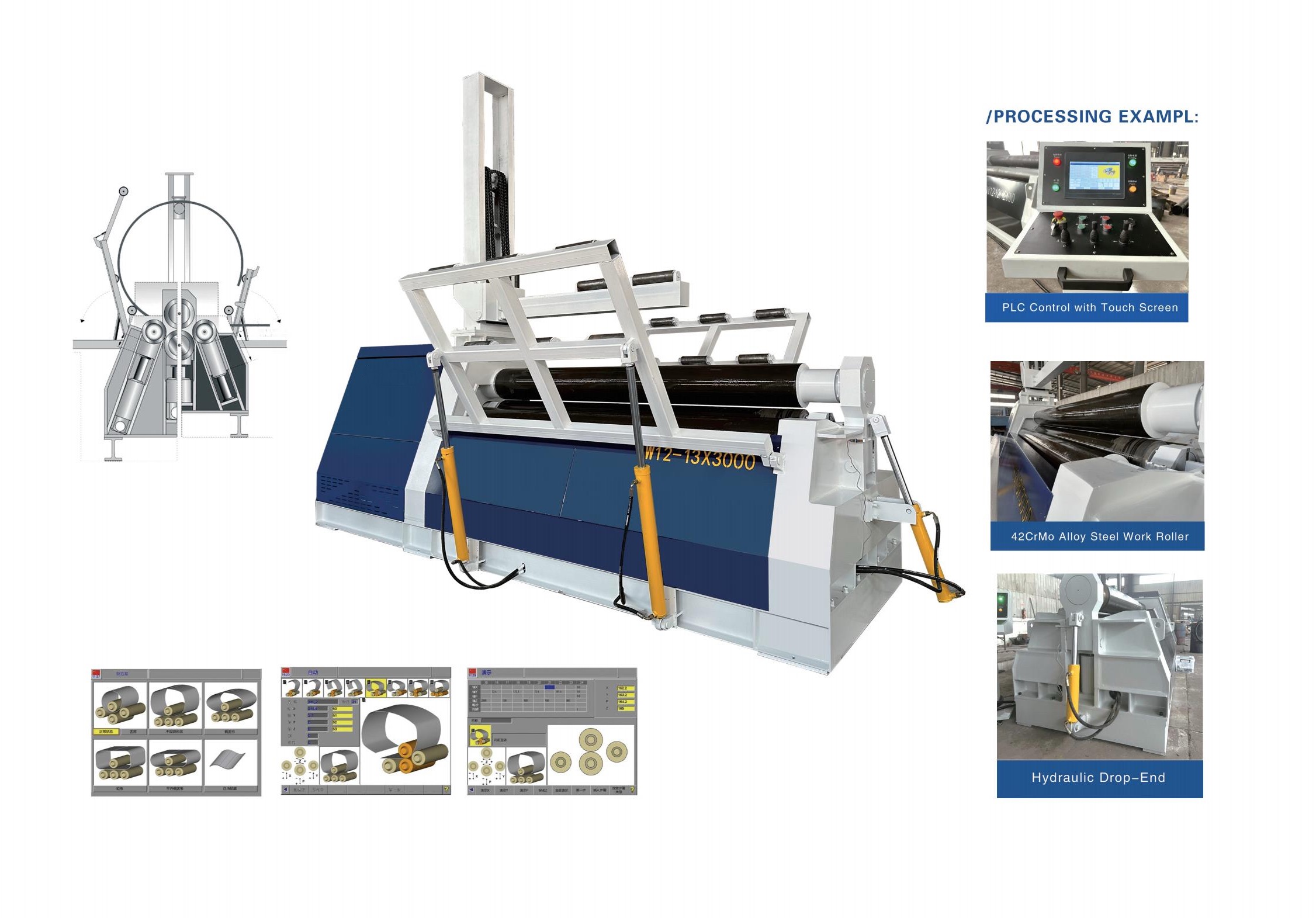
A four-roll plate roller machine uses an upper roll, a lower pinch roll, and two side rolls. The lower roll securely clamps the plate while the side rolls form it, allowing the operator to pre-bend both ends without removing and turning the plate in many applications. This can improve repeatability and reduce handling time, making four-roll designs relevant for fabricators with recurring production, larger plates, or tight fit-up requirements. Automation options can further support repeat jobs, although skilled setup remains essential.
Specialized systems may add powered side supports, top supports, overhead manipulators, automatic feeding, digital displays, CNC programming, or integration with welding lines. These additions are selected according to the workpiece, not as generic upgrades. Long, thin shells may need support to prevent sagging; heavy shells may require safe unloading assistance; cone production may need a dedicated attachment. The most productive configuration balances roll capacity, material flow, operator safety, and the shop's actual mix of jobs.
Who Uses Plate Rolling Equipment And Why
Typical users include tank and vessel fabricators, pipeline contractors, boiler workshops, wind-energy suppliers, shipbuilding companies, structural steel processors, mining-equipment manufacturers, HVAC duct producers, and general sheet-metal factories. Their requirements differ substantially. A shop producing thin stainless food-processing tanks may prioritize surface protection and repeatable diameters, while a heavy-equipment manufacturer may require high torque, rigid frames, large roll diameters, and material-handling support for thick carbon-steel plate.
A plate roller machine is particularly valuable when the alternative is segmented press-brake forming, outsourced rolling, or manual heat-and-force methods. Rolling can reduce the number of facets in a finished shell and shorten fit-up work. It also keeps curved-part production inside the facility, which may improve scheduling control and reduce transport risk for large components. The operational value depends on annual throughput, labor availability, lead-time pressure, and the extent to which rolled parts support profitable finished assemblies.
Wuxi Samgins serves fabrication environments that require rolling equipment alongside related welding, cutting, leveling, and steel-structure machinery. This broader machine range can help buyers consider the complete production sequence, from CNC cutting and edge preparation through shell rolling, seam welding, and handling. For a project involving tanks, pipelines, steel structures, or sheet-metal processing, the appropriate recommendation should be based on drawings, material data, production rhythm, and required interfaces rather than a generic capacity estimate.
International fabricators also need to align the machine and manufacturing process with local project requirements. Wuxi Samgins states that its machines comply with the ISO9001 quality system and EU CE Machinery and LVD directives, and its export team has experience with ASME, API, and local industry codes. Buyers should still confirm the applicable scope, documentation, electrical requirements, safety obligations, and acceptance criteria for their destination market and particular end use.
How To Select The Right Machine
Start selection with a representative workpiece matrix rather than the single thickest plate on a drawing. List material type and yield strength, thickness range, plate width, inside diameter, cylinder or cone geometry, edge pre-bend expectation, and annual quantity. Include the smallest target diameter because tight diameters are frequently more demanding than large shells. Also identify whether quoted capacity must be achieved at full width, since a machine may roll a thicker narrow plate than a full-width plate.
Next, evaluate machine mechanics. Frame stiffness, roll diameter, roll length, drive torque, hydraulic control, bearing arrangement, and side-roll travel all affect usable performance. Larger rolls can support heavy loads and reduce deflection, but they may limit the smallest attainable diameter. Digital readouts and CNC controls can support repeatability, yet they do not compensate for incorrect material data or poor plate alignment. Ask suppliers to define capacity assumptions in writing and review sample calculations against the buyer's actual plates.
Material handling deserves equal attention. Large plates and finished shells carry lifting, pinch-point, and stability risks. A suitable installation may need loading tables, side supports, top supports, roller conveyors, cranes, guarding, emergency stops, adequate floor capacity, and clear operator access. Layout planning should consider the plate's approach path, shell discharge direction, welding transfer route, and space required to remove the upper roll or open the drop end for unloading.
For customized projects, Wuxi Samgins can align rolling equipment with a wider fabrication cell that may include welding rotators, welding positioners, longitudinal seam welding machines, cutting machines, and handling equipment. A productive inquiry provides drawings, plate specifications, tolerances, expected batch sizes, available power supply, site dimensions, and desired delivery scope. This information enables a technical proposal that addresses the real process constraints instead of simply matching a catalog tonnage figure.
Installation, Quality Control, And Maintenance
Installation begins with verifying the foundation, leveling the machine, confirming electrical and hydraulic connections, and checking that safety devices operate as intended. The manufacturer instructions and local regulations should govern commissioning. Before production, operators should inspect roll surfaces, lubrication points, fasteners, hydraulic hoses, electrical connections, guards, controls, and emergency-stop functions. The first trial pieces should use representative material so that roll position settings and springback behavior are established under realistic conditions.
A disciplined quality process links incoming plate inspection to final shell verification. Material grade, thickness, plate flatness, edge condition, and dimensions influence rolling results. During operation, the team should document settings for repeat parts, check diameter at multiple points, monitor seam alignment, and verify that the shell does not show unacceptable marks, distortion, or edge damage. Calibrated measuring tools and clear acceptance criteria help prevent subjective decisions when several operators run the same plate roller machine.
Preventive maintenance protects accuracy and availability. Daily actions commonly include cleaning, visual inspection, and checking lubrication or fluid condition according to the machine manual. Periodic tasks may include inspecting roll bearings, drive components, hydraulic seals, filters, cylinder movement, electrical terminals, and control-system alarms. A sudden change in rolling consistency can indicate worn components, contamination, misalignment, or material variation; it should be investigated before the shop accumulates rework.
Wuxi Samgins emphasizes support spanning design, manufacturing, sales, after-sales service, and technical assistance, as well as long-term warranty arrangements. Its stated use of world-famous imported hydraulic, servo, and CNC components in relevant equipment is intended to support precision, stability, and service life. Buyers should request the specific component list, maintenance plan, recommended spares, remote-support process, commissioning scope, and response expectations as part of the purchase agreement.
Total Cost Of Ownership And Return On Investment
The purchase price is only one part of plate roller machine ownership. Total cost includes freight, import duties where applicable, civil works, installation, electrical work, training, tooling, handling equipment, planned maintenance, spare parts, energy, operator labor, downtime, and quality losses. A low initial quotation can become less attractive when it excludes essential supports, commissioning, documentation, or service access. Conversely, advanced automation should be justified by reduced labor, higher throughput, or better repeatability in the buyer's specific production mix.
ROI analysis should compare the proposed machine against the current method. Measure outsourced rolling charges, internal setup hours, crane time, scrap rate, seam-fit-up labor, delivery delays, and the margin available from bringing additional products in house. For recurring jobs, calculate expected cycle time and annual volume using conservative assumptions. The result should include capacity utilization, because a large machine that is rarely used may not return value as quickly as a properly sized system that serves frequent production needs.
Supplier capability also affects financial risk. Wuxi Samgins has more than 10 years of global export experience and lists customers including URALSTANKOIMPORT, MD Calbah Industries Pty Ltd, Ersay International Transport, Contevix comercio e servicos ltda, Zein Steel Industries Co. LLC, BatysMunaiGazZhabdyktary LLP, and Lincoln Electric-MENA. These names demonstrate international commercial experience, but buyers should conduct their own technical, commercial, and reference checks for the machine model and project scope under consideration.
A sound procurement package defines performance tests before shipment and after installation. It can specify test material, plate dimensions, target diameter, tolerances, inspection method, cycle expectations, included accessories, training, documentation, warranty conditions, and spare-parts recommendations. This converts broad promises into measurable acceptance points. It also gives both parties a shared basis for commissioning, reducing uncertainty when the plate roller machine enters production.
Future Trends In Plate Rolling
Plate rolling is moving toward more connected, repeatable, and operator-assisted production. Digital position feedback, programmable recipes, automated material handling, and integration with cutting and welding stations can reduce variation on repeat work. These capabilities are most useful when fabrication data is organized and operators receive practical training. Automation should be evaluated as a process improvement tool, not as a substitute for understanding material behavior, springback, safe handling, and quality inspection.
Demand for higher-strength steels, corrosion-resistant alloys, energy equipment, large storage systems, and modular industrial fabrication continues to create varied rolling requirements. These materials and applications place greater emphasis on verified capacity, surface protection, controlled forming, and traceable production records. Fabricators may also need flexible equipment because short production runs and custom-engineered assemblies can require frequent changeovers between diameters, thicknesses, and shapes.
For buyers planning future capacity, the practical question is whether the selected plate roller machine can support the next product range without creating unnecessary complexity today. Consider upgrade paths for controls, supports, cone attachments, and integration with rotators or seam welding systems. Maintainable mechanical construction, accessible service components, clear technical documentation, and available support often matter as much as headline specifications over a machine's operating life.
The strongest investment decision combines application engineering with transparent commercial evaluation. By defining the workpiece, validating performance assumptions, planning installation and handling, and measuring lifecycle cost, a fabricator can select rolling equipment that supports dependable shell production. Wuxi Samgins can review technical requirements across rolling, welding, cutting, and related fabrication processes to help purchasers develop a coordinated equipment scope for their project.
search
Recommended Products
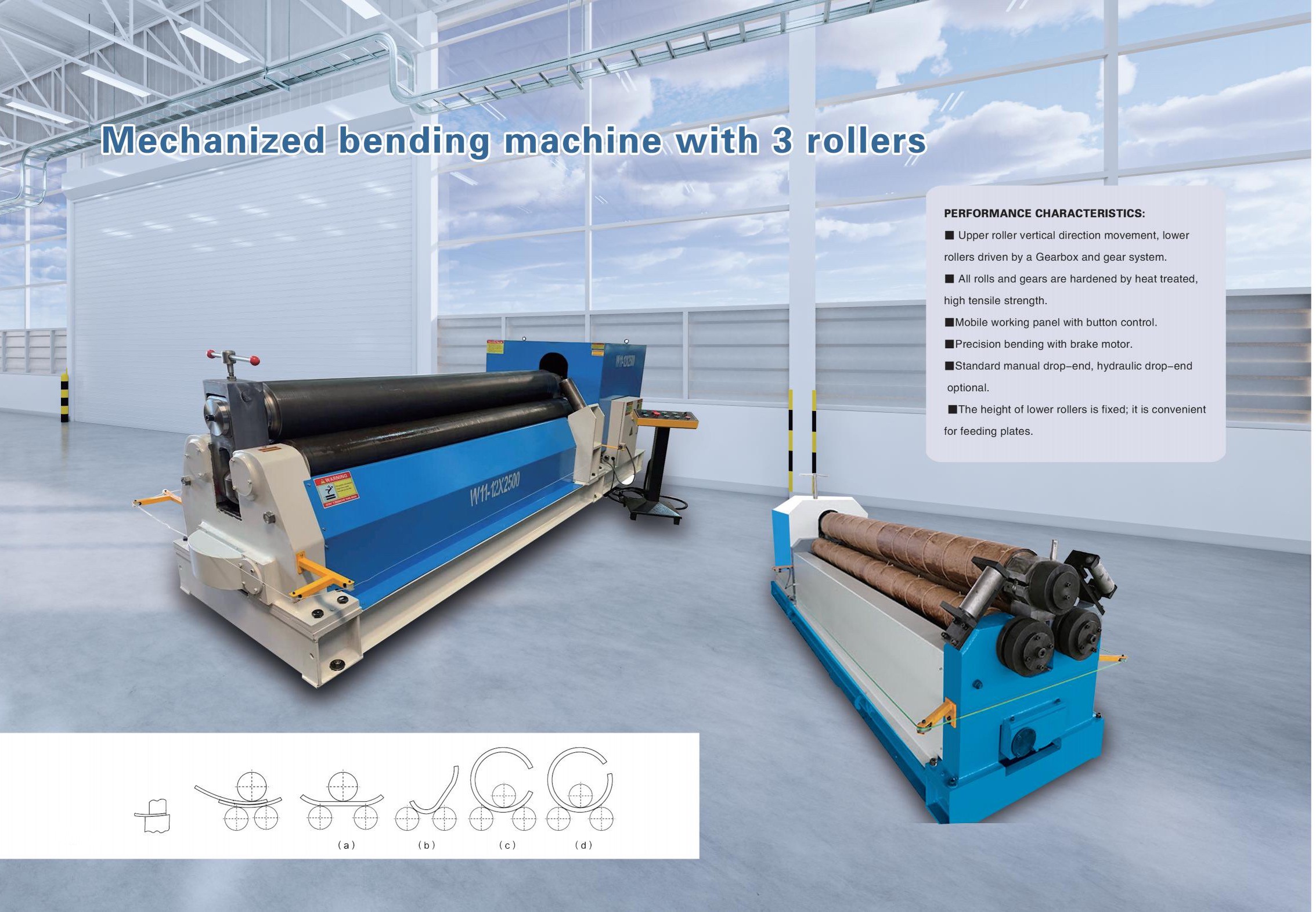
 Mechanized bending machine with 3 rollerA roll forming machine is a processing device that bends sheet materials into desired shapes through the action of working rollers. It is capable of producing various components, including cylindrical and conical parts, making it essential equipment in metal fabrication.
The machine operates by applying external forces—hydraulic or mechanical—to move the working rollers, which bend or roll the sheet into shape. Depending on the rotational movement and positional changes of differently shaped rollers, it can process elliptical, arc-shaped, and cylindrical workpieces.![星星1]()
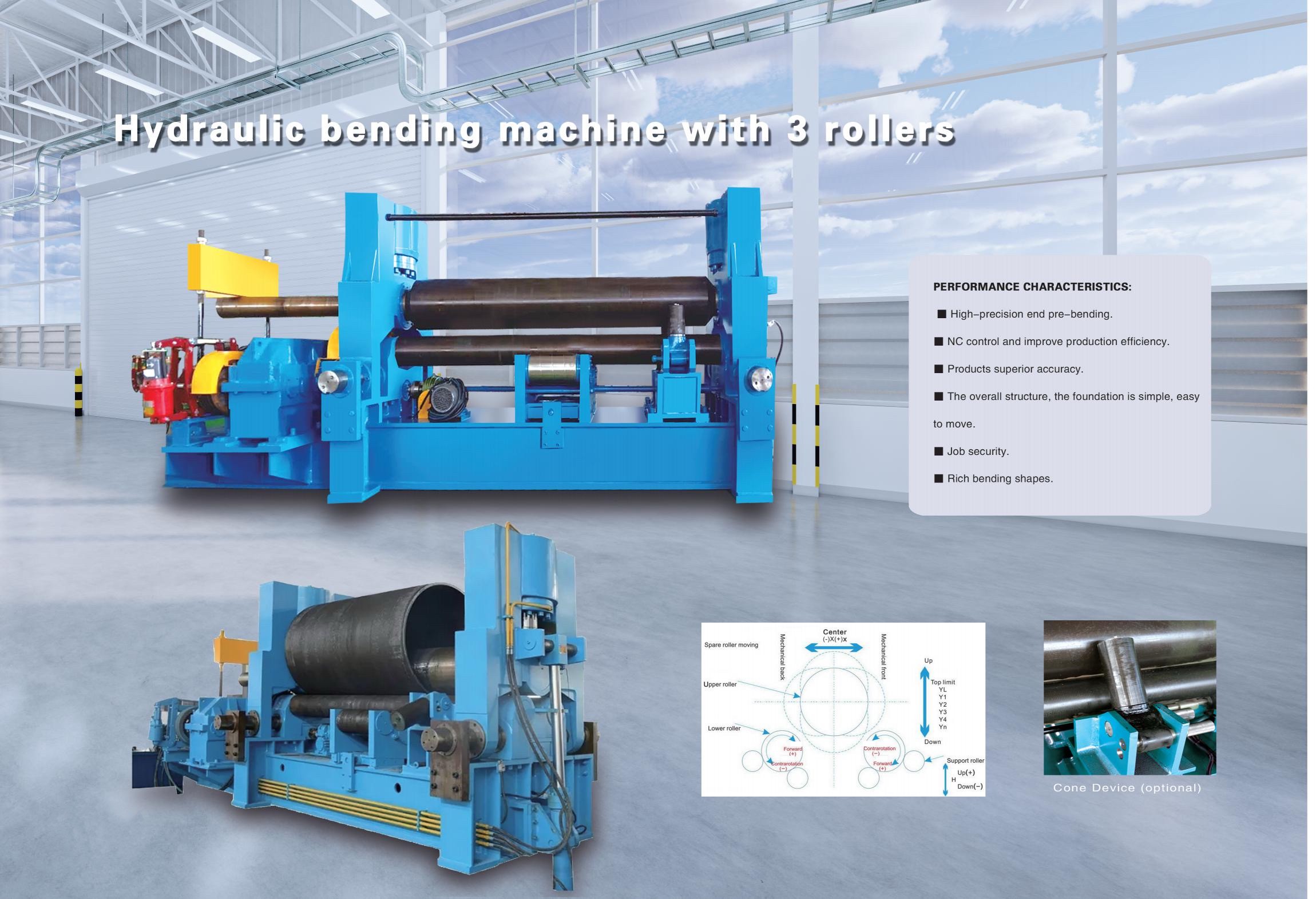
 Hydraulic bending machine with 3 roller1.Introduction for Hydraulic bending machine with 3 roller:
A roll forming machine is a device that bends sheet materials into shapes through the action of working rolls. It can form various parts such as cylindrical pieces and conical pieces. It is a very important processing equipment. The working principle of a roll forming machine is to use external forces such as hydraulic pressure and mechanical force to make the working rolls move, thereby bending or rolling the sheet materials into shapes. Depending on the rotational movement and position changes of the working rolls of different shapes, parts such as elliptical pieces, arc-shaped pieces, and cylindrical pieces can be processed.![星星1]()

Send Us A Message
Send us a Message
A dedicated person will follow up on your needs one-on-one and provide personalized customized solutions according
to your needs.
Get In Touch
We look forward to hearing from you for in-depth communication on how to fulfill your mixing requirements.