




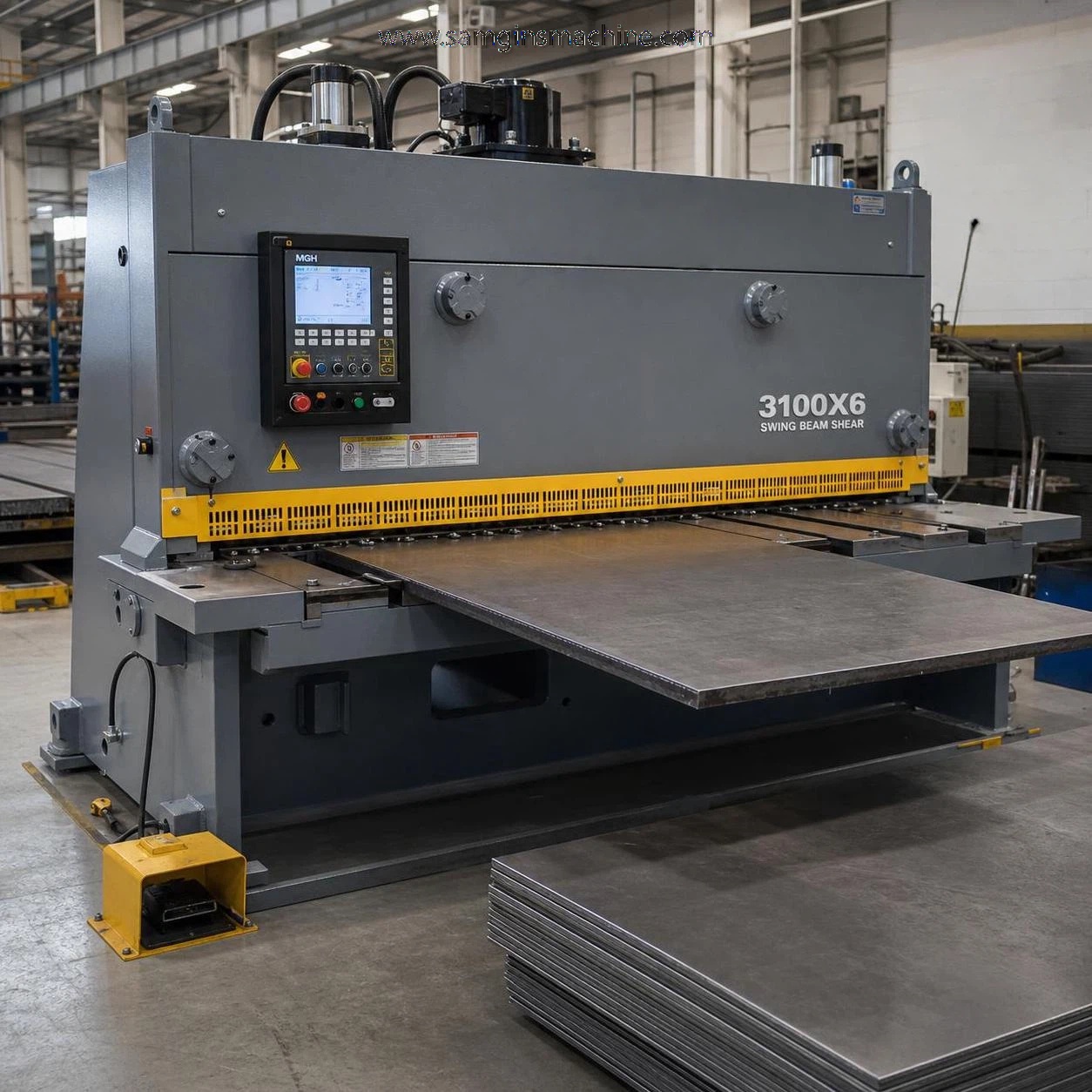
MGH Hydraulic Swing Beam Shear Explained: Key Components, Cutting Performance, and Maintenance
What Is An MGH Hydraulic Swing Beam Shear?
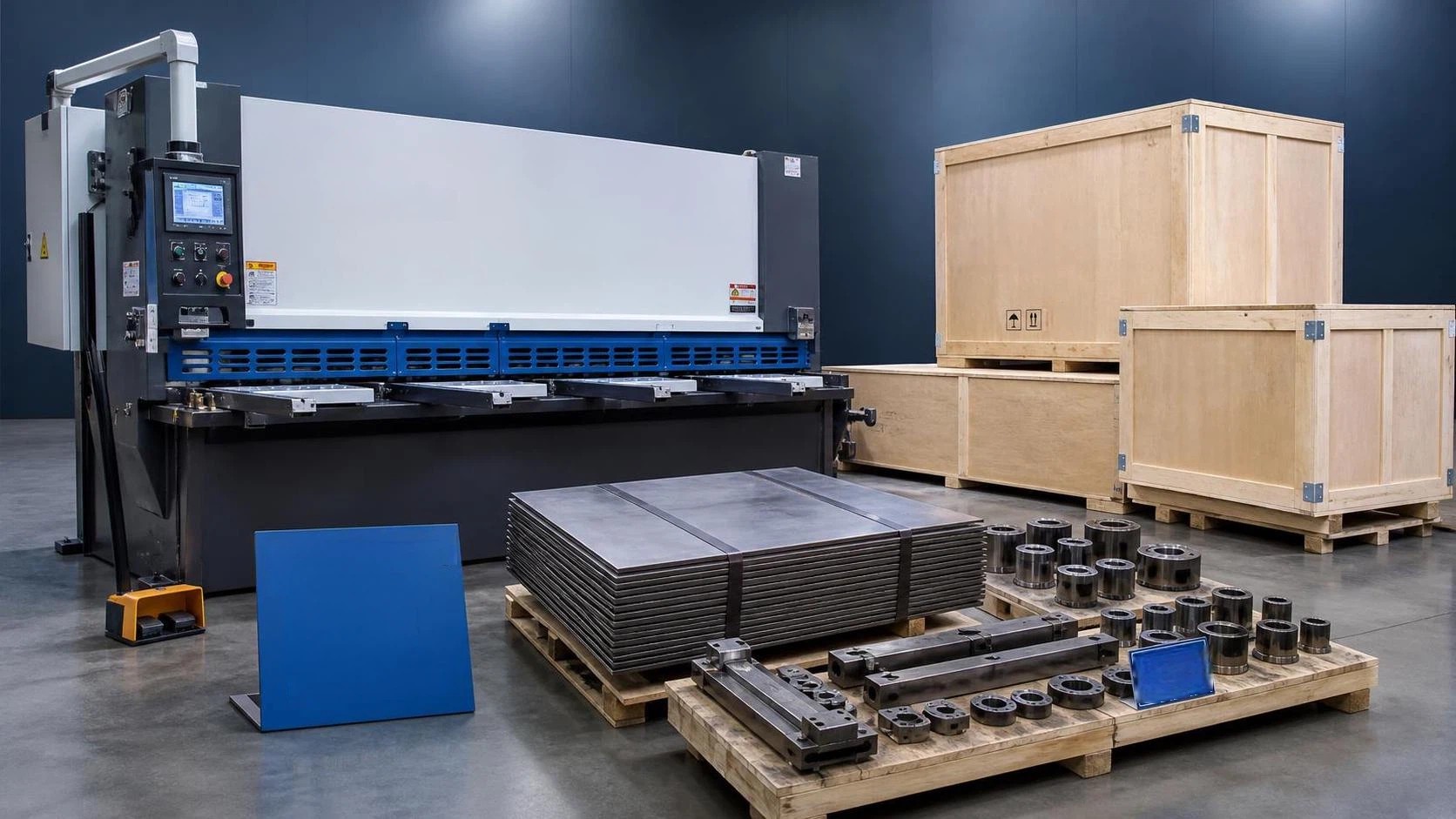
An MGH hydraulic swing beam shear is a guillotine-style sheet-metal cutting machine in which a hydraulically driven upper beam pivots through a controlled arc to shear plate against a fixed lower blade. It is typically used for straight-line cutting of carbon steel, stainless steel, aluminum, galvanized sheet, and other workable metal sheets within the machine's rated material and thickness range. In purchasing discussions, the term may describe a swing-beam shear configuration rather than one universally fixed model specification, so buyers should confirm the actual machine data sheet.
Its purpose is to convert stock sheets into accurately sized blanks before bending, rolling, welding, stamping, assembly, or further CNC processing. The machine combines hydraulic force, blade geometry, back-gauge positioning, hold-down pressure, and a set blade clearance to create a clean separation with controlled deformation. It differs from a press brake, which forms material, and from laser or plasma cutting equipment, which is better suited to complex profiles rather than fast repeated straight cuts.
MGH hydraulic swing beam shear equipment is commonly evaluated by cutting length, rated thickness, maximum shear strength, back-gauge travel, stroke rate, motor power, throat depth, and control configuration. These values must be read together. A machine rated for a given mild-steel thickness may have lower practical capacity for higher-tensile stainless steel, while short pieces, narrow strips, edge condition, and production duty cycle can also influence real-world cutting performance.
For fabricators, the machine is not merely a cutting station. It establishes the accuracy and edge quality of downstream operations. Stable blank dimensions reduce bending adjustment, fit-up gaps, weld preparation time, and scrap. A correctly selected hydraulic swing beam shear therefore supports production flow across sheet-metal shops, structural steel plants, vessel and tank fabricators, HVAC manufacturers, equipment builders, and general metal service operations.
How The Hydraulic Swing Beam Cutting System Works
The cutting cycle begins when an operator or programmed controller positions the back gauge to the required cut length. The sheet is placed against the gauge and aligned with a squaring arm or front support. Hydraulic hold-down cylinders clamp the material before the blade moves. This sequence matters because a sheet that shifts during cutting can create dimensional inconsistency, edge distortion, operator risk, and premature wear on blades or mechanical components.
Hydraulic oil supplied by the pump and valve group drives cylinders connected to the upper swing beam. The beam rotates about pivot points, bringing the upper blade past the stationary lower blade. The material fractures progressively along the cut line instead of being compressed along its entire width at one instant. This progressive shearing action helps manage required cutting force and is one reason swing beam machines are widely used for routine plate and sheet processing.
Blade clearance is a central process variable. Excessively small clearance can increase cutting force, burr formation, heat, and blade loading. Excessive clearance can leave a rougher edge, greater rollover, and more bending or tearing at the cut. The appropriate setting depends on material grade, thickness, hardness, and the quality required by the next operation. Shops processing varied materials benefit from a clear, repeatable clearance-setting procedure and trained operators.
A CNC or NC controller can improve repeatability by managing back-gauge positions, cut counts, retract functions, and job sequences. More advanced controls may assist with parameter selection, though they do not replace process knowledge. Operators should still check the first-off part, verify squareness and burr level, inspect sheet condition, and confirm that the selected material is within the published capabilities of the MGH hydraulic swing beam shear.
Key Components And Their Effect On Performance
The machine frame provides the structural reference for blade alignment and cutting stability. A rigid, well-manufactured frame helps resist deflection under load, while the swing beam and pivot assembly guide upper-blade motion. Buyers should assess fabrication quality, machining of critical interfaces, access for adjustment, and the supplier's documented inspection approach. These factors affect long-term alignment, especially where thick material, wide sheets, or frequent production cycles are expected.
Upper and lower blades are consumable cutting elements, usually designed with multiple usable edges that can be indexed or turned when one edge becomes worn. Blade material, heat treatment, mounting accuracy, and clamping integrity influence cut quality and service interval. A sharp, correctly installed blade reduces burrs and distortion. It also lowers unnecessary load on the hydraulic system, which can improve consistency while helping the operation avoid unplanned stoppages.
The hydraulic power unit includes the motor, pump, reservoir, filters, piping, seals, cylinders, and control valves. Clean oil, stable pressure, sound seals, and correct valve response are essential to smooth cutting motion. Leakage, contaminated oil, unusual noise, or inconsistent beam speed should be investigated early. Because hydraulic components are high-impact service items, procurement teams should ask about component specifications, replacement-part availability, documentation, and local or remote technical support.
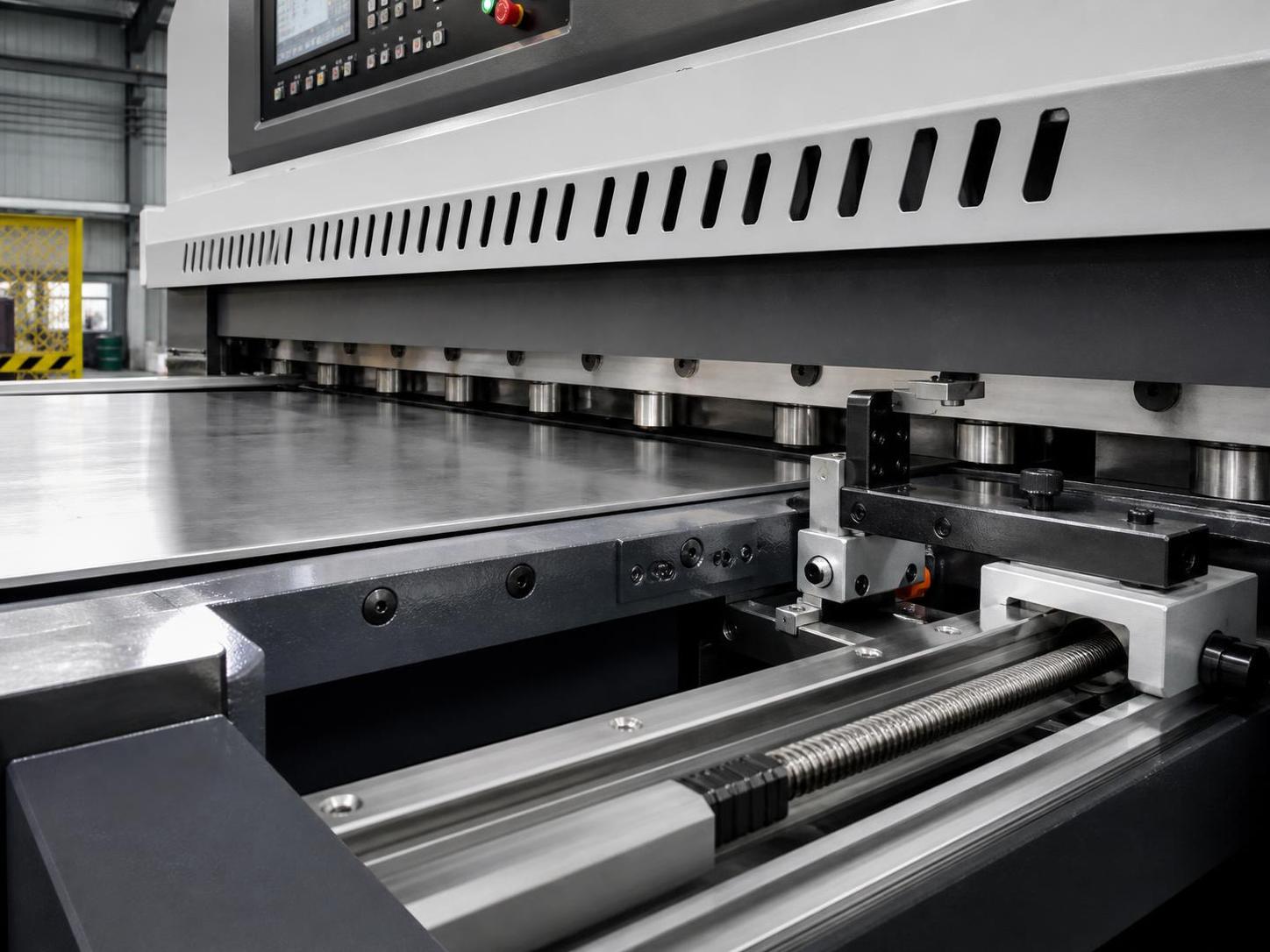
The back gauge determines repeated cut length and often has the greatest direct effect on dimensional productivity. Ball screws, guide systems, servo or motor drive arrangements, and controller logic should match the required tolerance and throughput. Other useful components include front sheet supports, squaring arms, safety guards, foot controls, shadow lines, and return mechanisms. A practical layout reduces manual handling and makes the MGH hydraulic swing beam shear easier to integrate with upstream decoiling or downstream bending and welding stations.
Main Types And Application Fit
Swing beam shears are commonly grouped by cutting capacity, working length, control level, and production duty. Light and medium-capacity machines suit general sheet-metal fabrication, enclosure work, ventilation products, and small parts production. Larger machines are selected for wider or thicker plates used in tanks, trailers, structural members, industrial equipment, and heavy fabrication. Capacity should be based on the heaviest normal material, not an occasional theoretical maximum that would dominate the investment.
Manual-stop or basic powered-gauge configurations can be appropriate for varied, lower-volume work where operators make frequent setup changes. NC back-gauge systems support repeatable batch work, while CNC controls are more suitable where multiple dimensions, frequent programs, material optimization, and traceable job parameters are required. The best control choice depends on the operator skill base, order mix, target throughput, and the accuracy required by downstream machinery.
A swing beam design is generally valued for robust straight cutting and practical operation. However, it should not be chosen solely from a familiar name or capacity label. Some jobs may be better handled by a variable-rake guillotine shear, a laser cutting machine, a slitting line, or a combined workflow. For example, high-mix parts with internal features favor CNC thermal cutting, while long repetitive strips may require specialized coil or slitting equipment.
Wuxi Samgins supplies shearing machines within a broader portfolio that includes CNC flame, plasma, and fiber laser cutting machines; press brakes; plate rolling machines; leveling equipment; welding systems; and H-beam production equipment. This broader capability can help buyers assess the MGH hydraulic swing beam shear as one part of a production route instead of as an isolated asset. The recommended configuration should reflect material flow, part geometry, labor availability, and the downstream welding or forming process.
Selection Criteria For B2B Buyers
Start with a documented material profile: grades, thickness range, maximum width, annual volume, typical blank sizes, and acceptable edge condition. Also identify the highest-strength material that will be processed regularly. Suppliers need these details to validate usable capacity rather than quoting only nominal mild-steel figures. Ask whether ratings are stated for a defined tensile-strength range and whether the quoted length and thickness can be achieved together under normal production conditions.
Next, define dimensional requirements. Specify cut-length tolerance, squareness expectations, repeat quantities, and whether operators will cut narrow strips or full-size sheets. A long back-gauge stroke may be valuable for larger blanks, but its benefit must be balanced against floor space, cycle time, and budget. Consider sheet support equipment and material-handling methods as early as possible; manual handling of large sheets can become the bottleneck even when the cutting machine itself has adequate speed.
Evaluate safety, utility, and site conditions before issuing a purchase order. Confirm electrical supply, installation access, foundation or floor suitability, lifting route, noise expectations, operator safeguarding, and hydraulic-oil maintenance procedures. Request the machine layout, shipping dimensions, utility demand, and commissioning scope. A clear acceptance plan should include the materials to be tested, measurement method, cutting conditions, training content, and responsibilities for installation and final handover.
Quality assurance should extend beyond the main frame. Wuxi Samgins states that its machines comply with the ISO9001 quality system and EU CE Machinery and LVD directives, and that key hydraulic, servo, and CNC components use internationally recognized imported brands. Buyers should request the machine-specific documentation applicable to their order and destination, then verify that supplied electrical, guarding, control, and technical files meet local obligations. This is particularly important for cross-border projects and regulated industrial sites.
Installation, Quality Control, And Daily Operation
Installation begins with a suitable level floor, approved electrical connection, adequate lighting, working clearance, and safe material-loading access. The machine should be leveled according to supplier instructions before operational adjustment and acceptance testing. After hydraulic oil and electrical systems are checked, technicians should confirm blade condition, blade clearance, hold-down function, beam travel, back-gauge accuracy, emergency stops, guards, and foot-control operation. Never bypass safety devices to speed a setup or recover a misplaced sheet.
A disciplined first-piece inspection is preferable to relying on controller settings alone. Measure cut length, diagonal difference or squareness, burr level, edge rollover, and any visible bowing or twist. Record the material grade, thickness, blade clearance, gauge position, and operator observations for recurring jobs. This creates a practical reference for future batches and helps distinguish between a setup issue, worn blades, material variation, hydraulic behavior, or back-gauge calibration error.
Daily operation should include visual checks for oil leaks, abnormal sound, loose fasteners, damaged guards, and material debris around the cutting area. Operators should keep the lower blade area and gauge guides clean, use appropriate lifting aids for heavy sheets, and avoid cutting material outside the rated range. They should also avoid feeding severely warped, contaminated, or unsupported sheet in a way that could shift during the stroke or create an unsafe condition.
For integrated fabrication cells, coordinate the shear with plate leveling, press-brake scheduling, welding fixtures, and material identification procedures. Wuxi Samgins has experience serving international customers including URALSTANKOIMPORT, MD Calbah Industries Pty Ltd, Ersay International Transport, Contevix comercio e servicos ltda, Zein Steel Industries Co. LLC, and Lincoln Electric-MENA. These named customer relationships should be treated as references to discuss relevant application experience, not as evidence that every machine configuration or project outcome is identical.
Maintenance Planning And Troubleshooting Priorities
Preventive maintenance for an MGH hydraulic swing beam shear should follow the supplier manual, actual duty cycle, material mix, and site environment. At a routine daily or shift level, inspect cleanliness, lubrication points where specified, hydraulic leakage, blade condition, guards, and fastener security. At planned intervals, check hydraulic-oil level and condition, filters, pressure behavior, electrical terminals, gauge movement, pivot wear, and blade clamping. Maintain dated service records so recurrent faults can be identified rather than treated as isolated events.
Poor edge quality is often the first visible warning sign. Excess burrs, tearing, excessive rollover, bowed strips, or inconsistent dimensions may indicate incorrect blade clearance, dull or damaged blades, unsuitable material settings, loose blade mounting, poor sheet support, or gauge alignment issues. Before replacing major components, verify the basic process conditions. A structured check saves time and prevents a simple setup issue from being incorrectly attributed to the hydraulic system or machine frame.
Hydraulic symptoms require careful attention. Slow or uneven beam movement, overheating, pressure instability, vibration, or visible oil leakage can arise from contamination, low oil, blocked filtration, air ingress, seal wear, pump condition, valve response, or incorrect adjustment. Maintenance should be performed by trained personnel using the specified oil grade and lockout procedures. Work on pressurized hydraulic circuits without proper isolation creates a significant safety risk and can cause more damage.
Spare-parts planning should focus on operationally critical items: blades, seals, filters, selected electrical components, and parts identified by the supplier for the installed configuration. Wuxi Samgins offers long-term warranties and technical support as part of its design, manufacturing, sales, and after-sales service approach. Before purchase, establish response channels, remote-diagnosis process, spare-part lead times, warranty boundaries, and the documents required for the maintenance team to support the machine effectively.
Total Cost Of Ownership And Future Direction
The purchase price is only one element of total cost of ownership. Buyers should include shipping, duties where applicable, installation, commissioning, electrical work, lifting, operator training, maintenance labor, hydraulic oil, filters, blade indexing or replacement, spare parts, power consumption, floor space, and downtime. Material waste is often a larger hidden cost than routine service, particularly where inaccurate gauges, poor nesting decisions, or repeated setup errors consume expensive stainless or coated sheet.
Return on investment is strongest when the machine replaces slow manual cutting, reduces outsourced blank preparation, shortens changeover, improves repeatability, and supports a consistent flow into bending or welding. Estimate ROI with conservative inputs: real annual cutting hours, average labor savings, avoided scrap, expected maintenance, and achievable utilization. Do not assume nameplate strokes per minute will equal production output. Loading time, measurement, material movement, program changes, and quality checks all influence actual throughput.
Industry development is moving toward more connected and parameter-driven sheet processing. Buyers increasingly expect programmable gauges, clearer diagnostic information, traceable job settings, energy-conscious hydraulic design, safer material handling, and integration with laser cutting, press braking, welding, and production planning. The fundamental need for dependable straight cutting remains, but competitiveness increasingly depends on reducing setup variation and making machine data useful to operators, supervisors, and maintenance teams.
For a practical sourcing process, provide Wuxi Samgins with material samples or a detailed cutting schedule, target tolerances, site voltage, production volume, preferred control level, and downstream process requirements. Its product range covers welding robots, H-beam lines, laser cutters, CNC press brakes, rolling machines, leveling machines, pipe-processing equipment, and related fabrication machinery. A complete requirement review makes it easier to determine whether an MGH hydraulic swing beam shear is the right primary cutting solution and what supporting equipment will deliver the most dependable production result.
search
Recommended Products
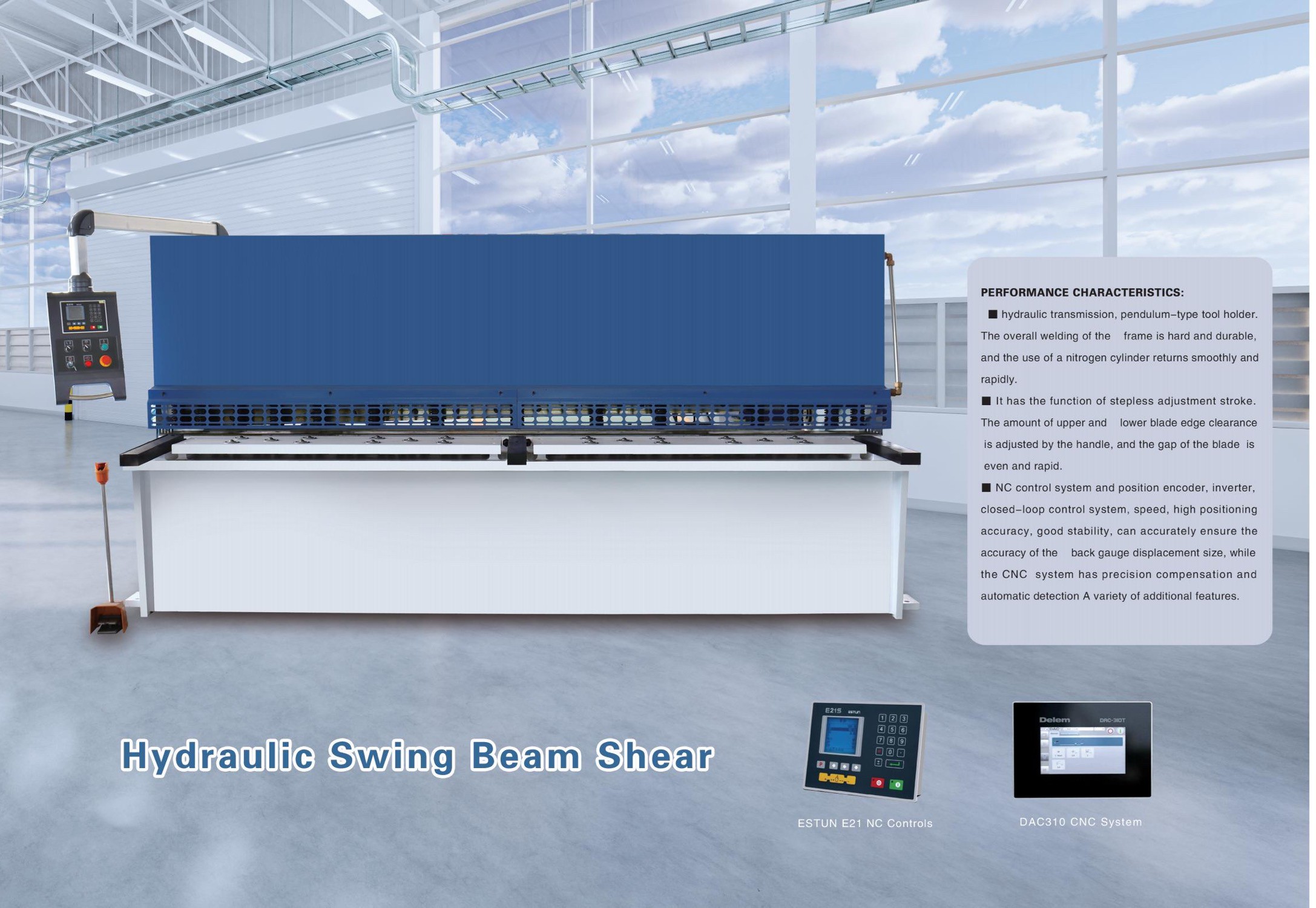
 Hydraulic Swing Beam ShearA shearing machine is a piece of equipment that uses a blade performing reciprocating linear motion to cut sheet metal. It operates with a moving upper blade and a fixed lower blade, set at an appropriate clearance, to apply shearing force to metal sheets of varying thicknesses. This force causes the material to fracture and separate along the required dimensions.
Shearing machines belong to the category of forging machinery and are primarily used in the metal processing industry. Their products are widely applied across numerous sectors, including aviation, light industry, metallurgy, chemical engineering, construction, shipbuilding, automotive, power generation, electrical appliances, and decoration, providing essential specialized machinery and complete equipment for these fields.![星星1]()
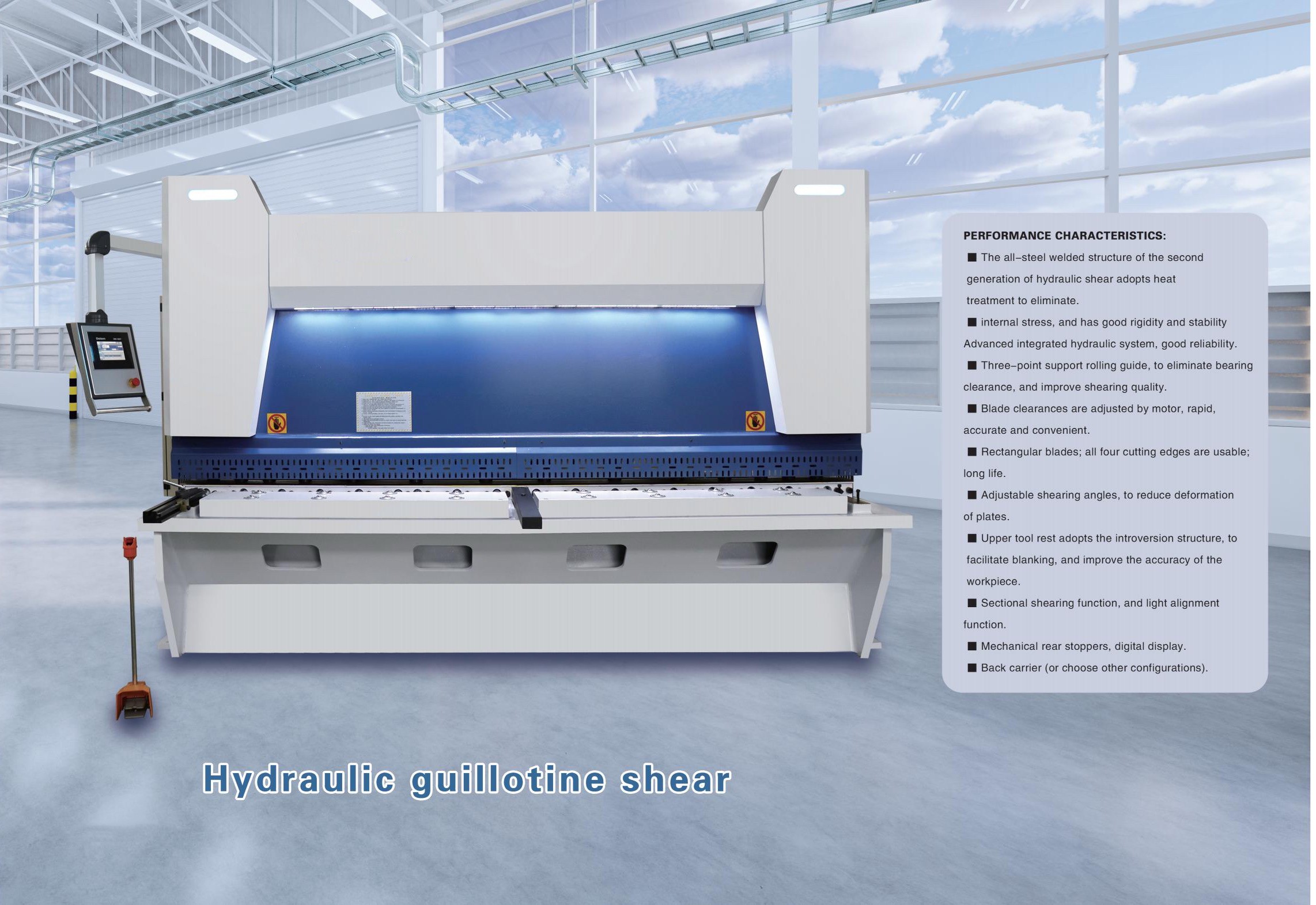
 Hydraulic guillotine shearA shearing machine is a machine that uses one blade to perform reciprocating linear motion to shear the sheet metal. It relies on the moving upper blade and the fixed lower blade, with a reasonable blade gap, to apply shear force to various thicknesses of metal sheets, causing the sheets to break and separate according to the required dimensions. Shearing machines belong to a type of forging machinery and are mainly used in the metal processing industry. The products are widely applicable to industries such as aviation, light industry, metallurgy, chemical industry, construction, shipbuilding, automobiles, power, electrical appliances, and decoration, providing the necessary specialized machinery and complete equipment.
![星星1]()

Recommended blogs
 MGH Hydraulic Swing Beam Shear: What Impacts Operating Cost Most?
 When Does a Custom Hydraulic Swing Beam Shear Make Sense for Mixed-Batch Fabrication?
- How to Compare a CNC Hydraulic Swing Beam Shear Provider on Service and Lead Time
 When Does a Hydraulic CNC Swing Beam Shear Outperform Conventional Shearing Equipment?
Send Us A Message
Send us a Message
A dedicated person will follow up on your needs one-on-one and provide personalized customized solutions according
to your needs.
Get In Touch
We look forward to hearing from you for in-depth communication on how to fulfill your mixing requirements.