




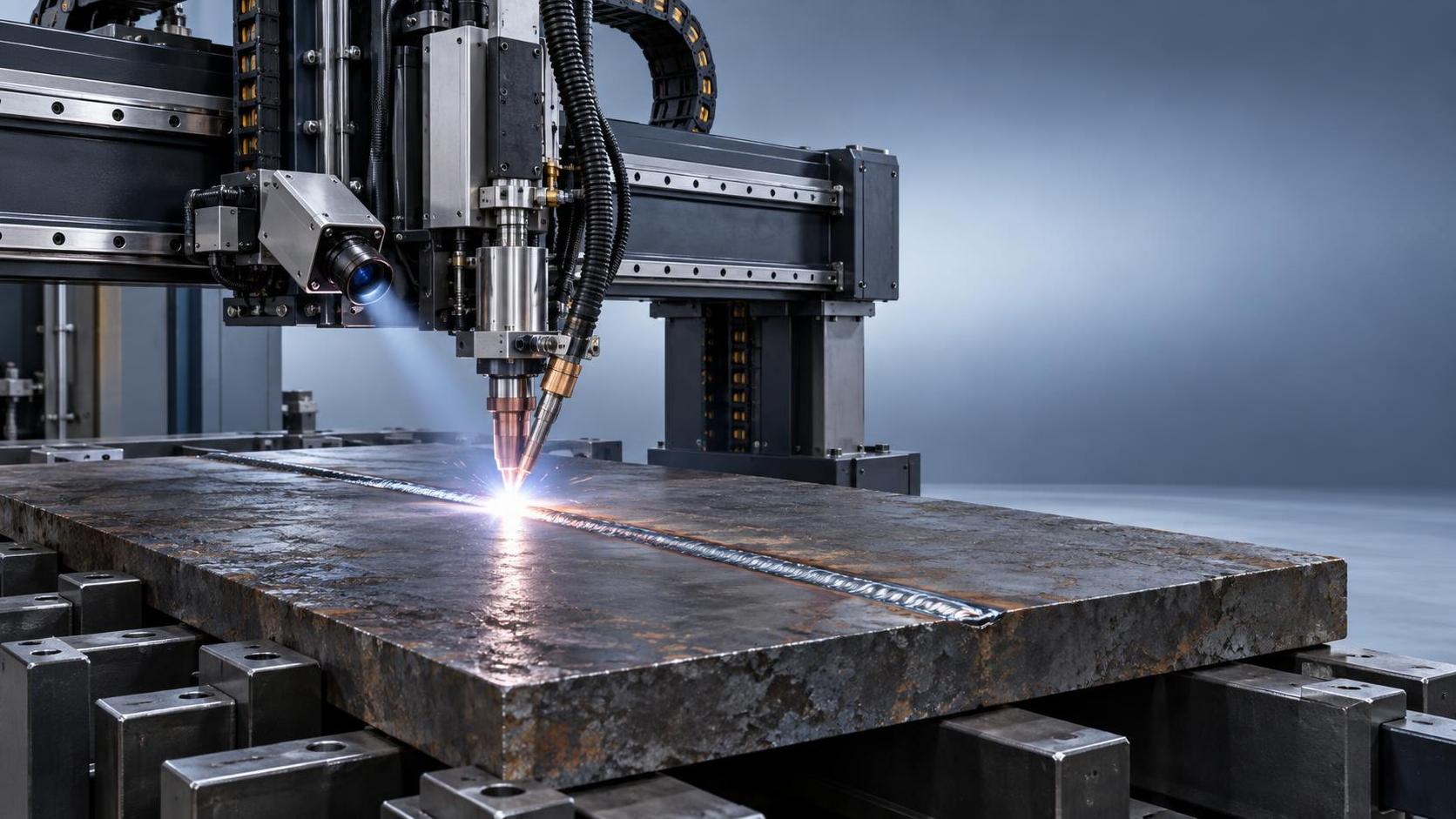
Understanding the longitudinal seam welding machine: TIG, MIG and Plasma Welding Explained
Understanding The Longitudinal Seam Welding Machine
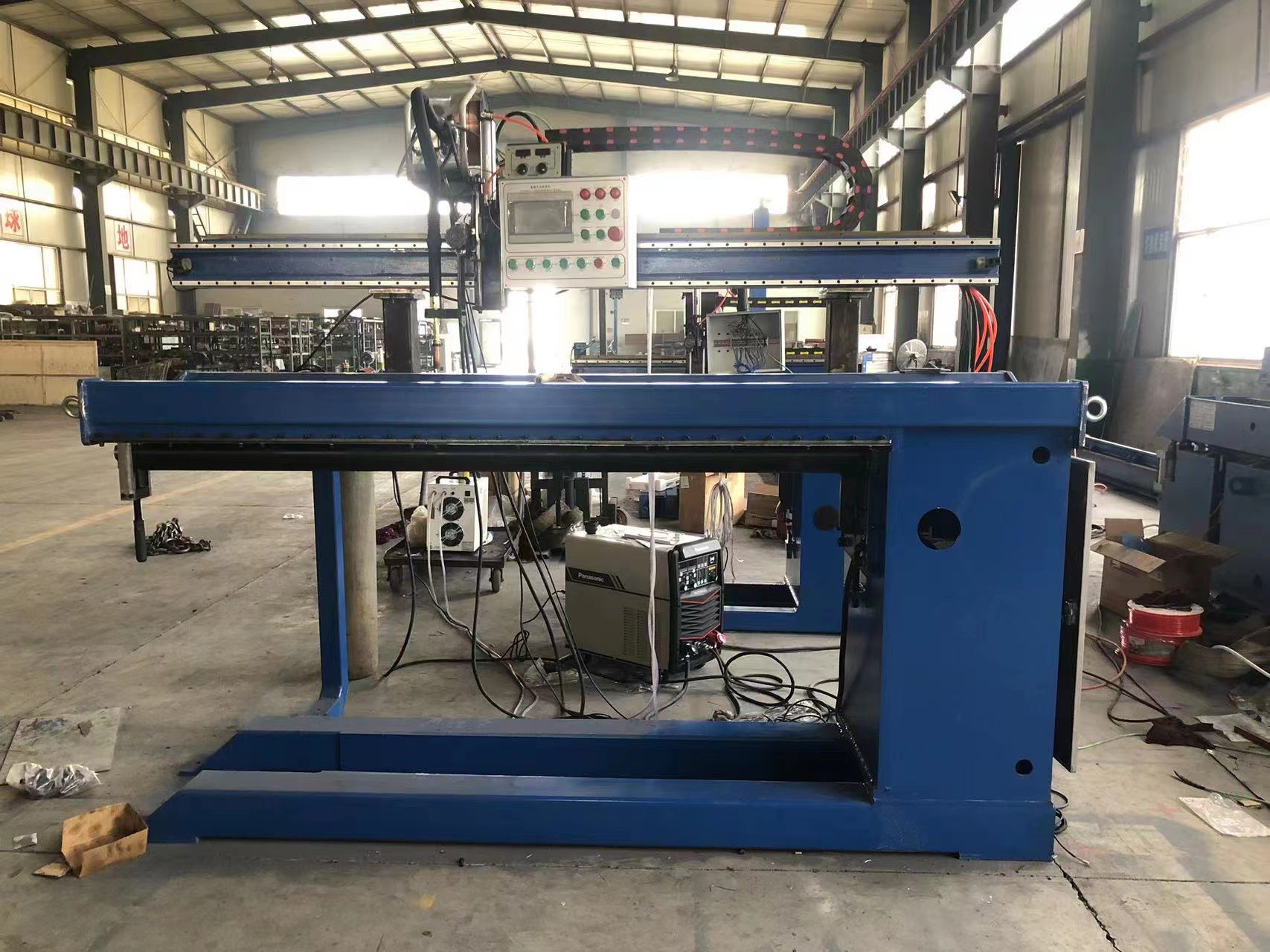
A longitudinal seam welding machine mechanizes welding along a straight joint, typically parallel to the axis of a rolled cylinder or along adjoining flat sheets. Its main elements usually include a supporting bed or mandrel, workpiece clamps, a traveling welding carriage, a welding power source and coordinated controls. Typical products include tank shells, metal ducts, tube sections and fabricated enclosures. The machine establishes repeatable positioning and travel conditions, while the selected welding process determines how heat and filler metal create the joint.
The term describes the joint geometry and equipment arrangement rather than one welding process. TIG, also called gas tungsten arc welding or GTAW, uses a nonconsumable tungsten electrode. MIG uses a continuously fed consumable wire; welding with active shielding gases is more precisely called MAG, although suppliers often group both under MIG equipment. Plasma arc welding constricts the arc through a nozzle. Each process can serve longitudinal seams, but each places different demands on preparation, shielding, controls and operator competence.
Machine configurations also vary. External seam welders position the torch above a supported joint, while internal welding arrangements depend on workpiece access and clearance. Some systems support flat panels and cylindrical shells; others specialize in particular diameters, seam lengths or production routines. Resistance seam welding belongs to a different equipment category and should not be confused with these arc welding systems. A useful specification therefore identifies the material, joint design, workpiece dimensions and required welding process before comparing suppliers or advertised capacities.
How Clamping, Travel And Heat Control Work
The welding cycle begins with joint preparation and alignment. Operators position the seam over a backing arrangement, establish the specified root gap and close the clamps in a controlled sequence. Many longitudinal seam welders use closely spaced clamping fingers to hold both edges near the joint. This arrangement helps resist edge lifting and movement during heating. Clamping cannot compensate for poorly rolled shells, inconsistent edge preparation or excessive mismatch, so upstream forming accuracy remains central to repeatable weld quality.
During welding, the carriage moves the torch along the seam at a programmed speed. Current, voltage, travel speed and, where applicable, wire feed jointly influence penetration and deposited metal. Heat input calculations can support procedure development, but they do not independently predict weld quality. Arc efficiency, joint geometry, material conductivity and heat extraction through tooling also matter. Repeatable starts, controlled current ramps and appropriate end treatments help address defects that often occur at the beginning or end of a seam.
Backing bars may provide mechanical support, root shielding and heat extraction, depending on their design. Copper tooling and cooling circuits are common options, but their suitability must be checked against the material and welding procedure. Stainless steel and other oxidation-sensitive applications may need controlled root purging. Torch height control or seam tracking can improve consistency where geometry varies, although these features have operating limits. The practical objective is a stable relationship between the joint, arc and supporting tooling throughout the cycle.
TIG, MIG And Plasma Welding Compared
TIG welding suits applications where precise heat control, clean weld appearance and controlled penetration are priorities. Common candidates include stainless steel shells, thin sheet assemblies and selected aluminum fabrications. Some closely fitted joints can be welded without filler, while other designs require controlled wire addition. TIG generally provides lower deposition rates than wire-fed processes, so its economics depend on material thickness, joint fit-up and quality requirements. Electrode condition, shielding coverage and surface cleanliness strongly affect results, especially during repeated automatic cycles.
MIG and MAG welding suit production that benefits from continuous wire feeding and higher deposition rates. Carbon steel fabrication often uses active shielding gas mixtures, while aluminum commonly uses inert shielding. Pulsed operation can help manage metal transfer and heat, but it does not remove the need for a suitable procedure. Buyers should evaluate spatter, weld profile, wire feeding stability and distortion on representative joints. Aluminum applications also require particular attention to wire delivery, oxide removal and prevention of contamination.
Plasma arc welding constricts the arc to produce a concentrated heat source. Depending on the operating mode and application, it can offer stable welding at low currents or support keyhole welding with full penetration. Keyhole performance depends closely on thickness, material, joint preparation, gas flow and travel conditions. Plasma systems also introduce specialized torches, nozzles and gas controls. Their potential productivity benefits should therefore be assessed alongside consumable life, setup complexity, maintenance requirements and the available process expertise within the factory.
No process is universally preferable. For thin stainless steel with demanding cosmetic requirements, TIG may be a strong starting point; for joints requiring substantial filler deposition, MIG or MAG may be more economical. Plasma merits evaluation where its penetration characteristics match a stable, repeatable product family. These are screening principles, not guaranteed operating ranges. Request sample welds using the actual alloy, thickness, seam length, joint preparation and acceptance criteria before selecting a longitudinal seam welding machine or approving a process change.
Applications, Industry Standards And Supplier Capabilities
Typical users include tank manufacturers, stainless steel fabricators, ventilation equipment producers and factories making cylindrical or rectangular sheet metal assemblies. Pressure-containing products require particular care because the finished weld must satisfy the applicable design and fabrication requirements. Longitudinal welding can also support pipe production, but a standalone seam welder should not be assumed to replace an integrated pipe mill. Production volume, forming method, material handling and inspection requirements determine whether a flexible workstation or a dedicated production line is appropriate.
Standards apply at different levels. ISO 9001 concerns quality management systems; equipment conformity requirements concern machinery and electrical safety; fabrication codes address the manufactured product and its welds. ASME Section IX may govern welding procedure and personnel qualification when invoked by the relevant construction code. API requirements depend on the product and contract. Buyers should identify the governing documents first, then confirm required procedure qualifications, inspection methods and records. Purchasing equipment alone does not establish compliance for a finished vessel, pipeline or structural assembly.
Wuxi Samgins offers longitudinal seam welding machines alongside plate rolling machines, edge milling machines, welding manipulators, rotators and positioners, supporting coordinated purchasing across forming and welding operations. Its supplied company information describes customization capabilities, more than ten years of export experience, ISO 9001 quality system compliance and CE-related conformity claims. Request documentation applicable to the quoted machine and destination. The company also lists international customers, including MD Calbah Industries Pty Ltd and Lincoln Electric-MENA; these names alone do not establish specific machine performance or documented project outcomes.
How To Specify And Select The Right Machine
Begin with a workpiece matrix covering material grades, minimum and maximum thickness, seam length, shell diameter, component weight and expected tolerances. Include the smallest diameter because mandrel access and torch clearance can become limiting factors. State whether the machine must accommodate flat sheets, open shells, closed cylinders or multiple geometries. Clarify loading and unloading arrangements, available lifting equipment and surrounding space. A nominal welding length is insufficient if the complete workpiece cannot be safely loaded, clamped, welded and removed.
Next, define the joint and quality requirements. Specify edge preparation, permissible gap and mismatch, required penetration, allowable distortion and any restrictions on internal or external reinforcement. Identify whether backing marks, discoloration or post-weld dressing affect product acceptance. Translate these needs into equipment functions such as root purging, controlled wire feeding, programmable sequencing or torch height regulation. Request verified operating ranges for the proposed configuration; the same machine frame can deliver different results when paired with different power sources, tooling or controls.
Finally, assess the supplier's ability to demonstrate and support the complete system. Wuxi Samgins describes the use of internationally recognized hydraulic, servo and CNC components, but buyers should confirm the actual brands, specifications and replacement availability in the quotation. Agree on a factory acceptance test using representative parts and measurable criteria. Include seam quality, dimensional stability, repeatability, cycle time and safety functions. Confirm documentation language, training scope, installation responsibilities, warranty terms and remote support arrangements before treating competing offers as commercially equivalent.
Installation, Procedure Development And Quality Control
Installation starts with verifying the foundation or floor requirements, electrical supply, protective grounding, shielding gas provision and cooling arrangements specified by the supplier. Plan ventilation and fume extraction around the materials and process. Check handling routes, operator access, emergency stops and protection from moving clamps and carriage components. After positioning, inspect bed alignment, carriage travel and tooling condition. Commissioning should establish that the mechanical system, welding source, gas circuits and controls operate correctly together before production qualification begins.
Develop the welding procedure with representative production materials and realistic fit-up variation. Record the joint preparation, shielding and purge conditions, welding parameters, consumables and clamping sequence. Examine trial welds against the applicable acceptance criteria, using visual examination and additional testing where required. Depending on the product, this may include penetrant testing, radiography, ultrasonic testing or mechanical tests. Test methods are not interchangeable, and their suitability depends on material, thickness, joint geometry and the governing specification. Retain approved settings and supporting records for production use.
Production control should connect incoming material identification, preparation checks, machine settings and inspection results. Operators need clear responses to loss of shielding, unstable travel, wire feeding problems or cooling alarms. Establish maintenance intervals from supplier instructions and actual duty, rather than adopting one universal calendar. Routine attention commonly covers torch consumables, clamps, backing surfaces, guideways, cables and cooling circuits. Investigate recurring defects through their causes: porosity may involve contamination or shielding, while incomplete penetration may involve fit-up, energy delivery or torch positioning.
Total Ownership Cost And Investment Evaluation
The purchase price is only one part of owning a longitudinal seam welding machine. Initial spending may also include freight, import charges, installation, tooling, extraction, operator training and procedure qualification. Operating costs include labor, electricity, shielding and purge gases, filler wire, electrodes or nozzles, cooling maintenance and spare parts. Product mix influences these costs: frequent changes in diameter, material or thickness can increase setup effort and reduce productive machine time. Compare quotations against the same production assumptions and included scope.
Evaluate throughput using the complete part cycle. Loading, alignment, clamping, purging, welding, cooling, unloading and inspection can each constrain output. Higher travel speed creates limited value if preparation or handling remains the bottleneck. Calculate cost per accepted component by including rework, scrap and finishing effort, rather than dividing operating cost by every part started. Where product appearance matters, reduced grinding or polishing may contribute to savings, but those benefits should be demonstrated through trials and measured against the existing production method.
A practical payback estimate divides the installed investment by the expected annual net operating savings. Include additional maintenance and financing effects where relevant, and test the calculation at conservative utilization levels. For capacity expansion, count additional contribution only where demand and downstream capacity support the forecast. Ask suppliers to separate necessary equipment from optional features and explain the production constraint each option addresses. Wuxi Samgins can be evaluated across connected forming, preparation and welding equipment, with each proposed investment justified by measurable production needs.
Future Trends And A Practical Purchasing Path
Development is moving toward easier recipe management, better monitoring and more coordinated handling. Digital welding sources can support consistent parameter selection, while data logging can connect welding records with production batches. Sensors and seam tracking may help manage variation, provided their accuracy and operating conditions match the application. Logged parameters do not prove that every weld is acceptable, so monitoring should support a defined quality plan. Buyers should also clarify data export, access permissions and long-term support for control hardware and software.
Another trend is tighter integration between cutting, edge preparation, rolling and welding. Better upstream consistency can reduce alignment effort and make automated welding more dependable. Flexible tooling and simpler changeovers are especially valuable for factories producing multiple tank or duct sizes. Laser welding and hybrid processes may warrant separate evaluation for suitable products, but their equipment, joint preparation and safety requirements differ. For established TIG, MIG and plasma applications, improving preparation, fixturing and process control can remain a practical route to higher productivity.
To request a useful proposal from Wuxi Samgins, provide drawings, material grades, thickness and diameter ranges, seam lengths, target output and applicable inspection requirements. Include photographs or samples of current fit-up problems where available, together with local utility and installation conditions. Ask for a recommended process, tooling concept, itemized scope and representative welding trial. A purchasing decision becomes more reliable when the proposed longitudinal seam welding machine is linked to demonstrated joint quality, an achievable production cycle and clearly documented service responsibilities.
search

Recommended blogs
 Hydraulic Press Brake Maintenance Checklist to Reduce Downtime
 MGH Hydraulic Swing Beam Shear: What Impacts Operating Cost Most?
 Common Alignment Errors in H Beam Drilling Machine Operation
- How can a handling robot arm for steel plates prevent surface damage?
- Automated Welding Cell: Design Checklist for Integrating Vision Guidance, Seam Tracking, and Real-Time Parameter Adjustment in Heavy Plate Fabrication
Send Us A Message
Send us a Message
A dedicated person will follow up on your needs one-on-one and provide personalized customized solutions according
to your needs.
Get In Touch
We look forward to hearing from you for in-depth communication on how to fulfill your mixing requirements.